Back to Integrations
integrationTelegram node
integrationWordpress node

Telegram and Wordpress integration

Save yourself the work of writing custom integrations for Telegram and Wordpress and use n8n instead. Build adaptable and scalable Communication, HITL, and Marketing workflows that work with your technology stack. All within a building experience you will love.

How to connect Telegram and Wordpress

  • Step 1: Create a new workflow
  • Step 2: Add and configure nodes
  • Step 3: Connect
  • Step 4: Customize and extend your integration
  • Step 5: Test and activate your workflow

Step 1: Create a new workflow and add the first step

In n8n, click the "Add workflow" button in the Workflows tab to create a new workflow. Add the starting point – a trigger on when your workflow should run: an app event, a schedule, a webhook call, another workflow, an AI chat, or a manual trigger. Sometimes, the HTTP Request node might already serve as your starting point.
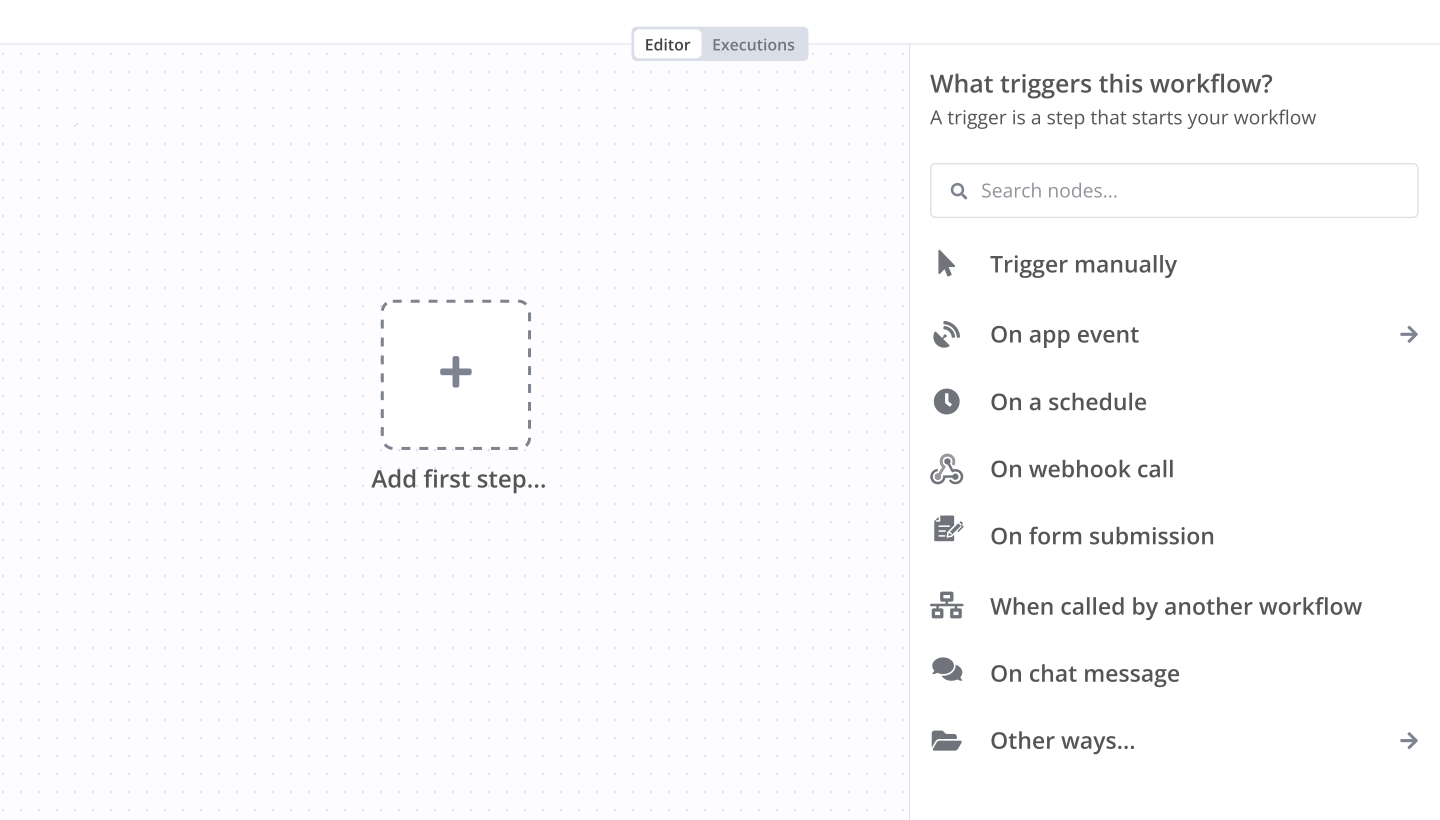
Telegram and Wordpress integration: Create a new workflow and add the first step

Step 2: Add and configure Telegram and Wordpress nodes

You can find Telegram and Wordpress in the nodes panel. Drag them onto your workflow canvas, selecting their actions. Click each node, choose a credential, and authenticate to grant n8n access. Configure Telegram and Wordpress nodes one by one: input data on the left, parameters in the middle, and output data on the right.

Telegram and Wordpress integration: Add and configure Telegram and Wordpress nodes

Step 3: Connect Telegram and Wordpress

A connection establishes a link between Telegram and Wordpress (or vice versa) to route data through the workflow. Data flows from the output of one node to the input of another. You can have single or multiple connections for each node.

Telegram and Wordpress integration: Connect Telegram and Wordpress

Step 4: Customize and extend your Telegram and Wordpress integration

Use n8n's core nodes such as If, Split Out, Merge, and others to transform and manipulate data. Write custom JavaScript or Python in the Code node and run it as a step in your workflow. Connect Telegram and Wordpress with any of n8n’s 1000+ integrations, and incorporate advanced AI logic into your workflows.

Telegram and Wordpress integration: Customize and extend your Telegram and Wordpress integration

Step 5: Test and activate your Telegram and Wordpress workflow

Save and run the workflow to see if everything works as expected. Based on your configuration, data should flow from Telegram to Wordpress or vice versa. Easily debug your workflow: you can check past executions to isolate and fix the mistake. Once you've tested everything, make sure to save your workflow and activate it.

Telegram and Wordpress integration: Test and activate your Telegram and Wordpress workflow

🔍🛠️Generate SEO-optimized WordPress content with AI powered perplexity research

Generate SEO-Optimized WordPress Content with Perplexity Research

Who is This For?
This workflow is ideal for content creators, marketers, and businesses looking to streamline the creation of SEO-optimized blog posts for WordPress. It is particularly suited for professionals in the AI consulting and workflow automation industries.

What Problem Does This Workflow Solve?
Creating high-quality, SEO-friendly blog posts can be time-consuming and challenging, especially when trying to balance research, formatting, and publishing. This workflow automates the process by integrating research capabilities, AI-driven content creation, and seamless WordPress publishing. It reduces manual effort while ensuring professional-grade output.

What This Workflow Does
Research: Gathers detailed insights from Perplexity AI based on user-provided queries.
Content Generation: Uses OpenAI models to create structured blog posts, including titles, slugs, meta descriptions, and HTML content optimized for WordPress.
Image Handling: Automatically fetches and uploads featured images to WordPress posts.
Publishing: Drafts the blog post directly in WordPress with all necessary formatting and metadata.
Notification: Sends a success message via Telegram upon completion.

Setup Guide
Prerequisites:
A WordPress account with API access.
OpenAI API credentials.
Perplexity AI API credentials.
Telegram bot credentials for notifications.

Steps:
Import the workflow into your n8n instance.
Configure API credentials for WordPress, OpenAI, Perplexity AI, and Telegram.
Customize the form trigger to define your research query.
Test the workflow using sample queries to ensure smooth execution.

How to Customize This Workflow to Your Needs
Modify the research query prompt in the "Form Trigger" node to suit your industry or niche.
Adjust content generation guidelines in the "Copywriter AI Agent" node for specific formatting preferences.
Replace the image URL in the "Set Image URL" node with your own source or dynamic image selection logic.

Nodes used in this workflow

Popular Telegram and Wordpress workflows

+2

🔍🛠️Generate SEO-Optimized WordPress Content with AI Powered Perplexity Research

Generate SEO-Optimized WordPress Content with Perplexity Research Who is This For? This workflow is ideal for content creators, marketers, and businesses looking to streamline the creation of SEO-optimized blog posts for WordPress. It is particularly suited for professionals in the AI consulting and workflow automation industries. What Problem Does This Workflow Solve? Creating high-quality, SEO-friendly blog posts can be time-consuming and challenging, especially when trying to balance research, formatting, and publishing. This workflow automates the process by integrating research capabilities, AI-driven content creation, and seamless WordPress publishing. It reduces manual effort while ensuring professional-grade output. What This Workflow Does Research: Gathers detailed insights from Perplexity AI based on user-provided queries. Content Generation: Uses OpenAI models to create structured blog posts, including titles, slugs, meta descriptions, and HTML content optimized for WordPress. Image Handling: Automatically fetches and uploads featured images to WordPress posts. Publishing: Drafts the blog post directly in WordPress with all necessary formatting and metadata. Notification: Sends a success message via Telegram upon completion. Setup Guide Prerequisites: A WordPress account with API access. OpenAI API credentials. Perplexity AI API credentials. Telegram bot credentials for notifications. Steps: Import the workflow into your n8n instance. Configure API credentials for WordPress, OpenAI, Perplexity AI, and Telegram. Customize the form trigger to define your research query. Test the workflow using sample queries to ensure smooth execution. How to Customize This Workflow to Your Needs Modify the research query prompt in the "Form Trigger" node to suit your industry or niche. Adjust content generation guidelines in the "Copywriter AI Agent" node for specific formatting preferences. Replace the image URL in the "Set Image URL" node with your own source or dynamic image selection logic.
+9

Extract text from PDFs and images in Google Drive and post to WordPress and social media with OpenAI GPT-4.1 and DALL·E

Who is this for? This workflow is designed for content creators, social media managers, digital marketers, and business owners who want to automate their content creation and distribution process across multiple platforms. It's perfect for those who regularly create content from PDFs or images and want to streamline their social media posting workflow. Key Features Monitors a specific Google Drive folder for new PDFs or images Extracts text from PDFs or images using AI Optionally generates new images from text using OpenAI's DALL-E Automatically posts content with images to multiple platforms Sends notifications about successful posts Handles different file types with specialized extraction methods Workflow Does This workflow automates monitoring a Google Drive folder for new PDFs and images, extracting content using AI, and distributing it across social media platforms like WordPress, Facebook, Telegram, LinkedIn, and Discord. It can also generate new images from text and sends notifications about successful posts. The process ensures efficient handling of different file types and streamlines content sharing across multiple channels. Requirements Google Drive account with a dedicated folder for content OpenAI API credentials for image generation WordPress API credentials for website posting Social media API credentials: Facebook Graph API Telegram Bot API LinkedIn OAuth2 API Discord Bot API X/Twitter OAuth2 API Gmail credentials for email notifications Rapiwa account for WhatsApp notifications Important Notes Make sure all API credentials are properly configured before running the workflow The workflow handles both PDF and image files differently based on their MIME type Image generation is optional and can be disabled if not needed All social media posting nodes can be individually enabled or disabled based on your needs The workflow includes rate limiting to avoid API restrictions Support & Help WhatsApp**: Chat on WhatsApp Discord**: SpaGreen Community Facebook Group**: SpaGreen Support Website**: https://spagreen.net Developer Portfolio**: Codecanyon SpaGreen
+4

Generate & Publish SEO-Optimized WordPress Blog Posts with AI

Generate and Publish SEO-Optimized Blog Posts to WordPress This n8n workflow, BlogBlitz, automates the creation and publishing of SEO-optimized blog posts for WordPress, saving you hours of content creation time. Triggered via Telegram or a scheduled interval, it generates 1,500–2,500-word articles on Technology, AI, Tech Facts, History, or Tips, complete with catchy titles, slugs, meta descriptions, and realistic featured images. Perfect for bloggers and marketers, BlogBlitz ensures your site stays fresh with high-quality content. Who is this for? Bloggers, content marketers, and WordPress site owners who want to automate high-quality, SEO-ready blog content creation without manual writing or formatting. What problem is this workflow solving? Manually creating engaging, SEO-optimized blog posts is time-consuming and requires expertise. BlogBlitz solves this by automating the entire process—from generating ideas and writing articles to publishing and notifying you—keeping your site active and discoverable. What this workflow does Triggers**: Runs every 3 hours via a Schedule Trigger or on-demand with a Telegram command (“generate”). Generates Content**: Uses OpenRouter to pick a category (e.g., Technology, AI) and create a title, slug, focus keyphrase, and meta description. Writes Articles**: OpenAI crafts 1,500–2,500-word posts with SEO-friendly structure, headings, and a call-to-action. Adds Visuals**: Generates realistic featured images with OpenAI and uploads them to WordPress. SEO Features**: Generate optimized slug, focus keyphrase, meta description Publishes**: Posts articles to WordPress with proper categories and featured images. Notifies**: Sends publish alerts with links to Discord and Telegram. Setup n8n instance (Cloud or self-hosted): Ensure you have a cloud or self-hosted n8n instance. Credentials: WordPress: API access for wp-json/wp/v2 endpoint. OpenAI: For article and image generation. OpenRouter: For title and category generation. Telegram: Bot API for triggers and notifications. Discord: Webhook for publish alerts. WordPress Configuration: Set up categories (Technology [ID:3], AI [ID:4], Tech Fact [ID:7], Tech History [ID:8], Tech Tips [ID:9]). Ensure an admin user ID is available (default: 1). Node Setup: Use the Edit Fields node to centralize variables like category IDs. Test: Send “generate” via Telegram to test the workflow. Check WordPress for the published post. How to customize this workflow to your needs Change Categories**: Update the WordPress Post Draft node to match your site’s category IDs. Adjust Schedule**: Modify the Schedule Trigger node for different intervals (e.g., daily). Tweak Tone**: Edit the prompt in the Basic LLM Chain node for a different writing style (e.g., formal or casual). Add Platforms**: Extend notifications to Slack or email by adding nodes. Image Style**: Adjust the OpenAI image node for different sizes or styles (e.g., “natural” instead of “vivid”). Pre-Requirements n8n Instance**: Cloud or self-hosted. Credentials**: WordPress API (wp-json/wp/v2 endpoint). OpenAI API for text and images. OpenRouter API for AI content. Telegram bot API. Discord Webhook API. Dependencies**: @n8n/n8n-nodes-langchain package. WordPress Setup**: Categories and admin user ID configured. Network**: Stable internet for API calls. Made by: Khaisa Studio Tag: youtube, summarizer, telegram, openai Category: AI Automation, Video Tools Need a custom? Contact Me
+3

✍️🌄 Your First Wordpress + AI Content Creator - Quick Start

✍️🌄 WordPress + AI Content Creator This workflow automates the creation and publishing of multi-reading-level content for WordPress blogs. It leverages AI to generate optimized articles, automatically creates featured images, and provides versions of the content at different reading levels (Grade 2, 5, and 9). How It Works Content Generation & Processing 🎯 Starts with a manual trigger and a user-defined blog topic Uses AI to create a structured blog post with proper HTML formatting Separates and validates the title and content components Saves a draft version to Google Drive for backup Multi-Reading Level Versions 📚 Automatically rewrites the content for different reading levels: Grade 9: Sophisticated language with appropriate metaphors Grade 5: Simplified with light humor and age-appropriate examples Grade 2: Basic language with simple metaphors and child-friendly explanations WordPress Integration 🌐 Creates a draft post in WordPress with the Grade 9 version Generates a relevant featured image using Pollinations.ai Automatically uploads and sets the featured image Sends success/error notifications via Telegram Setup Steps Configure API Credentials 🔑 Set up WordPress API connection Configure OpenAI API access Set up Google Drive integration Add Telegram bot credentials for notifications Customize Content Parameters ⚙️ Adjust reading level prompts as needed Modify image generation settings Set WordPress post parameters Test and Deploy 🚀 Run a test with a sample topic Verify all reading level versions Check WordPress draft creation Confirm notification system This workflow is perfect for content creators who need to maintain a consistent blog presence while catering to different audience reading levels. It's especially useful for educational content, news sites, or any platform that needs to communicate complex topics to diverse audiences.
+18

💅 AI Agents Generate Content & Automate Posting for Beauty Salon Social Media 📲

💅 AI Agents Generate Content & Automate Posting for Beauty Salon Social Media 📲 Who Is This For? This workflow is for beauty salons who want consistent, high‑quality social media content without writing every post manually. It also suits agencies and automation builders who manage multiple beauty brands and want a reusable, AI‑driven posting system they can adapt per client. What Problem Is This Workflow Solving? Many beauty businesses struggle to post regularly because research, copywriting, and design all take time and marketing skills. This workflow automates research, writing, image creation, and posting, so your channels stay active and relevant while you focus on clients and services. What This Workflow Does Generates short, engaging posts tailored to a beauty‑salon audience (hair, nails, skincare, make‑up, self‑care) using an AI agent. Uses Tavily Internet Search to pull up‑to‑date information and trends based on a reference link or topic. Turns each post into a detailed, photorealistic image prompt and creates a matching visual with an AI image model (for example, gpt‑image‑1 or other connected providers). Automatically sends the final text and image to Telegram, and can be extended to other social platforms from the Split Out node. How It Works Trigger the workflow Scheduled automatic generation:** Run the parent workflow on a schedule (for example, once per day at 9 AM) to publish new content regularly. Google Sheets trigger:** Generate content when a new row with a reference link or topic is added to your sheet. Use it when you manage ideas or briefs in Google Sheets and want the workflow to react as soon as a new idea appears. RSS Feed trigger:** Start the workflow when new items appear in a selected RSS feed. Ideal for turning fresh blog posts, news, or industry updates into social media content or automated summaries. Meta (Facebook/Instagram) webhook:** Use the Meta Reference trigger to fire the workflow on incoming webhooks from Meta (for example, new comments, messages, or events). Helpful when you want to auto‑respond, log activity, or generate follow‑up content from Meta activity. Airtable trigger:** Start the workflow when records in a selected Airtable base/table change (for example, a new idea, brief, or status update), so your posts react instantly to updates in your Airtable content board. Postgres trigger:** Fire the workflow when new rows are inserted or existing rows are updated in a connected PostgreSQL table, letting you drive content generation from events in your app database or Supabase‑style back end. Manual start:* Hit Execute workflow* whenever you want to spin up a batch of posts on demand, test new prompt settings, or debug the flow step by step. Research and generate copy The GENERATE TEXT agent calls Tavily to gather fresh information on the topic. It writes a post under 1024 characters with a hook, practical tips, relevant hashtags, and a closing line with your salon address and contact. Create the visual The GENERATE PROMPT agent converts the post into a single, clear description of the scene (client, service, salon interior, lighting, mood) with a strict “no text on image” rule. An image model such as gpt‑image‑1 or one of the HTTP image APIs renders a matching beauty visual. Distribute the content The Split Out node fans out the result so Telegram receives a photo post with the generated caption. Additional social or content nodes (for example Facebook, LinkedIn, X, template tools) can be wired after this step for multi‑channel posting. How to Customize This Workflow to Your Needs Brand voice** Edit the system message in the GENERATE TEXT node to adjust tone (luxury, friendly, clinical, playful), language, services, and city. Update the final address and phone line to match your salon details. Topics and triggers** Point the Google Sheets Trigger to your own document ID, sheet, and columns for ideas, links, or campaign themes. Use the Schedule Trigger for fully automatic posting or rely on the Manual Trigger for controlled, batch generation sessions. Models and providers** Swap GPT‑5 llm and the default image model for alternatives such as Mistral, Gemini, Anthropic, DeepSeek, or custom HTTP image APIs by enabling the corresponding nodes and adding credentials. Channels and outputs** Connect or remove social nodes after Split Out depending on which platforms you actively use. Add extra processing steps (for example resizing images or adding UTM parameters) before each channel if needed. Visual style** Tweak the GENERATE PROMPT instructions to control composition (close‑up vs. full‑body), color palette, lighting, and overall salon aesthetic, while keeping the constraint of no text or logos in the image.
+5

Automate RSS Content to Blog Posts with GPT-4o, WordPress & LinkedIn Publishing

Automated Blog Post Review and Multi-Platform Publishing Workflow with RSS Feeds Description This workflow automates the process of generating, reviewing, and publishing blog posts across multiple platforms, now enhanced with support for RSS Feeds as a content source. It streamlines the management of blog posts by fetching content from RSS Feeds, formatting, storing, reviewing, templating, and publishing to platforms like LinkedIn and WordPress. The workflow is split into three key flows: Initial Flow**: Fetches content from RSS Feeds, prepares and stores blog post data, sends a review email with approval/rejection links. Approval Flow**: Handles review actions via a webhook to update the status in Google Sheets. Status Update Flow**: Monitors status changes and publishes approved posts. Target Audience Content creators, bloggers, and digital marketers. Teams managing multi-platform content publishing. Users familiar with n8n, Google Sheets, LinkedIn, and RSS Feeds. Problem Solved Manually managing blog posts, especially when sourcing content from RSS Feeds, can be time-consuming and error-prone This workflow addresses: Content Sourcing**: Fetches blog posts from RSS Feeds for automated processing Content Formatting**: Automatically formats and stores blog posts. Review Process**: Simplifies approval with email notifications and webhook triggers. Multi-Platform Publishing**: Publishes to LinkedIn, WordPress and optionally Medium) with delays to avoid rate limits Status Tracking**: Tracks approval and publishing status in Google Sheets. Setup Instructions Prerequisites n8n Instance**: Ensure you have an active n8n instance RSS Feed URL**: Identify an RSS Feed URL (e.g., a blog’s feed like https://example.com/feed) Google Sheets**: Create a spreadsheet with columns: Title, Blogpost, Publication Date, Keywords, Status, Published, Featured Image, articleUrl, Rendered Blog. Sheet Name: Posts Initial Add a dropdown for Status: Pending, Approved, Rejected. Gmail Account**: For sending review and notification emails. LinkedIn Account**: For publishing posts (OAuth credentials needed). Optional**: WordPress.com or Medium account for additional publishing. Customization Guidance Below is a detailed breakdown of each flow and node, including setup instructions. 🔹 Initial Flow: Fetch from RSS Feeds, Prepare, and Send for Review. Purpose: Fetches blog posts from an RSS Feed, formats them, extracts images, stores data, and sends a review email. Fetch from RSS Feed Type: RSS Feed Purpose: Retrieves blog posts from an RSS Feed Configuration: URL: https://example.com/feed (replace with your RSS Feed URL) Limit: 1 (or adjust based on your needs) Setup: Ensure the RSS Feed URL is valid and accessible; test the node to verify it fetches posts Set Fields Type: Set Purpose: Maps RSS Feed data to blog post fields Setup: Adjust field mappings based on your RSS Feed’s structure Format Blog Post for Storage Type: Code Purpose: Cleans up the blog post content. Extract Featured Image Type: Code Purpose: Extracts or generates a featured image URL. Setup: Ensure originalHtml contains image data; otherwise, it uses a placeholder. Store Blog Posts Initial Type: Google Sheets Purpose: Stores initial blog post data Setup: Ensure Google Sheets credentials are set up and the spreadsheet has the required columns. Set Fields for Email Type: Set Purpose: Prepares fields for the review email. Setup: Replace https://your-n8n-instance with your n8n instance URL. Prepare Email HTML Type: Code Purpose: Generates HTML email content with conditional image display Setup: No additional configuration needed Notify for Review (Gmail) Type: Gmail Purpose: Sends a review email with approval/rejection links 🔹 Approval Flow: Handle Review Actions Purpose: Updates the blog post status based on approval/rejection Webhook Trigger Type: Webhook Purpose: Triggers on approval/rejection link clicks Configuration: HTTP Method: GET Path: approve-post Response Code: 200 Response Data: {"message": "Status updated"} Setup: Ensure the webhook URL matches the one in Set Fields for Email Find Row to Update Type: Google Sheets Purpose: Retrieves all rows to find the matching blog post Filter Row by Title Type: Code Purpose: Filters the row matching the blog post title Setup: No additional configuration needed Update Status on Approval Type: Google Sheets Purpose: Updates the status to Approved or Rejected 🔹 Status Update Flow: Publish Approved Posts Purpose: Monitors status changes and publishes approved posts Google Sheets Trigger (Fetch Row) Type: Google Sheets Trigger Purpose: Triggers when a row’s status is updated Configuration: Event: Update Sheet Name: Posts Initial Output Fields: title, status, published, featuredImage, articleUrl Setup: Ensure Google Sheets credentials are set up Router (Check Status) Type: Router Purpose: Routes based on status and published state Configuration: Route 1: Approved and Not Published Condition: status equals Approved AND published equals NO Route 2: Rejected Condition: status equals Rejected Route 3: Pending Condition: status equals Pending Setup: No additional configuration needed Apply Blog Template Store Blog Posts Final Type: Google Sheets Purpose: Stores the final HTML content Configuration: Operation: Update Row Setup: Ensure the Rendered Blog column exists Loop Over Blog Posts Type: Split in Batches Purpose: Processes each blog post individually Configuration: Default settings Setup: No additional configuration needed Delay Between Posts Type: Wait Purpose: Adds a delay to avoid rate limits Configuration: Wait Type: Delay Amount: 1 second Setup: Adjust delay as needed for LinkedIn rate limits Publish to LinkedIn Type: LinkedIn Purpose: Publishes the blog post to LinkedIn Configuration: Operation: Share Post Author: urn:li:person:YOUR_PERSONAL_URN Setup: Set up LinkedIn OAuth credentials and replace YOUR_PERSONAL_URN with your LinkedIn URN Update Published State Type: Google Sheets Purpose: Updates the published status Configuration: Operation: Update Row Setup: Ensure the Published column exists Notify Team Type: Gmail Purpose: Notifies the team of successful publishing Configuration: The blog post "{{ $json.title }}" has been successfully published Setup: Set up Gmail credentials; replace [Link] with the LinkedIn URL if captured Notify Rejection (Gmail) (Route 2) Type: Gmail Purpose: Notifies on rejection The blog post "{{ $json.title }}" has been rejected Suggestions: Rewrite with more engaging content, adjust keywords, or verify facts Please update the status in Google Sheets if you wish to revise and resubmit Setup: Set up Gmail credentials Wait for Status Update (Route 3) Type: Wait Purpose: Delays for status recheck Configuration: Wait Type: Delay Duration: 24h Setup: Adjust delay as needed Conclusion This workflow streamlines blog post management with RSS Feeds, making it ideal for busy content creators and teams. Customize it by adding more platforms adjusting delays, or enhancing notifications. Share your feedback in the n8n community to help others benefit from this automation.

Build your own Telegram and Wordpress integration

Create custom Telegram and Wordpress workflows by choosing triggers and actions. Nodes come with global operations and settings, as well as app-specific parameters that can be configured. You can also use the HTTP Request node to query data from any app or service with a REST API.

Telegram supported actions

Get
Get up to date information about a chat
Get Administrators
Get the Administrators of a chat
Get Member
Get the member of a chat
Leave
Leave a group, supergroup or channel
Set Description
Set the description of a chat
Set Title
Set the title of a chat
Answer Query
Send answer to callback query sent from inline keyboard
Answer Inline Query
Send answer to callback query sent from inline bot
Get
Get a file
Delete Chat Message
Delete a chat message
Edit Message Text
Edit a text message
Pin Chat Message
Pin a chat message
Send Animation
Send an animated file
Send Audio
Send a audio file
Send Chat Action
Send a chat action
Send Document
Send a document
Send Location
Send a location
Send Media Group
Send group of photos or videos to album
Send Message
Send a text message
Send and Wait for Response
Send a message and wait for response
Send Photo
Send a photo
Send Sticker
Send a sticker
Send Video
Send a video
Unpin Chat Message
Unpin a chat message

Wordpress supported actions

Create
Create a post
Get
Get a post
Get Many
Get many posts
Update
Update a post
Create
Create a page
Get
Get a page
Get Many
Get many pages
Update
Update a page
Create
Create a user
Get
Get a user
Get Many
Get many users
Update
Update a user

FAQs

  • Can Telegram connect with Wordpress?

  • Can I use Telegram’s API with n8n?

  • Can I use Wordpress’s API with n8n?

  • Is n8n secure for integrating Telegram and Wordpress?

  • How to get started with Telegram and Wordpress integration in n8n.io?

Need help setting up your Telegram and Wordpress integration?

Discover our latest community's recommendations and join the discussions about Telegram and Wordpress integration.
Trigi Digital

Looking to integrate Telegram and Wordpress in your company?

Over 3000 companies switch to n8n every single week

Why use n8n to integrate Telegram with Wordpress

Build complex workflows, really fast

Build complex workflows, really fast

Handle branching, merging and iteration easily.
Pause your workflow to wait for external events.

Code when you need it, UI when you don't

Simple debugging

Your data is displayed alongside your settings, making edge cases easy to track down.

Use templates to get started fast

Use 1000+ workflow templates available from our core team and our community.

Reuse your work

Copy and paste, easily import and export workflows.

Implement complex processes faster with n8n

red iconyellow iconred iconyellow icon