Back to Integrations
integrationTelegram node
integrationZendesk node

Telegram and Zendesk integration

Save yourself the work of writing custom integrations for Telegram and Zendesk and use n8n instead. Build adaptable and scalable Communication, and HITL workflows that work with your technology stack. All within a building experience you will love.

How to connect Telegram and Zendesk

  • Step 1: Create a new workflow
  • Step 2: Add and configure nodes
  • Step 3: Connect
  • Step 4: Customize and extend your integration
  • Step 5: Test and activate your workflow

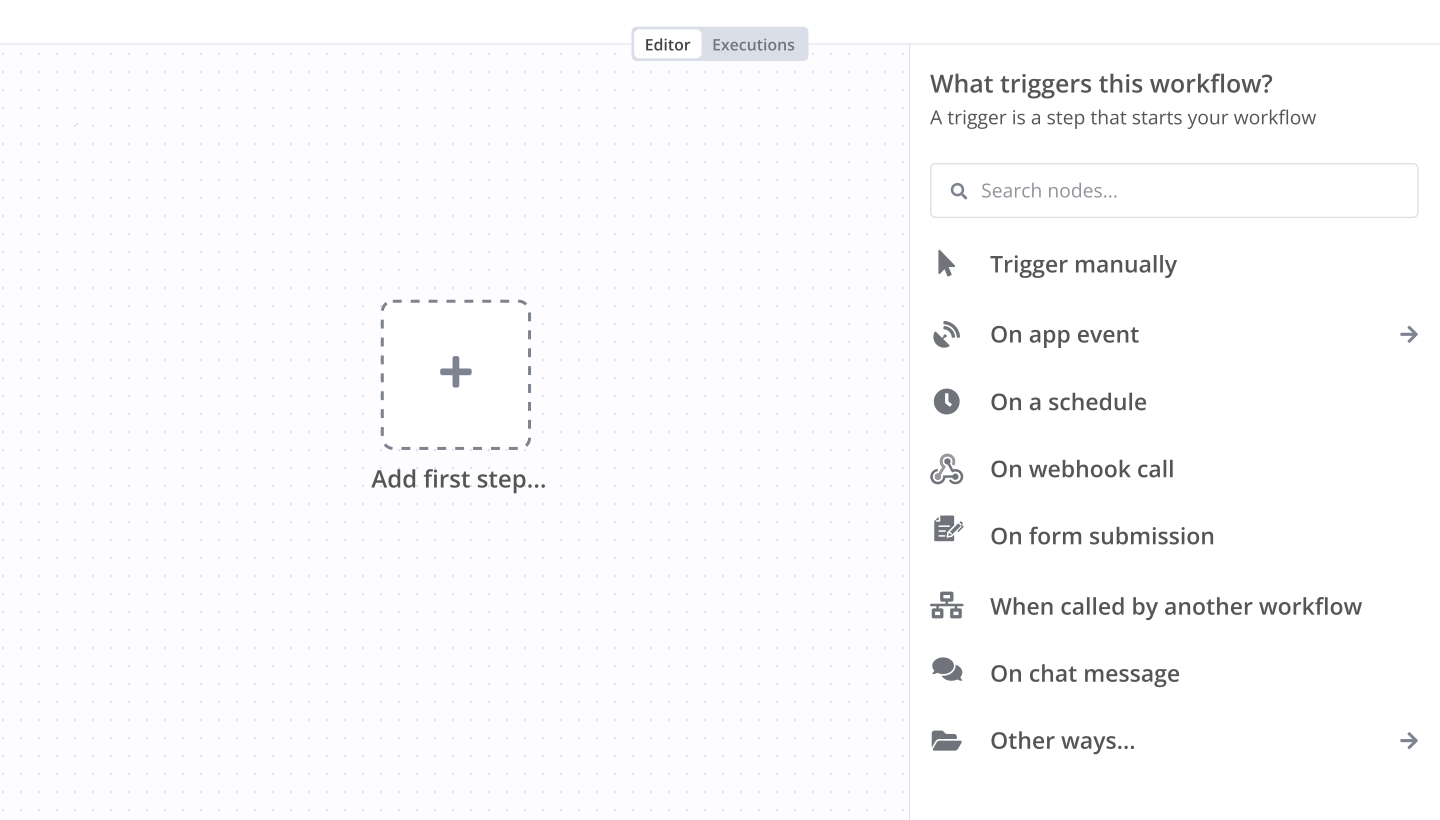
Step 1: Create a new workflow and add the first step

In n8n, click the "Add workflow" button in the Workflows tab to create a new workflow. Add the starting point – a trigger on when your workflow should run: an app event, a schedule, a webhook call, another workflow, an AI chat, or a manual trigger. Sometimes, the HTTP Request node might already serve as your starting point.

Telegram and Zendesk integration: Create a new workflow and add the first step

Step 2: Add and configure Telegram and Zendesk nodes

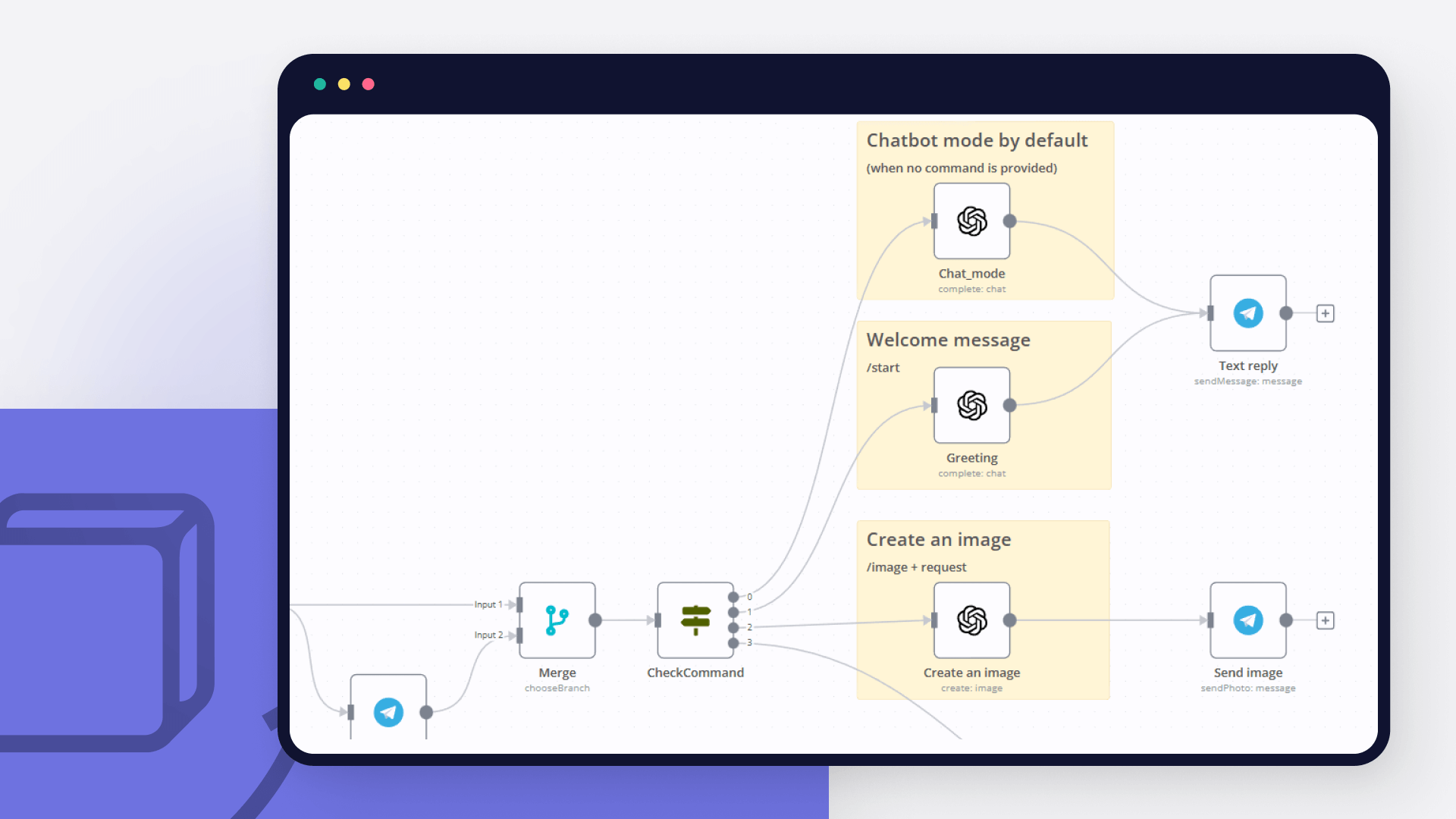
You can find Telegram and Zendesk in the nodes panel. Drag them onto your workflow canvas, selecting their actions. Click each node, choose a credential, and authenticate to grant n8n access. Configure Telegram and Zendesk nodes one by one: input data on the left, parameters in the middle, and output data on the right.

Telegram and Zendesk integration: Add and configure Telegram and Zendesk nodes

Step 3: Connect Telegram and Zendesk

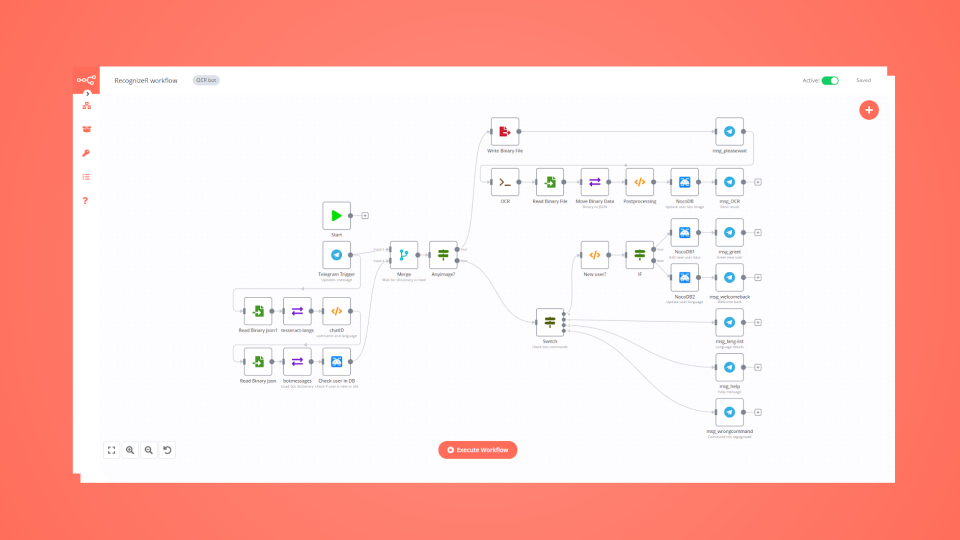
A connection establishes a link between Telegram and Zendesk (or vice versa) to route data through the workflow. Data flows from the output of one node to the input of another. You can have single or multiple connections for each node.

Telegram and Zendesk integration: Connect Telegram and Zendesk

Step 4: Customize and extend your Telegram and Zendesk integration

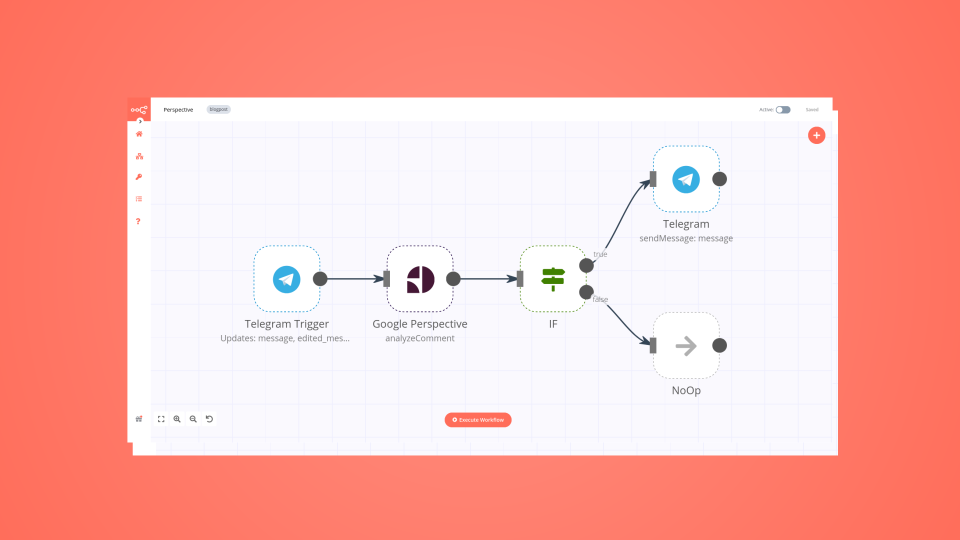
Use n8n's core nodes such as If, Split Out, Merge, and others to transform and manipulate data. Write custom JavaScript or Python in the Code node and run it as a step in your workflow. Connect Telegram and Zendesk with any of n8n’s 1000+ integrations, and incorporate advanced AI logic into your workflows.

Telegram and Zendesk integration: Customize and extend your Telegram and Zendesk integration

Step 5: Test and activate your Telegram and Zendesk workflow

Save and run the workflow to see if everything works as expected. Based on your configuration, data should flow from Telegram to Zendesk or vice versa. Easily debug your workflow: you can check past executions to isolate and fix the mistake. Once you've tested everything, make sure to save your workflow and activate it.

Telegram and Zendesk integration: Test and activate your Telegram and Zendesk workflow

Zendesk: visual summarization, sentiment analysis, and Slack integration

Analyze and Explore your ZenDesk Support Requests using AI-Powered Knowledge Graph

This template helps you create an interactive InfraNodus knowledge graph for your ZenDesk tickets using any search criteria (e.g. after a certain date, specific status, sender, keyword) that will automatically be sent to a selected Slack channel.

Here's an example of the InfraNodus graph that shows the main topics and gaps in ZenDesk support tickets:

You can use the workflow to:

Get an instant overview of the main topics your customers are talking about
Generate business and product ideas based on the blind spots identified using the InfraNodus AI
See which topics correlate to the negative / positive sentiment understanding the weak and strong sides of your product and support
Receive daily notifications on the main topics your customers are talking about via Slack / Telegram / Email and other channels
Perform detailed search using a password-protected web form for tickets filtered by a certain date, status, tag, sender, keyword.
Use the interactive graph to explore specific topics and concepts your customers are talking about — a great way to engage with their concerns in a non-linear way, bypassing the boring tabular interface
Use the graph to explore the support requests by specific segments — e.g. status, priority, sentiment, tags, urgency.
Use the graph generated as an AI expert available to your AI agents in other n8n workflows via InfraNodus GraphRAG. For instance, you could connect your knowledge base to the support tickets graph and let the agent discover possible solutions to your customers' most typical problems. See an sample template here.

How it works
You can start this workflow

manually,
with a daily / weekly trigger, or
via a password-protected web form, where you can provide search requests.

Once started, it will perform a ZenDesk tickets search with the default or your custom criteria. Then it will use the search results to generate an InfraNodus graph (or add the new data to an existing one), and — finally — use the InfraNodus AI endpoints to generate a topical summary and a product business idea based on the blind spots identified. The results are delivered a channel of your choice.

Here's a description step by step:

Start the workflow (manually or on schedule)
Assign values to variables (search criteria, graph name)
Perform ZenDesk support tickets search
Convert the data received and submit it to InfraNodus to generate a knowledge graph
Generate topical summary with InfraNodus
Generate a business idea with InfraNodus (you can also change the setting to generate a question instead)
Send a notification via Slack / Telegram / Email or back to the webform

How to use

You need an InfraNodus API account and key to use this workflow. You also need a ZenDesk account. It takes about 5 minutes to set everything up.

Create an InfraNodus account.
Get the API key at https://infranodus.com/api-access and create a Bearer authorization key for the InfraNodus HTTP nodes.
Add the authorization key to all the InfraNodus HTTP nodes in the template (Steps 3, 5, and 6).
Generate a ZenDesk authorization token following the instructions in n8n's ZenDesk node (Step 3).
Optionally: connect your Slack or Telegram or Gmail account to receive automated notifications with the link to the graph, once the workflow is ready (it takes about 30 seconds to run).
Run it with using the form to play around with the search criteria that works best for you (you can leave everything empty at first), then choose the parameters you like and activate the Daily Trigger node to receive executive summaries to a channel of your choice.
Open the graph in InfraNodus and use our customer feedback analysis guide to explore the graph and generate new insights.

Requirements

An InfraNodus account and API key
A ZenDesk API key
(Optional) — a Slack / Telegram / Gmail connection for notifications

FAQ

  1. What are the best use cases to try?

I love to set the graph to deliver me a daily visual briefing of what's happening in my support portal. It shows me the main topics and gaps and generates product ideas based on them. Great to keep the pulse on the business.

I also really like generating a graph for the past week manually, using the form, and then exploring the graph in InfraNodus directly using the customer feedback analysis workflow to:

discover main topics my customers are talking about?
understand the topics that have the most negative connotation for them (using the sentiment filter)?
discover some support tickets that need more attention or that talk about the topics I'm personally interested in and engage with the client
identify the gaps in your customers' discourse based on the blind spots — useful for generating ideas, see the graph below with a demo of how it works:

  1. Why use the graph and not just AI summary?

AI summary will just give you generic results. You'll see what you already know. Using the graph helps you deconstruct the discourse and get a much more nuanced understanding of the main pain points and interests of your customers. The auto-generated InfraNodus summary and business ideas have a direct explainable connection to the discourse, so you can always see where they are coming from and maintain the focus on all the topics, rather than the most prominent ones.

Additionally, having an interactive graph opens a possibility to explore your customers' concerns in a more engaging way, finding the topics and concepts that are relevant to your interests or to your agents' expertise, helping you find the conversations that you'd otherwise have missed.

  1. Is my customers' data safe?

Absolutely. InfraNodus' terms of use and privacy policy state that the customers' data and text graphs are not used in AI training and are not offered to any third parties. Its underlying API system uses the Open API which explicitly states that data is not used for training either. So all the customers' data are private and safe. As an extra precaution, you can always delete the graphs after you analyzed them, in which case there is no trace of this data left on the servers.

Customizing this workflow

Check out the complete setup guide for this workflow at https://support.noduslabs.com/hc/en-us/articles/20447530961308-Zendesk-Tickets-Summarization-Sentiment-Analysis-and-Slack-Integration-with-n8n-and-InfraNodus

For support with this template, please, contact
https://support.noduslabs.com

For more InfraNodus n8n workflows, please, see our creators page:
https://n8n.io/creators/infranodus/

To learn more about InfraNodus, GraphRAG, and knowledge graph analysis:
https://infranodus.com

Nodes used in this workflow

Popular Telegram and Zendesk workflows

Zendesk: Visual Summarization, Sentiment Analysis, and Slack Integration

Analyze and Explore your ZenDesk Support Requests using AI-Powered Knowledge Graph This template helps you create an interactive InfraNodus knowledge graph for your ZenDesk tickets using any search criteria (e.g. after a certain date, specific status, sender, keyword) that will automatically be sent to a selected Slack channel. Here's an example of the InfraNodus graph that shows the main topics and gaps in ZenDesk support tickets: You can use the workflow to: Get an instant overview of the main topics your customers are talking about Generate business and product ideas based on the blind spots identified using the InfraNodus AI See which topics correlate to the negative / positive sentiment understanding the weak and strong sides of your product and support Receive daily notifications on the main topics your customers are talking about via Slack / Telegram / Email and other channels Perform detailed search using a password-protected web form for tickets filtered by a certain date, status, tag, sender, keyword. Use the interactive graph to explore specific topics and concepts your customers are talking about — a great way to engage with their concerns in a non-linear way, bypassing the boring tabular interface Use the graph to explore the support requests by specific segments — e.g. status, priority, sentiment, tags, urgency. Use the graph generated as an AI expert available to your AI agents in other n8n workflows via InfraNodus GraphRAG. For instance, you could connect your knowledge base to the support tickets graph and let the agent discover possible solutions to your customers' most typical problems. See an sample template here. How it works You can start this workflow manually, with a daily / weekly trigger, or via a password-protected web form, where you can provide search requests. Once started, it will perform a ZenDesk tickets search with the default or your custom criteria. Then it will use the search results to generate an InfraNodus graph (or add the new data to an existing one), and — finally — use the InfraNodus AI endpoints to generate a topical summary and a product business idea based on the blind spots identified. The results are delivered a channel of your choice. Here's a description step by step: Start the workflow (manually or on schedule) Assign values to variables (search criteria, graph name) Perform ZenDesk support tickets search Convert the data received and submit it to InfraNodus to generate a knowledge graph Generate topical summary with InfraNodus Generate a business idea with InfraNodus (you can also change the setting to generate a question instead) Send a notification via Slack / Telegram / Email or back to the webform How to use You need an InfraNodus API account and key to use this workflow. You also need a ZenDesk account. It takes about 5 minutes to set everything up. Create an InfraNodus account. Get the API key at https://infranodus.com/api-access and create a Bearer authorization key for the InfraNodus HTTP nodes. Add the authorization key to all the InfraNodus HTTP nodes in the template (Steps 3, 5, and 6). Generate a ZenDesk authorization token following the instructions in n8n's ZenDesk node (Step 3). Optionally: connect your Slack or Telegram or Gmail account to receive automated notifications with the link to the graph, once the workflow is ready (it takes about 30 seconds to run). Run it with using the form to play around with the search criteria that works best for you (you can leave everything empty at first), then choose the parameters you like and activate the Daily Trigger node to receive executive summaries to a channel of your choice. Open the graph in InfraNodus and use our customer feedback analysis guide to explore the graph and generate new insights. Requirements An InfraNodus account and API key A ZenDesk API key (Optional) — a Slack / Telegram / Gmail connection for notifications FAQ What are the best use cases to try? I love to set the graph to deliver me a daily visual briefing of what's happening in my support portal. It shows me the main topics and gaps and generates product ideas based on them. Great to keep the pulse on the business. I also really like generating a graph for the past week manually, using the form, and then exploring the graph in InfraNodus directly using the customer feedback analysis workflow to: discover main topics my customers are talking about? understand the topics that have the most negative connotation for them (using the sentiment filter)? discover some support tickets that need more attention or that talk about the topics I'm personally interested in and engage with the client identify the gaps in your customers' discourse based on the blind spots — useful for generating ideas, see the graph below with a demo of how it works: Why use the graph and not just AI summary? AI summary will just give you generic results. You'll see what you already know. Using the graph helps you deconstruct the discourse and get a much more nuanced understanding of the main pain points and interests of your customers. The auto-generated InfraNodus summary and business ideas have a direct explainable connection to the discourse, so you can always see where they are coming from and maintain the focus on all the topics, rather than the most prominent ones. Additionally, having an interactive graph opens a possibility to explore your customers' concerns in a more engaging way, finding the topics and concepts that are relevant to your interests or to your agents' expertise, helping you find the conversations that you'd otherwise have missed. Is my customers' data safe? Absolutely. InfraNodus' terms of use and privacy policy state that the customers' data and text graphs are not used in AI training and are not offered to any third parties. Its underlying API system uses the Open API which explicitly states that data is not used for training either. So all the customers' data are private and safe. As an extra precaution, you can always delete the graphs after you analyzed them, in which case there is no trace of this data left on the servers. Customizing this workflow Check out the complete setup guide for this workflow at https://support.noduslabs.com/hc/en-us/articles/20447530961308-Zendesk-Tickets-Summarization-Sentiment-Analysis-and-Slack-Integration-with-n8n-and-InfraNodus For support with this template, please, contact https://support.noduslabs.com For more InfraNodus n8n workflows, please, see our creators page: https://n8n.io/creators/infranodus/ To learn more about InfraNodus, GraphRAG, and knowledge graph analysis: https://infranodus.com

Fast-Track VIP Tickets with Google Sheets, ClickUp, and Telegram

Description: Accelerate VIP support handling with this n8n workflow template that automatically identifies high-priority customers and ensures their tickets get instant attention. This automation pulls customer ticket data from Google Sheets, checks for the VIP tag, and seamlessly creates a priority task in ClickUp, while sending an instant Telegram alert to your team. What This Template Does: 🔍 Detects VIP-tagged customers in real time 📝 Creates high-priority ClickUp tasks for their tickets 📱 Sends Telegram alerts with ticket details (subject + requester email) 📊 Organizes VIP workload for easy tracking in ClickUp Built-in logic ensures: • Only VIP-tagged customers are escalated • Priority tasks are auto-assigned without delays • Teams receive instant notifications for fast response • No missed high-value customer interactions Requirements: • Google Sheets API credentials • ClickUp API credentials • Telegram Bot token & Chat ID • n8n instance (self-hosted or cloud) Perfect For: Customer support teams, sales organizations, and service-based businesses who need to prioritize VIP tickets instantly and streamline customer experience.

Zendesk Ticket Escalation to ClickUp with Telegram Alerts

Description This workflow automates Zendesk ticket escalation by creating ClickUp tasks for urgent cases and notifying the support team in Telegram. It ensures that high-priority tickets are instantly visible to the right team members, avoiding delays in resolution. What This Template Does (Step-by-Step) 🟢 Trigger (Manual Test or Later Zendesk Trigger) Currently uses a manual trigger (Execute Workflow) for testing. In production, this would start whenever a pending Zendesk ticket appears. 🎫 Fetch Zendesk Tickets Pulls all pending tickets assigned to a group. Sorts them by status and date. 🧹 Select Latest Ticket Sorts by created_at and keeps only the newest ticket. Outputs: id, subject, description, requester_id, created_at. 📧 Fetch Requester Email Retrieves requester details (name, email, timezone) from Zendesk Users API. 🔀 Merge Ticket & Requester Data Combines both streams: ticket info + requester info. Ensures the ClickUp task payload has everything it needs. 📝 Prepare ClickUp Task Payload Builds a structured task: Task Name: [Escalation] {Subject} (Ticket #ID) Description: Ticket + requester details + escalation message Priority: 3 (default, can be adjusted) Tags: zendesk, escalation 📂 Create ClickUp Task Pushes the structured task into ClickUp under the escalation list. Assigns it to a predefined team member. 📨 Format Telegram Alert Message Generates a concise but urgent message: Ticket subject + ID Requester name + email Direct ClickUp link Adds urgency formatting (🚨 Immediate Attention Required). 📢 Send Telegram Escalation Alert Posts the alert into the chosen Telegram chat/team. Ensures managers/stakeholders know instantly. Prerequisites Zendesk account + API credentials ClickUp account + API credentials Telegram bot token & chat ID n8n instance (cloud or self-hosted) Customization Ideas ⚡ Replace manual trigger with Zendesk “Ticket Created” trigger. 🎯 Add SLA-based conditions (e.g., escalate only if response > 4 hrs). 📊 Auto-assign ClickUp tasks by ticket category. 🔔 Add Slack/Email notification along with Telegram. 📂 Store escalation logs into Notion or Google Sheets. Key Benefits ✅ Zero delay in handling critical tickets ✅ Automatically creates ClickUp task + Telegram alert ✅ Reduces manual handoff between support → escalation team ✅ Keeps everyone aligned in real-time Perfect For 🎯 Support teams needing fast escalations 📈 SaaS companies managing large ticket volumes 🚀 Agencies ensuring VIP clients never wait

Build your own Telegram and Zendesk integration

Create custom Telegram and Zendesk workflows by choosing triggers and actions. Nodes come with global operations and settings, as well as app-specific parameters that can be configured. You can also use the HTTP Request node to query data from any app or service with a REST API.

Telegram supported actions

Get
Get up to date information about a chat
Get Administrators
Get the Administrators of a chat
Get Member
Get the member of a chat
Leave
Leave a group, supergroup or channel
Set Description
Set the description of a chat
Set Title
Set the title of a chat
Answer Query
Send answer to callback query sent from inline keyboard
Answer Inline Query
Send answer to callback query sent from inline bot
Get
Get a file
Delete Chat Message
Delete a chat message
Edit Message Text
Edit a text message
Pin Chat Message
Pin a chat message
Send Animation
Send an animated file
Send Audio
Send a audio file
Send Chat Action
Send a chat action
Send Document
Send a document
Send Location
Send a location
Send Media Group
Send group of photos or videos to album
Send Message
Send a text message
Send and Wait for Response
Send a message and wait for response
Send Photo
Send a photo
Send Sticker
Send a sticker
Send Video
Send a video
Unpin Chat Message
Unpin a chat message

Zendesk supported actions

Create
Create a ticket
Delete
Delete a ticket
Get
Get a ticket
Get Many
Get many tickets
Recover
Recover a suspended ticket
Update
Update a ticket
Get
Get a ticket field
Get Many
Get many system and custom ticket fields
Create
Create a user
Delete
Delete a user
Get
Get a user
Get Many
Get many users
Get Organizations
Get a user's organizations
Get Related Data
Get data related to the user
Search
Search users
Update
Update a user
Count
Count organizations
Create
Create an organization
Delete
Delete an organization
Get
Get an organization
Get Many
Get many organizations
Get Related Data
Get data related to the organization
Update
Update a organization

FAQs

  • Can Telegram connect with Zendesk?

  • Can I use Telegram’s API with n8n?

  • Can I use Zendesk’s API with n8n?

  • Is n8n secure for integrating Telegram and Zendesk?

  • How to get started with Telegram and Zendesk integration in n8n.io?

Need help setting up your Telegram and Zendesk integration?

Discover our latest community's recommendations and join the discussions about Telegram and Zendesk integration.
Trigi Digital
Rafael Serrano

Looking to integrate Telegram and Zendesk in your company?

Over 3000 companies switch to n8n every single week

Why use n8n to integrate Telegram with Zendesk

Build complex workflows, really fast

Build complex workflows, really fast

Handle branching, merging and iteration easily.
Pause your workflow to wait for external events.

Code when you need it, UI when you don't

Simple debugging

Your data is displayed alongside your settings, making edge cases easy to track down.

Use templates to get started fast

Use 1000+ workflow templates available from our core team and our community.

Reuse your work

Copy and paste, easily import and export workflows.

Implement complex processes faster with n8n

red iconyellow iconred iconyellow icon