Back to Integrations
integrationWebhook node
integrationAsana node

Webhook and Asana integration

Save yourself the work of writing custom integrations for Webhook and Asana and use n8n instead. Build adaptable and scalable Development, Core Nodes, and Productivity workflows that work with your technology stack. All within a building experience you will love.

How to connect Webhook and Asana

  • Step 1: Create a new workflow
  • Step 2: Add and configure nodes
  • Step 3: Connect
  • Step 4: Customize and extend your integration
  • Step 5: Test and activate your workflow

Step 1: Create a new workflow and add the first step

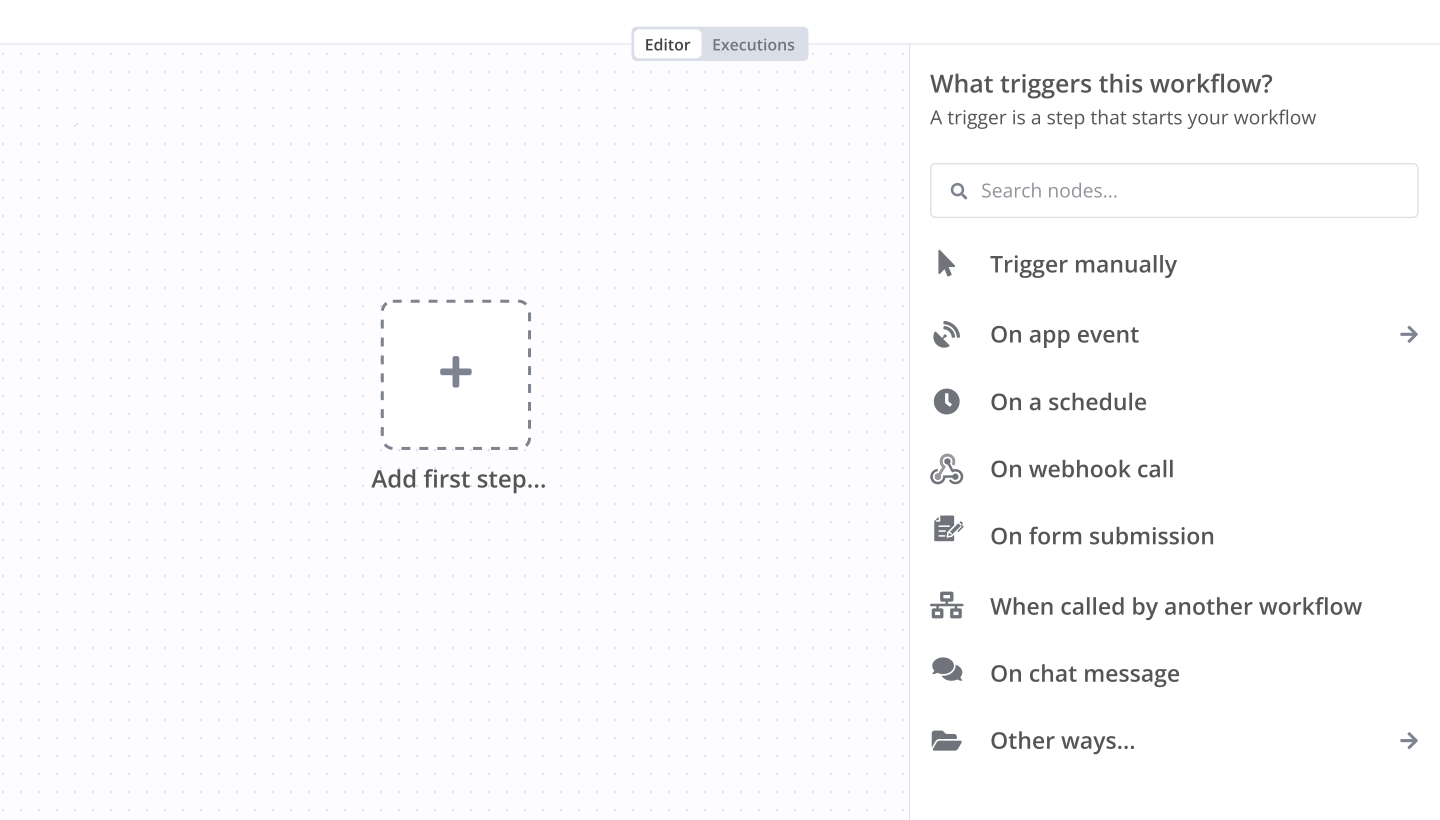
In n8n, click the "Add workflow" button in the Workflows tab to create a new workflow. Add the starting point – a trigger on when your workflow should run: an app event, a schedule, a webhook call, another workflow, an AI chat, or a manual trigger. Sometimes, the HTTP Request node might already serve as your starting point.

Webhook and Asana integration: Create a new workflow and add the first step

Step 2: Add and configure Webhook and Asana nodes

You can find Webhook and Asana in the nodes panel. Drag them onto your workflow canvas, selecting their actions. Click each node, choose a credential, and authenticate to grant n8n access. Configure Webhook and Asana nodes one by one: input data on the left, parameters in the middle, and output data on the right.

Webhook and Asana integration: Add and configure Webhook and Asana nodes

Step 3: Connect Webhook and Asana

A connection establishes a link between Webhook and Asana (or vice versa) to route data through the workflow. Data flows from the output of one node to the input of another. You can have single or multiple connections for each node.

Webhook and Asana integration: Connect Webhook and Asana

Step 4: Customize and extend your Webhook and Asana integration

Use n8n's core nodes such as If, Split Out, Merge, and others to transform and manipulate data. Write custom JavaScript or Python in the Code node and run it as a step in your workflow. Connect Webhook and Asana with any of n8n’s 1000+ integrations, and incorporate advanced AI logic into your workflows.

Webhook and Asana integration: Customize and extend your Webhook and Asana integration

Step 5: Test and activate your Webhook and Asana workflow

Save and run the workflow to see if everything works as expected. Based on your configuration, data should flow from Webhook to Asana or vice versa. Easily debug your workflow: you can check past executions to isolate and fix the mistake. Once you've tested everything, make sure to save your workflow and activate it.

Webhook and Asana integration: Test and activate your Webhook and Asana workflow

Sync Zendesk tickets with subsequent comments to Asana tasks

This workflow creates an Asana task when a new ticket is created in Zendesk. Subsequent comments on the ticket in Zendesk are added as comments to the task in Asana.

Prerequisites

Zendesk account and Zendesk credentials.
Asana account and Asana credentials.
Asana workspace to create tasks in.

How it works

The workflow listens for new tickets in Zendesk.
When a new ticket is created, the workflow creates a new task in Asana.
The Asana GID is then saved in one of the ticket's fields (in setup we call this "Asana GID").
The next time a comment is added to the ticket, the workflow retrieves the Asana GID from the ticket's field and adds the comment to the task in Asana.

Setup

This workflow requires that you set up a webhook in Zendesk. To do so, follow the steps below:

In the workflow, open the On new Zendesk ticket node and copy the webhook URL.
In Zendesk, navigate to Admin Center > Apps and integrations > Webhooks > Actions > Create Webhook.
Add all the required details which can be retrieved from the On new Zendesk ticket node. The webhook URL gets added to the “Endpoint URL” field, and the “Request method” should match what is shown in n8n.
Save the webhook.
In Zendesk, navigate to Admin Center > Objects and rules > Business rules > Triggers > Add trigger.
Give trigger a name such as “New tickets”.
Under “Conditions” in “Meet ALL of the following conditions”, add “Status is New”.
Under “Actions”, select “Notify active webhook” and select the webhook you created previously.
In the JSON body, add the following:

    {
	"id": "{{ticket.id}}",
	"comment": "{{ticket.latest_comment_html}}"
}

Save the Zendesk trigger.

You will also need to set up a field in Zendesk to store the Asana GID. To do so, follow the steps below:

In Zendesk, navigate to Admin Center > Objects and rules > Tickets > Fields > Add field.
Use the number field option and give the field a name such as “Asana GID”.
Save the field.
In n8n, open the Update ticket node and select the field you created in Zendesk.

Nodes used in this workflow

Popular Webhook and Asana workflows

+2

Automate client onboarding with Asana, Google Docs, Gmail, Slack and Sheets

📊 Description Automate short-term trading research by generating high-quality trade ideas using MCP (Market Context Protocol) signals and AI-powered analysis. 📈🤖 This workflow evaluates market context, catalysts, momentum, and risk factors to produce structured trade ideas with clear reasoning, confidence scores, and execution notes. Designed for fast-moving markets, it helps traders and analysts spot actionable opportunities consistently—without manual screening or emotional bias. Perfect for systematic traders, research teams, and AI-driven trading desks. ⚡📊 🔁 What This Template Does 1️⃣ Ingests market context and asset data from MCP inputs. 📥 2️⃣ Normalizes symbols, sectors, and time horizons for analysis. 🧾 3️⃣ Evaluates short-term momentum and catalyst strength. 🚀 4️⃣ Analyzes risk, volatility, and downside exposure. ⚠️ 5️⃣ Uses AI to generate a structured trade thesis. 🤖 6️⃣ Assigns a confidence score and risk level to each idea. 📊 7️⃣ Produces clear entry logic, rationale, and trade direction. 🧠 8️⃣ Filters out low-quality or low-conviction setups. 🚫 9️⃣ Outputs clean JSON-ready trade ideas for downstream systems. 🔁 ⭐ Key Benefits ✅ Automates short-term trade idea generation ✅ Reduces emotional bias with AI-based scoring ✅ Combines market context, catalysts, and momentum ✅ Produces structured, repeatable trade logic ✅ Saves hours of manual chart and news analysis ✅ Ideal for fast-paced trading environments 🧩 Features MCP (Market Context Protocol) data ingestion AI-powered trade thesis generation Confidence and risk scoring logic Short-term momentum and catalyst analysis Strict structured output for automation reliability Easy integration into dashboards or execution systems 🔐 Requirements MCP-compatible market data source OpenAI API credentials (GPT-4o or GPT-4o-mini recommended) n8n instance with AI nodes enabled Defined schema for trade idea output 🎯 Target Audience Short-term and swing traders Quant and discretionary trading teams Market research analysts Fintech platforms generating trade signals Automation engineers building trading workflows

Qualify webhook leads with GPT-4o-mini and create Asana tasks automatically

📊 Description Automate your inbound lead qualification pipeline by enriching raw lead data, scoring it with AI, and instantly creating follow-up tasks for your sales team. 🎯🤖 This workflow receives new leads via webhook, enriches them using RocketReach to fetch verified emails and contact details, applies confidence-based filtering, and uses GPT-4o-mini to score each lead based on seniority, company fit, and data quality. High-quality leads automatically generate Asana tasks and Slack notifications, while low-quality leads are safely filtered out — ensuring your team focuses only on the best opportunities. 🚀📋 🔁 What This Template Does 1️⃣ Receives inbound lead data via webhook (name, company, job title, LinkedIn URL). 🌐 2️⃣ Normalizes incoming data into a clean, structured format. 🧾 3️⃣ Enriches lead profiles using RocketReach to fetch emails and phone numbers. 📇 4️⃣ Calculates email confidence scores based on quality grades (A–D). 📊 5️⃣ Filters out low-confidence leads automatically. 🚫 6️⃣ Uses AI (GPT-4o-mini) to score qualified leads from 1–10. 🤖 7️⃣ Assigns priority levels (High / Medium / Low) with reasoning. 🧠 8️⃣ Creates an Asana task for leads scoring above the threshold. ✅ 9️⃣ Sends Slack notifications for both qualified and disqualified leads. 💬 🔟 Returns a structured webhook response with scoring results. 🔁 1️⃣1️⃣ Sends Gmail alerts automatically if any workflow error occurs. 🚨 ⭐ Key Benefits ✅ Eliminates manual lead enrichment and qualification ✅ Uses verified contact data from RocketReach ✅ AI scoring ensures consistent, unbiased lead evaluation ✅ Automatically routes high-quality leads to sales via Asana ✅ Keeps teams informed with real-time Slack notifications ✅ Prevents sales effort from being wasted on low-quality leads 🧩 Features Webhook-based inbound lead intake RocketReach profile enrichment Email confidence scoring logic AI lead scoring with strict JSON output Configurable quality and score thresholds Automatic Asana task creation Slack alerts for qualified and disqualified leads Gmail-based error handling Frontend-ready webhook responses 🔐 Requirements RocketReach API key OpenAI API key (GPT-4o-mini recommended) Asana OAuth2 credentials Slack API credentials Gmail OAuth2 credentials (for error alerts) Webhook client sending lead details (first_name, last_name, company, job_title, linkedin_url) 🎯 Target Audience B2B sales teams handling inbound leads Revenue operations (RevOps) teams SaaS companies optimizing lead qualification Lead generation agencies Automation teams building AI-driven sales pipelines
+2

Analyze stock sentiment with GPT-4o and create Asana tasks with Slack alerts

📘 Description This workflow analyzes real-time stock market sentiment and intent from public social media discussions and converts those signals into operations-ready actions. It exposes a webhook endpoint where a stock-market–related query can be submitted (for example, a stock, sector, index, or market event). The workflow then scans Twitter/X and Instagram for recent public discussions that indicate buying interest, selling pressure, fear, uncertainty, or emerging opportunities. An AI agent classifies each signal by intent type, sentiment, urgency, and strength. These insights are transformed into a prioritized Asana task for market or research teams and a concise Slack alert for leadership visibility. Built-in validation and error handling ensure reliable execution and fast debugging. This automation removes the need for manual social monitoring while keeping teams informed of emerging market risks and opportunities. ⚠️ Deployment Disclaimer This template is designed for self-hosted n8n installations only. It relies on external MCP tools and custom AI orchestration that are not supported on n8n Cloud. ⚙️ What This Workflow Does (Step-by-Step) 🌐 Receive Stock Market Query (Webhook Trigger) Accepts an external POST request containing a stock market query. 🧾 Extract Stock Market Query from Payload Normalizes and prepares the query for analysis. 🔎 Analyze Social Media for Stock Market Intent (AI) Scans public Twitter/X and Instagram posts to detect actionable market intent signals. 📡 Social Intelligence Data Fetch (MCP Tool) Retrieves relevant social data from external intelligence sources. 🧠 Transform Market Intent Signals into Ops-Ready Actions (AI) Structures insights into priorities, summaries, and recommended actions. 🧹 Parse Structured Ops Payload Validates and safely parses AI-generated JSON for downstream use. 📋 Create Asana Task for Market Signal Review Creates a prioritized task with key signals, context, and recommendations. 📣 Send Market Risk & Sentiment Alert to Slack Delivers an executive-friendly alert summarizing risks or opportunities. 🚨 Error Handler → Slack Alert Posts detailed error information if any workflow step fails. 🧩 Prerequisites • Self-hosted n8n instance • OpenAI and Azure OpenAI API credentials • MCP (Xpoz) social intelligence credentials • Asana OAuth credentials • Slack API credentials 🛠 Setup Instructions Deploy the workflow on a self-hosted n8n instance Configure the webhook endpoint and test with a sample query Connect OpenAI, Azure OpenAI, MCP, Asana, and Slack credentials Set the correct Asana workspace and project ID Select the Slack channel for alerts 🛠 Customization Tips • Adjust intent and sentiment classification rules in AI prompts • Modify task priority logic or due-date rules • Extend outputs to email reports or dashboards if required 💡 Key Benefits ✔ Real-time market sentiment detection from social media ✔ Converts unstructured signals into actionable tasks ✔ Provides leadership-ready Slack alerts ✔ Eliminates manual market monitoring ✔ Built-in validation and error visibility 👥 Perfect For Market research teams Investment and strategy teams Operations and risk teams Founders and analysts tracking market sentiment
+2

Create client onboarding projects, contracts and Slack channels from form data

📊 Description Streamline and standardize your entire client onboarding process with a single end-to-end automation. 🚀📋 This workflow captures detailed client intake data via webhook, automatically creates a fully structured Asana onboarding project, generates a personalized service contract from a Google Docs template, emails the agreement to the client, and logs all information in Google Sheets. It also creates a dedicated Slack channel for internal collaboration, ensuring every new client is onboarded consistently, professionally, and without manual effort. Perfect for service businesses scaling operations while maintaining quality and clarity. ✨📄🤝 🔁 What This Template Does 1️⃣ Receives detailed client intake form data via webhook. 📥 2️⃣ Parses and normalizes 70+ client, business, and technical fields. 🧾 3️⃣ Creates a new client-specific onboarding project in Asana. 📋 4️⃣ Copies sections and tasks from a predefined Asana template project. 🔄 5️⃣ Assigns all tasks into the new project with proper structure. ✅ 6️⃣ Retrieves a Google Docs contract template. 📄 7️⃣ Replaces placeholders with client-specific details (name, fees, dates). ✍️ 8️⃣ Downloads the personalized contract as a PDF. 📑 9️⃣ Sends a welcome email to the client with the contract attached. 📧 🔟 Resets the contract template for the next onboarding. 🔁 1️⃣1️⃣ Logs all client data into Google Sheets for tracking and reporting. 📊 1️⃣2️⃣ Creates a dedicated Slack channel for internal client communication. 💬 ⭐ Key Benefits ✅ Eliminates manual onboarding setup and repetitive admin work ✅ Ensures consistent project structure for every client ✅ Generates error-free, personalized contracts automatically ✅ Improves client experience with instant, professional communication ✅ Centralizes client data for operations and reporting ✅ Scales onboarding without adding operational overhead 🧩 Features Webhook-based client intake form processing Advanced data parsing for large intake payloads Asana project creation with template-based sections and tasks Google Docs dynamic contract generation Automated PDF download and email delivery Google Sheets client tracking with append/update logic Automatic Slack channel creation for internal teams Clean reset logic for reusable document templates 🔐 Requirements Asana OAuth2 credentials Google Docs OAuth2 credentials Google Drive OAuth2 credentials Google Sheets OAuth2 credentials Gmail OAuth2 credentials Slack API credentials Asana template project ID Google Docs contract template ID Google Sheets tracking document ID 🎯 Target Audience Service-based businesses onboarding new clients Agencies managing multi-step client engagements Operations and delivery teams SaaS or healthcare service providers with complex intake forms Automation teams building scalable onboarding systems

Sync Zendesk tickets with subsequent comments to Asana tasks

This workflow creates an Asana task when a new ticket is created in Zendesk. Subsequent comments on the ticket in Zendesk are added as comments to the task in Asana. Prerequisites Zendesk account and Zendesk credentials. Asana account and Asana credentials. Asana workspace to create tasks in. How it works The workflow listens for new tickets in Zendesk. When a new ticket is created, the workflow creates a new task in Asana. The Asana GID is then saved in one of the ticket's fields (in setup we call this "Asana GID"). The next time a comment is added to the ticket, the workflow retrieves the Asana GID from the ticket's field and adds the comment to the task in Asana. Setup This workflow requires that you set up a webhook in Zendesk. To do so, follow the steps below: In the workflow, open the On new Zendesk ticket node and copy the webhook URL. In Zendesk, navigate to Admin Center > Apps and integrations > Webhooks > Actions > Create Webhook. Add all the required details which can be retrieved from the On new Zendesk ticket node. The webhook URL gets added to the “Endpoint URL” field, and the “Request method” should match what is shown in n8n. Save the webhook. In Zendesk, navigate to Admin Center > Objects and rules > Business rules > Triggers > Add trigger. Give trigger a name such as “New tickets”. Under “Conditions” in “Meet ALL of the following conditions”, add “Status is New”. Under “Actions”, select “Notify active webhook” and select the webhook you created previously. In the JSON body, add the following: { "id": "{{ticket.id}}", "comment": "{{ticket.latest_comment_html}}" } Save the Zendesk trigger. You will also need to set up a field in Zendesk to store the Asana GID. To do so, follow the steps below: In Zendesk, navigate to Admin Center > Objects and rules > Tickets > Fields > Add field. Use the number field option and give the field a name such as “Asana GID”. Save the field. In n8n, open the Update ticket node and select the field you created in Zendesk.

Create Asana Ticket from Terminal Bash-dash

This workflow allows creating a new Asana task via bash-dash Example usage: \- asana My new task Example bash-dash config: commands[asana]="http://localhost:5678/webhook/asana"

Build your own Webhook and Asana integration

Create custom Webhook and Asana workflows by choosing triggers and actions. Nodes come with global operations and settings, as well as app-specific parameters that can be configured. You can also use the HTTP Request node to query data from any app or service with a REST API.

Asana supported actions

Create
Create a new project
Delete
Delete a project
Get
Get a project
Get Many
Get many projects
Update
Update a project
Create
Create a subtask
Get Many
Get many subtasks
Create
Create a task
Delete
Delete a task
Get
Get a task
Get Many
Get many tasks
Move
Move a task
Search
Search for tasks
Update
Update a task
Add
Add a comment to a task
Remove
Remove a comment from a task
Add
Add a task to a project
Remove
Remove a task from a project
Add
Add a tag to a task
Remove
Remove a tag from a task
Get
Get a user
Get Many
Get many users

Webhook and Asana integration details

integrationWebhook node
Webhook

Webhooks are automatic notifications that apps send when something occurs. They are sent to a certain URL, which is effectively the app's phone number or address, and contain a message or payload. Polling is nearly never quicker than webhooks, and it takes less effort from you.

Use case

Save engineering resources

Reduce time spent on customer integrations, engineer faster POCs, keep your customer-specific functionality separate from product all without having to code.

Learn more

FAQs

  • Can Webhook connect with Asana?

  • Can I use Webhook’s API with n8n?

  • Can I use Asana’s API with n8n?

  • Is n8n secure for integrating Webhook and Asana?

  • How to get started with Webhook and Asana integration in n8n.io?

Need help setting up your Webhook and Asana integration?

Discover our latest community's recommendations and join the discussions about Webhook and Asana integration.
Benjamin Hatton
Albert Ashkhatoyan
Víctor González
Salomão
sg tech

Looking to integrate Webhook and Asana in your company?

Over 3000 companies switch to n8n every single week

Why use n8n to integrate Webhook with Asana

Build complex workflows, really fast

Build complex workflows, really fast

Handle branching, merging and iteration easily.
Pause your workflow to wait for external events.

Code when you need it, UI when you don't

Simple debugging

Your data is displayed alongside your settings, making edge cases easy to track down.

Use templates to get started fast

Use 1000+ workflow templates available from our core team and our community.

Reuse your work

Copy and paste, easily import and export workflows.

Implement complex processes faster with n8n

red iconyellow iconred iconyellow icon