Back to Integrations
integrationWebhook node
integrationHubSpot node

Webhook and HubSpot integration

Save yourself the work of writing custom integrations for Webhook and HubSpot and use n8n instead. Build adaptable and scalable Development, Core Nodes, and Sales workflows that work with your technology stack. All within a building experience you will love.

How to connect Webhook and HubSpot

  • Step 1: Create a new workflow
  • Step 2: Add and configure nodes
  • Step 3: Connect
  • Step 4: Customize and extend your integration
  • Step 5: Test and activate your workflow

Step 1: Create a new workflow and add the first step

In n8n, click the "Add workflow" button in the Workflows tab to create a new workflow. Add the starting point – a trigger on when your workflow should run: an app event, a schedule, a webhook call, another workflow, an AI chat, or a manual trigger. Sometimes, the HTTP Request node might already serve as your starting point.
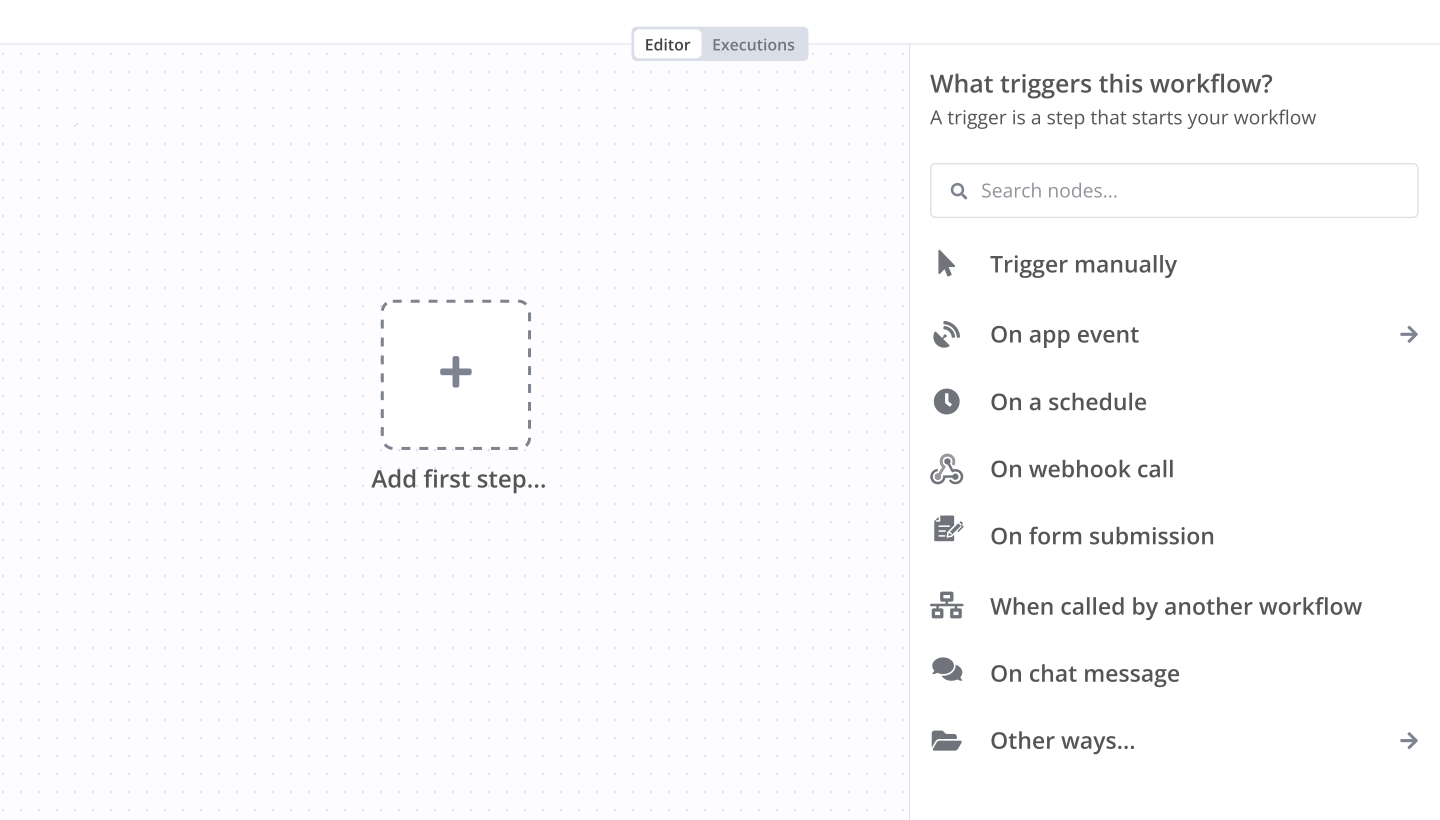
Webhook and HubSpot integration: Create a new workflow and add the first step

Step 2: Add and configure Webhook and HubSpot nodes

You can find Webhook and HubSpot in the nodes panel. Drag them onto your workflow canvas, selecting their actions. Click each node, choose a credential, and authenticate to grant n8n access. Configure Webhook and HubSpot nodes one by one: input data on the left, parameters in the middle, and output data on the right.

Webhook and HubSpot integration: Add and configure Webhook and HubSpot nodes

Step 3: Connect Webhook and HubSpot

A connection establishes a link between Webhook and HubSpot (or vice versa) to route data through the workflow. Data flows from the output of one node to the input of another. You can have single or multiple connections for each node.

Webhook and HubSpot integration: Connect Webhook and HubSpot

Step 4: Customize and extend your Webhook and HubSpot integration

Use n8n's core nodes such as If, Split Out, Merge, and others to transform and manipulate data. Write custom JavaScript or Python in the Code node and run it as a step in your workflow. Connect Webhook and HubSpot with any of n8n’s 1000+ integrations, and incorporate advanced AI logic into your workflows.

Webhook and HubSpot integration: Customize and extend your Webhook and HubSpot integration

Step 5: Test and activate your Webhook and HubSpot workflow

Save and run the workflow to see if everything works as expected. Based on your configuration, data should flow from Webhook to HubSpot or vice versa. Easily debug your workflow: you can check past executions to isolate and fix the mistake. Once you've tested everything, make sure to save your workflow and activate it.

Webhook and HubSpot integration: Test and activate your Webhook and HubSpot workflow

Automate new customer onboarding with HubSpot, Google Calendar, and AI-powered Gmail

This n8n workflow streamlines the onboarding process for new customers by automating personalized email communication, calendar scheduling, and contact assignment in HubSpot. It is perfect for businesses looking to ensure a smooth and personalized onboarding experience for new clients.

🧑‍💼 Who is this for?

Customer success teams who need to onboard new clients efficiently.
Sales teams who want to ensure smooth transitions from prospect to customer.
Small businesses that want to automate customer onboarding without complex systems.

🧩 What problem is this workflow solving?

This workflow reduces the manual effort involved in onboarding new customers by:

Automatically sending personalized welcome emails.
Scheduling a welcome meeting using a calendar tool.
Assigning the customer to a Customer Success Manager (CSM) in HubSpot.

⚙️ What this workflow does

Trigger via Webhook or HubSpot:
The workflow can be triggered either by a webhook (direct API call) or a HubSpot trigger (e.g., when a new contact is created).

HubSpot Connection:
Retrieves the list of HubSpot owners (users with contact access).
Identifies the owner of the new contact.

Calendar Management:
Utilizes a Calendar Agent to schedule a welcome meeting with the new customer.
The Calendar Agent can create, update, or delete events as needed.

Personalized Email Creation:
Uses an AI-powered Email Writer (OpenAI) to generate a personalized welcome email.
Transforms the email text into HTML for a polished format.

Email Sending via Gmail:
Sends the personalized email to the customer using Gmail.
Sets the new contact’s owner in HubSpot for further communication tracking.

🛠️ Setup

Webhook Setup in n8n:
Create a new workflow and add a Webhook node.
Set the Webhook URL path (e.g., /webhook-customer-onboarding).
Make sure the workflow is active.

Webhook Setup in HubSpot:
Go to HubSpot Developer Account.
Navigate to Settings > Integrations > Webhooks.
Create a new webhook and set the URL as the n8n Webhook URL.
Choose POST as the request method.
Test the webhook to ensure it triggers the workflow in n8n.

Calendar Agent Configuration:
The Calendar Agent can be configured to create, update, or delete events.
Connect it to your calendar tool (Google Calendar, Outlook, etc.).
Customize the calendar event details (title, description, time).

Email Writer Setup:
Customize the AI prompt in the Email Writer node to match your brand’s voice.
Adjust the email text format for your specific needs.

Gmail Integration:
Connect your Gmail account in n8n.
Set the recipient email to the new customer’s email address.

✏️ How to customize this workflow to your needs

Modify the AI-Powered Email**:
Adjust the email prompt for the AI model to create a different welcome message.
Change the email format or add custom variables (e.g., customer name, service details).

Customize Calendar Settings**:
Set default time slots for welcome meetings.
Specify which calendar to use for scheduling.

Add Additional Steps**:
Extend the workflow to automatically assign the customer to a specific HubSpot list.
Add a follow-up email or survey after the welcome meeting.

This workflow is perfect for businesses seeking an efficient and personalized onboarding process, ensuring new customers feel welcomed and supported from day one.

Nodes used in this workflow

Popular Webhook and HubSpot workflows

Design scalable sync workflows with Data Tables, ProspectPro and HubSpot

This template is a pattern library (one importable workflow) that shows a repeatable way to structure n8n automations so they remain easy to extend, cheaper to run, and safer to scale. It’s intentionally opinionated and dry: the goal is not “plug & play”, but a set of proven building blocks you can copy into your own workflows. Problems this framework solves Spaghetti workflows that are hard to change** A consistent split into Trigger → Manager → Function → Utility so changes don’t ripple through everything. Duplicate processing when runs overlap** Uses “in progress / success / error” indicators so the trigger can skip items that are already being processed. Unnecessary re-runs that keep failing** Items that fail can be marked/parked, so you don’t burn executions repeating the same error. Execution costs exploding over time** Offers polling + batching alternatives when “one event = one execution” becomes too expensive. Rate limits and API throttling under load** Includes rate-limited processing patterns (delays/throttling) to smooth spikes. Missed items during downtime, deploys, or restarts** Stores sync state (e.g., lastSync) in n8n Data Tables instead of relying on in-memory state. Long-running pagination that becomes fragile** Demonstrates manual “page-wise” pagination (fetch N → process N → checkpoint → repeat) to avoid huge in-memory batches. Debugging incidents without visibility** Includes an error workflow pattern (Error Trigger + notification) and structured error logging. What you get in this template Trigger patterns (simple and rate-limited) Polling / batching patterns (basic → more robust → fully configurable with pagination) A “manager” pattern for stateful processing and overlap protection Function + utility workflow examples for reusability Error logging to a Data Table and an example Telegram alert Requirements / setup n8n version that includes the Data Table node Create/replace Data Tables used in the template (e.g. Timestamps, Errors) Example nodes use ProspectPro, HubSpot, and Telegram (optional). Replace these with your own tools if you’re not using them. Important notes This is not a finished automation. Import it, then choose the pattern(s) you need and swap the example “get items / process item” steps for your own logic. Some patterns include looping/recursion options—configure stop conditions carefully to avoid unintended infinite runs. This framework is one effective route to scalable n8n systems, not the only one. Note: this is a living document that will be updated periodically.

Customer Onboarding Automation with HubSpot, Email Sequences and Team Alerts

Learn Customer Onboarding Automation with n8n ✅ How It Works This smart onboarding automation handles new customer signups by: Receiving signup data via webhook Validating required customer info Creating a contact in HubSpot CRM Sending a personalized welcome email Delivering onboarding documents after 2 hours Sending a personal check-in email after 1 day Sending a Week 1 success guide after 3 days Updating CRM status and notifying the team at each milestone It’s designed for professional onboarding, with built-in timing, CRM integration, and smart notifications to improve engagement and retention. 🛠️ Setup Steps Create Webhook Add a Webhook node in n8n with POST method — this triggers when a new customer signs up. Validate Customer Data Add an IF node to check if email and customerName are present. Create CRM Contact Use a HubSpot node to create a new contact, map fields (e.g., split name into first/last). Send Notifications Add a Telegram or Slack node to alert your team instantly. Send Welcome Email Use an Email Send node for a warm welcome, customized with customer details. Wait 2 Hours Add a Wait node to delay next steps and avoid overwhelming the customer. Send Onboarding Documents Use another Email Send node to deliver helpful PDFs or guides. Wait 1 Day & Send Check-in Another Wait node, followed by a personal check-in email using the customer’s name. Wait 2 More Days & Send Success Guide Deliver Week 1 content via email to reinforce engagement. Update CRM & Notify Team Use HubSpot to update status and Telegram/Slack to notify your team of completion.
+2

Automate Event Follow-Ups with GPT-4, LinkedIn & HubSpot Multi-Channel Outreach

Automate your post-event networking with this intelligent n8n workflow. Triggered instantly after an event, it collects attendee and interaction data, enriches profiles with LinkedIn insights, and uses GPT-4 to analyze engagement and generate tailored follow-up messages. High-value leads are prioritized, messages are sent via email, LinkedIn, or Slack, and all activity is logged in your CRM and database. Save hours of manual follow-up while boosting relationship-building and ROI. 🤝✨ Advanced Features Webhook automation** – Starts instantly on event completion Multi-Source Enrichment** – Combines event data, interactions, and LinkedIn profiles AI-Powered Insights** – GPT-4 analyzes behavior and suggests personalized talking points Smart Priority Filtering** – Routes leads into High, Medium, and Low priority paths Personalized Content Generation** – AI crafts custom emails and LinkedIn messages Multi-Channel Outreach** – Sends via Email, LinkedIn DM, and Slack CRM Integration** – Automatically updates HubSpot with contact notes and engagement PostgreSQL Logging** – Stores full interaction history and analytics ROI Dashboard** – Tracks response rates, meetings booked, and pipeline impact What It Does Collects attendee data from your event platform Enriches with LinkedIn profiles & real-time interaction logs Scores networking potential using engagement algorithms Uses AI to analyze conversations, roles, and mutual interests Generates hyper-personalized follow-up emails and LinkedIn messages Sends messages through preferred channels (email, LinkedIn, Slack) Updates HubSpot CRM with follow-up status and next steps Logs all actions and tracks analytics for performance reporting Workflow Process The Webhook Trigger initiates the workflow via POST request with event and attendee data. Get Attendees** fetches participant list from the event platform. Get Interactions** pulls Q&A, chat, poll, and networking activity logs. Enrich LinkedIn Data** retrieves professional profiles, job titles, and company details via LinkedIn API. Merge & Enrich Data** combines all sources into a unified lead profile. AI Analyze Profile** uses GPT-4 to evaluate interaction depth, role relevance, and conversation context. Filter High Priority** routes top-tier leads (e.g., decision-makers with strong engagement). Filter Medium Priority** handles warm prospects for lighter follow-up. AI Agent1** generates personalized email content using chat model and memory. Generate Email** creates a professional, context-aware follow-up email. Send Email** delivers the message to the lead’s inbox. AI Agent2** crafts a concise, friendly LinkedIn connection message. Generate LinkedIn Msg** produces a tailored outreach note. Send LinkedIn** posts the message via LinkedIn API. Slack Notification** alerts your team in real-time about high-priority outreach. Update CRM (HubSpot)** adds contact, tags, and follow-up tasks automatically. Save to Database (Insert)** logs full lead journey and message content in PostgreSQL. Generate Analytics** compiles engagement metrics and success rates. Send Response** confirms completion back to the event system. Setup Instructions Import the workflow JSON into n8n Configure credentials: Event Platform API (for attendees & interactions) LinkedIn API (OAuth2) OpenAI (GPT-4) SMTP (for email) or Email Service (SendGrid, etc.) HubSpot API Key PostgreSQL Database Slack Webhook URL Trigger with a webhook POST containing event ID and settings Watch personalized outreach happen automatically! Prerequisites Event platform with webhook + attendee/interaction API LinkedIn Developer App with API access OpenAI API key with GPT-4 access HubSpot account with API enabled PostgreSQL database (table for leads & logs) Slack workspace (optional, for team alerts) Example Webhook Payload { "eventId": "evt_spring2025", "eventName": "Annual Growth Summit", "triggerFollowUp": true, "priorityThreshold": { "high": 75, "medium": 50 } } Modification Options Adjust scoring logic in AI Analyze Profile (e.g., weight Q&A participation higher) Add custom email templates in Generate Email with your brand voice Include meeting booking links (Calendly) in high-priority messages Route VIP leads to Send SMS via Twilio Export analytics to Google Sheets or BI tools (Looker, Tableau) Add approval step before sending LinkedIn messages Ready to 10x your event ROI? Get in touch with us for custom n8n automation!
+3

AI-Powered Lead Enrichment with Bright Data MCP and Google Sheets

📌 HubSpot Lead Enrichment with Bright Data MCP This template enables natural-language-driven automation using Bright Data's MCP tools, triggered directly by new leads in HubSpot. It dynamically extracts and executes the right tool based on lead context—powered by AI and configurable in N8N. ❓ What Problem Does This Solve? Manual lead enrichment is slow, inconsistent, and drains valuable time. This solution automates the process using a no-code workflow that connects HubSpot, Bright Data MCP, and an AI agent—without requiring scripts or technical skills. Perfect for marketing, sales, and RevOps teams. 🧰 Prerequisites To use this template, you’ll need: A self-hosted or cloud instance of N8N A Bright Data MCP API token A valid OpenAI API key (or compatible AI model) A HubSpot account Either a Private App token or OAuth credentials for HubSpot Basic familiarity with N8N workflows ⚙️ Setup Instructions Set Up Authentication in HubSpot 🔐 Option 1: Use a Private App Token (Simple Setup) Log in to your HubSpot account. Navigate to Settings → Integrations → Private Apps. Create a new Private App with the following scopes: crm.objects.contacts.read crm.objects.contacts.write crm.schemas.contacts.read crm.objects.companies.read (optional) Copy the Access Token. In N8N, create a credential for HubSpot App Token and paste the app token in the field. Go back to Hubspot Private App settings to setup a webhook. Copy the url in your workflow's Webhook node and paste it here. 🔁 Option 2: Use OAuth (Advanced + Secure) In HubSpot, go to Settings → Integrations → Apps → Create App. Set your Redirect URL to match your N8N OAuth2 redirect path. Choose scopes like: crm.objects.companies.read crm.objects.contacts.read crm.objects.deals.read crm.schemas.companies.read crm.schemas.contacts.read crm.schemas.deals.read crm.objects.contacts.write (conditionally required) Note the Client ID and Client Secret. Copy the App ID and the developer API key In N8N, create a credential for HubSpot Developer API and paste those info from previous step. Attach these credentials to the HubSpot node in N8N. Setup and obtain API token and other necessary information from Bright Data In your Bright Data account, obtain the following information: API token Web Unlocker zone name (optional) Browser API username and password string separated by colon (optional) Host SSE server from STDIO command The methods below will allow you to receive SSE (Server-Sent Events) from Bright Data MCP via a local Supergateway or Smithery ** Method 1: Run Supergateway in a separate web service (Recommended) This method will work for both cloud version and self-hosted N8N. Signup to any cloud services of your choice (DigitalOcean, Heroku, Hetzner, Render, etc.). For NPM based installation: Create a new web service. Choose Node.js as runtime environment and setup a custom server without repository. In your server’s settings to define environment variables or .env file, add: `API_TOKEN=your_brightdata_api_token WEB_UNLOCKER_ZONE=optional_zone_name BROWSER_AUTH=optional_browser_auth` Paste the following text as a start command: npx -y supergateway --stdio "npx -y @brightdata/mcp" --port 8000 --baseUrl http://localhost:8000 --ssePath /sse --messagePath /message Deploy it and copy the web server URL, then append /sse into it. Your SSE server should now be accessible at: https://your_server_url/sse For Docker based installation: Create a new web service. Choose Docker as the runtime environment. Set up your Docker environment by pulling the necessary images or creating a custom Dockerfile. In your server’s settings to define environment variables or .env file, add: `API_TOKEN=your_brightdata_api_token WEB_UNLOCKER_ZONE=optional_zone_name BROWSER_ZONE=optional_browser_zone_name` Use the following Docker command to run Supergateway: `docker run -it --rm -p 8000:8000 supercorp/supergateway \ --stdio "npx -y @brightdata/mcp /" \ --port 8000` Deploy it and copy the web server URL, then append /sse into it. Your SSE server should now be accessible at: https://your_server_url/sse For more installation guides, please refer to https://github.com/supercorp-ai/supergateway.git. ** Method 2: Run Supergateway in the same web service as the N8N instance This method will only work for self-hosted N8N. a. Set Required Environment Variables In your server's settings to define environment variables or .env file, add: API_TOKEN=your_brightdata_api_token WEB_UNLOCKER_ZONE=optional_zone_name BROWSER_ZONE=optional_browser_zone_name b. Run Supergateway in Background npx -y supergateway --stdio "npx -y @brightdata/mcp" --port 8000 --baseUrl http://localhost:8000 --ssePath /sse --messagePath /message Use the command above to execute it through the cloud shell or set it as a pre-deploy command. Your SSE server should now be accessible at: http://localhost:8000/sse For more installation guides, please refer to https://github.com/supercorp-ai/supergateway.git. Method 3: Configure via Smithery.ai (Easiest) If you don't want additional setup and want to test it right away, follow these instructions: Visit https://smithery.ai/server/@luminati-io/brightdata-mcp/tools to: Signup (if you are new to Smithery) Create an API key Define environment variables via a profile Retrieve your SSE server HTTP URL Connect Google Sheets to N8N Ensure your Google Sheet: Contains columns like row_id, first_name, last_name, email, and status. Is shared with your N8N service account (or connected via OAuth) In N8N: Add a Google Sheets Trigger node Set it to watch for new rows in your lead sheet Import and Configure the N8N Workflow Import the provided JSON workflow into N8N Update nodes with your credentials: Hubspot: Add your API key or connect it via OAuth. Google Sheets Trigger: Link to your actual sheet OpenAI Node: Add your API key Bright Data Tool Execution: Add Bright Data token and SSE URL 🔄 How It Works New contact in Hubspot or a new row is added to the Google Sheet N8N triggers the workflow AI agent classifies the task (e.g., “Find LinkedIn”, “Get company info”) The relevant MCP tool is called Results are appended back to the sheet or routed to another destination Rerun the specific record by specifying status "needs more enrichment", or leaving it blank. 🧩 Use Cases B2B Lead Enrichment** – Add missing fields (title, domain, social profiles) Email Intelligence** – Validate and enrich based on email Market Research** – Pull company or contact data on demand CRM Auto-fill** – Push enriched leads to tools like HubSpot or Salesforce 🛠️ Customization Prompt Tuning** – Adjust how the AI interprets input data Column Mapping** – Customize which fields to pull from the sheet Tool Logic** – Add retries, fallback tools, or confidence-based routing Destination Output** – Integrate with CRMs, Slack, or webhook endpoints ✅ Summary This template turns a Google Sheet into an AI-powered lead enrichment engine. By combining Bright Data’s tools with a natural language AI agent, your team can automate repetitive tasks and scale lead ops—without writing code. Just add a row, and let the workflow do the rest.
+4

Predict Customer Churn with AI Analysis of HubSpot and Google Sheets Data

Who it’s for Built for Customer Success and Account Management teams focused on proactive retention. This workflow helps you automatically identify at-risk customers – before they churn – by combining CRM, usage, and sentiment data into one actionable alert. What it does This end-to-end workflow continuously monitors customer health by consolidating data from HubSpot and Google Sheets. Here’s how it works: Fetch deals from HubSpot. Collect context — linked support tickets and feature usage from a Google Sheet. Run sentiment analysis on the tickets to generate a customer health score. Evaluate risk — an AI agent reviews deal age, sentiment score, and usage trends against predefined thresholds. Send alerts — if churn risk is detected, it automatically sends a clear, data-driven email to the responsible team member with next-step recommendations. How to set it up To get started, configure your credentials and parameters in the following nodes: Credentials: HubSpot: Connect your account (HubSpot: Get All Deals). LLM Model: Add credentials for your preferred provider (Config: Set LLM for Agent & Chains). Google Sheets: Connect your account (Tool: Get Feature Usage from Sheets). Email: Set up your SMTP credentials (Email: Send Churn Alert). Tool URLs: In Tool: Calculate Sentiment Score, enter the Webhook URL from the Trigger: Receive Tickets for Scoring node within this same workflow. In Tool: Get HubSpot Data, enter the Endpoint URL for your MCP HubSpot data workflow. (Note: This tool does call an external workflow). Google Sheet: In Tool: Get Feature Usage from Sheets, enter the Document ID for your own Google Sheet. Email Details: In Email: Send Churn Alert, change the From and To email addresses. Requirements HubSpot account with Deals API access LLM provider account (e.g. OpenAI) Google Sheets tracking customer feature usage n8n with LangChain community nodes enabled A separate n8n workflow set up to act as an MCP endpoint for fetching HubSpot data (called by Tool: Get HubSpot Data). How to customize it Tailor this workflow to match your business logic: Scoring logic:** Adjust the JavaScript in the Code: Convert Sentiment to Score node to redefine how customer scores are calculated. Alert thresholds:** Update the prompt in the AI Chain: Analyze for Churn Risk node to fine-tune when alerts trigger (e.g. deal age, score cutoff, or usage drop). Data sources:** Swap HubSpot or Google Sheets for your CRM or database of choice — like Salesforce or Airtable. ✅ Outcome: A proactive customer health monitoring system that surfaces risks before it’s too late — keeping your team focused on prevention, not firefighting.

Summarize Calls & Notify Teams via HubSpot, Slack, Email, WhatsApp

This workflow automates the process of handling conversation transcriptions and distributing key information across your organization. Here's what it does: Trigger: The workflow is initiated via a webhook that receives a transcription (e.g., from a call or meeting). Summarization & Extraction: Using AI, the transcription is summarized, and key information is extracted — such as action items, departments involved, and client details. Department Notifications: The relevant summarized information is automatically routed to specific departments via email based on content classification. CRM Sync: The summarized version is saved to the associated contact or deal in HubSpot for future reference and visibility. *Multi-Channel Alerts: *The summary is also sent via WhatsApp and Slack to keep internal teams instantly informed, regardless of platform. Use Case: Ideal for sales, customer service, or operations teams who manage client conversations and want to ensure seamless cross-departmental communication, documentation, and follow-up. Apps Used: Webhook (Trigger) OpenAI (or other AI/NLP for summarization) HubSpot Email Slack WhatsApp (via Twilio or third-party provider)

Build your own Webhook and HubSpot integration

Create custom Webhook and HubSpot workflows by choosing triggers and actions. Nodes come with global operations and settings, as well as app-specific parameters that can be configured. You can also use the HTTP Request node to query data from any app or service with a REST API.

HubSpot supported actions

Create
Create a company
Delete
Delete a company
Get
Get a company
Get Many
Get many companies
Get Recently Created/Updated
Get recently created/updated companies
Search
Search companies by their website domain
Update
Update a company
Create or Update
Create a new contact, or update the current one if it already exists (upsert)
Delete
Delete a contact
Get
Get a contact
Get Many
Get many contacts
Get Recently Created/Updated
Get recently created/updated contacts
Search
Search contacts
Add
Add contact to a list
Remove
Remove a contact from a list
Create
Create a deal
Delete
Delete a deal
Get
Get a deal
Get Many
Get many deals
Get Recently Created/Updated
Get recently created/updated deals
Search
Search deals
Update
Update a deal
Create
Create an engagement
Delete
Delete an engagement
Get
Get an engagement
Get Many
Get many engagements
Create
Create a ticket
Delete
Delete a ticket
Get
Get a ticket
Get Many
Get many tickets
Update
Update a ticket

Webhook and HubSpot integration details

integrationWebhook node
Webhook

Webhooks are automatic notifications that apps send when something occurs. They are sent to a certain URL, which is effectively the app's phone number or address, and contain a message or payload. Polling is nearly never quicker than webhooks, and it takes less effort from you.

Use case

Save engineering resources

Reduce time spent on customer integrations, engineer faster POCs, keep your customer-specific functionality separate from product all without having to code.

Learn more
Use case

Supercharge your CRM

Need a more powerful integration with your CRM? n8n lets you go beyond standard integrations offered by popular CRMs!

Learn more

FAQs

  • Can Webhook connect with HubSpot?

  • Can I use Webhook’s API with n8n?

  • Can I use HubSpot’s API with n8n?

  • Is n8n secure for integrating Webhook and HubSpot?

  • How to get started with Webhook and HubSpot integration in n8n.io?

Need help setting up your Webhook and HubSpot integration?

Discover our latest community's recommendations and join the discussions about Webhook and HubSpot integration.
Benjamin Hatton
Albert Ashkhatoyan
Víctor González
Salomão
sg tech

Looking to integrate Webhook and HubSpot in your company?

Over 3000 companies switch to n8n every single week

Why use n8n to integrate Webhook with HubSpot

Build complex workflows, really fast
Build complex workflows, really fast

Handle branching, merging and iteration easily.
Pause your workflow to wait for external events.

Code when you need it, UI when you don't

Simple debugging

Your data is displayed alongside your settings, making edge cases easy to track down.

Use templates to get started fast

Use 1000+ workflow templates available from our core team and our community.

Reuse your work

Copy and paste, easily import and export workflows.

Implement complex processes faster with n8n

red iconyellow iconred iconyellow icon