Back to Integrations
integrationWebhook node
integrationNocoDB node

Webhook and NocoDB integration

Save yourself the work of writing custom integrations for Webhook and NocoDB and use n8n instead. Build adaptable and scalable Development, Core Nodes, and Data & Storage workflows that work with your technology stack. All within a building experience you will love.

How to connect Webhook and NocoDB

  • Step 1: Create a new workflow
  • Step 2: Add and configure nodes
  • Step 3: Connect
  • Step 4: Customize and extend your integration
  • Step 5: Test and activate your workflow

Step 1: Create a new workflow and add the first step

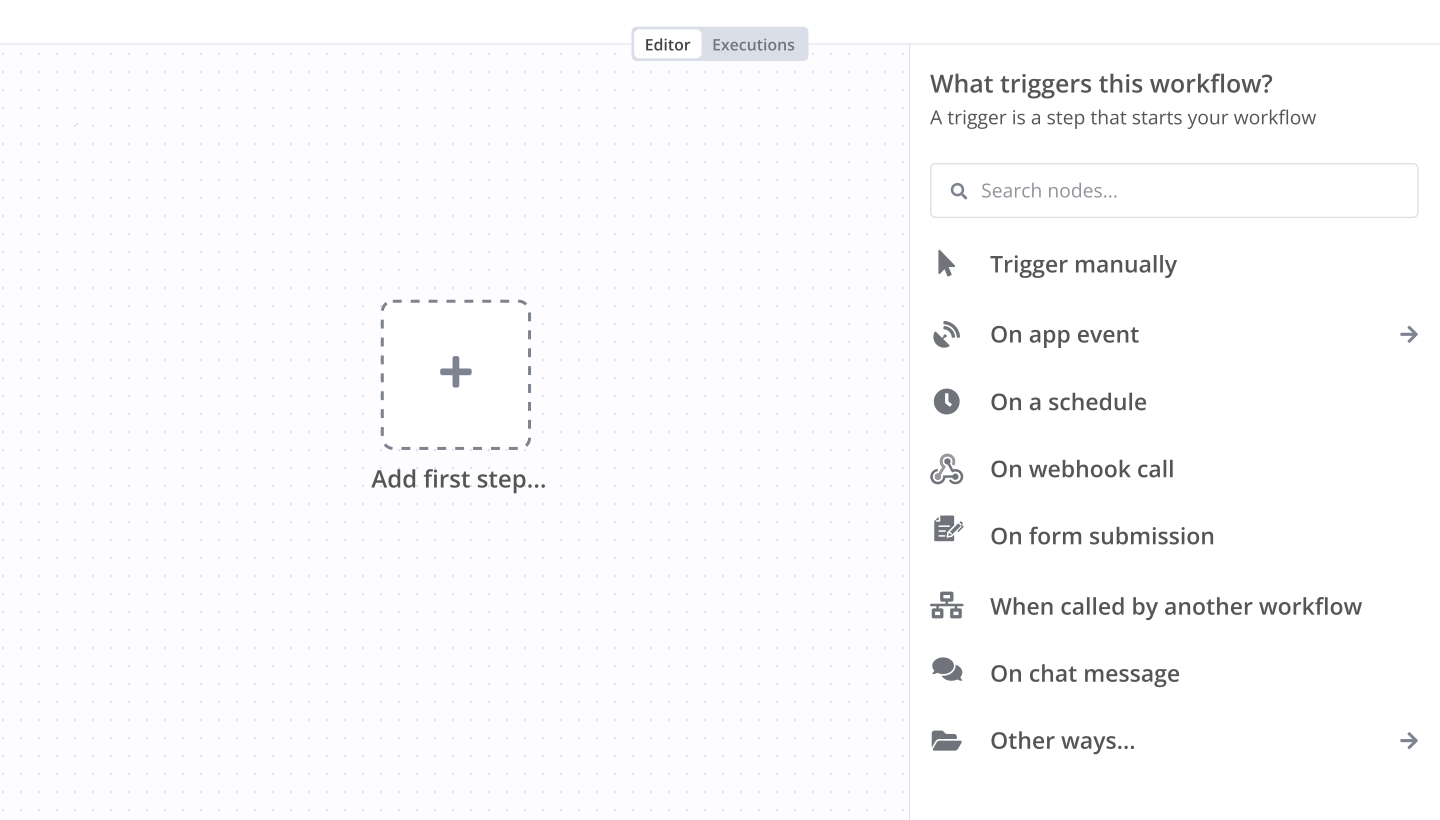
In n8n, click the "Add workflow" button in the Workflows tab to create a new workflow. Add the starting point – a trigger on when your workflow should run: an app event, a schedule, a webhook call, another workflow, an AI chat, or a manual trigger. Sometimes, the HTTP Request node might already serve as your starting point.

Webhook and NocoDB integration: Create a new workflow and add the first step

Step 2: Add and configure Webhook and NocoDB nodes

You can find Webhook and NocoDB in the nodes panel. Drag them onto your workflow canvas, selecting their actions. Click each node, choose a credential, and authenticate to grant n8n access. Configure Webhook and NocoDB nodes one by one: input data on the left, parameters in the middle, and output data on the right.

Webhook and NocoDB integration: Add and configure Webhook and NocoDB nodes

Step 3: Connect Webhook and NocoDB

A connection establishes a link between Webhook and NocoDB (or vice versa) to route data through the workflow. Data flows from the output of one node to the input of another. You can have single or multiple connections for each node.

Webhook and NocoDB integration: Connect Webhook and NocoDB

Step 4: Customize and extend your Webhook and NocoDB integration

Use n8n's core nodes such as If, Split Out, Merge, and others to transform and manipulate data. Write custom JavaScript or Python in the Code node and run it as a step in your workflow. Connect Webhook and NocoDB with any of n8n’s 1000+ integrations, and incorporate advanced AI logic into your workflows.

Webhook and NocoDB integration: Customize and extend your Webhook and NocoDB integration

Step 5: Test and activate your Webhook and NocoDB workflow

Save and run the workflow to see if everything works as expected. Based on your configuration, data should flow from Webhook to NocoDB or vice versa. Easily debug your workflow: you can check past executions to isolate and fix the mistake. Once you've tested everything, make sure to save your workflow and activate it.

Webhook and NocoDB integration: Test and activate your Webhook and NocoDB workflow

Comprehensive SEO keyword research with OpenAI & DataForSEO analytics to NocoDB

AI-Powered SEO Keyword Research Workflow with n8n

> automates comprehensive keyword research for content creation

Table of Contents

Introduction
Workflow Architecture
NocoDB Integration
Data Flow
Core Components
Setup Requirements
Possible Improvements

Introduction

This n8n workflow automates SEO keyword research using AI and data-driven analytics. It combines OpenAI's language models with DataForSEO's analytics to generate comprehensive keyword strategies for content creation. The workflow is triggered by a webhook from NocoDB, processes the input data through multiple stages, and returns a detailed content brief with optimized keywords.

Workflow Architecture

The workflow follows a structured process:

Input Collection: Receives data via webhook from NocoDB
Topic Expansion: Generates keywords using AI
Keyword Metrics Analysis: Gathers search volume, CPC, and difficulty metrics
Competitor Analysis: Analyzes competitor content for ranking keywords
Final Strategy Creation: Combines all data to generate a comprehensive keyword strategy
Output Storage: Saves results back to NocoDB and sends notifications

NocoDB Integration

Database Structure

The workflow integrates with two tables in NocoDB:

Input Table Schema

This table collects the input parameters for the keyword research:

Field Name Type Description
ID Auto Number Unique identifier
Primary Topic Text The main keyword/topic to research
Competitor URLs Text Comma-separated list of competitor websites
Target Audience Single Select Description of the target audience (Solopreneurs, Marketing Managers, etc.)
Content Type Single Select Type of content (Blog, Product page, etc.)
Location Single Select Target geographic location
Language Single Select Target language for keywords
Status Single Select Workflow status (Pending, Started, Done)
Start Research Checkbox Active Workflow when you set this to true

Output Table Schema

This table stores the generated keyword strategy:

Field Name Type Description
ID Auto Number Unique identifier
primary_topic_used Text The topic that was researched
report_content Long Text The complete keyword strategy in Markdown format
generatedAt Datetime Automatically generated by NocoDb

Webhook Settings

NocoDB Webhook Settings

Data Flow

The workflow handles data in the following sequence:

Webhook Trigger: Receives input from NocoDB when a new keyword research request is created

Field Extraction: Extracts primary topic, competitor URLs, audience, and other parameters
AI Topic Expansion: Uses OpenAI to generate related keywords, categorized by type and intent
Keyword Analysis: Sends primary keywords to DataForSEO to get search volume, CPC, and difficulty
Competitor Research: Analyzes competitor pages to identify their keyword rankings
Strategy Generation: Combines all data to create a comprehensive keyword strategy
Storage & Notification: Saves the strategy to NocoDB and sends a notification to Slack

Core Components

  1. Topic Expansion

This component uses OpenAI and a structured output parser to generate:

20 primary keywords
30 long-tail keywords with search intent
15 question-based keywords
10 related topics

  1. DataForSEO Integration

Two API endpoints are used:

Search Volume & CPC**: Gets monthly search volume and cost-per-click data
Keyword Difficulty**: Evaluates how difficult it would be to rank for each keyword

  1. Competitor Analysis

This component:

Analyzes competitor URLs to identify which keywords they rank for
Identifies content gaps or opportunities
Determines the search intent their content targets

  1. Final Keyword Strategy

The AI-generated strategy includes:

Top 10 primary keywords with metrics
15 long-tail opportunities with low competition
5 question-based keywords to address in content
Content structure recommendations
3 potential content titles optimized for SEO

Setup Requirements

To use this workflow, you'll need:

n8n Instance: Either cloud or self-hosted
NocoDB Account: For data input and storage
API Keys:
OpenAI API key
DataForSEO API credentials
Slack API token (for notifications)
Database Setup: Create the required tables in NocoDB as described above

Possible Improvements

The workflow could be enhanced with the following improvements:

Enhanced Keyword Strategy

Add topic clustering to group related keywords
Enhance the final output with more specific content structure suggestions
Include word count recommendations for each content section

Additional Data Sources

Integrate Google Search Console data for existing content optimization
Add Google Trends data to identify rising topics
Include sentiment analysis for different keyword groups

Improved Competitor Analysis

Analyze content length and structure from top-ranking pages
Identify common backlink sources for competitor content
Extract content headings to better understand content organization

Automation Enhancements

Add scheduling capabilities to run updates on existing content
Implement content performance tracking over time
Create alert thresholds for changes in keyword difficulty or search volume

Example Output

Here is an example Output the Workflow generated based on the following inputs.

Inputs:
Primary Topic: AI Automation
Competitor URLs: n8n.io, zapier.com, make.com
Target Audience: Small Business Owners
Content Type: Landing Page
Location: United States
Language: English

Output: Final Keyword Strategy

The workflow provides a powerful automation for content marketers and SEO specialists to develop data-driven keyword strategies with minimal manual effort.

> Original Workflow: AI-Powered SEO Keyword Research Automation - The vibe Marketer

Nodes used in this workflow

Popular Webhook and NocoDB workflows

Comprehensive SEO Keyword Research with OpenAI & DataForSEO Analytics to NocoDB

AI-Powered SEO Keyword Research Workflow with n8n > automates comprehensive keyword research for content creation Table of Contents Introduction Workflow Architecture NocoDB Integration Data Flow Core Components Setup Requirements Possible Improvements Introduction This n8n workflow automates SEO keyword research using AI and data-driven analytics. It combines OpenAI's language models with DataForSEO's analytics to generate comprehensive keyword strategies for content creation. The workflow is triggered by a webhook from NocoDB, processes the input data through multiple stages, and returns a detailed content brief with optimized keywords. Workflow Architecture The workflow follows a structured process: Input Collection: Receives data via webhook from NocoDB Topic Expansion: Generates keywords using AI Keyword Metrics Analysis: Gathers search volume, CPC, and difficulty metrics Competitor Analysis: Analyzes competitor content for ranking keywords Final Strategy Creation: Combines all data to generate a comprehensive keyword strategy Output Storage: Saves results back to NocoDB and sends notifications NocoDB Integration Database Structure The workflow integrates with two tables in NocoDB: Input Table Schema This table collects the input parameters for the keyword research: | Field Name | Type | Description | | --------------- | ------------- | --------------------------------------------------------------------------- | | ID | Auto Number | Unique identifier | | Primary Topic | Text | The main keyword/topic to research | | Competitor URLs | Text | Comma-separated list of competitor websites | | Target Audience | Single Select | Description of the target audience (Solopreneurs, Marketing Managers, etc.) | | Content Type | Single Select | Type of content (Blog, Product page, etc.) | | Location | Single Select | Target geographic location | | Language | Single Select | Target language for keywords | | Status | Single Select | Workflow status (Pending, Started, Done) | | Start Research | Checkbox | Active Workflow when you set this to true | Output Table Schema This table stores the generated keyword strategy: | Field Name | Type | Description | | ------------------ | ----------- | ------------------------------------------------ | | ID | Auto Number | Unique identifier | | primary_topic_used | Text | The topic that was researched | | report_content | Long Text | The complete keyword strategy in Markdown format | | generatedAt | Datetime | Automatically generated by NocoDb | Webhook Settings NocoDB Webhook Settings Data Flow The workflow handles data in the following sequence: Webhook Trigger: Receives input from NocoDB when a new keyword research request is created Field Extraction: Extracts primary topic, competitor URLs, audience, and other parameters AI Topic Expansion: Uses OpenAI to generate related keywords, categorized by type and intent Keyword Analysis: Sends primary keywords to DataForSEO to get search volume, CPC, and difficulty Competitor Research: Analyzes competitor pages to identify their keyword rankings Strategy Generation: Combines all data to create a comprehensive keyword strategy Storage & Notification: Saves the strategy to NocoDB and sends a notification to Slack Core Components Topic Expansion This component uses OpenAI and a structured output parser to generate: 20 primary keywords 30 long-tail keywords with search intent 15 question-based keywords 10 related topics DataForSEO Integration Two API endpoints are used: Search Volume & CPC**: Gets monthly search volume and cost-per-click data Keyword Difficulty**: Evaluates how difficult it would be to rank for each keyword Competitor Analysis This component: Analyzes competitor URLs to identify which keywords they rank for Identifies content gaps or opportunities Determines the search intent their content targets Final Keyword Strategy The AI-generated strategy includes: Top 10 primary keywords with metrics 15 long-tail opportunities with low competition 5 question-based keywords to address in content Content structure recommendations 3 potential content titles optimized for SEO Setup Requirements To use this workflow, you'll need: n8n Instance: Either cloud or self-hosted NocoDB Account: For data input and storage API Keys: OpenAI API key DataForSEO API credentials Slack API token (for notifications) Database Setup: Create the required tables in NocoDB as described above Possible Improvements The workflow could be enhanced with the following improvements: Enhanced Keyword Strategy Add topic clustering to group related keywords Enhance the final output with more specific content structure suggestions Include word count recommendations for each content section Additional Data Sources Integrate Google Search Console data for existing content optimization Add Google Trends data to identify rising topics Include sentiment analysis for different keyword groups Improved Competitor Analysis Analyze content length and structure from top-ranking pages Identify common backlink sources for competitor content Extract content headings to better understand content organization Automation Enhancements Add scheduling capabilities to run updates on existing content Implement content performance tracking over time Create alert thresholds for changes in keyword difficulty or search volume Example Output Here is an example Output the Workflow generated based on the following inputs. Inputs: Primary Topic: AI Automation Competitor URLs: n8n.io, zapier.com, make.com Target Audience: Small Business Owners Content Type: Landing Page Location: United States Language: English Output: Final Keyword Strategy The workflow provides a powerful automation for content marketers and SEO specialists to develop data-driven keyword strategies with minimal manual effort. > Original Workflow: AI-Powered SEO Keyword Research Automation - The vibe Marketer
+8

Personal Portfolio CV Rag Chatbot - with Conversation Store and Email Summary

Personal Portfolio CV Rag Chatbot - with Conversation Store and Email Summary Target Audience This template is perfect for: Individuals looking to create a working professional and interactive personal portfolio chatbot. Developers interested in integrating RAG Chatbot functionality with conversation storage. Description Create a stunning Personal Portfolio CV with integrated RAG Chatbot capabilities, including conversation storage and daily email summaries. 2.Features: Training: Setup Ingestion stage Upload your CV to Google Drive and let the Drive trigger updates to read your resume cv and convert it into your vector database (RAG purpose). Modify any parts as needed. Chat & Track: Use any frontend/backend interface to call the chat API and chat history API. Reporting Daily Chat Conversations: Receive daily automatic summaries of chat conversations. Data stored via NocoDB. 3.Setup Guide: Step-by-Step Instructions: Ensure all credentials are ready. Follow the notes provided. Ingestion: Upload your CV to Google Drive. The Drive triggers RAG update in your vector database. You can change the folder name, files and indexname of the vector database accordingly. Chat: Use any frontend/backend interface to call the chat API (refer to the notes for details) . [optional] Use any frontend/backend interface to call the update chat history API (refer to the notes for details). 3.Tracking Chat: Get daily automatic summaries of chat conversations.Format email conversations report as you like. You are ready to go!

Monitor Dropbox Folders for New Files with DB Comparison

Here's the corrected English text: Dropbox Folder Monitoring Workflow As we don't have (yet?) a Dropbox node "Watching new files" or "Watching folder", I created this central workflow to do it. How it works Triggered by Dropbox webhook I respond immediately to Dropbox to avoid webhook disabling Then I add/duplicate one branch per monitored folder, according to my needs In my case, I need to monitor several folders, like "vocal notes to process", "transcriptions to LinkedIn posts" or "quotes to add". This workflow shows 2 types of folder monitoring: Way #1: Each file in the monitored folder calls a sub-workflow Way #2: We get all files from the monitored folder and compare them to a database. If the file is not listed in DB, i supposed it's new one. Way #1 - We get all files from the monitored folder I set a variable folder_to_watch to indicate which folder to monitor. This step is here just to be homogeneous and allow setting the folder path only once in this branch. I list the folder files We keep only files (exclude folders) Then I call the specialized sub-workflow Way #2 - We want only new files from the monitored folder I set a variable folder_to_watch to indicate which folder to monitor I list the folder files and keep only files Meanwhile, I query my DB to get known files about this folder (I send the query to NocoDB (folder_to_watch,eq,{{ $json.folder_to_watch }})) Now I can exclude old files and keep only new ones by merging (I compare from Dropbox file id - as the file could be renamed by the user) I add the new file in DB to be sure to recognize it next time - I save the JSON Dropbox data: { "id":"{{ $json.id }}", "name":"{{ $json.name }}", "lastModifiedClient": "{{ $json.lastModifiedClient }}", "lastModifiedServer": "{{ $json.lastModifiedServer }}", "rev": "{{ $json.rev }}", "contentSize": {{ $json.contentSize }}, "type": "{{ $json.type }}", "contentHash": "{{ $json.contentHash }}", "pathLower": "{{ $json.pathLower }}", "pathDisplay": "{{ $json.pathDisplay }}", "isDownloadable": {{ $json.isDownloadable }} } And now I can call my sub-workflow :) My DB Columns details: folder_to_watch data (json/text) timestamp file_id (Dropbox file ID, to ease future searches) My vision: I have only one workflow in my n8n that monitors Dropbox folders/files This workflow calls the required sub-workflow specialized for the tasks required I will have as many branches as I have folders to monitor (if I have 5 different folders to watch, I will get 5 branches and 5 sub-workflows)

Process Voice Notes to AI Responses with Claude Sonnet, Nuclino & Slack

This workflow provides a way to capture detailed AI prompts using a voice note transcription service and then passes them on for completion to an AI agent. To preserve outputs in a knowledge management system, the AI response and the prompt are combined into one document that is created in a Nuclino collection (note: the Nuclino step is configured manually with a HTTP request node). How it works A webhook receives voice note data from Voicenotes.com containing the title and transcript The transcript is extracted and sent to an AI Agent powered by OpenRouter's Claude Sonnet model The AI generates a structured response in markdown format with Summary, Prompt, and Response sections The original prompt and AI response are merged and prepared for multiple outputs A Nuclino document is created via HTTP Request with the structured content A Slack notification is sent with the prompt, response, and Nuclino note URL Both the original prompt and AI response are archived in NocoDB for future reference How to use The webhook trigger can be configured to receive data from Voicenotes.com or any service that provides title and transcript data Replace the manual trigger with webhook, form, or other triggers as needed Customize the AI system message to change response format and behavior Configure Nuclino workspace and collection IDs for proper document organization Requirements OpenRouter account** for AI model access (Claude Sonnet) Nuclino account** and API token for document creation Slack workspace** with bot permissions for notifications NocoDB instance** for archiving (optional) Voicenotes.com account** for voice input (or alternative webhook source) Customising this workflow AI Models**: Switch between different OpenRouter models by changing the model parameter Response Format**: Modify the AI Agent system message to change output structure Documentation Platforms**: Replace Nuclino HTTP Request with other documentation APIs Notification Channels**: Add multiple Slack channels or other notification services Archive Storage**: Replace NocoDB with other database solutions Input Sources**: Adapt webhook to accept data from different voice note or transcription services Nuclino API The Nuclino API is documented here.

Voice-to-Text AI Assistant with Voicenotes, Claude Sonnet & Email Delivery

This workflow provides a mechanism for using AI transcribed voice notes using Voicenotes AI and then running them into an AI agent as prompts. On the "collection" end of the workflow, we gather the output (with the recorded prompt) and do two things: 1) It is saved into NocoDB as a new row on a database table recording AI outputs and prompts. 2) The prompt gets sent to an AI agent and the output gets returned to the user's email Who Is It For? If you like using voice AI tools to write detailed prompts for AI, then this workflow helps to remove the points of friction in getting from A to B! How Does It Work? Simply tag your voice note in Voicenotes with your preferred tag (I'm using 'prompt'). Then, provide the N8N webhook as the URL for a webhook that will trigger whenever a new note is created with this tag (and this tag only). Now, whenever you wish to use a voice note as a prompt, just add the 'tag.' This will trigger the webhook which, in turn, will trigger this workflow - sending the prompt to an AI agent of your choosing (configure within the workflow) and then saving the output into a database and returning it by email. Note: The AI agent system prompt is written to define a structured output to provide Gmail-safe HTML. This is thin injected into a template. You can use a Google Group to gather together the output runs or just receive them at your main address (if you don't use Gmail, just swap out for any other email node or your preferred delivery channel). How To Set It Up You'll need a Voicenotes account in order to use the service! Once you have one, you'll next want to create the tag and the webhook. In N8N, create your webhook node and then provide that to Voicenotes: Create a note. Then assign it a new tag: "Prompts" (or as you prefer). The webhook is matched to the tag. Requirements Voicenotes AI account Customisation The delivery mechanism can be customized to your preferences. If you're not a Google user, substitute the template and sending mechanism for your preferred delivery provider You could for example collect the outputs to a Slack channel or Telegram bot. You may omit the collector in NocoDB or substitute it for another wiki or knowledge management platform such as Notion or Nuclino.

Build your own Webhook and NocoDB integration

Create custom Webhook and NocoDB workflows by choosing triggers and actions. Nodes come with global operations and settings, as well as app-specific parameters that can be configured. You can also use the HTTP Request node to query data from any app or service with a REST API.

NocoDB supported actions

Create
Create a row
Delete
Delete a row
Get
Retrieve a row
Get Many
Retrieve many rows
Update
Update a row

Webhook and NocoDB integration details

integrationWebhook node
Webhook

Webhooks are automatic notifications that apps send when something occurs. They are sent to a certain URL, which is effectively the app's phone number or address, and contain a message or payload. Polling is nearly never quicker than webhooks, and it takes less effort from you.

Use case

Save engineering resources

Reduce time spent on customer integrations, engineer faster POCs, keep your customer-specific functionality separate from product all without having to code.

Learn more

FAQs

  • Can Webhook connect with NocoDB?

  • Can I use Webhook’s API with n8n?

  • Can I use NocoDB’s API with n8n?

  • Is n8n secure for integrating Webhook and NocoDB?

  • How to get started with Webhook and NocoDB integration in n8n.io?

Need help setting up your Webhook and NocoDB integration?

Discover our latest community's recommendations and join the discussions about Webhook and NocoDB integration.

Alex Kim
Benjamin Hatton
Albert Ashkhatoyan
Víctor González
Salomão

Looking to integrate Webhook and NocoDB in your company?

Over 3000 companies switch to n8n every single week

Why use n8n to integrate Webhook with NocoDB

Build complex workflows, really fast

Build complex workflows, really fast

Handle branching, merging and iteration easily.
Pause your workflow to wait for external events.

Code when you need it, UI when you don't

Simple debugging

Your data is displayed alongside your settings, making edge cases easy to track down.

Use templates to get started fast

Use 1000+ workflow templates available from our core team and our community.

Reuse your work

Copy and paste, easily import and export workflows.

Implement complex processes faster with n8n

red iconyellow iconred iconyellow icon