Back to Integrations
integrationWebhook node
integrationPushover node

Webhook and Pushover integration

Save yourself the work of writing custom integrations for Webhook and Pushover and use n8n instead. Build adaptable and scalable Development, Core Nodes, and Communication workflows that work with your technology stack. All within a building experience you will love.

How to connect Webhook and Pushover

  • Step 1: Create a new workflow
  • Step 2: Add and configure nodes
  • Step 3: Connect
  • Step 4: Customize and extend your integration
  • Step 5: Test and activate your workflow

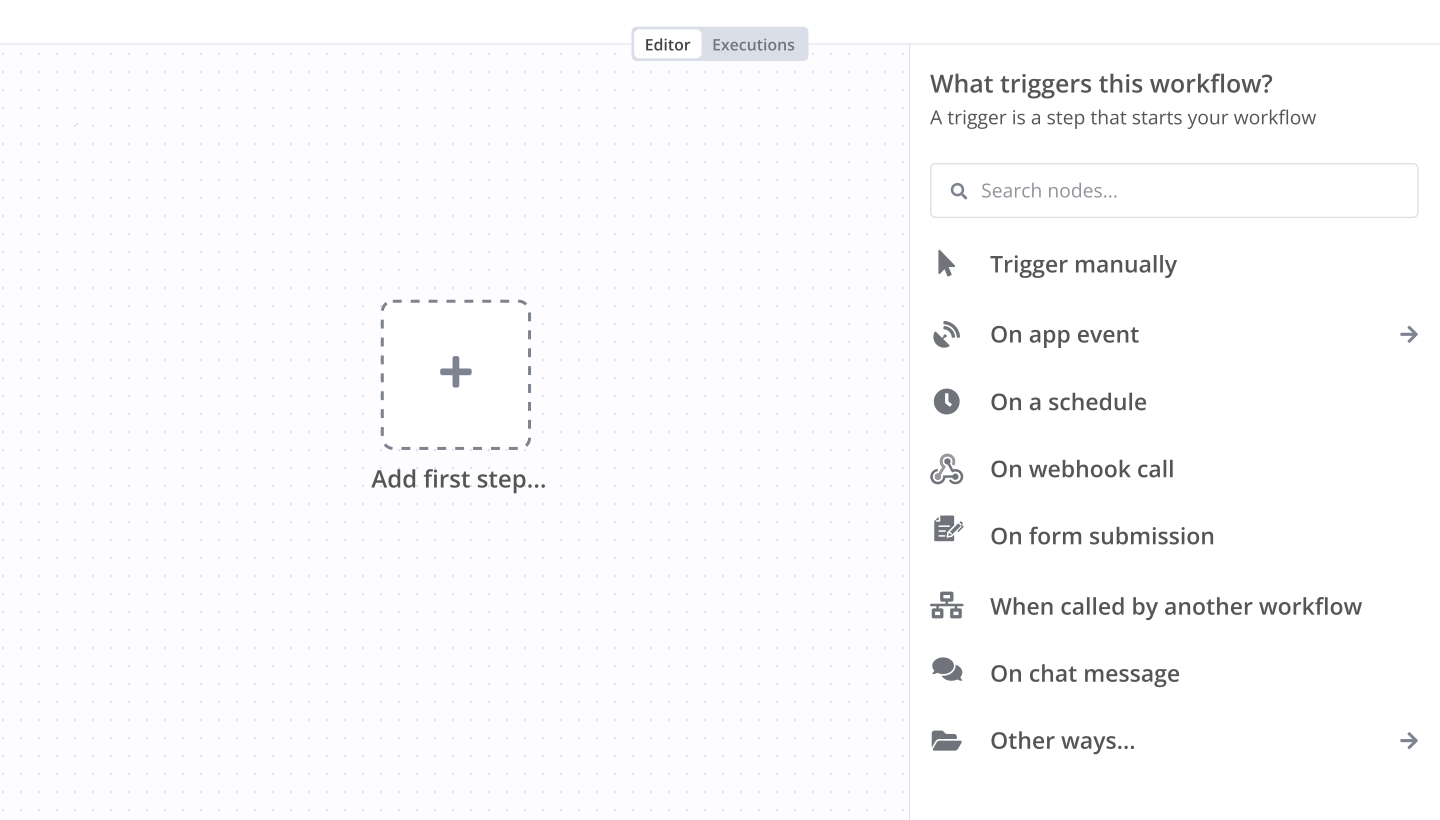
Step 1: Create a new workflow and add the first step

In n8n, click the "Add workflow" button in the Workflows tab to create a new workflow. Add the starting point – a trigger on when your workflow should run: an app event, a schedule, a webhook call, another workflow, an AI chat, or a manual trigger. Sometimes, the HTTP Request node might already serve as your starting point.

Webhook and Pushover integration: Create a new workflow and add the first step

Step 2: Add and configure Webhook and Pushover nodes

You can find Webhook and Pushover in the nodes panel. Drag them onto your workflow canvas, selecting their actions. Click each node, choose a credential, and authenticate to grant n8n access. Configure Webhook and Pushover nodes one by one: input data on the left, parameters in the middle, and output data on the right.

Webhook and Pushover integration: Add and configure Webhook and Pushover nodes

Step 3: Connect Webhook and Pushover

A connection establishes a link between Webhook and Pushover (or vice versa) to route data through the workflow. Data flows from the output of one node to the input of another. You can have single or multiple connections for each node.

Webhook and Pushover integration: Connect Webhook and Pushover

Step 4: Customize and extend your Webhook and Pushover integration

Use n8n's core nodes such as If, Split Out, Merge, and others to transform and manipulate data. Write custom JavaScript or Python in the Code node and run it as a step in your workflow. Connect Webhook and Pushover with any of n8n’s 1000+ integrations, and incorporate advanced AI logic into your workflows.

Webhook and Pushover integration: Customize and extend your Webhook and Pushover integration

Step 5: Test and activate your Webhook and Pushover workflow

Save and run the workflow to see if everything works as expected. Based on your configuration, data should flow from Webhook to Pushover or vice versa. Easily debug your workflow: you can check past executions to isolate and fix the mistake. Once you've tested everything, make sure to save your workflow and activate it.

Webhook and Pushover integration: Test and activate your Webhook and Pushover workflow

Track e-commerce price changes with ScrapeGraphAI, Baserow & Pushover alerts

Product Price Monitor with Pushover and Baserow

⚠️ COMMUNITY TEMPLATE DISCLAIMER: This is a community-contributed template that uses ScrapeGraphAI (a community node). Please ensure you have the ScrapeGraphAI community node installed in your n8n instance before using this template.

This workflow automatically scrapes multiple e-commerce sites for selected products, analyzes weekly pricing trends, stores historical data in Baserow, and sends an instant Pushover notification when significant price changes occur. It is ideal for retailers who need to track seasonal fluctuations and optimize inventory or pricing strategies.

Pre-conditions/Requirements

Prerequisites
An active n8n instance (self-hosted or n8n.cloud)
ScrapeGraphAI community node installed
At least one publicly accessible webhook URL (for on-demand runs)
A Baserow database with a table prepared for product data
Pushover account and registered application

Required Credentials
ScrapeGraphAI API Key** – Enables web-scraping capabilities
Baserow: Personal API Token** – Allows read/write access to your table
Pushover: User Key & API Token** – Sends mobile/desktop push notifications
(Optional) HTTP Basic Token or API Keys for any private e-commerce endpoints you plan to monitor

Baserow Table Specification

Field Name Type Description
Product ID Number Internal or SKU
Name Text Product title
URL URL Product page
Price Number Current price (float)
Currency Single select (USD, EUR, etc.)
Last Seen Date/Time Last price check
Trend Number 7-day % change

How it works

This workflow automatically scrapes multiple e-commerce sites for selected products, analyzes weekly pricing trends, stores historical data in Baserow, and sends an instant Pushover notification when significant price changes occur. It is ideal for retailers who need to track seasonal fluctuations and optimize inventory or pricing strategies.

Key Steps:
Webhook Trigger**: Manually or externally trigger the weekly price-check run.
Set Node**: Define an array of product URLs and metadata.
Split In Batches**: Process products one at a time to avoid rate limits.
ScrapeGraphAI Node**: Extract current price, title, and availability from each URL.
If Node**: Determine if price has changed > ±5 % since last entry.
HTTP Request (Trend API): Retrieve seasonal trend scores (optional).
Merge Node
: Combine scrape data with trend analysis.
Baserow Nodes**: Upsert latest record and fetch historical data for comparison.
Pushover Node**: Send alert when significant price movement detected.
Sticky Notes**: Documentation and inline comments for maintainability.

Set up steps

Setup Time: 15-25 minutes

Install Community Node: In n8n, go to “Settings → Community Nodes” and install ScrapeGraphAI.
Create Baserow Table: Match the field structure shown above.
Obtain Credentials:
ScrapeGraphAI API key from your dashboard
Baserow personal token (/account/settings)
Pushover user key & API token
Clone Workflow: Import this template into n8n.
Configure Credentials in Nodes: Open each ScrapeGraphAI, Baserow, and Pushover node and select/enter the appropriate credential.
Add Product URLs: Open the first Set node and replace the example array with your actual product list.
Adjust Thresholds: In the If node, change the 5 value if you want a higher/lower alert threshold.
Test Run: Execute the workflow manually; verify Baserow rows and the Pushover notification.
Schedule: Add a Cron trigger or external scheduler to run weekly.

Node Descriptions

Core Workflow Nodes:
Webhook** – Entry point for manual or API-based triggers.
Set** – Holds the array of product URLs and meta fields.
SplitInBatches** – Iterates through each product to prevent request spikes.
ScrapeGraphAI** – Scrapes price, title, and currency from product pages.
If** – Compares new price vs. previous price in Baserow.
HTTP Request** – Calls a trend API (e.g., Google Trends) to get seasonal score.
Merge** – Combines scraping results with trend data.
Baserow (Upsert & Read)** – Writes fresh data and fetches historical price for comparison.
Pushover** – Sends formatted push notification with price delta.
StickyNote** – Documents purpose and hints within the workflow.

Data Flow:
Webhook → Set → SplitInBatches → ScrapeGraphAI
ScrapeGraphAI → If
True branch → HTTP Request → Merge → Baserow Upsert → Pushover
False branch → Baserow Upsert

Customization Examples

Change Notification Channel to Slack
// Replace the Pushover node with Slack
{
"channel": "#pricing-alerts",
"text": 🚨 ${$json["Name"]} changed by ${$json["delta"]}% – now ${$json["Price"]} ${$json["Currency"]}
}

Additional Data Enrichment (Stock Status)
// Add to ScrapeGraphAI's selector map
{
"stock": {
"selector": ".availability span",
"type": "text"
}
}

Data Output Format

The workflow outputs structured JSON data:

{
"ProductID": 12345,
"Name": "Winter Jacket",
"URL": "https://shop.example.com/winter-jacket",
"Price": 79.99,
"Currency": "USD",
"LastSeen": "2024-11-20T10:34:18.000Z",
"Trend": 12,
"delta": -7.5
}

Troubleshooting

Common Issues
Empty scrape result – Check if the product page changed its HTML structure; update CSS selectors in ScrapeGraphAI.
Baserow “Row not found” errors – Ensure Product ID or another unique field is set as the primary key for upsert.

Performance Tips
Limit batch size to 5-10 URLs to avoid IP blocking.
Use n8n’s built-in proxy settings if scraping sites with geo-restrictions.

Pro Tips:
Store historical JSON responses in a separate Baserow table for deeper analytics.
Standardize currency symbols to avoid false change detections.
Couple this workflow with an n8n Dashboard to visualize price trends in real-time.

Nodes used in this workflow

Popular Webhook and Pushover workflows

Track E-commerce Price Changes with ScrapeGraphAI, Baserow & Pushover Alerts

Product Price Monitor with Pushover and Baserow ⚠️ COMMUNITY TEMPLATE DISCLAIMER: This is a community-contributed template that uses ScrapeGraphAI (a community node). Please ensure you have the ScrapeGraphAI community node installed in your n8n instance before using this template. This workflow automatically scrapes multiple e-commerce sites for selected products, analyzes weekly pricing trends, stores historical data in Baserow, and sends an instant Pushover notification when significant price changes occur. It is ideal for retailers who need to track seasonal fluctuations and optimize inventory or pricing strategies. Pre-conditions/Requirements Prerequisites An active n8n instance (self-hosted or n8n.cloud) ScrapeGraphAI community node installed At least one publicly accessible webhook URL (for on-demand runs) A Baserow database with a table prepared for product data Pushover account and registered application Required Credentials ScrapeGraphAI API Key** – Enables web-scraping capabilities Baserow: Personal API Token** – Allows read/write access to your table Pushover: User Key & API Token** – Sends mobile/desktop push notifications (Optional) HTTP Basic Token or API Keys for any private e-commerce endpoints you plan to monitor Baserow Table Specification | Field Name | Type | Description | |------------|-----------|--------------------------| | Product ID | Number | Internal or SKU | | Name | Text | Product title | | URL | URL | Product page | | Price | Number | Current price (float) | | Currency | Single select (USD, EUR, etc.) | | Last Seen | Date/Time | Last price check | | Trend | Number | 7-day % change | How it works This workflow automatically scrapes multiple e-commerce sites for selected products, analyzes weekly pricing trends, stores historical data in Baserow, and sends an instant Pushover notification when significant price changes occur. It is ideal for retailers who need to track seasonal fluctuations and optimize inventory or pricing strategies. Key Steps: Webhook Trigger**: Manually or externally trigger the weekly price-check run. Set Node**: Define an array of product URLs and metadata. Split In Batches**: Process products one at a time to avoid rate limits. ScrapeGraphAI Node**: Extract current price, title, and availability from each URL. If Node**: Determine if price has changed > ±5 % since last entry. HTTP Request (Trend API)**: Retrieve seasonal trend scores (optional). Merge Node**: Combine scrape data with trend analysis. Baserow Nodes**: Upsert latest record and fetch historical data for comparison. Pushover Node**: Send alert when significant price movement detected. Sticky Notes**: Documentation and inline comments for maintainability. Set up steps Setup Time: 15-25 minutes Install Community Node: In n8n, go to “Settings → Community Nodes” and install ScrapeGraphAI. Create Baserow Table: Match the field structure shown above. Obtain Credentials: ScrapeGraphAI API key from your dashboard Baserow personal token (/account/settings) Pushover user key & API token Clone Workflow: Import this template into n8n. Configure Credentials in Nodes: Open each ScrapeGraphAI, Baserow, and Pushover node and select/enter the appropriate credential. Add Product URLs: Open the first Set node and replace the example array with your actual product list. Adjust Thresholds: In the If node, change the 5 value if you want a higher/lower alert threshold. Test Run: Execute the workflow manually; verify Baserow rows and the Pushover notification. Schedule: Add a Cron trigger or external scheduler to run weekly. Node Descriptions Core Workflow Nodes: Webhook** – Entry point for manual or API-based triggers. Set** – Holds the array of product URLs and meta fields. SplitInBatches** – Iterates through each product to prevent request spikes. ScrapeGraphAI** – Scrapes price, title, and currency from product pages. If** – Compares new price vs. previous price in Baserow. HTTP Request** – Calls a trend API (e.g., Google Trends) to get seasonal score. Merge** – Combines scraping results with trend data. Baserow (Upsert & Read)** – Writes fresh data and fetches historical price for comparison. Pushover** – Sends formatted push notification with price delta. StickyNote** – Documents purpose and hints within the workflow. Data Flow: Webhook → Set → SplitInBatches → ScrapeGraphAI ScrapeGraphAI → If True branch → HTTP Request → Merge → Baserow Upsert → Pushover False branch → Baserow Upsert Customization Examples Change Notification Channel to Slack // Replace the Pushover node with Slack { "channel": "#pricing-alerts", "text": 🚨 ${$json["Name"]} changed by ${$json["delta"]}% – now ${$json["Price"]} ${$json["Currency"]} } Additional Data Enrichment (Stock Status) // Add to ScrapeGraphAI's selector map { "stock": { "selector": ".availability span", "type": "text" } } Data Output Format The workflow outputs structured JSON data: { "ProductID": 12345, "Name": "Winter Jacket", "URL": "https://shop.example.com/winter-jacket", "Price": 79.99, "Currency": "USD", "LastSeen": "2024-11-20T10:34:18.000Z", "Trend": 12, "delta": -7.5 } Troubleshooting Common Issues Empty scrape result – Check if the product page changed its HTML structure; update CSS selectors in ScrapeGraphAI. Baserow “Row not found” errors – Ensure Product ID or another unique field is set as the primary key for upsert. Performance Tips Limit batch size to 5-10 URLs to avoid IP blocking. Use n8n’s built-in proxy settings if scraping sites with geo-restrictions. Pro Tips: Store historical JSON responses in a separate Baserow table for deeper analytics. Standardize currency symbols to avoid false change detections. Couple this workflow with an n8n Dashboard to visualize price trends in real-time.

Build your own Webhook and Pushover integration

Create custom Webhook and Pushover workflows by choosing triggers and actions. Nodes come with global operations and settings, as well as app-specific parameters that can be configured. You can also use the HTTP Request node to query data from any app or service with a REST API.

Pushover supported actions

Push

Webhook and Pushover integration details

integrationWebhook node
Webhook

Webhooks are automatic notifications that apps send when something occurs. They are sent to a certain URL, which is effectively the app's phone number or address, and contain a message or payload. Polling is nearly never quicker than webhooks, and it takes less effort from you.

Use case

Save engineering resources

Reduce time spent on customer integrations, engineer faster POCs, keep your customer-specific functionality separate from product all without having to code.

Learn more

FAQs

  • Can Webhook connect with Pushover?

  • Can I use Webhook’s API with n8n?

  • Can I use Pushover’s API with n8n?

  • Is n8n secure for integrating Webhook and Pushover?

  • How to get started with Webhook and Pushover integration in n8n.io?

Need help setting up your Webhook and Pushover integration?

Discover our latest community's recommendations and join the discussions about Webhook and Pushover integration.
Benjamin Hatton
Albert Ashkhatoyan
Víctor González
Salomão
sg tech

Looking to integrate Webhook and Pushover in your company?

Over 3000 companies switch to n8n every single week

Why use n8n to integrate Webhook with Pushover

Build complex workflows, really fast

Build complex workflows, really fast

Handle branching, merging and iteration easily.
Pause your workflow to wait for external events.

Code when you need it, UI when you don't

Simple debugging

Your data is displayed alongside your settings, making edge cases easy to track down.

Use templates to get started fast

Use 1000+ workflow templates available from our core team and our community.

Reuse your work

Copy and paste, easily import and export workflows.

Implement complex processes faster with n8n

red iconyellow iconred iconyellow icon