Back to Integrations
integrationWebhook node
integrationQuickBooks Online node

Webhook and QuickBooks Online integration

Save yourself the work of writing custom integrations for Webhook and QuickBooks Online and use n8n instead. Build adaptable and scalable Development, Core Nodes, and Finance & Accounting workflows that work with your technology stack. All within a building experience you will love.

How to connect Webhook and QuickBooks Online

  • Step 1: Create a new workflow
  • Step 2: Add and configure nodes
  • Step 3: Connect
  • Step 4: Customize and extend your integration
  • Step 5: Test and activate your workflow

Step 1: Create a new workflow and add the first step

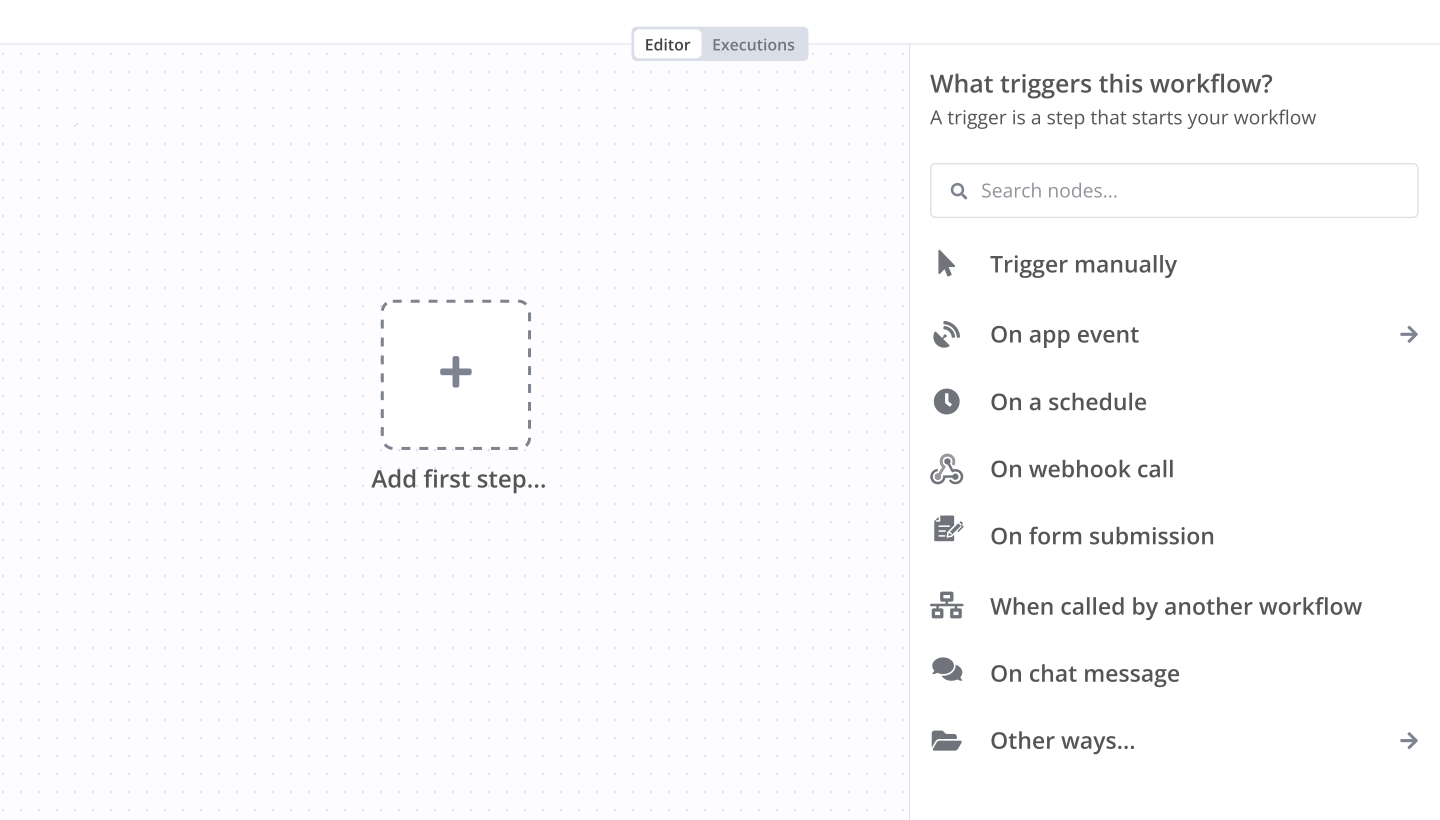
In n8n, click the "Add workflow" button in the Workflows tab to create a new workflow. Add the starting point – a trigger on when your workflow should run: an app event, a schedule, a webhook call, another workflow, an AI chat, or a manual trigger. Sometimes, the HTTP Request node might already serve as your starting point.

Webhook and QuickBooks Online integration: Create a new workflow and add the first step

Step 2: Add and configure Webhook and QuickBooks Online nodes

You can find Webhook and QuickBooks Online in the nodes panel. Drag them onto your workflow canvas, selecting their actions. Click each node, choose a credential, and authenticate to grant n8n access. Configure Webhook and QuickBooks Online nodes one by one: input data on the left, parameters in the middle, and output data on the right.

Webhook and QuickBooks Online integration: Add and configure Webhook and QuickBooks Online nodes

Step 3: Connect Webhook and QuickBooks Online

A connection establishes a link between Webhook and QuickBooks Online (or vice versa) to route data through the workflow. Data flows from the output of one node to the input of another. You can have single or multiple connections for each node.

Webhook and QuickBooks Online integration: Connect Webhook and QuickBooks Online

Step 4: Customize and extend your Webhook and QuickBooks Online integration

Use n8n's core nodes such as If, Split Out, Merge, and others to transform and manipulate data. Write custom JavaScript or Python in the Code node and run it as a step in your workflow. Connect Webhook and QuickBooks Online with any of n8n’s 1000+ integrations, and incorporate advanced AI logic into your workflows.

Webhook and QuickBooks Online integration: Customize and extend your Webhook and QuickBooks Online integration

Step 5: Test and activate your Webhook and QuickBooks Online workflow

Save and run the workflow to see if everything works as expected. Based on your configuration, data should flow from Webhook to QuickBooks Online or vice versa. Easily debug your workflow: you can check past executions to isolate and fix the mistake. Once you've tested everything, make sure to save your workflow and activate it.

Webhook and QuickBooks Online integration: Test and activate your Webhook and QuickBooks Online workflow

Automate real-time QuickBooks invoice sync to Google Sheets

This n8n template from Intuz provides a complete and automated solution for real-time financial reporting.

It instantly syncs new QuickBooks invoices to Google Sheets, using specific invoice data or keywords as triggers to ensure your financial records are always accurate and up-to-date.

It uses a webhook to capture every new or updated invoice and logs the essential details into a designated Google Sheet. Perfect for creating custom reports, data backups, or a real-time dashboard of your accounts receivable.

Use Cases

Financial Reporting:** Create a simple, shareable Google Sheet for team members who don't have QuickBooks access.
Data Backup:** Maintain a secure, independent log of all your invoices outside of the QuickBooks ecosystem.
Custom Dashboards:** Use the Google Sheet as a data source for tools like Google Data Studio or Grafana to build custom financial dashboards.
Auditing:** Easily track the history and status of all invoices in a simple, searchable spreadsheet format.

How it Works

  1. Instant Webhook Trigger: The workflow activates the moment an invoice is created or updated in QuickBooks. The QuickBooks webhook sends a notification to n8n, kicking off the process in real time.

  2. Fetch Full Invoice Details: The initial webhook notification only contains the invoice ID. This node uses that ID to make a call back to the QuickBooks API and retrieve the complete invoice data, including customer name, due date, and more.

  3. Format Key Data: A simple Code node cleans up the data fetched from QuickBooks. It extracts only the fields you need—ID, Domain, Customer Name, and Due Date—and structures them perfectly for the next step.

  4. Append or Update in Google Sheets: The final node connects to your Google Sheet and uses the powerful "Append or Update" operation.
    If the ID of the invoice doesn't exist in the sheet, it adds a new row.
    If the ID already exists, it updates the existing row with the latest information.

This ensures your Google Sheet is always a perfect mirror of your QuickBooks invoice data, preventing duplicates and keeping everything current.

Setup Instructions

For this workflow to run successfully, follow these setup steps:

  1. Credentials:
    QuickBooks: Connect your QuickBooks account credentials to n8n.
    Google: Connect your Google account using OAuth2 credentials. Ensure the Google Sheets and Google Drive APIs are enabled.

  2. QuickBooks Webhook Configuration:
    Activate the workflow. Copy the Production URL from the Webhook node.
    In your Intuit Developer Portal, go to the webhooks section for your app.
    Paste the URL and subscribe to Invoice events (e.g., Create, Update).

  3. Google Sheet Setup:
    Create a Google Sheet for your invoice data.
    Crucially, create the following headers in the first row of your sheet:
    -ID
    -Domain
    -Customer Name
    -Due Date

  4. Node Configuration:
    In the Append or update row in sheet node, select your Google Sheet document and the specific sheet name from the dropdown lists. The columns should map automatically if you've set up the headers correctly.

Connect with us
Website: https://www.intuz.com/n8n-workflow-automation-templates
Email: [email protected]
LinkedIn: https://www.linkedin.com/company/intuz
Get Started: https://n8n.partnerlinks.io/intuz

For Custom Worflow Automation
Click here- Get Started

Nodes used in this workflow

Popular Webhook and QuickBooks Online workflows

Custom Branded QuickBooks Invoices to PDF & Email

Automated QuickBooks Invoice to Custom PDF & Email Tired of the standard, boring invoices from QuickBooks Online? This workflow completely automates the process of creating beautiful, custom-branded PDF invoices and emailing them directly to your clients, saving you time and elevating your brand's professionalism. The moment you create an invoice in QuickBooks, this workflow triggers, fetches all the necessary data, and generates a lavish, multi-page-aware PDF invoice complete with your company logo and signature. Key Features Fully Automated:** Runs instantly when a new invoice is created in QuickBooks. Custom Branding:** Automatically fetches your company logo and signature from a URL to place on the invoice. Modern & Professional Design:** Uses a premium, multi-column HTML template that is clean, easy to read, and far superior to the default QBO templates. Multi-Page Ready:** If an invoice has many line items, the template will intelligently create multiple pages and add a "Page X of Y" footer automatically. Smart Layout:** The totals and summary block are designed to never break across pages, ensuring a professional look no matter the length. Automatic Emailing:** The final PDF is attached to a beautifully formatted email and sent directly to the customer's email address on file. Prerequisites Before you start, you will need a few things: A running n8n instance. A QuickBooks Online account with API access. A running Gotenberg instance. This is a powerful, open-source tool for converting HTML to PDF. This workflow is designed to connect to its API. You can learn more about it here. Publicly accessible URLs for your company logo and signature image (e.g., hosted on your website or a service like Imgur). Setup Guide Follow these steps carefully to configure the workflow for your own use. Nodes that need your attention are marked with a [!!] prefix. Step 1: Configure the QuickBooks Webhook The workflow starts with a webhook. You need to tell QuickBooks to send information to this webhook. Open the [!!] Listen for New QuickBooks Invoice node. You will see a Webhook URL. Copy the Production URL. Go to your QuickBooks Developer dashboard, select your app, and navigate to the Webhooks section. Paste the n8n URL into the Endpoint URL field and select the Invoice event to subscribe to. Step 2: Connect Your QuickBooks Account Open the [!!] Get Invoice Data from QuickBooks node. In the "Credentials" field, select your existing QuickBooks Online credentials or create a new set. Step 3: Add Your Branding Open the [!!] Fetch Company Logo Image node. In the URL field, replace the placeholder with the public URL of your company's logo. Open the [!!] Fetch Company Signature Image node. In the URL field, replace the placeholder with the public URL of your signature image. Step 4: Update the PDF Generation Service Open the [!!] Generate PDF via Gotenberg node. In the URL field, replace the placeholder http://YourGotenBergInstanceURL/... with the real URL of your running Gotenberg instance. Step 5: Configure Your Email Open the [!!] Email PDF Invoice to Customer node. In the "Credentials" field, select your SMTP or email service credentials. Customize the From Email and Subject fields. You can also edit the beautiful HTML email body to match your company's tone of voice. Step 6: Activate Your Workflow You're all set! Save the workflow and activate it using the toggle at the top-right of the screen. Now, when you create a new invoice in QuickBooks, this automation will handle the rest. A Note from the Creator Thank you for using this workflow! I believe that professional and automated invoicing is a cornerstone of a great business. This tool was designed to save you time and help you put your best foot forward with every client interaction. If you have any questions or need assistance, feel free to reach out. Website:** https://www.elegantbiztech.com/ Email:** [email protected]

Generate Invoices and Send AI-Summarized Reminders with Jotform and QuickBooks

Generate Invoices and Send Reminders for Customers with Jotform and QuickBooks This workflow automates the entire process of receiving a product/service order, checking or creating a customer in QuickBooks Online (QBO), generating an invoice, emailing it — all triggered by a form submission (via Jotform), and sending invoice reminders. How It Works Receive Submission Triggered when a user submits a form. Collects data like customer details, selected product/service, etc. Check If Customer Exists Searches QBO to determine if the customer already exists. If Customer Exists:* Update* customer details (e.g., billing address). If Customer Doesn’t Exist:* Create* a new customer in QBO. Get The Item Retrieves the selected product or service from QBO. Create The Invoice Generates a new invoice for the customer using the item selected. Send The Invoice Automatically sends the invoice via email to the customer. Store The Invoice In DB Stores the needed invoice details in the DB. Send Reminders Every day at 8 AM, the automation checks each invoice to decide whether to: send a reminder email, skip and send it later, or delete the invoice from the DB (if it's paid or all reminders have been sent). Who Can Benefit from This Workflow? Freelancers** Service Providers** Consultants & Coaches** Small Businesses** E-commerce or Custom Product Sellers** Requirements Jotform webhook setup, more info here QuickBooks Online credentials, more info here Email setup, update email nodes (Send reminder email & Send reminders sent summary) Create data table with the following columns: invoiceId (string) remainingAmount (number) currency (string) remindersSent (number) lastSentAt (date time) Update Add reminders config node so update the data table id and intervals in days (default is after 2 days, then after 3 days and finally after 5 days ) LLM model credentials

Generate Custom Branded PDF Invoices from QuickBooks and Email to Clients

Automated QuickBooks Invoice to Custom PDF & Email This n8n workflow automates the entire QuickBooks invoicing process — from creation to delivery. When a new invoice is generated in QuickBooks Online, it automatically fetches the data, applies your company branding, converts it into a professional multi-page PDF via Gotenberg, and emails it directly to your client. Key Features: ⚡ Fully Automated: Triggers instantly on new QuickBooks invoices. 🧾 Custom Branding: Adds your logo and signature from public URLs. 🎨 Modern PDF Design: Clean, professional multi-page layout with smart totals and “Page X of Y” footers. 📧 Automatic Emailing: Sends the final PDF in a formatted email to your customer. Requirements: QuickBooks Online, n8n instance, Gotenberg (HTML→PDF converter), and public URLs for logo/signature.

Automate Invoice Creation & Smart Reminders with Jotform, QuickBooks & Outlook AI

Generate Invoices and Send Reminders for Customers with Jotform, QuickBooks and Outlook This workflow automates the entire process of receiving a product/service order, checking or creating a customer in QuickBooks Online (QBO), generating an invoice, emailing it — all triggered by a form submission (via Jotform), and sending invoice reminders. How It Works Receive Submission Triggered when a user submits a form. Collects data like customer details, selected product/service, etc. Check If Customer Exists Searches QBO to determine if the customer already exists. If Customer Exists:* Update* customer details (e.g., billing address). If Customer Doesn’t Exist:* Create* a new customer in QBO. Get The Item Retrieves the selected product or service from QBO. Create The Invoice Generates a new invoice for the customer using the item selected. Send The Invoice Automatically sends the invoice via email to the customer. Store The Invoice In DB Stores the needed invoice details in the DB. Send Reminders Every day at 8 AM, the automation checks each invoice to decide whether to: send a reminder email, skip and send it later, or delete the invoice from the DB (if it's paid or all reminders have been sent). Who Can Benefit from This Workflow? Freelancers** Service Providers** Consultants & Coaches** Small Businesses** E-commerce or Custom Product Sellers** Requirements Jotform webhook setup, more info here QuickBooks Online credentials, more info here Email setup, update email nodes (Send reminder email & Send reminders sent summary), more info about Outlook setup here Create data table with the following columns: invoiceId (string) remainingAmount (number) currency (string) remindersSent (number) lastSentAt (date time) Update Add reminders config node so update the data table id and intervals in days (default is after 2 days, then after 3 days and finally after 5 days ) LLM model credentials

Automated Invoice Generation & Payment Reminders with QuickBooks, Jotform & GPT-4o

Generate Invoices and Send Reminders for Customers with Jotform, QuickBooks and Gmail This workflow automates the entire process of receiving a product/service order, checking or creating a customer in QuickBooks Online (QBO), generating an invoice, emailing it — all triggered by a form submission (via Jotform), and sending invoice reminders. How It Works Receive Submission Triggered when a user submits a form. Collects data like customer details, selected product/service, etc. Check If Customer Exists Searches QBO to determine if the customer already exists. If Customer Exists:* Update* customer details (e.g., billing address). If Customer Doesn’t Exist:* Create* a new customer in QBO. Get The Item Retrieves the selected product or service from QBO. Create The Invoice Generates a new invoice for the customer using the item selected. Send The Invoice Automatically sends the invoice via email to the customer. Store The Invoice In DB Stores the needed invoice details in the DB. Send Reminders Every day at 8 AM, the automation checks each invoice to decide whether to: send a reminder email, skip and send it later, or delete the invoice from the DB (if it's paid or all reminders have been sent). Who Can Benefit from This Workflow? Freelancers** Service Providers** Consultants & Coaches** Small Businesses** E-commerce or Custom Product Sellers** Requirements Jotform webhook setup, more info here QuickBooks Online credentials, more info here Email setup, update email nodes (Send reminder email & Send reminders sent summary), more info about Gmail setup here Create data table with the following columns: invoiceId (string) remainingAmount (number) currency (string) remindersSent (number) lastSentAt (date time) Update Add reminders config node so update the data table id and intervals in days (default is after 2 days, then after 3 days and finally after 5 days ) LLM model credentials

Generate Invoices for Customers with Jotform and QuickBooks

Generate Invoices for Customers with Jotform and QuickBooks This workflow automates the entire process of receiving a product/service order, checking or creating a customer in QuickBooks Online (QBO), generating an invoice, and emailing it — all triggered by a form submission (via Jotform). How It Works Receive Submission Triggered when a user submits a form. Collects data like customer details, selected product/service, etc. Check If Customer Exists Searches QBO to determine if the customer already exists. If Customer Exists:* Update* customer details (e.g., billing address). If Customer Doesn’t Exist:* Create* a new customer in QBO. Get The Item Retrieves the selected product or service from QBO. Create The Invoice Generates a new invoice for the customer using the item selected. Send The Invoice Automatically sends the invoice via email to the customer. Who Can Benefit from This Workflow? Freelancers** Service Providers** Consultants & Coaches** Small Businesses** E-commerce or Custom Product Sellers** Requirements Jotform webhook setup, more info here QuickBooks Online credentials, more info here

Build your own Webhook and QuickBooks Online integration

Create custom Webhook and QuickBooks Online workflows by choosing triggers and actions. Nodes come with global operations and settings, as well as app-specific parameters that can be configured. You can also use the HTTP Request node to query data from any app or service with a REST API.

QuickBooks Online supported actions

Create
Delete
Get
Get Many
Update
Create
Get
Get Many
Update
Create
Get
Get Many
Update
Create
Delete
Get
Get Many
Send
Update
Create
Delete
Get
Get Many
Send
Update
Void
Get
Get Many
Create
Delete
Get
Get Many
Send
Update
Void
Get
Get Many
Get Report
Create
Get
Get Many
Update

Webhook and QuickBooks Online integration details

integrationWebhook node
Webhook

Webhooks are automatic notifications that apps send when something occurs. They are sent to a certain URL, which is effectively the app's phone number or address, and contain a message or payload. Polling is nearly never quicker than webhooks, and it takes less effort from you.

Use case

Save engineering resources

Reduce time spent on customer integrations, engineer faster POCs, keep your customer-specific functionality separate from product all without having to code.

Learn more

FAQs

  • Can Webhook connect with QuickBooks Online?

  • Can I use Webhook’s API with n8n?

  • Can I use QuickBooks Online’s API with n8n?

  • Is n8n secure for integrating Webhook and QuickBooks Online?

  • How to get started with Webhook and QuickBooks Online integration in n8n.io?

Need help setting up your Webhook and QuickBooks Online integration?

Discover our latest community's recommendations and join the discussions about Webhook and QuickBooks Online integration.
Benjamin Hatton
Albert Ashkhatoyan
Víctor González
Salomão
sg tech

Looking to integrate Webhook and QuickBooks Online in your company?

Over 3000 companies switch to n8n every single week

Why use n8n to integrate Webhook with QuickBooks Online

Build complex workflows, really fast

Build complex workflows, really fast

Handle branching, merging and iteration easily.
Pause your workflow to wait for external events.

Code when you need it, UI when you don't

Simple debugging

Your data is displayed alongside your settings, making edge cases easy to track down.

Use templates to get started fast

Use 1000+ workflow templates available from our core team and our community.

Reuse your work

Copy and paste, easily import and export workflows.

Implement complex processes faster with n8n

red iconyellow iconred iconyellow icon