Back to Integrations
integrationWebhook node
integrationSnowflake node

Webhook and Snowflake integration

Save yourself the work of writing custom integrations for Webhook and Snowflake and use n8n instead. Build adaptable and scalable Development, Core Nodes, and Data & Storage workflows that work with your technology stack. All within a building experience you will love.

How to connect Webhook and Snowflake

  • Step 1: Create a new workflow
  • Step 2: Add and configure nodes
  • Step 3: Connect
  • Step 4: Customize and extend your integration
  • Step 5: Test and activate your workflow

Step 1: Create a new workflow and add the first step

In n8n, click the "Add workflow" button in the Workflows tab to create a new workflow. Add the starting point – a trigger on when your workflow should run: an app event, a schedule, a webhook call, another workflow, an AI chat, or a manual trigger. Sometimes, the HTTP Request node might already serve as your starting point.
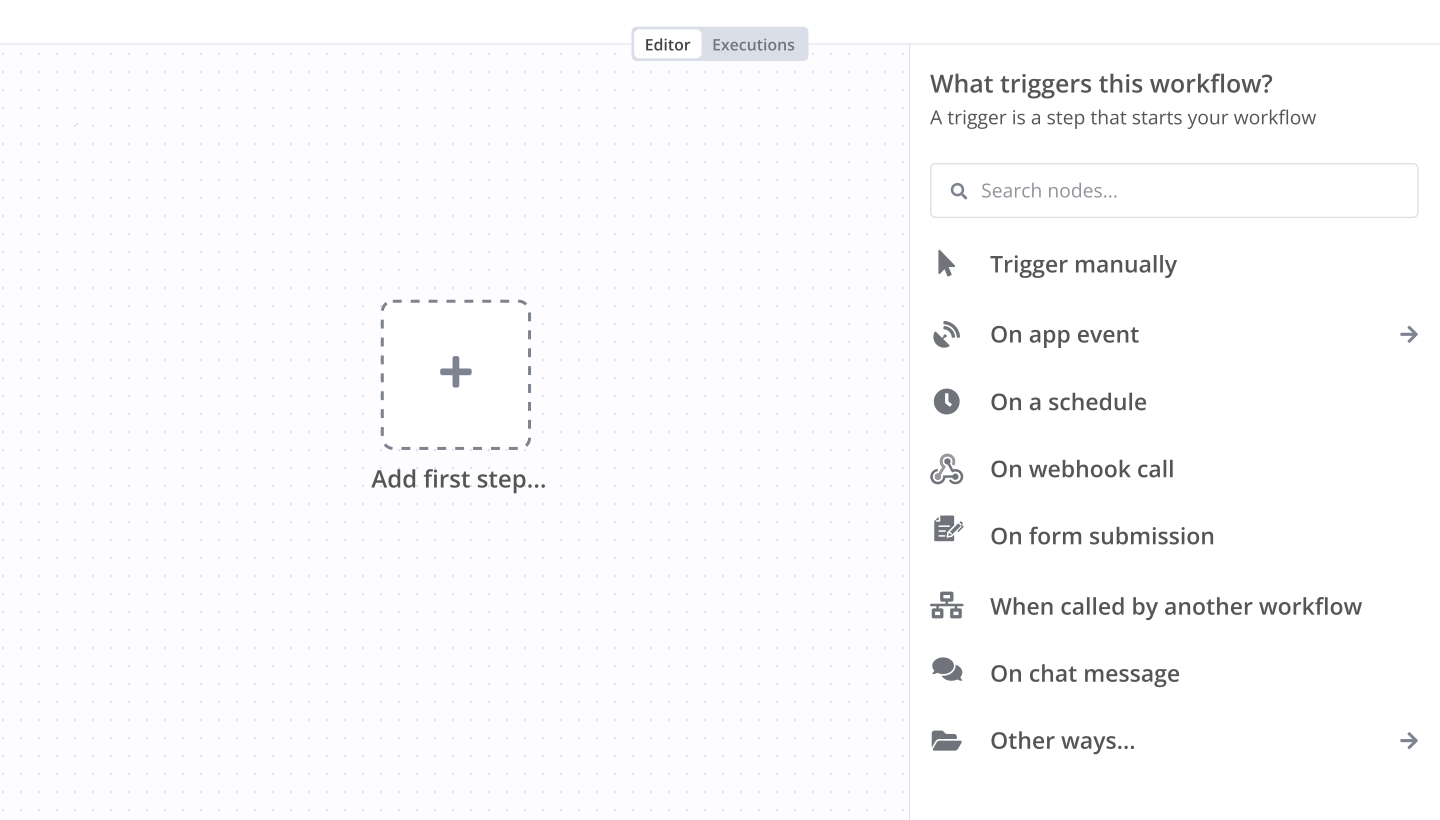
Webhook and Snowflake integration: Create a new workflow and add the first step

Step 2: Add and configure Webhook and Snowflake nodes

You can find Webhook and Snowflake in the nodes panel. Drag them onto your workflow canvas, selecting their actions. Click each node, choose a credential, and authenticate to grant n8n access. Configure Webhook and Snowflake nodes one by one: input data on the left, parameters in the middle, and output data on the right.

Webhook and Snowflake integration: Add and configure Webhook and Snowflake nodes

Step 3: Connect Webhook and Snowflake

A connection establishes a link between Webhook and Snowflake (or vice versa) to route data through the workflow. Data flows from the output of one node to the input of another. You can have single or multiple connections for each node.

Webhook and Snowflake integration: Connect Webhook and Snowflake

Step 4: Customize and extend your Webhook and Snowflake integration

Use n8n's core nodes such as If, Split Out, Merge, and others to transform and manipulate data. Write custom JavaScript or Python in the Code node and run it as a step in your workflow. Connect Webhook and Snowflake with any of n8n’s 1000+ integrations, and incorporate advanced AI logic into your workflows.

Webhook and Snowflake integration: Customize and extend your Webhook and Snowflake integration

Step 5: Test and activate your Webhook and Snowflake workflow

Save and run the workflow to see if everything works as expected. Based on your configuration, data should flow from Webhook to Snowflake or vice versa. Easily debug your workflow: you can check past executions to isolate and fix the mistake. Once you've tested everything, make sure to save your workflow and activate it.

Webhook and Snowflake integration: Test and activate your Webhook and Snowflake workflow

AI agent to chat with Snowflake database

Video Guide

I prepared a detailed guide showcasing the process of building an AI agent that interacts with a Snowflake database using n8n. This setup enables conversational querying, secure execution of SQL queries, and dynamic report generation with rich visualization capabilities.

Youtube Link

Who is this for?

This workflow is designed for developers, data analysts, and business professionals who want to interact with their Snowflake data conversationally. It suits users looking to automate SQL query generation with AI, manage large datasets efficiently, and produce interactive reports without deep technical knowledge.

What problem does this workflow solve?

Querying Snowflake databases typically requires SQL proficiency and can lead to heavy token usage if large datasets are sent to AI models directly. This workflow addresses these challenges by:

Guiding AI to generate accurate SQL queries based on user chat input while referencing live database schema to avoid errors.
Executing queries safely on Snowflake with proper credential management.
Aggregating large result sets to reduce token consumption.
Offering a user-friendly report link with pagination, filtering, charts, and CSV export instead of returning overwhelming raw data.
Providing an error-resilient environment that prompts regenerations for SQL errors or connectivity issues.

What this workflow does

The scenario consists of multiple focused n8n workflows orchestrated for smooth, secure, and scalable interactions:

Agent Workflow
Starts with a chat node and sets the system role as "Snowflake SQL assistant."
AI generates SQL after verifying database schema and table definitions to avoid hallucinations.
Reinforcement rules ensure schema validation before query creation.

Data Retrieval Workflow
Receives SQL queries from the agent workflow.
Executes them against the Snowflake database using user-provided credentials (hostname, account, warehouse, database, schema, username, password).
Optionally applies safety checks on SQL to prevent injection attacks.

Aggregation and Reporting Decision
Aggregates returned data into arrays for efficient processing.
Applies a threshold (default 100 records) to decide whether to return raw data or generate a dynamic report link.
Prepares report links embedding URL-encoded SQL queries to securely invoke a separate report workflow.

Report Viewing Workflow
Triggered via webhook from the report link.
Re-executes SQL queries to fetch fresh data.
Displays data with pagination, column filtering, and selectable chart visualizations.
Supports CSV export and custom HTML layouts for tailored user experience.
Provides proper error pages in case of SQL or data issues.

Schema and Table Definition Retrieval Tools
Two helper workflows that fetch the list of tables and column metadata from Snowflake.
Require the user to replace placeholders with actual database and data source names.
Crucial for AI to maintain accurate understanding of the database structure.

N8N Workflow

Preparation
Create your Snowflake credentials in n8n with required host and account details, warehouse (e.g., "computer_warehouse"), database, schema, username, and password.
Replace placeholder variables in schema retrieval workflows with your actual database and data source names.
Verify the credentials by testing the connection; reset passwords if needed.

Workflow Logic
The Agent Workflow listens to user chats, employs system role "Snowflake SQL assistant," and ensures schema validation before generating SQL queries.
Generated SQL queries pass to the Data Retrieval Workflow, which executes them against Snowflake securely.
Retrieved data is aggregated and evaluated against a configurable threshold to decide between returning raw data or creating a report link.
When a report link is generated, the Report Viewing Workflow renders a dynamic interactive HTML-based report webpage, including pagination, filters, charts, and CSV export options.
Helper workflows periodically fetch or update the current database schema and table definitions to maintain AI accuracy and prevent hallucinations in SQL generation.
Error handling mechanisms provide user-friendly messages both in the agent chat and report pages when issues arise with SQL or connectivity.

This modular, secure, and extensible setup empowers you to build intelligent AI-driven data interactions with Snowflake through n8n automations and custom reporting.

Nodes used in this workflow

Popular Webhook and Snowflake workflows

AI Agent to chat with Snowflake database

Video Guide I prepared a detailed guide showcasing the process of building an AI agent that interacts with a Snowflake database using n8n. This setup enables conversational querying, secure execution of SQL queries, and dynamic report generation with rich visualization capabilities. Youtube Link Who is this for? This workflow is designed for developers, data analysts, and business professionals who want to interact with their Snowflake data conversationally. It suits users looking to automate SQL query generation with AI, manage large datasets efficiently, and produce interactive reports without deep technical knowledge. What problem does this workflow solve? Querying Snowflake databases typically requires SQL proficiency and can lead to heavy token usage if large datasets are sent to AI models directly. This workflow addresses these challenges by: Guiding AI to generate accurate SQL queries based on user chat input while referencing live database schema to avoid errors. Executing queries safely on Snowflake with proper credential management. Aggregating large result sets to reduce token consumption. Offering a user-friendly report link with pagination, filtering, charts, and CSV export instead of returning overwhelming raw data. Providing an error-resilient environment that prompts regenerations for SQL errors or connectivity issues. What this workflow does The scenario consists of multiple focused n8n workflows orchestrated for smooth, secure, and scalable interactions: Agent Workflow Starts with a chat node and sets the system role as "Snowflake SQL assistant." AI generates SQL after verifying database schema and table definitions to avoid hallucinations. Reinforcement rules ensure schema validation before query creation. Data Retrieval Workflow Receives SQL queries from the agent workflow. Executes them against the Snowflake database using user-provided credentials (hostname, account, warehouse, database, schema, username, password). Optionally applies safety checks on SQL to prevent injection attacks. Aggregation and Reporting Decision Aggregates returned data into arrays for efficient processing. Applies a threshold (default 100 records) to decide whether to return raw data or generate a dynamic report link. Prepares report links embedding URL-encoded SQL queries to securely invoke a separate report workflow. Report Viewing Workflow Triggered via webhook from the report link. Re-executes SQL queries to fetch fresh data. Displays data with pagination, column filtering, and selectable chart visualizations. Supports CSV export and custom HTML layouts for tailored user experience. Provides proper error pages in case of SQL or data issues. Schema and Table Definition Retrieval Tools Two helper workflows that fetch the list of tables and column metadata from Snowflake. Require the user to replace placeholders with actual database and data source names. Crucial for AI to maintain accurate understanding of the database structure. N8N Workflow Preparation Create your Snowflake credentials in n8n with required host and account details, warehouse (e.g., "computer_warehouse"), database, schema, username, and password. Replace placeholder variables in schema retrieval workflows with your actual database and data source names. Verify the credentials by testing the connection; reset passwords if needed. Workflow Logic The Agent Workflow listens to user chats, employs system role "Snowflake SQL assistant," and ensures schema validation before generating SQL queries. Generated SQL queries pass to the Data Retrieval Workflow, which executes them against Snowflake securely. Retrieved data is aggregated and evaluated against a configurable threshold to decide between returning raw data or creating a report link. When a report link is generated, the Report Viewing Workflow renders a dynamic interactive HTML-based report webpage, including pagination, filters, charts, and CSV export options. Helper workflows periodically fetch or update the current database schema and table definitions to maintain AI accuracy and prevent hallucinations in SQL generation. Error handling mechanisms provide user-friendly messages both in the agent chat and report pages when issues arise with SQL or connectivity. This modular, secure, and extensible setup empowers you to build intelligent AI-driven data interactions with Snowflake through n8n automations and custom reporting.

Build your own Webhook and Snowflake integration

Create custom Webhook and Snowflake workflows by choosing triggers and actions. Nodes come with global operations and settings, as well as app-specific parameters that can be configured. You can also use the HTTP Request node to query data from any app or service with a REST API.

Snowflake supported actions

Execute Query
Execute an SQL query
Insert
Insert rows in database
Update
Update rows in database

Webhook and Snowflake integration details

integrationWebhook node
Webhook

Webhooks are automatic notifications that apps send when something occurs. They are sent to a certain URL, which is effectively the app's phone number or address, and contain a message or payload. Polling is nearly never quicker than webhooks, and it takes less effort from you.


Use case

Save engineering resources

Reduce time spent on customer integrations, engineer faster POCs, keep your customer-specific functionality separate from product all without having to code.

Learn more

FAQs

  • Can Webhook connect with Snowflake?

  • Can I use Webhook’s API with n8n?

  • Can I use Snowflake’s API with n8n?

  • Is n8n secure for integrating Webhook and Snowflake?

  • How to get started with Webhook and Snowflake integration in n8n.io?

Need help setting up your Webhook and Snowflake integration?

Discover our latest community's recommendations and join the discussions about Webhook and Snowflake integration.
Benjamin Hatton
Albert Ashkhatoyan
Víctor González
Salomão
sg tech

Looking to integrate Webhook and Snowflake in your company?

Over 3000 companies switch to n8n every single week

Why use n8n to integrate Webhook with Snowflake

Build complex workflows, really fast
Build complex workflows, really fast

Handle branching, merging and iteration easily.
Pause your workflow to wait for external events.

Code when you need it, UI when you don't

Simple debugging

Your data is displayed alongside your settings, making edge cases easy to track down.

Use templates to get started fast

Use 1000+ workflow templates available from our core team and our community.

Reuse your work

Copy and paste, easily import and export workflows.

Implement complex processes faster with n8n

red iconyellow iconred iconyellow icon