Back to Integrations
integrationWebhook node
integrationWordpress node

Webhook and Wordpress integration

Save yourself the work of writing custom integrations for Webhook and Wordpress and use n8n instead. Build adaptable and scalable Development, Core Nodes, and Marketing workflows that work with your technology stack. All within a building experience you will love.

How to connect Webhook and Wordpress

  • Step 1: Create a new workflow
  • Step 2: Add and configure nodes
  • Step 3: Connect
  • Step 4: Customize and extend your integration
  • Step 5: Test and activate your workflow

Step 1: Create a new workflow and add the first step

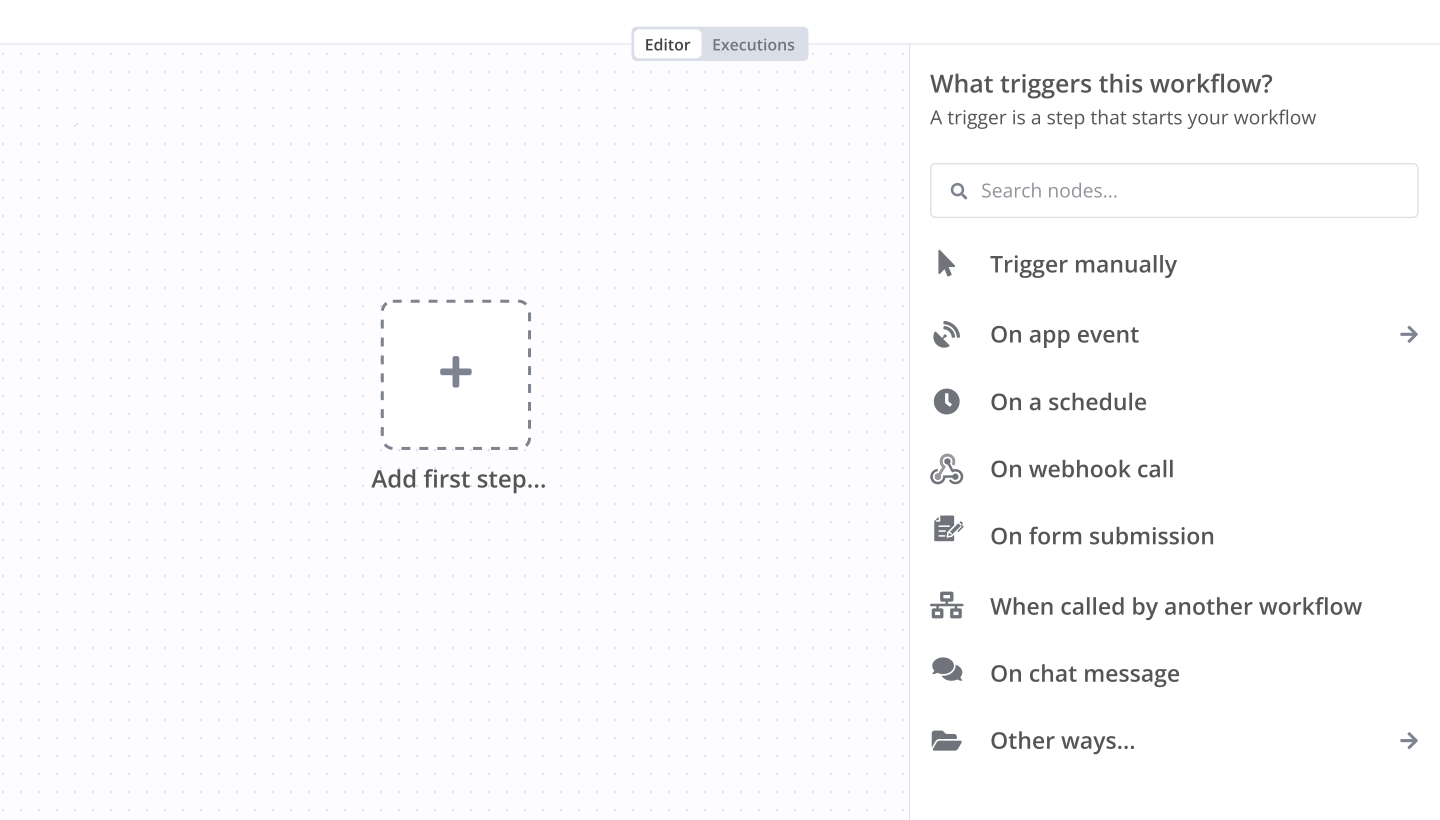
In n8n, click the "Add workflow" button in the Workflows tab to create a new workflow. Add the starting point – a trigger on when your workflow should run: an app event, a schedule, a webhook call, another workflow, an AI chat, or a manual trigger. Sometimes, the HTTP Request node might already serve as your starting point.

Webhook and Wordpress integration: Create a new workflow and add the first step

Step 2: Add and configure Webhook and Wordpress nodes

You can find Webhook and Wordpress in the nodes panel. Drag them onto your workflow canvas, selecting their actions. Click each node, choose a credential, and authenticate to grant n8n access. Configure Webhook and Wordpress nodes one by one: input data on the left, parameters in the middle, and output data on the right.

Webhook and Wordpress integration: Add and configure Webhook and Wordpress nodes

Step 3: Connect Webhook and Wordpress

A connection establishes a link between Webhook and Wordpress (or vice versa) to route data through the workflow. Data flows from the output of one node to the input of another. You can have single or multiple connections for each node.

Webhook and Wordpress integration: Connect Webhook and Wordpress

Step 4: Customize and extend your Webhook and Wordpress integration

Use n8n's core nodes such as If, Split Out, Merge, and others to transform and manipulate data. Write custom JavaScript or Python in the Code node and run it as a step in your workflow. Connect Webhook and Wordpress with any of n8n’s 1000+ integrations, and incorporate advanced AI logic into your workflows.

Webhook and Wordpress integration: Customize and extend your Webhook and Wordpress integration

Step 5: Test and activate your Webhook and Wordpress workflow

Save and run the workflow to see if everything works as expected. Based on your configuration, data should flow from Webhook to Wordpress or vice versa. Easily debug your workflow: you can check past executions to isolate and fix the mistake. Once you've tested everything, make sure to save your workflow and activate it.

Webhook and Wordpress integration: Test and activate your Webhook and Wordpress workflow

AI-generated summary block for WordPress posts

What is this workflow?
This n8n template automates the process of adding an AI-generated summary at the top of your WordPress posts.
It retrieves, processes, and updates your posts dynamically, ensuring efficiency and flexibility without relying on a heavy WordPress plugin.

Example of AI Summary Section

How It Works
Triggers → Runs on a scheduled interval or via a webhook when a new post is published.
Retrieves posts → Fetches content from WordPress and converts HTML to Markdown for AI processing.
AI Summary Generation → Uses OpenAI to create a concise summary.
Post Update → Inserts the summary at the top of the post while keeping the original excerpt intact.
Data Logging & Notifications → Saves processed posts to Google Sheets and notifies a Slack channel.

Why use this workflow?
✅ No need for a WordPress plugin → Keeps your site lightweight.
✅ Highly flexible → Easily connect with Google Sheets, Slack, or other services.
✅ Customizable → Adapt AI prompts, formatting, and integrations to your needs.
✅ Smart filtering → Ensures posts are not reprocessed unnecessarily.

💡 Check the detailed sticky notes for setup instructions and customization options!

Nodes used in this workflow

Popular Webhook and Wordpress workflows

+3

Singapore University Eligibility Analyzer with GPT-4o-Mini, WordPress and Slack Notifications

Introduction Automates scholarship tracking by scraping university sites, assessing eligibility via AI, and publishing results to WordPress or Slack. Eliminates manual searches for students, counselors, and education platforms, enabling scalable curation and timely notifications. How it Works Webhook triggers parallel scraping of NUS, NTU, SIT, SUTD → merge data → AI evaluates eligibility → aggregate qualified scholarships → generate summaries → post to WordPress/Slack → send email notifications with appeal options. Setup Steps Configure OpenAI credentials and eligibility prompt template Update HTTP requests with university URLs and selectors Add WordPress site URL and API credentials Create Slack webhook and notification channel Configure Gmail/SMTP for email notifications Workflow Webhook → Scrape 4 Universities (Parallel) → Merge Data → Prepare Context → AI Eligibility Check → Aggregate Results → Generate Summary → Check Status → Publish Slack/Email/WordPress → Handle Appeals Workflow Steps Scraping: Fetch scholarship pages from four universities simultaneously Merge: Combine data into a unified dataset AI Processing: Analyze eligibility criteria, deadlines against student profile Aggregation: Consolidate qualified scholarships with match scores Publishing: Post to WordPress, send Slack/email with results Appeals: Webhook handles rejection appeals with AI review Prerequisites OpenAI API key, WordPress site with REST API, Slack workspace with webhook, Gmail/SMTP credentials, student profile data (GPA, citizenship, major) Use Cases Counselors automating recommendations for 100+ students, financial aid offices aggregating departmental opportunities Customization Add universities (SMU, SUSS, international institutions), include government schemes (MOE, Edusave, Mendaki) Benefits Saves 10+ hours weekly per counselor, monitors 50+ scholarships automatically, provides AI eligibility matching (85%+ accuracy)
+5

Automate RSS Content to Blog Posts with GPT-4o, WordPress & LinkedIn Publishing

Automated Blog Post Review and Multi-Platform Publishing Workflow with RSS Feeds Description This workflow automates the process of generating, reviewing, and publishing blog posts across multiple platforms, now enhanced with support for RSS Feeds as a content source. It streamlines the management of blog posts by fetching content from RSS Feeds, formatting, storing, reviewing, templating, and publishing to platforms like LinkedIn and WordPress. The workflow is split into three key flows: Initial Flow**: Fetches content from RSS Feeds, prepares and stores blog post data, sends a review email with approval/rejection links. Approval Flow**: Handles review actions via a webhook to update the status in Google Sheets. Status Update Flow**: Monitors status changes and publishes approved posts. Target Audience Content creators, bloggers, and digital marketers. Teams managing multi-platform content publishing. Users familiar with n8n, Google Sheets, LinkedIn, and RSS Feeds. Problem Solved Manually managing blog posts, especially when sourcing content from RSS Feeds, can be time-consuming and error-prone This workflow addresses: Content Sourcing**: Fetches blog posts from RSS Feeds for automated processing Content Formatting**: Automatically formats and stores blog posts. Review Process**: Simplifies approval with email notifications and webhook triggers. Multi-Platform Publishing**: Publishes to LinkedIn, WordPress and optionally Medium) with delays to avoid rate limits Status Tracking**: Tracks approval and publishing status in Google Sheets. Setup Instructions Prerequisites n8n Instance**: Ensure you have an active n8n instance RSS Feed URL**: Identify an RSS Feed URL (e.g., a blog’s feed like https://example.com/feed) Google Sheets**: Create a spreadsheet with columns: Title, Blogpost, Publication Date, Keywords, Status, Published, Featured Image, articleUrl, Rendered Blog. Sheet Name: Posts Initial Add a dropdown for Status: Pending, Approved, Rejected. Gmail Account**: For sending review and notification emails. LinkedIn Account**: For publishing posts (OAuth credentials needed). Optional**: WordPress.com or Medium account for additional publishing. Customization Guidance Below is a detailed breakdown of each flow and node, including setup instructions. 🔹 Initial Flow: Fetch from RSS Feeds, Prepare, and Send for Review. Purpose: Fetches blog posts from an RSS Feed, formats them, extracts images, stores data, and sends a review email. Fetch from RSS Feed Type: RSS Feed Purpose: Retrieves blog posts from an RSS Feed Configuration: URL: https://example.com/feed (replace with your RSS Feed URL) Limit: 1 (or adjust based on your needs) Setup: Ensure the RSS Feed URL is valid and accessible; test the node to verify it fetches posts Set Fields Type: Set Purpose: Maps RSS Feed data to blog post fields Setup: Adjust field mappings based on your RSS Feed’s structure Format Blog Post for Storage Type: Code Purpose: Cleans up the blog post content. Extract Featured Image Type: Code Purpose: Extracts or generates a featured image URL. Setup: Ensure originalHtml contains image data; otherwise, it uses a placeholder. Store Blog Posts Initial Type: Google Sheets Purpose: Stores initial blog post data Setup: Ensure Google Sheets credentials are set up and the spreadsheet has the required columns. Set Fields for Email Type: Set Purpose: Prepares fields for the review email. Setup: Replace https://your-n8n-instance with your n8n instance URL. Prepare Email HTML Type: Code Purpose: Generates HTML email content with conditional image display Setup: No additional configuration needed Notify for Review (Gmail) Type: Gmail Purpose: Sends a review email with approval/rejection links 🔹 Approval Flow: Handle Review Actions Purpose: Updates the blog post status based on approval/rejection Webhook Trigger Type: Webhook Purpose: Triggers on approval/rejection link clicks Configuration: HTTP Method: GET Path: approve-post Response Code: 200 Response Data: {"message": "Status updated"} Setup: Ensure the webhook URL matches the one in Set Fields for Email Find Row to Update Type: Google Sheets Purpose: Retrieves all rows to find the matching blog post Filter Row by Title Type: Code Purpose: Filters the row matching the blog post title Setup: No additional configuration needed Update Status on Approval Type: Google Sheets Purpose: Updates the status to Approved or Rejected 🔹 Status Update Flow: Publish Approved Posts Purpose: Monitors status changes and publishes approved posts Google Sheets Trigger (Fetch Row) Type: Google Sheets Trigger Purpose: Triggers when a row’s status is updated Configuration: Event: Update Sheet Name: Posts Initial Output Fields: title, status, published, featuredImage, articleUrl Setup: Ensure Google Sheets credentials are set up Router (Check Status) Type: Router Purpose: Routes based on status and published state Configuration: Route 1: Approved and Not Published Condition: status equals Approved AND published equals NO Route 2: Rejected Condition: status equals Rejected Route 3: Pending Condition: status equals Pending Setup: No additional configuration needed Apply Blog Template Store Blog Posts Final Type: Google Sheets Purpose: Stores the final HTML content Configuration: Operation: Update Row Setup: Ensure the Rendered Blog column exists Loop Over Blog Posts Type: Split in Batches Purpose: Processes each blog post individually Configuration: Default settings Setup: No additional configuration needed Delay Between Posts Type: Wait Purpose: Adds a delay to avoid rate limits Configuration: Wait Type: Delay Amount: 1 second Setup: Adjust delay as needed for LinkedIn rate limits Publish to LinkedIn Type: LinkedIn Purpose: Publishes the blog post to LinkedIn Configuration: Operation: Share Post Author: urn:li:person:YOUR_PERSONAL_URN Setup: Set up LinkedIn OAuth credentials and replace YOUR_PERSONAL_URN with your LinkedIn URN Update Published State Type: Google Sheets Purpose: Updates the published status Configuration: Operation: Update Row Setup: Ensure the Published column exists Notify Team Type: Gmail Purpose: Notifies the team of successful publishing Configuration: The blog post "{{ $json.title }}" has been successfully published Setup: Set up Gmail credentials; replace [Link] with the LinkedIn URL if captured Notify Rejection (Gmail) (Route 2) Type: Gmail Purpose: Notifies on rejection The blog post "{{ $json.title }}" has been rejected Suggestions: Rewrite with more engaging content, adjust keywords, or verify facts Please update the status in Google Sheets if you wish to revise and resubmit Setup: Set up Gmail credentials Wait for Status Update (Route 3) Type: Wait Purpose: Delays for status recheck Configuration: Wait Type: Delay Duration: 24h Setup: Adjust delay as needed Conclusion This workflow streamlines blog post management with RSS Feeds, making it ideal for busy content creators and teams. Customize it by adding more platforms adjusting delays, or enhancing notifications. Share your feedback in the n8n community to help others benefit from this automation.
+9

Build a WordPress RAG chatbot with OpenAI, Qdrant or MongoDB

Wordpress AI Chatbot Build a powerful, customizable AI chatbot for your WordPress website that intelligently retrieves posts, answers questions, and engages in natural conversations. This complete solution handles content indexing with OpenAI embeddings and vector storage (Qdrant or MongoDB), then powers a sophisticated chatbot interface that provides accurate, context-aware responses using RAG (Retrieval-Augmented Generation). Two indexing options: Quick path:** Automated workflow indexing to Qdrant (15-25 minutes setup) Advanced path:** Manual off-workflow indexing to MongoDB with included code and guides (1-2 hours setup) Complete package: Includes both indexing and chatbot workflows, WordPress plugin with customizable chat widget, and comprehensive step-by-step guides with screenshots. What this workflow does This complete solution provides content indexing and a customizable AI chatbot for your WordPress website: Indexing Phase (Choose your path): Option 1: Automated Qdrant indexing (Recommended): Retrieves all published posts from your WordPress site using the REST API Cleans and structures the content by extracting titles, URLs, post IDs, and slugs Splits text into intelligent chunks (1200 characters with 150-character overlap) for optimal embedding Generates vector embeddings using OpenAI's text-embedding model (1536 dimensions) Stores vectors in Qdrant Cloud for fast similarity search and retrieval Option 2: Advanced MongoDB indexing: Manual off-workflow process** for developers who prefer MongoDB Atlas Includes complete Node.js embedding scripts and detailed setup guides Full control over indexing parameters and storage structure Chatbot Phase (Works with both indexing options): Once indexed, your WordPress site features a fully customizable AI chatbot that: Retrieves relevant posts** using semantic search to answer content-related questions Provides accurate information** from your actual WordPress content with source citations Engages in natural small talk** for a conversational user experience Customizable appearance** to match your website's branding and style Delivers context-aware responses** using RAG (Retrieval-Augmented Generation) Tools and services used Core components: WordPress REST API** - Retrieves published posts with full content OpenAI Embeddings API** - Generates text-embedding-ada-002 vectors (1536d) Qdrant Cloud** - Vector database for storing and searching embeddings LangChain nodes** - Document processing and vector store integration Recursive Character Text Splitter** - Intelligent text chunking with overlap n8n nodes included: WordPress node (getAll posts operation) Qdrant Vector Store node (insert mode) OpenAI Embeddings node Default Data Loader with custom metadata Text Splitter with configurable chunk sizes Manual trigger for on-demand indexing Use cases Content websites & blogs Make your articles semantically searchable Power AI chatbots with your blog content Help visitors discover relevant posts through natural language Business websites Enable intelligent search across your service pages Answer customer questions using your existing content Reduce support load with automated, accurate responses Documentation sites Semantic search across technical documentation Find solutions by meaning, not exact keyword matches Combine multiple doc sources in one searchable index Portfolio sites Make your projects and case studies searchable Answer questions about your work with AI Showcase expertise through conversational interface E-commerce Search product descriptions semantically Answer product questions using your content Guide customers to relevant items What's included When you purchase this complete pack, you receive: Workflows (both included) Indexing workflow part** - Prepares WordPress content for semantic search Chatbot workflow part** - User-facing AI chat interface with RAG search capabilities Both workflows work together as a complete AI chatbot solution Documentation & guides 📚 Clear and complete step-by-step guides included: Quick start guide** - Get up and running in 15-25 minutes Detailed setup instructions** - With screenshots for every step Qdrant configuration guide** - Vector database setup walkthrough MongoDB alternative path** - Advanced setup option (1-2 hours) Customization guide** - Adjust AI behavior, chunk sizes, and styling Troubleshooting guide** - Solutions to common issues Security best practices** - GDPR compliance, authentication setup API integration guide** - Connect all required services WordPress plugin Frontend chat widget** - Ready-to-use chat interface REST API proxy** - Secure server-side communication Admin settings panel** - Easy configuration from WordPress dashboard Customizable shortcode** - [wp_ai_chatbot] for any page Additional files Configuration examples** - Sample credentials and settings templates Test micro-website** - Standalone HTML for testing chatbot workflow MongoDB embedding scripts** (Node.js) - For advanced setup path Sample data files** - For testing and verification Support: 📧 Email support after purchase for installation help (may require additional fees) 📚 Full documentation access with all guides Requirements Essential services (all have free tiers): WordPress site** (5.0+) with REST API enabled n8n instance** (cloud or self-hosted v1.0+) OpenAI API key** - For generating embeddings Qdrant** Cloud: Free tier includes 1GB storage On-Premise/VM: Dockerized or runned from source Optional but recommended: HTTPS enabled on WordPress site Application password authentication for WordPress Cohere API key (for reranking in the chatbot workflow) Technical requirements: WordPress application password or API credentials Basic understanding of API authentication Basic understanding and knowledge of automation platforms (n8n) Ability to import JSON workflows into n8n Cost estimate Indexing For a typical small site (150 posts, indexed once): | Service | Initial cost | Monthly cost | Notes | | ----------------- | ------------ | ------------ | ----------------------------- | | OpenAI Embeddings | ~$0.01-0.50 | $0 | One-time indexing cost | | Qdrant Cloud | $0 | $0 | Free tier: 1GB storage | | n8n Self-hosted | $0 | $0 | If self-hosted | | n8n Cloud | - | $20 | If using n8n Cloud | | TOTAL | ~$0.25 | $0-20 | Depends on n8n hosting choice | Re-indexing costs: Run this workflow whenever you publish new content or want to update the index. Each run costs only the OpenAI embedding fee (~$0.01-0.05 per 100 posts). Chatbot usage costs The chatbot workflow uses AI models to generate responses. Costs vary by provider and model. Typical conversation: 1000 tokens input (context + user query) + 500 tokens output (AI response) Cost per chat interaction - Monthly cost examples Based on different traffic levels: | Monthly chats | GPT-4o-mini | Gemini Flash | Claude Haiku | GPT-4o | Claude Sonnet | | ------------- | ----------- | ------------ | ------------ | ------ | ------------- | | 100 | $0.05 | $0.02 | $0.09 | $0.80 | $1.10 | | 500 | $0.25 | $0.10 | $0.45 | $4.00 | $5.50 | | 1,000 | $0.50 | $0.20 | $0.90 | $8.00 | $11.00 | | 5,000 | $2.50 | $1.00 | $4.50 | $40.00 | $55.00 | | 10,000 | $5.00 | $2.00 | $9.00 | $80.00 | $110.00 | Note: Prices are approximate and based on January 2025 rates. Check current pricing at: OpenAI: https://openai.com/api/pricing/ Google Gemini: https://ai.google.dev/pricing Anthropic Claude: https://www.anthropic.com/pricing Setup time Indexing: Indexing Quick setup:** 15-25 minutes Create Qdrant account (5 min) Get OpenAI API key (5 min) Import workflow and configure credentials (5-10 min) Run initial indexing (5 min) Indexing Advanced Setup**: 30-60 minutes Chatbot: First-time users: 5-10 minutes Import chatbot workflow Configure webhook URL in WordPress plugin Add shortcode to pages Testing and verification 📚 Complete guides included: All setup steps are documented with clear instructions and screenshots in the guides you receive after purchase. How to use this workflow 📚 Complete setup guides with screenshots are included with your purchase. Below is a quick overview: Step 1: indexing workflow Phase 1: Prepare services (10-15 min) Create Qdrant Cloud account (or MongoDB Atlas for advanced path) Get OpenAI API key from platform.openai.com Create WordPress application password Configure Qdrant collection (vector size: 1536, distance: Cosine) Phase 2: Import and configure workflow (5-10 min) Import indexing workflow JSON into n8n Add credentials (WordPress, OpenAI, Qdrant) Verify collection name matches your Qdrant setup Optionally customize chunk size and overlap settings Phase 3: Run indexing (5-10 min) Execute workflow manually or set up schedule Workflow retrieves all published posts from WordPress Content is cleaned, chunked, and embedded Vectors stored in Qdrant with metadata (title, URL, post ID, slug) Check execution log to confirm success Phase 4: Maintain index (ongoing) Re-run workflow after publishing new posts Update index when editing existing content Schedule automatic indexing (optional) Step 2: Deploy the chatbot workflow After indexing is complete, follow these steps to activate your AI chatbot: Import the chatbot workflow (included in your purchase) into n8n Configure the webhook - The chatbot receives user queries via secure webhook Connect to your vector database - Point to the same Qdrant collection you just created Test the chatbot - Use the included test micro-website to verify AI responses Install the WordPress plugin - Upload and activate on your WordPress site Configure plugin settings - Add webhook URL, customize colors and appearance Add shortcode to pages - Place [wp_ai_chatbot] where you want the chat widget Go live - Your AI chatbot is now answering visitor questions using your content How the chatbot works When a visitor asks a question on your site: Question sent to n8n - WordPress plugin sends query to chatbot workflow via webhook Intent classification - AI determines if it's SmallTalk, content question, or profile/skills query Vector search - For content questions, searches your indexed posts in Qdrant using semantic similarity Context retrieval - Fetches relevant content chunks with metadata (title, URL, post ID) AI response generation - Uses retrieved context to generate accurate, contextual answer Response delivered - Answer sent back to WordPress plugin and displayed in chat widget Result: Visitors get instant, accurate answers based on your actual content, not generic AI responses. Compatibility Works with: WordPress 5.0+ (including WordPress 6.x) n8n 1.0+ (Cloud or self-hosted) OpenAI API (all embedding models) Qdrant Cloud (free and paid tiers) MongoDB Atlas (alternative vector database path) Tested on: WordPress 6.4+ n8n 1.65+ OpenAI text-embedding-ada-002 Qdrant Cloud free tier Common questions Q: What exactly is included when I purchase? A: You get the complete package: both the indexing workflow (shown here) AND the chatbot workflow, the WordPress plugin with chat interface, comprehensive step-by-step setup guides with screenshots, configuration templates, email support, and 12 months of free updates. Everything you need to deploy a fully functional AI chatbot. Q: Are the setup guides really clear and complete? A: Yes! Clear, detailed step-by-step guides are included with screenshots for every step. We provide both quick setup (15-25 min) and advanced setup paths, troubleshooting guides, customization instructions, and security best practices. Even beginners can follow along. Q: Do I need to buy the chatbot workflow separately? A: No! Both workflows come together as a complete package. You get everything needed for a fully functional AI chatbot solution. Q: How often should I run this workflow? A: Run it whenever you publish new content or want to update the index. For active blogs, weekly or after each batch of posts. Q: Can I index custom post types? A: Yes. Modify the WordPress node to include custom post types in the query parameters. Q: What if I have more than 1000 posts? A: The workflow handles pagination automatically. Larger sites may take longer to index and may exceed free tier limits. Q: Is my content secure? A: Your content is sent to OpenAI for embedding generation and stored in Qdrant. Review privacy policies of both services. Q: Can I use a different embedding model? A: Yes. Update the OpenAI node to use text-embedding-3-small or text-embedding-3-large (adjust vector dimensions accordingly). Q: What's the difference between Qdrant and MongoDB? A: Qdrant is easier to set up (15 min) and purpose-built for vectors. MongoDB Atlas is more flexible for complex data but takes longer to configure (1-2 hours). Q: Do I need coding skills? A: No. If you can follow instructions, create API keys, and import workflows, you can set this up. Q: Can I use this for multiple WordPress sites? A: Yes. Create separate collections in Qdrant for each site, or purchase additional licenses for commercial use. Troubleshooting "Failed to fetch posts from WordPress" Verify WordPress REST API is enabled (visit /wp-json/wp/v2/posts) Check application password credentials Ensure WordPress site is publicly accessible "OpenAI API authentication failed" Verify API key is correct and active Check account has available credits Ensure no rate limits are exceeded "Qdrant collection not found" Create collection manually in Qdrant dashboard Verify collection name matches workflow settings Check API key has write permissions "Text too large" or chunking errors Reduce chunk size in Text Splitter node Increase overlap if context is being lost Check for unusually large posts (>50k words) Indexing takes too long Normal for large sites (1000+ posts) Consider indexing in batches Check network speed and API rate limits Complete WordPress AI chatbot solution This is a complete, all-in-one package that includes everything you need: ✅ What you get: Indexing workflow** (shown here) - Prepares your content for semantic search Chatbot workflow** - Full RAG-powered chat interface with intent classification WordPress plugin** - Frontend chat widget and secure REST API proxy Advanced features** - SmallTalk handling, multilingual support, GDPR compliance Complete documentation** - Clear, step-by-step setup guides with screenshots All configuration files** - Templates, examples, and sample data Email support** - Installation and configuration assistance (fees may apply) No hidden costs. No separate purchases needed. Everything included. License & usage Single site license: Use on one WordPress site you own or manage Modify and customize as needed Cannot resell or redistribute the workflow Technical architecture INDEXING FLOW ┌─────────────────────────────────────────────────────────────┐ │ │ │ 1. Manual Trigger (or scheduled) │ │ ↓ │ │ 2. WordPress Node (Get all published posts) │ │ ↓ │ │ 3. Prepare Documents (Extract & structure) │ │ ↓ │ │ 4. Default Data Loader (Add metadata: title, URL, ID) │ │ ↓ │ │ 5. Text Splitter (1200 chars, 150 overlap) │ │ ↓ │ │ 6. OpenAI Embeddings (Generate 1536d vectors) │ │ ↓ │ │ 7. Qdrant Vector Store (Insert mode) │ │ ↓ │ │ ✓ Content indexed and searchable │ │ │ └─────────────────────────────────────────────────────────────┘ Data flow: Raw WordPress posts (JSON) Cleaned content with metadata Text chunks (1200 chars each) Vector embeddings (1536 dimensions) Stored in Qdrant with metadata Updates & changelog Version included: 1.0.0 Changelog: v1.0.0 (2026-02) - Initial release for n8n creators WordPress REST API integration OpenAI embedding generation Qdrant vector storage Metadata preservation Configurable chunking Planned features: Incremental indexing (update only new/modified posts) Multi-language support with language detection Image and media embedding Custom field extraction Scheduled automatic indexing About the author Built by Paolo Ronco, automation specialist and n8n workflow developer. More workflows: AI-powered contact forms Automated content publishing Social media automation Document processing pipelines Get started today Ready to make your WordPress content semantically searchable? Purchase the complete pack - Receive both workflows, WordPress plugin, and all guides Follow the step-by-step guides - Clear instructions with screenshots included Import workflows into n8n (5 minutes) Configure credentials (10 minutes) - Guides show you exactly how Run indexing (5 minutes) Deploy chatbot (10 minutes) - Install WordPress plugin and go live Start answering user questions with AI-powered responses 🚀 Transform your WordPress content into an intelligent, searchable knowledge base. 📚 Everything you need is included: Complete documentation, both workflows, WordPress plugin, and email support. © 2026 Paolo Ronco. All rights reserved. This workflow is provided as-is for use with n8n. OpenAI, WordPress, and Qdrant are trademarks of their respective owners.

Generate AI case studies from Feedspace testimonials with Google Gemini and publish to WordPress

Who is this for? This template is for teams who collect customer testimonials on feedpsace (via forms) and want to automatically convert them into professional case studies using AI and publish them to WordPress. What this workflow does This workflow listens for incoming testimonial data via a webhook, extracts the relevant fields, uses an AI agent to generate a complete case study (including title, sections, and structure), and publishes the final content directly to WordPress. The AI is instructed to vary tone, angle, and structure across case studies to avoid repetitive content and improve SEO value. Requirements: Feedspace account with webhook integration enabled Access to a WordPress site with REST API enabled An AI API key (Google Gemini or compatible model) Setup steps Connect to Feedspace Activate the workflow and copy the Production webhook URL Go to Feedspace → Automations → Webhooks Paste the webhook URL and activate it See https://www.feedspace.io/help/automation/ for more information Add your AI API credentials to the AI model node Connect your WordPress account in the WordPress node Send testimonial data to the webhook in this format: Reviewer name Rating Text feedback Event or feedback type Activate the workflow How it works Receives testimonial data through feedpsace webhook Extracts reviewer name, rating, feedback, and event type Filters for text-based testimonials Uses an AI agent to: Choose a unique case study angle and tone Generate structured HTML content Create an SEO-optimized title Parses and validates the AI output Publishes the generated case study to WordPress as a post
+2

AI-Generated Summary Block for WordPress Posts

What is this workflow? This n8n template automates the process of adding an AI-generated summary at the top of your WordPress posts. It retrieves, processes, and updates your posts dynamically, ensuring efficiency and flexibility without relying on a heavy WordPress plugin. Example of AI Summary Section How It Works Triggers → Runs on a scheduled interval or via a webhook when a new post is published. Retrieves posts → Fetches content from WordPress and converts HTML to Markdown for AI processing. AI Summary Generation → Uses OpenAI to create a concise summary. Post Update → Inserts the summary at the top of the post while keeping the original excerpt intact. Data Logging & Notifications → Saves processed posts to Google Sheets and notifies a Slack channel. Why use this workflow? ✅ No need for a WordPress plugin → Keeps your site lightweight. ✅ Highly flexible → Easily connect with Google Sheets, Slack, or other services. ✅ Customizable → Adapt AI prompts, formatting, and integrations to your needs. ✅ Smart filtering → Ensures posts are not reprocessed unnecessarily. 💡 Check the detailed sticky notes for setup instructions and customization options!
+2

Translate multilingual content with DeepL, GPT-4, WordPress, Slack and Sheets

#Multi-Language Content Translation Pipeline with AI Quality Control This workflow provides a professional-grade translation pipeline that combines the speed of DeepL with the intelligent reasoning of OpenAI's GPT-4. It is designed to help teams scale their global content reach without sacrificing linguistic accuracy or cultural nuance. Who’s it for This template is ideal for content managers, digital marketing teams, and global publishers who need to localize high volumes of articles or documentation while maintaining a "human-in-the-loop" quality standard. How it works The workflow automates the entire translation lifecycle through the following steps: Trigger: Content is ingested via a Webhook or a recurring Schedule. Translation: The source text is translated into multiple target languages simultaneously using the DeepL API. AI Quality Guard: An OpenAI agent evaluates each translation, assigning a quality score based on accuracy and fluency. Automated Publishing: Content that meets your quality threshold is automatically uploaded as a draft to WordPress. Manual Review: Any translations that fall below the threshold are flagged in Slack for human intervention. Data Logging: All results are saved to Google Sheets to build a searchable translation memory. How to set up Credentials: Connect your DeepL, OpenAI, WordPress, Slack, and Google Sheets accounts. Configuration: In the 'Translation Configuration' node, define your source language and a list of target languages (e.g., DE, FR, JA). Google Sheets: Create a sheet with headers: contentId, title, sourceLanguage, targetLanguage, translatedText, and qualityScore. Slack: Choose the notification channels for alerts and summary reports. Requirements DeepL API key OpenAI API key (GPT-4o or GPT-4o-mini recommended) WordPress site with Application Passwords enabled A Slack workspace and a Google Sheets account How to customize the workflow Adjust Quality Standards:** Change the qualityThreshold value in the configuration node to make the AI verification more or less strict. Add Platforms:** Replace the WordPress node with other CMS nodes like Ghost, Strapi, or Contentful to match your stack. Advanced QA:** Modify the AI Quality Reviewer’s prompt to focus on specific brand guidelines or industry terminology.

Build your own Webhook and Wordpress integration

Create custom Webhook and Wordpress workflows by choosing triggers and actions. Nodes come with global operations and settings, as well as app-specific parameters that can be configured. You can also use the HTTP Request node to query data from any app or service with a REST API.

Wordpress supported actions

Create
Create a post
Get
Get a post
Get Many
Get many posts
Update
Update a post
Create
Create a page
Get
Get a page
Get Many
Get many pages
Update
Update a page
Create
Create a user
Get
Get a user
Get Many
Get many users
Update
Update a user

Webhook and Wordpress integration details

integrationWebhook node
Webhook

Webhooks are automatic notifications that apps send when something occurs. They are sent to a certain URL, which is effectively the app's phone number or address, and contain a message or payload. Polling is nearly never quicker than webhooks, and it takes less effort from you.

Use case

Save engineering resources

Reduce time spent on customer integrations, engineer faster POCs, keep your customer-specific functionality separate from product all without having to code.

Learn more
Use case

Automate lead management

Using too many marketing tools? n8n lets you orchestrate all your apps into one cohesive, automated workflow.

Learn more

FAQs

  • Can Webhook connect with Wordpress?

  • Can I use Webhook’s API with n8n?

  • Can I use Wordpress’s API with n8n?

  • Is n8n secure for integrating Webhook and Wordpress?

  • How to get started with Webhook and Wordpress integration in n8n.io?

Need help setting up your Webhook and Wordpress integration?

Discover our latest community's recommendations and join the discussions about Webhook and Wordpress integration.
Benjamin Hatton
Albert Ashkhatoyan
Víctor González
Salomão
sg tech

Looking to integrate Webhook and Wordpress in your company?

Over 3000 companies switch to n8n every single week

Why use n8n to integrate Webhook with Wordpress

Build complex workflows, really fast

Build complex workflows, really fast

Handle branching, merging and iteration easily.
Pause your workflow to wait for external events.

Code when you need it, UI when you don't

Simple debugging

Your data is displayed alongside your settings, making edge cases easy to track down.

Use templates to get started fast

Use 1000+ workflow templates available from our core team and our community.

Reuse your work

Copy and paste, easily import and export workflows.

Implement complex processes faster with n8n

red iconyellow iconred iconyellow icon