Back to Integrations
integrationWebhook node
integrationYouTube node

Webhook and YouTube integration

Save yourself the work of writing custom integrations for Webhook and YouTube and use n8n instead. Build adaptable and scalable Development, Core Nodes, and Marketing workflows that work with your technology stack. All within a building experience you will love.

How to connect Webhook and YouTube

  • Step 1: Create a new workflow
  • Step 2: Add and configure nodes
  • Step 3: Connect
  • Step 4: Customize and extend your integration
  • Step 5: Test and activate your workflow

Step 1: Create a new workflow and add the first step

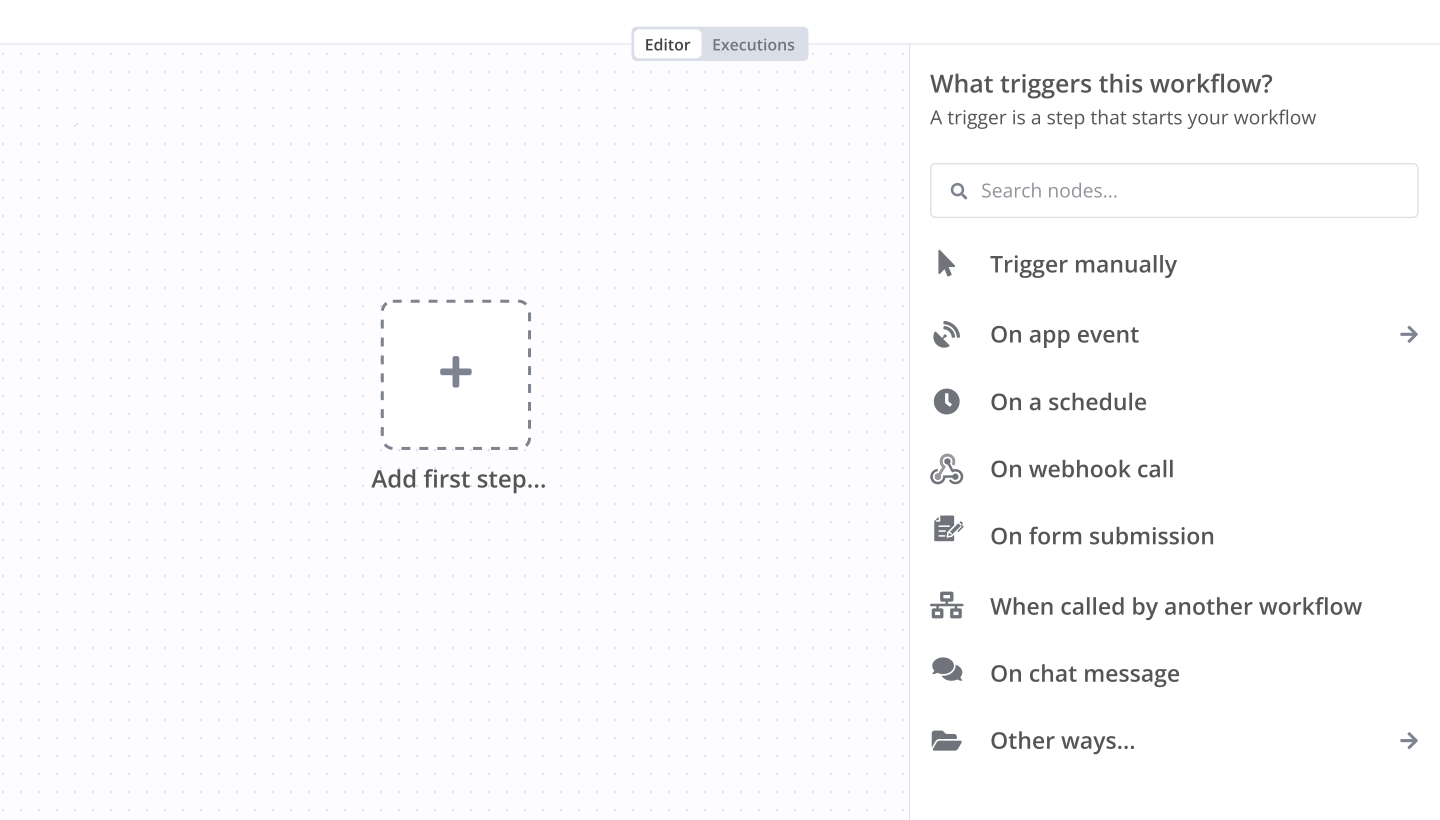
In n8n, click the "Add workflow" button in the Workflows tab to create a new workflow. Add the starting point – a trigger on when your workflow should run: an app event, a schedule, a webhook call, another workflow, an AI chat, or a manual trigger. Sometimes, the HTTP Request node might already serve as your starting point.

Webhook and YouTube integration: Create a new workflow and add the first step

Step 2: Add and configure Webhook and YouTube nodes

You can find Webhook and YouTube in the nodes panel. Drag them onto your workflow canvas, selecting their actions. Click each node, choose a credential, and authenticate to grant n8n access. Configure Webhook and YouTube nodes one by one: input data on the left, parameters in the middle, and output data on the right.

Webhook and YouTube integration: Add and configure Webhook and YouTube nodes

Step 3: Connect Webhook and YouTube

A connection establishes a link between Webhook and YouTube (or vice versa) to route data through the workflow. Data flows from the output of one node to the input of another. You can have single or multiple connections for each node.

Webhook and YouTube integration: Connect Webhook and YouTube

Step 4: Customize and extend your Webhook and YouTube integration

Use n8n's core nodes such as If, Split Out, Merge, and others to transform and manipulate data. Write custom JavaScript or Python in the Code node and run it as a step in your workflow. Connect Webhook and YouTube with any of n8n’s 1000+ integrations, and incorporate advanced AI logic into your workflows.

Webhook and YouTube integration: Customize and extend your Webhook and YouTube integration

Step 5: Test and activate your Webhook and YouTube workflow

Save and run the workflow to see if everything works as expected. Based on your configuration, data should flow from Webhook to YouTube or vice versa. Easily debug your workflow: you can check past executions to isolate and fix the mistake. Once you've tested everything, make sure to save your workflow and activate it.

Webhook and YouTube integration: Test and activate your Webhook and YouTube workflow

⚡AI-powered YouTube video summarization & analysis

-- Disclaimer: This workflow uses a community node and therefore only works for self-hosted n8n users --

Transform YouTube videos into comprehensive summaries and structured analysis instantly. This n8n workflow automatically extracts, processes, and analyzes video transcripts to deliver clear, organized insights without watching the entire video.

Time-Saving Features
🚀 Instant Processing
Simply provide a YouTube URL and receive a structured summary within seconds, eliminating the need to watch lengthy videos. Perfect for research, learning, or content analysis.

🤖 AI-Powered Analysis
Leverages GPT-4o-mini to analyze video transcripts, organizing key concepts and insights into a clear, hierarchical structure with main topics and essential points.

Smart Processing Pipeline
📝 Automated Transcript Extraction
Supports public YouTube video
Handles multiple URL formats
Extracts complete video transcripts automatically

🧠 Intelligent Content Organization
Breaks down content into main topics
Highlights key concepts and terminology
Maintains technical accuracy while improving clarity
Structures information logically with markdown formatting

Perfect For
📚 Researchers & Students
Quick comprehension of educational content and lectures without watching entire videos.

💼 Business Professionals
Efficient analysis of industry talks, presentations, and training materials.

🎯 Content Creators
Rapid research and competitive analysis of video content in your niche.

Technical Implementation
🔄 Workflow Components
Webhook endpoint for URL submission
YouTube API integration for video details
Transcript extraction system
GPT-4 powered analysis engine
Telegram notification system (optional)

Transform your video content consumption with an intelligent system that delivers structured, comprehensive summaries while saving hours of viewing time.

Nodes used in this workflow

Popular Webhook and YouTube workflows

⚡AI-Powered YouTube Video Summarization & Analysis

-- Disclaimer: This workflow uses a community node and therefore only works for self-hosted n8n users -- Transform YouTube videos into comprehensive summaries and structured analysis instantly. This n8n workflow automatically extracts, processes, and analyzes video transcripts to deliver clear, organized insights without watching the entire video. Time-Saving Features 🚀 Instant Processing Simply provide a YouTube URL and receive a structured summary within seconds, eliminating the need to watch lengthy videos. Perfect for research, learning, or content analysis. 🤖 AI-Powered Analysis Leverages GPT-4o-mini to analyze video transcripts, organizing key concepts and insights into a clear, hierarchical structure with main topics and essential points. Smart Processing Pipeline 📝 Automated Transcript Extraction Supports public YouTube video Handles multiple URL formats Extracts complete video transcripts automatically 🧠 Intelligent Content Organization Breaks down content into main topics Highlights key concepts and terminology Maintains technical accuracy while improving clarity Structures information logically with markdown formatting Perfect For 📚 Researchers & Students Quick comprehension of educational content and lectures without watching entire videos. 💼 Business Professionals Efficient analysis of industry talks, presentations, and training materials. 🎯 Content Creators Rapid research and competitive analysis of video content in your niche. Technical Implementation 🔄 Workflow Components Webhook endpoint for URL submission YouTube API integration for video details Transcript extraction system GPT-4 powered analysis engine Telegram notification system (optional) Transform your video content consumption with an intelligent system that delivers structured, comprehensive summaries while saving hours of viewing time.
+43

Explore n8n Nodes in a Visual Reference Library

WATCH THE n8n STARTER GUIDE 👇 This template is featured in the n8n Starter Guide series. The template is free, but comes with two additional PDFs and a Quick Start video if you grab the full download pack on gumroad. How it works This template is a visual map of many useful n8n nodes. It groups nodes like Triggers, AI tools, and App connectors onto the canvas. Explore the sections to learn about different nodes and easily copy them for your own workflows. It acts as a handy visual reference guide. Set up steps • Setup takes about 5 minutes. • Import the template into your n8n instance. • Explore the node categories visually on the canvas. • A Quick Start video is included in the download pack, along with a prompts PDF and PDF with links to other awesome n8n templates here on the n8n template gallery.
+8

Create & Approve POV Videos with AI, ElevenLabs & Multi-Posting (TikTok/IG/YT)

POV Video Creator: Automating TikTok-Style Instagram Video Automation, Approval, and Multi-Platform Posting Using AI, ElevenLabs, Google Sheets, and Social Media APIs Description What Problem Does This Solve? 🎥 This workflow automates the creation, rendering, approval, and posting of TikTok-style POV (Point of View) videos to Instagram, with cross-posting to Facebook and YouTube. It eliminates manual video production, approval delays, and inconsistent posting schedules. It ensures high-quality content creation and distribution for social media managers and content creators Target audience: Social media managers, content creators, small to medium-sized businesses, and n8n users familiar with AI tools, Google Sheets, and social media APIs What Does It Do? 🌟 Generates daily POV video ideas using OpenAI Creates images, videos, and audio with PIAPI.ai and ElevenLabs Renders final videos with Creatomate Manages approvals via email and Google Sheets Posts approved videos to Instagram, Facebook, and YouTube Tracks progress in a Google Sheet for transparency Key Features AI-driven idea generation and script creation Automated media production with image, video, and audio synthesis Email-based approval system for quality control Cross-platform posting to Instagram, Facebook, and YouTube Real-time tracking in Google Sheets and Google Drive Error handling for rendering and posting failures Setup Instructions Prerequisites n8n Instance**: Self-hosted or cloud n8n instance API Credentials**: OpenAI API: API key for idea generation, stored in n8n credentials PIAPI.ai API: API key for image and video generation, stored in n8n credentials ElevenLabs API: API key for audio generation, stored in n8n credentials Creatomate API: API key for video rendering, stored in n8n credentials Google Sheets/Drive API: OAuth2 credentials from Google Cloud Console with Sheets and Drive scopes Gmail API: OAuth2 credentials from Google Cloud Console with Gmail scope Instagram Graph API: User Access Token with instagram_content_publish permission from a Facebook App Facebook Graph API: Access Token from the same Facebook App YouTube API: OAuth2 credentials for YouTube uploads Google Sheet**: A sheet named "POV Videos" with a tab "Instagram" and columns: Timestamp, ID, Subject, Topic, Caption, POV_Status, Prompt, Publish_Status, Link, Final Video, Approval, row_number Creatomate Template**: A pre-configured template with video, audio, and text elements Installation Steps Import the Workflow: Copy the workflow JSON from the “Template Code” section (to be provided) Import it into n8n via “Import from File” or “Import from URL” Configure Credentials: Add API credentials in n8n’s Credentials section for OpenAI, PIAPI.ai, ElevenLabs, Creatomate, Google Sheets/Drive, Gmail, Instagram Graph, Facebook Graph, and YouTube Assign credentials to respective nodes. For example: In "Text-to-Image", use PIAPI.ai credentials: {{ $credentials.PIAPI }} In "Render with Creatomate", use Creatomate credentials: {{ $credentials.Creatomate }} In "Send Approval Request", use Gmail credentials Set Up Nodes: Schedule Trigger: Configure to run daily Approval Email (Send Approval Request): Customize the HTML email template with approval/rejection links Post to Social Media Nodes (Instagram Container, Facebook Posts, Post YouTube): Configure with your Instagram Business Account ID, Facebook Page ID, and YouTube channel details Configure Google Sheet and Drive: Create "POV Videos" Google Sheet with "Instagram" tab and specified columns Share the sheet with your Google Sheets credential email Create "Audio" and "Video" folders in Google Drive, noting their IDs Test the Workflow: Run manually to verify idea generation, media creation, and posting Check email notifications, Google Sheet updates, and social media posts Schedule the Workflow: Enable "Schedule Trigger" and "Schedule Trigger1" for daily runs Enable "Get Latest Approved Video" to poll at 7 PM daily How It Works High-Level Steps Generate Video Ideas: Creates daily POV video concepts with OpenAI Create Media: Produces images, videos, and audio using AI tools Render Video: Combines media into a final video with Creatomate Manage Approvals: Sends approval emails and processes decisions Post to Platforms: Publishes approved videos to Instagram, Facebook, and YouTube Detailed Descriptions Detailed node descriptions are available in the sticky notes within the workflow (to be provided). Below is a summary of key actions Node Names and Actions Video Idea Generation and Script Creation Schedule Trigger**: Initiates daily workflow Get Title**: Fetches pending video ideas from Google Sheet Generate Topics**: Uses OpenAI to create a new video idea Format Row**: Structures the idea into a Google Sheet row Insert new Prompt, Caption and Title/Topic**: Adds the idea to Google Sheet Generate Ideas**: Produces 3 POV sequences Generate Script**: Expands a sequence into a detailed script Set Topics**: Stores the script for media creation Media Creation Text-to-Image**: Generates an image with PIAPI.ai Get Image**: Retrieves the generated image Generate Video Prompt**: Creates a video prompt from the image Generate Video**: Produces a 5-second video with PIAPI.ai Access Videos**: Retrieves the video URL Store Video**: Updates Google Sheet with video URL Generate Sound Prompt**: Creates an audio prompt Text-to-Sound**: Generates a 20-second audio clip with ElevenLabs Store Sound**: Uploads audio to Google Drive Allow Access**: Sets audio file permissions Video Rendering Merge**: Combines script, video, and audio data List Elements**: Formats data for Creatomate Render with Creatomate**: Renders the final video Check Video Status**: Routes based on render success/failure Storage and Notification Google Drive**: Uploads the rendered video New Render Video Alert**: Sends success email Failed Render**: Sends failure email Render Video Link**: Updates Google Sheet with final video URL Approval Process Approval Email**: Sends approval request email Handle Approval/Rejection1**: Processes approval/rejection via webhook Video Update1**: Updates Google Sheet with approval status Social Media Posting Get Latest Approved Video**: Polls for approved videos Check Approval**: Routes based on approval status Instagram Container**: Creates Instagram media container Post to Instagram**: Publishes to Instagram Facebook Posts**: Posts to Facebook Download Video**: Downloads video for YouTube Post YouTube**: Uploads to YouTube Mark Rejected**: Updates status for rejected videos Update Google Sheet**: Updates publish status Customization Tips Expand Platforms**: Add nodes to post to other platforms Modify Approval Email**: Update the Send Approval Request node to customize the HTML template Alternative Notifications**: Add nodes for Slack or Telegram alerts Adjust Video Duration**: Modify Generate Video node to change duration (default: 5 seconds)

Automated Video Translation & Distribution with DubLab to Multiple Platforms

Automated n8n workflow: Receives videos via form, dubs/translates them to the selected languages, and—upon completion—uploads them to multiple social media channels and cloud drives, including Box, Dropbox, and YouTube, Telegram, Postiz (Facebook, Instagram, Tiktok, Reddit etc.) Workflows Via n8n form select files to dub for desired languages. Listen webhook and whenever dubbing finishes upload to desired platforms Used Stacks DubLab App (ApiKey, Webhook Setup Required) Optional (Upload) Telegram (Token Required) Box (Oauth2 Required) Dropbox (Oauth2 Required) Youtube (Oauth2 Required) Postiz (ApiKey Required)
+2

AI Content Creation and Publishing Engine with Mistral, Creatomate, and YouTube

Description This n8n workflow automates the entire process of creating and publishing AI-generated videos, triggered by a simple message from a Telegram bot (YTAdmin). It transforms a text prompt into a structured video with scenes, visuals, and voiceover, stores assets in MongoDB, renders the final output using Creatomate, and uploads the video to YouTube. Throughout the process, YTAdmin receives real-time updates on the workflow’s progress. This is ideal for content creators, marketers, or businesses looking to scale video production using automation and AI. You can see a video demonstrating this template in action here: https://www.youtube.com/watch?v=EjI-ChpJ4xA&t=200s How it Works Trigger: Message from YTAdmin (Telegram Bot) The flow starts when YTAdmin sends a content prompt. Generate Structured Content A Mistral language model processes the input and outputs structured content, typically broken into scenes. Split & Process Content into Scenes The content is split into categorized parts for scene generation. Generate Media Assets For each scene: Images: Generated using OpenAI’s image model. Voiceovers: Created using OpenAI’s text-to-speech. Audio files are encoded and stored in MongoDB. Scene Composition Assets are grouped into coherent scenes. Render with Creatomate A complete payload is generated and sent to the Creatomate rendering API to produce the video. Progress messages are sent to YTAdmin. The flow pauses briefly to avoid rate limits. Render Callback Once Creatomate completes rendering, it sends a callback to the flow. If the render fails, an error message is sent to YTAdmin. If the render succeeds, the flow proceeds to post-processing. Generate Title & Description A second Mistral prompt generates a compelling title and description for YouTube. Upload to YouTube The rendered video is retrieved from Creatomate. It’s uploaded to YouTube with the AI-generated metadata. Final Update A success message is sent to YTAdmin, confirming upload completion. Set Up Steps (Approx. 10–15 Minutes)Step 1: Set Up YTAdmin Bot Create a Telegram bot via BotFather and get your API token. Add this token in n8n's Telegram credentials and link to the "Receive Message from YTAdmin" trigger. Step 2: Connect Your AI Providers Mistral: Add your API key under HTTP Request or AI Model nodes. OpenAI: Create an account at platform.openai.com and obtain an API key. Use it for both image generation and voiceover synthesis. Step 3: Configure Audio File Storage with MongoDB via Custom API Receives the Base64 encoded audio data sent in the request body. Connects to the configured MongoDB instance (connection details are managed securely within the API- code below). Uses the MongoDB driver and GridFS to store the audio data. Returns the unique _id (ObjectId) of the stored file in GridFS as a response. This _id is crucial as it will be used in subsequent steps to generate the download URL for the audio file. My API code can be found here for reference: https://github.com/nanabrownsnr/YTAutomation.git Step 4: Set Up Creatomate Create a Creatomate account, define your video templates, and retrieve your API key. Configure the HTTP request node to match your Creatomate payload requirements. Step 5: Connect YouTube In n8n, add OAuth2 credentials for your YouTube account. Make sure your Google Cloud project has YouTube Data API enabled. Step 6: Deploy and Test Send a message to YTAdmin and monitor the flow in n8n. Verify that content is generated, media is created, and the final video is rendered and uploaded. Customization Options Change the AI Prompts Modify the generation prompts to adjust tone, voice, or content type (e.g., news recaps, product videos, educational summaries). Switch Messaging Platform Replace Telegram (YTAdmin) with Slack, Discord, or WhatsApp by swapping out the trigger and response nodes. Add Subtitles or Effects Integrate Whisper or another speech-to-text tool to generate subtitles. Add overlay or transition effects in the Creatomate video payload. Use Local File Storage Instead of MongoDB Swap out MongoDB upload http nodes with filesystem or S3-compatible storage. Repurpose for Other Platforms Swap YouTube upload with TikTok, Instagram, or Vimeo endpoints for broader publishing. **Need Help or Want to Customize This Workflow? If you'd like assistance setting this up or adapting it for a different use case, feel free to reach out to me at [email protected]. I'm happy to help!**
+2

Create tutorial videos from documentation URLs with Claude, Google TTS, Remotion and YouTube

This automated n8n workflow converts any technical documentation or blog post URL into a professional, step-by-step developer tutorial video complete with AI-generated narration, code syntax highlighting, terminal command animations, and visual diagrams. The system intelligently analyzes documentation structure, extracts code examples, generates natural voiceover narration, creates synchronized visual scenes, and automatically publishes the finished video to YouTube with SEO-optimized descriptions. Fundamental Aspects Webhook-Based Trigger**: Accepts HTTP POST requests containing a documentation URL to initiate the automated video creation pipeline on-demand. Intelligent Content Extraction**: Fetches HTML content, parses documentation structure, extracts code blocks with language detection, identifies headings for organization, and cleans irrelevant elements like navigation and scripts. AI-Powered Tutorial Planning**: Uses Claude AI to analyze documentation content and generate a comprehensive tutorial outline including section titles, duration estimates, narration scripts, visual types (code/terminal/diagram), and learning outcomes. Professional Audio Generation**: Converts narration scripts into high-quality audio using Google Cloud Text-to-Speech with natural-sounding neural voices, proper pacing, and timing synchronization. Dynamic Visual Scene Creation**: Generates code editor scenes with syntax highlighting and typewriter effects, terminal animations with command execution sequences, flowchart diagrams with progressive reveals, and text overlays with key points. Automated Video Rendering**: Combines audio narration with visual scenes using Remotion API to render publication-ready videos in 1080p resolution at 30fps with smooth transitions. Multi-Platform Distribution**: Automatically uploads completed videos to YouTube with AI-generated titles and descriptions, backs up to Google Drive for archival, and returns comprehensive metadata via webhook response. Setup Instructions Import the Workflow into n8n**: Download the workflow JSON file and import via n8n interface under "Workflows" → "Import from File" option. Configure Claude AI (Anthropic) Credentials**: Navigate to the "Analyze with Claude AI" node and click the credentials dropdown. Create new Anthropic credentials using your API key from console.anthropic.com. Ensure you have access to Claude Sonnet 4 model (claude-sonnet-4-20250514). Save and test the connection to verify API access. Set Up Google Cloud Text-to-Speech**: Go to Google Cloud Console and enable the Text-to-Speech API. Create a service account with "Cloud Text-to-Speech User" role. Generate and download a JSON key file for the service account. In n8n, navigate to "Generate Audio with Google TTS" node and add service account credentials. Upload the JSON key file when prompted. Configure Remotion API for Video Rendering**: Sign up for a Remotion account at remotion.dev and obtain API credentials. In the "Render Video with Remotion" node, add HTTP Header Auth credentials. Set authorization header with your Remotion API key. Ensure you have a Remotion composition named "TutorialVideo" deployed. Note: You may need to create a custom Remotion project for code highlighting and terminal animations. Add YouTube OAuth2 Credentials**: Navigate to "Upload to YouTube" node and create YouTube OAuth2 credentials. Follow Google's OAuth flow to authorize n8n to upload videos on your behalf. Ensure your YouTube account has upload permissions and is verified for videos longer than 15 minutes. Configure default privacy settings (public, unlisted, or private) in node parameters. Configure Google Drive Backup**: Go to "Backup to Google Drive" node and add Google Drive OAuth2 credentials. Authorize n8n to access your Google Drive. Optionally specify a folder ID in node options to organize video backups. Activate Webhook Endpoint**: Activate the workflow using the toggle switch in the top-right corner. Copy the webhook URL from the "Webhook Trigger" node (appears after activation). The URL will be in format: https://your-n8n-instance.com/webhook/create-video. Test the Workflow**: Send a test POST request to the webhook URL using curl, Postman, or HTTPie: curl -X POST https://your-n8n-instance.com/webhook/create-video \ -H "Content-Type: application/json" \ -d '{"documentationUrl": "https://docs.example.com/getting-started"}' Monitor the execution in n8n's "Executions" tab to track progress through each node. Check YouTube and Google Drive for the generated video (processing may take 5-15 minutes depending on content length). Verify Output Quality**: Review the generated video for audio quality, code highlighting accuracy, and pacing. Check YouTube description for proper formatting of prerequisites and learning outcomes. Ensure code snippets are readable and terminal animations are properly synchronized. Technical Dependencies Claude AI (Anthropic)**: For intelligent content analysis, tutorial outline generation, section structuring, and narration script writing with natural language processing. Google Cloud Text-to-Speech**: For converting narration scripts into professional-quality audio with neural voice models (en-US-Neural2-J recommended for technical content). Remotion API**: For programmatic video rendering, scene composition, code syntax highlighting, terminal animations, and transition effects (requires custom React components). YouTube Data API v3**: For automated video uploads, metadata management, thumbnail generation, and playlist organization. Google Drive API**: For backup storage, file sharing, and archival of raw video files with organized folder structures. n8n Platform**: For workflow orchestration, webhook handling, conditional logic, error handling, and execution monitoring. JavaScript Runtime**: For custom content parsing, JSON manipulation, code language detection, timing calculations, and data transformation in Code nodes. Customization Possibilities Voice Customization**: Change narrator voice in "Generate Narration Script" node by modifying the voice parameter. Google TTS offers multiple voices (male, female, different accents). Adjust speed (0.25-4.0) and pitch (-20 to +20) for different pacing styles. Use different voices for intro/outro vs main content. Video Branding**: Add custom intro/outro animations by modifying Remotion composition. Include your logo, channel name, and subscribe animations. Customize color schemes in code editor themes (Dracula, Monokai, Solarized, One Dark). Add watermarks or corner branding throughout video. Code Editor Themes**: Change syntax highlighting themes in "Create Visual Scenes" node. Popular options include Dracula (default), VS Code Dark+, GitHub Light, Monokai Pro, Nord. Adjust font sizes, line spacing, and highlighting animation speeds for readability. Content Filtering**: Add pre-processing logic to filter specific documentation sections. Skip changelog entries, API reference tables, or installation instructions if not needed. Focus on tutorial-style content only. Add minimum/maximum content length thresholds. Multi-Language Support**: Extend the workflow to detect documentation language and use appropriate TTS voices. Support Spanish (es-ES), French (fr-FR), German (de-DE), Japanese (ja-JP), and other languages. Generate localized titles and descriptions. Advanced Visual Types**: Add screen recording capabilities for live demonstrations. Include animated flowcharts using Mermaid or D3.js. Generate architecture diagrams from code structure. Add picture-in-picture video of an instructor or animated avatar. Tutorial Complexity Detection**: Use Claude AI to assess documentation difficulty level and adjust pacing accordingly. Beginner content gets slower narration and more detailed explanations. Advanced content can move faster with less repetition. Interactive Elements**: Generate timestamp chapters for YouTube with clickable sections. Create accompanying blog post or GitHub repository with code examples. Generate quiz questions based on content for learning validation. Quality Assurance**: Add validation nodes to check video quality before upload. Verify audio levels are balanced, code is readable at 1080p, and total duration matches expectations. Implement retry logic for failed renders. Batch Processing**: Extend webhook to accept multiple URLs for bulk video generation. Create playlists automatically for related documentation pages. Schedule sequential uploads to avoid flooding your channel. Analytics Integration**: Track video performance by connecting to YouTube Analytics API. Monitor view counts, engagement rates, and audience retention. Use insights to improve future video generation parameters. Cost Optimization**: Implement caching for previously processed documentation URLs to avoid redundant API calls. Use cheaper TTS voices for internal testing. Compress videos before upload while maintaining quality. Set API rate limits to control costs. Custom Remotion Components**: Build specialized React components for your tech stack (e.g., database schema visualizers, API request/response animations, deployment pipeline diagrams). Create reusable templates for common tutorial patterns. Notification System**: Add email or Slack notifications when videos complete processing. Include video URLs, processing time, and any errors encountered. Send daily summaries of generated videos. SEO Enhancement**: Use Claude AI to generate SEO-optimized titles, descriptions, and tags. Research trending keywords in your niche. Auto-generate closed captions and subtitles for accessibility and searchability. Explore More AI Video Automation: Contact us to design custom video automation workflows for product demos, educational content, marketing videos, or AI-powered content creation pipelines tailored to your business needs.

Build your own Webhook and YouTube integration

Create custom Webhook and YouTube workflows by choosing triggers and actions. Nodes come with global operations and settings, as well as app-specific parameters that can be configured. You can also use the HTTP Request node to query data from any app or service with a REST API.

YouTube supported actions

Get
Retrieve a channel
Get Many
Retrieve many channels
Update
Update a channel
Upload Banner
Upload a channel banner
Create
Create a playlist
Delete
Delete a playlist
Get
Get a playlist
Get Many
Retrieve many playlists
Update
Update a playlist
Add
Add an item to a playlist
Delete
Delete a item from a playlist
Get
Get a playlist's item
Get Many
Retrieve many playlist items
Delete
Delete a video
Get
Get a video
Get Many
Retrieve many videos
Rate
Rate a video
Update
Update a video
Upload
Upload a video
Get Many
Retrieve many video categories

Webhook and YouTube integration details

integrationWebhook node
Webhook

Webhooks are automatic notifications that apps send when something occurs. They are sent to a certain URL, which is effectively the app's phone number or address, and contain a message or payload. Polling is nearly never quicker than webhooks, and it takes less effort from you.

Use case

Save engineering resources

Reduce time spent on customer integrations, engineer faster POCs, keep your customer-specific functionality separate from product all without having to code.

Learn more
Use case

Automate lead management

Using too many marketing tools? n8n lets you orchestrate all your apps into one cohesive, automated workflow.

Learn more

FAQs

  • Can Webhook connect with YouTube?

  • Can I use Webhook’s API with n8n?

  • Can I use YouTube’s API with n8n?

  • Is n8n secure for integrating Webhook and YouTube?

  • How to get started with Webhook and YouTube integration in n8n.io?

Need help setting up your Webhook and YouTube integration?

Discover our latest community's recommendations and join the discussions about Webhook and YouTube integration.
Benjamin Hatton
Albert Ashkhatoyan
Víctor González
Salomão
sg tech

Looking to integrate Webhook and YouTube in your company?

Over 3000 companies switch to n8n every single week

Why use n8n to integrate Webhook with YouTube

Build complex workflows, really fast

Build complex workflows, really fast

Handle branching, merging and iteration easily.
Pause your workflow to wait for external events.

Code when you need it, UI when you don't

Simple debugging

Your data is displayed alongside your settings, making edge cases easy to track down.

Use templates to get started fast

Use 1000+ workflow templates available from our core team and our community.

Reuse your work

Copy and paste, easily import and export workflows.

Implement complex processes faster with n8n

red iconyellow iconred iconyellow icon