
Back to Integrations
integrationWebhook node
integrationZoom node

Webhook and Zoom integration

Save yourself the work of writing custom integrations for Webhook and Zoom and use n8n instead. Build adaptable and scalable Development, Core Nodes, and Communication workflows that work with your technology stack. All within a building experience you will love.

How to connect Webhook and Zoom

  • Step 1: Create a new workflow
  • Step 2: Add and configure nodes
  • Step 3: Connect
  • Step 4: Customize and extend your integration
  • Step 5: Test and activate your workflow

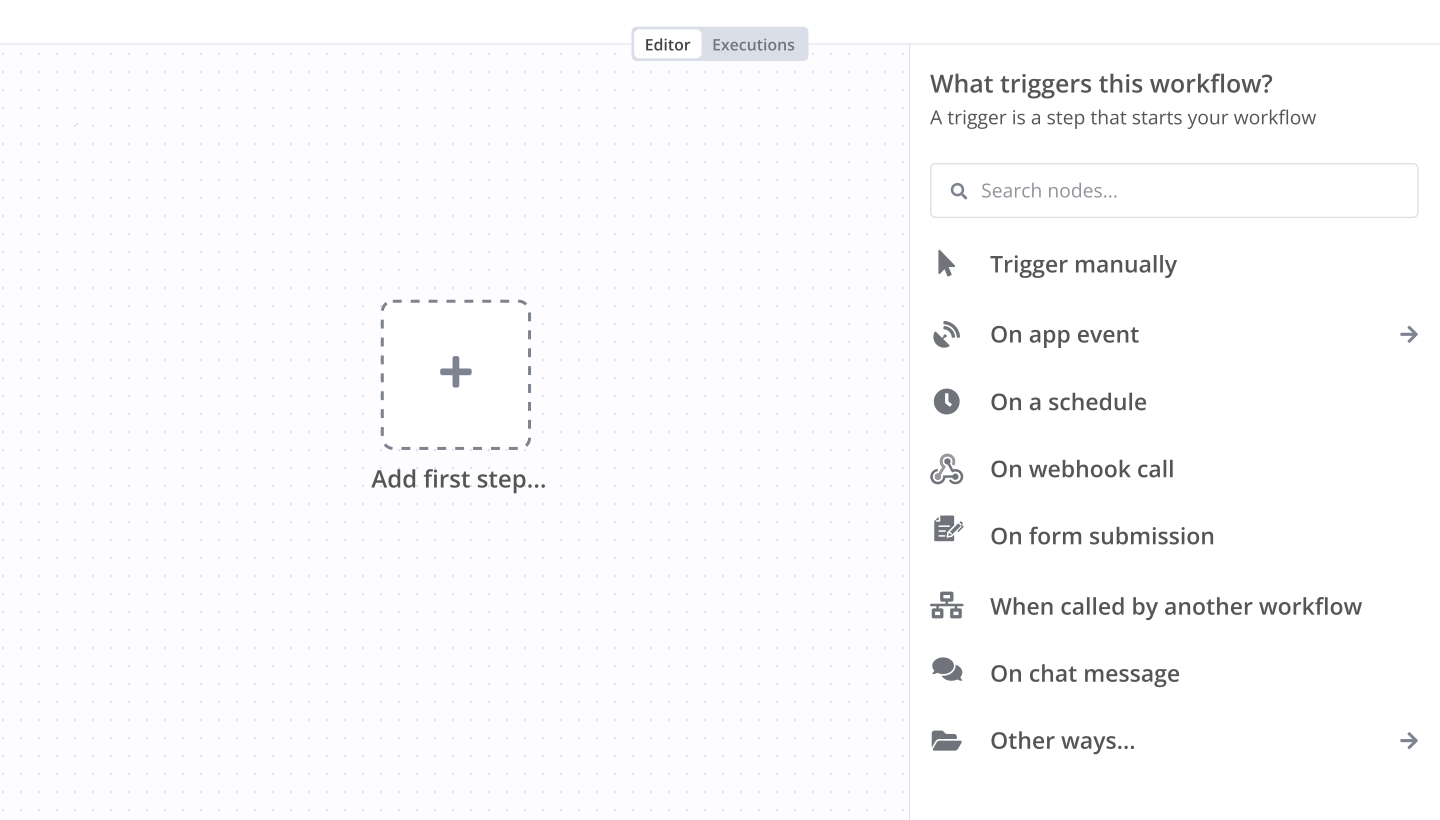
Step 1: Create a new workflow and add the first step

In n8n, click the "Add workflow" button in the Workflows tab to create a new workflow. Add the starting point – a trigger on when your workflow should run: an app event, a schedule, a webhook call, another workflow, an AI chat, or a manual trigger. Sometimes, the HTTP Request node might already serve as your starting point.

Webhook and Zoom integration: Create a new workflow and add the first step

Step 2: Add and configure Webhook and Zoom nodes

You can find Webhook and Zoom in the nodes panel. Drag them onto your workflow canvas, selecting their actions. Click each node, choose a credential, and authenticate to grant n8n access. Configure Webhook and Zoom nodes one by one: input data on the left, parameters in the middle, and output data on the right.

Webhook and Zoom integration: Add and configure Webhook and Zoom nodes

Step 3: Connect Webhook and Zoom

A connection establishes a link between Webhook and Zoom (or vice versa) to route data through the workflow. Data flows from the output of one node to the input of another. You can have single or multiple connections for each node.

Webhook and Zoom integration: Connect Webhook and Zoom

Step 4: Customize and extend your Webhook and Zoom integration

Use n8n's core nodes such as If, Split Out, Merge, and others to transform and manipulate data. Write custom JavaScript or Python in the Code node and run it as a step in your workflow. Connect Webhook and Zoom with any of n8n’s 1000+ integrations, and incorporate advanced AI logic into your workflows.

Webhook and Zoom integration: Customize and extend your Webhook and Zoom integration

Step 5: Test and activate your Webhook and Zoom workflow

Save and run the workflow to see if everything works as expected. Based on your configuration, data should flow from Webhook to Zoom or vice versa. Easily debug your workflow: you can check past executions to isolate and fix the mistake. Once you've tested everything, make sure to save your workflow and activate it.

Webhook and Zoom integration: Test and activate your Webhook and Zoom workflow

Schedule client meetings via web forms with Google Calendar, Zoom

Who it's for
This n8n workflow is designed for businesses, consultants, and service providers who want to automate their meeting scheduling process. The workflow creates a seamless booking system that can handle meeting requests, check availability, create calendar events, set up video conferences, and send notifications through multiple channels.

Features
Integrates with web forms to receive booking requests
Checks Google Calendar availability automatically
Creates calendar events with booking details
Sets up Zoom meetings instantly
Sends notifications via email, WhatsApp, Discord, and Teams
Notifies politely if requested slots aren’t available
Supports Your time zone conversions

Requirements
Google Calendar API Credentials**: For checking availability and creating events
Zoom API Credentials**: For generating meeting links and video conferences
Gmail OAuth2 Credentials**: For sending email confirmations
Notification Service Credentials**:
Discord Bot API, Microsoft Teams API, Rapiwa API (for WhatsApp)

Important Notes
Time Zone Configuration**: The workflow is set to Asia/Dhaka time zone but can be customized
Meeting Settings**: Default meeting duration (40 minutes) and password can be adjusted
Notification Templates**: All notification messages can be customized to match your brand voice
Calendar Selection**: Ensure the correct Google Calendar ID is configured for your booking system

Support & Help
WhatsApp**: Chat on WhatsApp
Discord**: SpaGreen Community
Facebook Group**: SpaGreen Support
Website**: https://spagreen.net
Developer Portfolio**: Codecanyon SpaGreen

Nodes used in this workflow

Popular Webhook and Zoom workflows

+4

Generate continuous PRD updates in Google Docs from Slack, Zoom, Jira, Zendesk, Figma and analytics using OpenAI

This workflow creates an automated Product Intelligence Engine that continuously collects signals from multiple product sources and generates structured PRD updates using AI. It ingests conversations, feedback, support tickets, analytics, and design comments, standardizes them, analyzes them with an AI PRD Agent, and automatically updates a Google Doc with structured PRD recommendations. Instead of manually reviewing Slack threads, Zoom calls, Jira comments, support tickets, and customer forms, this workflow centralizes everything into one intelligent PRD analysis system. High-Level Architecture - The workflow runs in 4 layers: Signal Ingestion Layer Captures product signals from: • Slack (channel messages + app mentions) • Customer Form submissions • Zoom recordings (scheduled) • Jira comments (scheduled) • Zendesk tickets (scheduled) • Figma comments (file updates) • Platform analytics via webhook • (Extendable to Salesforce / HubSpot) Standardization Layer Each source passes through a Format Node that: • Extracts relevant text • Normalizes metadata • Adds timestamps • Labels source type All inputs are converted into a unified "product signal" object. Intelligence Layer (AI PRD Agent) All signals are merged into a single stream using a Merge node. The PRD Analysis Agent then: • Extracts feature requests • Detects scope changes • Identifies risks and constraints • Evaluates priority signals • Detects target user shifts • Generates structured PRD updates PRD Governance Layer - output in a Google Doc The structured AI output is appended to a Google Doc, which is fully traceable. This creates a living PRD that continuously evolves based on real product signals. Required Credentials (And How To Add Them): You will need to configure the following credentials in n8n: Slack Used for Slack Trigger. Steps: Create a Slack App at api.slack.com Enable: app_mentions:read channels:history chat:write (optional if you want replies) Install app to workspace Copy Bot OAuth Token In n8n → Create Slack API credential Paste token Reference - https://www.youtube.com/watch?v=qk5JH6ImK0I Zoom (OAuth2) Used to fetch recordings. Steps: Create an OAuth App in Zoom Marketplace Add the Redirect URL from n8n Copy Client ID + Secret Add Zoom OAuth2 credential in n8n Connect account Reference - https://www.youtube.com/watch?v=BC6O_3LYgac Google Docs (OAuth2) Used to update PRD document. Steps: Create Google Cloud Project Add Doc URl to n8n Replace the example Google Doc URL with your own PRD document. Reference - https://www.youtube.com/watch?v=iieEHvu93dc Jira (Cloud) Steps: Generate API token from Atlassian Create Jira Software Cloud credential Enter: Email API token Domain Reference - https://www.youtube.com/watch?v=T4z7lzqSZDY Zendesk Steps: Generate API token Add Zendesk credential Enter: Subdomain Email API token Figma Steps: Generate a personal access token in Figma Add Figma credentials with the team ID Paste token Platform Analytics Webhook Replace: <PLACEHOLDER_VALUE__your_analytics_api_endpoint> With your real analytics endpoint. You can: • Send Mixpanel exports • Send Amplitude exports • Or POST custom JSON What Makes This Powerful • Eliminates product signal silos • Creates AI-driven PRD governance • Ensures traceability of decisions • Enables continuous PRD evolution • Scales across teams

Form to Meeting: Google Calendar, Zoom, Gmail & Slack Booking Automation

Who’s it for Teams that collect meeting requests via a form and want instant, error-free scheduling: customer success, sales, education, agencies, and community managers. How it works / What it does This workflow ingests a form submission (name, email, preferred date/time), checks Google Calendar for conflicts, and branches automatically. If the slot is free, it creates a calendar event, spins up a Zoom meeting, emails the guest a confirmation, and posts a Slack summary to your team. If busy, it sends a polite “please pick another time” email. Time handling defaults to Asia/Tokyo and converts to ISO internally to keep downstream integrations consistent. How to set up Import the workflow and rename nodes for clarity if needed. Open the Workflow Configuration (Set) node and adjust variables (calendar ID, meeting duration, Slack channel, sender info). Map your form fields in Extract Booking Details. Connect credentials in each service node (Google Calendar, Zoom, Gmail, Slack). Test once with a real submission. Requirements Active accounts and n8n credentials for Google Calendar, Zoom, Gmail, and Slack. A form or webhook source that sends name, email, and a valid datetime. How to customize the workflow Duration & buffers: Change end time calculation in Extract Booking Details. Time zones: If you accept multiple time zones, normalize before building ISO strings. Email copy: Personalize confirmation/alternative-time messages and add attachments if desired. Slack format: Enrich the post with fields (host, Zoom join URL, internal tags). Routing: Add CRM updates or reminders after the “slot free” branch. Security note: No hardcoded API keys in HTTP nodes. Configure all credentials via n8n’s credential manager.

Schedule client meetings via web forms with Google Calendar, Zoom

Who it's for This n8n workflow is designed for businesses, consultants, and service providers who want to automate their meeting scheduling process. The workflow creates a seamless booking system that can handle meeting requests, check availability, create calendar events, set up video conferences, and send notifications through multiple channels. Features Integrates with web forms to receive booking requests Checks Google Calendar availability automatically Creates calendar events with booking details Sets up Zoom meetings instantly Sends notifications via email, WhatsApp, Discord, and Teams Notifies politely if requested slots aren’t available Supports Your time zone conversions Requirements Google Calendar API Credentials**: For checking availability and creating events Zoom API Credentials**: For generating meeting links and video conferences Gmail OAuth2 Credentials**: For sending email confirmations Notification Service Credentials**: Discord Bot API, Microsoft Teams API, Rapiwa API (for WhatsApp) Important Notes Time Zone Configuration**: The workflow is set to Asia/Dhaka time zone but can be customized Meeting Settings**: Default meeting duration (40 minutes) and password can be adjusted Notification Templates**: All notification messages can be customized to match your brand voice Calendar Selection**: Ensure the correct Google Calendar ID is configured for your booking system Support & Help WhatsApp**: Chat on WhatsApp Discord**: SpaGreen Community Facebook Group**: SpaGreen Support Website**: https://spagreen.net Developer Portfolio**: Codecanyon SpaGreen
+2

Automate Lead Qualification & Follow-up with Gemini, HubSpot, Zoom & Mailchimp

Lead Qualification & Follow‑up (Gemini) Automate lead intake, AI qualification, and next‑step outreach. Qualified leads get a scheduled meeting, Zoom details, an email confirmation, CRM update, and Mailchimp enrollment. Not‑qualified leads receive a follow‑up sequence, CRM update, and a 30‑day reminder. What this workflow does AI qualifies leads as QUALIFIED or NOT QUALIFIED using Google Gemini. Supports two triggers: Webhook (wordpress-form) or n8n Form Trigger. QUALIFIED branch: AI phone call via VAPI Schedules Google Calendar event Creates Zoom meeting Sends confirmation email via Gmail Adds to Mailchimp audience Updates contact in HubSpot NOT QUALIFIED branch: AI phone call via VAPI Adds to Mailchimp audience Sends follow‑up email via Gmail Updates contact in HubSpot Creates 30‑day follow‑up calendar event Apps and credentials required Google Gemini (PaLM/Gemini API) Gmail HubSpot Zoom Google Calendar VAPI (for AI phone calls) Mailchimp Environment variables MAILCHIMP_LIST_ID_QUALIFIED=your_mailchimp_list_id_for_qualified MAILCHIMP_LIST_ID_FOLLOWUP=your_mailchimp_list_id_for_followup Triggers supported Webhook: path wordpress-form (POST) Form Trigger: built‑in n8n form Use only one in production. Keep the other disabled. Expected input (fields) name: string email: string message: string If using Webhook, send a JSON body with the fields above. Setup Connect credentials: Google Gemini (model: models/gemini-2.5-flash) Gmail HubSpot (OAuth) Zoom Google Calendar (select the target calendar) VAPI (HTTP header auth: Bearer token) Set env vars: MAILCHIMP_LIST_ID_QUALIFIED MAILCHIMP_LIST_ID_FOLLOWUP Choose your trigger: Webhook: enable and use the provided URL for wordpress-form Form Trigger: enable and publish the form Review timing: adjust Wait nodes for your timezone and SLA. Personalize messaging: edit Gmail subjects/bodies and Zoom topic. CRM and lists: confirm HubSpot properties and Mailchimp list IDs. How it works (at a glance) Intake → AI classifies (QUALIFIED / NOT QUALIFIED) QUALIFIED: VAPI call → Schedule Calendar → Create Zoom → Add to Mailchimp (qualified) → Gmail confirmation → HubSpot update NOT QUALIFIED: VAPI call → Add to Mailchimp (follow‑up) → Gmail follow‑up → HubSpot update → 30‑day calendar event Test the workflow (before going live) Submit a test via your chosen trigger with name, email, message. Confirm AI decision at the “Lead Decision” node. If QUALIFIED: VAPI call executed Calendar event created Zoom meeting created (join URL available) Mailchimp enrollment (qualified list) Gmail confirmation sent HubSpot contact created/updated If NOT QUALIFIED: VAPI call executed Mailchimp enrollment (follow‑up list) Gmail follow‑up sent HubSpot updated 30‑day calendar reminder created Open any failing HTTP nodes and review response codes/messages. Go‑live checklist All credentials connected (no warnings) MAILCHIMP_LIST_ID_QUALIFIED and MAILCHIMP_LIST_ID_FOLLOWUP set Timezone and delays validated Email copy approved Only one trigger enabled Final end‑to‑end test passed Toggle workflow Active Customization ideas Add a Slack or Microsoft Teams notification on QUALIFIED Enrich leads (Clearbit, ZoomInfo, etc.) before AI decision Swap Mailchimp for your ESP (Klaviyo, SendGrid Marketing) Add a second‑chance branch for ambiguous AI classifications Localize email copy by country or language Troubleshooting Webhook receives no data: ensure external form POSTs JSON to the n8n URL and network rules allow it. AI decision empty/garbled: verify Gemini credentials/model ID and input fields. Mailchimp errors: verify List IDs and that email is valid. Gmail send fails: check OAuth scopes and daily limits. Zoom/Calendar issues: re‑connect OAuth; verify calendar access. HubSpot errors: confirm OAuth scopes and property mappings. Security and scopes Gmail: send email Google Calendar: create events Zoom: create meetings HubSpot: read/write contacts Mailchimp: list membership VAPI: authenticated HTTP requests Gemini: model inference Use least‑privilege for each integration. Limits and notes Gmail and Mailchimp rate limits may apply during spikes. Zoom and Google Calendar API quotas apply for frequent scheduling. VAPI call timeouts are 30s by default; adjust as needed. Changelog 2025‑09‑15: Initial public template with dual triggers, Gemini qualification, VAPI calls, scheduling, Mailchimp, Gmail, and HubSpot updates.

Build your own Webhook and Zoom integration

Create custom Webhook and Zoom workflows by choosing triggers and actions. Nodes come with global operations and settings, as well as app-specific parameters that can be configured. You can also use the HTTP Request node to query data from any app or service with a REST API.

Zoom supported actions

Create
Create a meeting
Delete
Delete a meeting
Get
Retrieve a meeting
Get Many
Retrieve many meetings
Update
Update a meeting

Webhook and Zoom integration details

integrationWebhook node
Webhook

Webhooks are automatic notifications that apps send when something occurs. They are sent to a certain URL, which is effectively the app's phone number or address, and contain a message or payload. Polling is nearly never quicker than webhooks, and it takes less effort from you.

Use case

Save engineering resources

Reduce time spent on customer integrations, engineer faster POCs, keep your customer-specific functionality separate from product all without having to code.

Learn more

FAQs

  • Can Webhook connect with Zoom?

  • Can I use Webhook’s API with n8n?

  • Can I use Zoom’s API with n8n?

  • Is n8n secure for integrating Webhook and Zoom?

  • How to get started with Webhook and Zoom integration in n8n.io?

Need help setting up your Webhook and Zoom integration?

Discover our latest community's recommendations and join the discussions about Webhook and Zoom integration.
Benjamin Hatton
Albert Ashkhatoyan
Víctor González
Salomão
sg tech

Looking to integrate Webhook and Zoom in your company?

Over 3000 companies switch to n8n every single week

Why use n8n to integrate Webhook with Zoom

Build complex workflows, really fast

Build complex workflows, really fast

Handle branching, merging and iteration easily.
Pause your workflow to wait for external events.

Code when you need it, UI when you don't

Simple debugging

Your data is displayed alongside your settings, making edge cases easy to track down.

Use templates to get started fast

Use 1000+ workflow templates available from our core team and our community.

Reuse your work

Copy and paste, easily import and export workflows.

Implement complex processes faster with n8n

red iconyellow iconred iconyellow icon