Back to Integrations
integrationWooCommerce node
integrationZendesk node

WooCommerce and Zendesk integration

Save yourself the work of writing custom integrations for WooCommerce and Zendesk and use n8n instead. Build adaptable and scalable Sales, and Communication workflows that work with your technology stack. All within a building experience you will love.

How to connect WooCommerce and Zendesk

  • Step 1: Create a new workflow
  • Step 2: Add and configure nodes
  • Step 3: Connect
  • Step 4: Customize and extend your integration
  • Step 5: Test and activate your workflow

Step 1: Create a new workflow and add the first step

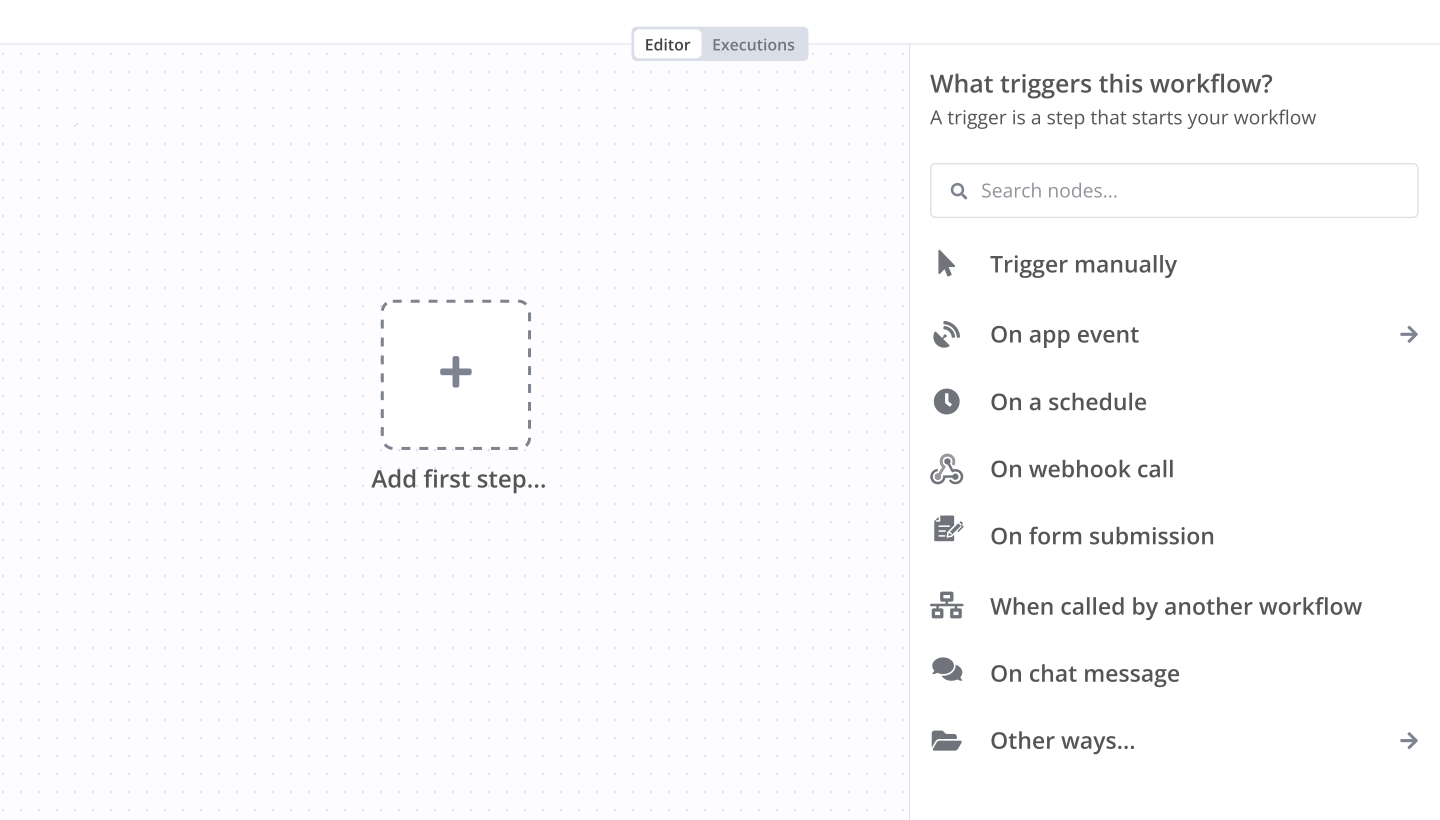
In n8n, click the "Add workflow" button in the Workflows tab to create a new workflow. Add the starting point – a trigger on when your workflow should run: an app event, a schedule, a webhook call, another workflow, an AI chat, or a manual trigger. Sometimes, the HTTP Request node might already serve as your starting point.

WooCommerce and Zendesk integration: Create a new workflow and add the first step

Step 2: Add and configure WooCommerce and Zendesk nodes

You can find WooCommerce and Zendesk in the nodes panel. Drag them onto your workflow canvas, selecting their actions. Click each node, choose a credential, and authenticate to grant n8n access. Configure WooCommerce and Zendesk nodes one by one: input data on the left, parameters in the middle, and output data on the right.

WooCommerce and Zendesk integration: Add and configure WooCommerce and Zendesk nodes

Step 3: Connect WooCommerce and Zendesk

A connection establishes a link between WooCommerce and Zendesk (or vice versa) to route data through the workflow. Data flows from the output of one node to the input of another. You can have single or multiple connections for each node.

WooCommerce and Zendesk integration: Connect WooCommerce and Zendesk

Step 4: Customize and extend your WooCommerce and Zendesk integration

Use n8n's core nodes such as If, Split Out, Merge, and others to transform and manipulate data. Write custom JavaScript or Python in the Code node and run it as a step in your workflow. Connect WooCommerce and Zendesk with any of n8n’s 1000+ integrations, and incorporate advanced AI logic into your workflows.

WooCommerce and Zendesk integration: Customize and extend your WooCommerce and Zendesk integration

Step 5: Test and activate your WooCommerce and Zendesk workflow

Save and run the workflow to see if everything works as expected. Based on your configuration, data should flow from WooCommerce to Zendesk or vice versa. Easily debug your workflow: you can check past executions to isolate and fix the mistake. Once you've tested everything, make sure to save your workflow and activate it.

WooCommerce and Zendesk integration: Test and activate your WooCommerce and Zendesk workflow

Match WooCommerce orders to new Zendesk tickets and send confirmation emails

Zendesk New Ticket → WooCommerce Order Matching, Tagging & Email Automation

Automatically enrich Zendesk tickets with WooCommerce order details and reduce manual lookups.

This workflow listens for new Zendesk tickets, fetches the ticket requester’s details, retrieves recent WooCommerce orders, matches them by customer email and updates the ticket with order information and relevant tags. If a matching order is marked as completed, it also sends a confirmation email to the customer.

Quick Implementation Steps

Connect Zendesk, WooCommerce and Gmail credentials in n8n.
Import the workflow JSON and review node credentials.
Adjust the WooCommerce order fetch limit if needed.
Activate the workflow.

That’s it — new tickets will now automatically include order context.

What It Does

This workflow bridges the gap between customer support and order management by linking Zendesk tickets with WooCommerce orders. When a new ticket is created, the workflow retrieves the requester’s profile to identify their email address, which is then used to find related orders in WooCommerce.

Because direct email-based filtering is not available in the WooCommerce node, the workflow fetches the latest five orders and performs email matching internally within n8n. This ensures accurate matching while working around platform limitations.

Once a matching order is found, the workflow extracts essential details such as order number, status, currency and purchased items. It updates the Zendesk ticket with a private internal note and applies clear order-status-based tags. If the order is marked as completed, the workflow also sends a confirmation email to the customer.

Who’s It For

Customer support teams using Zendesk and WooCommerce
E-commerce businesses handling frequent order-related inquiries
Support managers aiming to reduce manual order lookups
Teams that want faster, more consistent ticket responses

Requirements to Use This Workflow

An active Zendesk account with API access
A WooCommerce store with REST API credentials
A Gmail account (OAuth2) for sending customer emails
An active n8n instance
Permission to update tickets and users in Zendesk

How It Works & How To Set Up

Workflow Logic Overview

Trigger on New Ticket
The workflow starts when a new Zendesk ticket is created with status new.

Fetch Ticket Requester Details
The requester’s user profile is retrieved to obtain their email address.

Fetch Recent WooCommerce Orders
The workflow retrieves the latest five orders from WooCommerce.

Match Customer Email
Each order’s billing email is compared with the Zendesk requester’s email.
Only matching orders continue through the workflow.

Generate Zendesk Tags
Order status is evaluated and mapped to meaningful Zendesk tags.

Prepare Ticket Update Payload
Order details and tags are formatted for the Zendesk update.

Update Zendesk Ticket
A private internal note is added to the ticket, along with order-related tags.

Check for Completed Orders
If the order status is completed, the workflow proceeds to send an email.

Send Confirmation Email
The customer receives a confirmation email with their order details.

Setup Instructions

Update credentials in all Zendesk, WooCommerce and Gmail nodes.
Review the WooCommerce order fetch limit (default: 5).
Verify the email comparison logic in the IF node.
Activate the workflow once testing is complete.

How To Customize Nodes

WooCommerce – Fetch Recent Orders**
Increase or decrease the limit value to control how many recent orders are checked.
Match Customer Email (IF Node)**
Modify comparison logic (for example, make it case-insensitive).
Generate Zendesk Tags (Code Node)**
Add or change tags based on custom order statuses.
Zendesk – Update Ticket**
Customize the internal note format or add additional fields.
Send Order Confirmation Email**
Edit the email content or disable this node if emails are not required.

Add-ons (Additional Features)

SLA-based ticket prioritization
Shipment tracking number enrichment
Refund and cancellation detection
Slack or Microsoft Teams notifications
Extended reporting using Zendesk tags

Use Case Examples

Automatically attaching order details to “Where is my order?” tickets
Speeding up refund or replacement requests
Reducing agent time spent switching between Zendesk and WooCommerce
Applying consistent order-status tags for analytics
Sending proactive confirmation emails for completed orders

There are many more possible use cases depending on how this workflow is extended or customized.

Troubleshooting Guide

Issue Possible Cause Solution
No order found Customer used a different email Ask the customer to confirm the checkout email
Wrong order matched Order not in recent fetch range Increase the WooCommerce order fetch limit
No email sent Order status is not completed Confirm order status or customize the IF condition
Ticket not updated Zendesk permission issue Verify API credentials and scopes
Tags missing Code node not triggered Check order status logic in the Code node

Need Help?

If you need help setting up this workflow, customizing nodes or building additional automation, WeblineIndia is here to support you.

Our team specializes in n8n workflow automation, Zendesk integrations and WooCommerce process optimization. Whether you want to extend this workflow or build a similar solution tailored to your business, feel free to reach out to WeblineIndia for expert assistance.

Nodes used in this workflow

Popular WooCommerce and Zendesk workflows

Handle Zendesk WooCommerce refund tickets with Slack and Gmail

Zendesk Refund Ticket Automation with WooCommerce Order Lookup, Slack Alerts & Gmail Emails This workflow automatically handles refund-related Zendesk tickets for WooCommerce orders. When a new refund ticket is created, it verifies whether the ticket is related to WooCommerce, fetches the order details, checks refund eligibility and then routes the case based on the refund type. Damaged items notify the internal team via Slack, while other refund cases trigger customer emails via Gmail for further proof or confirmation. Quick Implementation Steps Import the workflow JSON into n8n Connect Zendesk, WooCommerce, Slack and Gmail credentials Update Slack channel and Gmail sender settings Activate the workflow Start receiving and processing refund tickets automatically What It Does This workflow listens for new Zendesk tickets and checks whether they are related to WooCommerce refunds. If the ticket qualifies, it extracts the order ID from the ticket description and fetches the corresponding order from WooCommerce. Once the order data is retrieved, the workflow validates the order status and checks whether a refund already exists. Eligible cases are merged with ticket data and routed based on the refund reason, such as damaged items, wrong items, partial refunds or full refunds. For damaged items, the workflow immediately notifies the internal support team via Slack. For other refund types, it sends structured and context-aware emails to customers using Gmail, requesting proof or informing them about next steps. Who’s It For Customer support teams handling WooCommerce refunds Operations teams managing refund communication E-commerce businesses using Zendesk and WooCommerce Non-technical users who want automated ticket handling without coding Requirements to Use This Workflow Active Zendesk account with ticket access WooCommerce store** with REST API credentials Slack workspace** with permission to post messages Gmail account** connected via OAuth2 n8n instance (Cloud or Self-hosted) How It Works & Set Up Setup Instructions Import Workflow Upload the workflow JSON into your n8n instance. Zendesk Trigger Configuration Connect Zendesk OAuth credentials Trigger runs when a new ticket is created WooCommerce Configuration Add WooCommerce API credentials Ensure permission to fetch orders by ID Slack Setup Select the Slack channel for damaged item alerts Gmail Setup Connect Gmail OAuth Configure sender email and reply settings Activate Workflow Save and activate the workflow New refund tickets will now be processed automatically How To Customize Nodes Order ID Regex**: Modify extraction logic in the Zendesk normalization node Refund Keywords**: Update refund-type detection keywords (damaged, wrong, partial, full) Slack Message Format**: Customize internal notification content Email Templates**: Change subject lines and messages in Set nodes Eligibility Rules**: Adjust order status or refund conditions in IF nodes Add-ons (Optional Enhancements) Auto-tag Zendesk tickets based on refund type Assign tickets to specific agents or groups Log refund cases to Google Sheets or Airtable Add SLA timers for refund response tracking Integrate WhatsApp or SMS notifications Use Case Examples Automatically handle damaged product refund requests Ask customers for proof when wrong items are delivered Notify support teams instantly for high-priority refund cases Reduce manual order lookups for refund tickets Standardize refund communication across support channels > There can be many more similar use cases depending on business needs. Troubleshooting Guide | Issue | Possible Cause | Solution | |-----|---------------|----------| | Order ID is null | Order number not in ticket text | Ask customers to include order number | | Workflow not triggering | Zendesk trigger misconfigured | Check trigger event type | | Slack message not sent | Channel or credentials incorrect | Reconnect Slack account | | Email not delivered | Gmail OAuth expired | Reauthorize Gmail | | Workflow stops early | Order already refunded | This is expected behavior | Need Help? If you need help setting up this workflow or extending it with advanced automation then our n8n workflow developers at WeblineIndia are happy to assist.

Match WooCommerce orders to new Zendesk tickets and send confirmation emails

Zendesk New Ticket → WooCommerce Order Matching, Tagging & Email Automation Automatically enrich Zendesk tickets with WooCommerce order details and reduce manual lookups. This workflow listens for new Zendesk tickets, fetches the ticket requester’s details, retrieves recent WooCommerce orders, matches them by customer email and updates the ticket with order information and relevant tags. If a matching order is marked as completed, it also sends a confirmation email to the customer. Quick Implementation Steps Connect Zendesk, WooCommerce and Gmail credentials in n8n. Import the workflow JSON and review node credentials. Adjust the WooCommerce order fetch limit if needed. Activate the workflow. That’s it — new tickets will now automatically include order context. What It Does This workflow bridges the gap between customer support and order management by linking Zendesk tickets with WooCommerce orders. When a new ticket is created, the workflow retrieves the requester’s profile to identify their email address, which is then used to find related orders in WooCommerce. Because direct email-based filtering is not available in the WooCommerce node, the workflow fetches the latest five orders and performs email matching internally within n8n. This ensures accurate matching while working around platform limitations. Once a matching order is found, the workflow extracts essential details such as order number, status, currency and purchased items. It updates the Zendesk ticket with a private internal note and applies clear order-status-based tags. If the order is marked as completed, the workflow also sends a confirmation email to the customer. Who’s It For Customer support teams using Zendesk and WooCommerce E-commerce businesses handling frequent order-related inquiries Support managers aiming to reduce manual order lookups Teams that want faster, more consistent ticket responses Requirements to Use This Workflow An active Zendesk account with API access A WooCommerce store with REST API credentials A Gmail account (OAuth2) for sending customer emails An active n8n instance Permission to update tickets and users in Zendesk How It Works & How To Set Up Workflow Logic Overview Trigger on New Ticket The workflow starts when a new Zendesk ticket is created with status new. Fetch Ticket Requester Details The requester’s user profile is retrieved to obtain their email address. Fetch Recent WooCommerce Orders The workflow retrieves the latest five orders from WooCommerce. Match Customer Email Each order’s billing email is compared with the Zendesk requester’s email. Only matching orders continue through the workflow. Generate Zendesk Tags Order status is evaluated and mapped to meaningful Zendesk tags. Prepare Ticket Update Payload Order details and tags are formatted for the Zendesk update. Update Zendesk Ticket A private internal note is added to the ticket, along with order-related tags. Check for Completed Orders If the order status is completed, the workflow proceeds to send an email. Send Confirmation Email The customer receives a confirmation email with their order details. Setup Instructions Update credentials in all Zendesk, WooCommerce and Gmail nodes. Review the WooCommerce order fetch limit (default: 5). Verify the email comparison logic in the IF node. Activate the workflow once testing is complete. How To Customize Nodes WooCommerce – Fetch Recent Orders** Increase or decrease the limit value to control how many recent orders are checked. Match Customer Email (IF Node)** Modify comparison logic (for example, make it case-insensitive). Generate Zendesk Tags (Code Node)** Add or change tags based on custom order statuses. Zendesk – Update Ticket** Customize the internal note format or add additional fields. Send Order Confirmation Email** Edit the email content or disable this node if emails are not required. Add-ons (Additional Features) SLA-based ticket prioritization Shipment tracking number enrichment Refund and cancellation detection Slack or Microsoft Teams notifications Extended reporting using Zendesk tags Use Case Examples Automatically attaching order details to “Where is my order?” tickets Speeding up refund or replacement requests Reducing agent time spent switching between Zendesk and WooCommerce Applying consistent order-status tags for analytics Sending proactive confirmation emails for completed orders There are many more possible use cases depending on how this workflow is extended or customized. Troubleshooting Guide | Issue | Possible Cause | Solution | |------|---------------|----------| | No order found | Customer used a different email | Ask the customer to confirm the checkout email | | Wrong order matched | Order not in recent fetch range | Increase the WooCommerce order fetch limit | | No email sent | Order status is not completed | Confirm order status or customize the IF condition | | Ticket not updated | Zendesk permission issue | Verify API credentials and scopes | | Tags missing | Code node not triggered | Check order status logic in the Code node | Need Help? If you need help setting up this workflow, customizing nodes or building additional automation, WeblineIndia is here to support you. Our team specializes in n8n workflow automation, Zendesk integrations and WooCommerce process optimization. Whether you want to extend this workflow or build a similar solution tailored to your business, feel free to reach out to WeblineIndia for expert assistance.

Build your own WooCommerce and Zendesk integration

Create custom WooCommerce and Zendesk workflows by choosing triggers and actions. Nodes come with global operations and settings, as well as app-specific parameters that can be configured. You can also use the HTTP Request node to query data from any app or service with a REST API.

WooCommerce supported actions

Create
Create a customer
Delete
Delete a customer
Get
Retrieve a customer
Get Many
Retrieve many customers
Update
Update a customer
Create
Create a order
Delete
Delete a order
Get
Get a order
Get Many
Get many orders
Update
Update a order
Create
Create a product
Delete
Delete a product
Get
Get a product
Get Many
Get many products
Update
Update a product

Zendesk supported actions

Create
Create a ticket
Delete
Delete a ticket
Get
Get a ticket
Get Many
Get many tickets
Recover
Recover a suspended ticket
Update
Update a ticket
Get
Get a ticket field
Get Many
Get many system and custom ticket fields
Create
Create a user
Delete
Delete a user
Get
Get a user
Get Many
Get many users
Get Organizations
Get a user's organizations
Get Related Data
Get data related to the user
Search
Search users
Update
Update a user
Count
Count organizations
Create
Create an organization
Delete
Delete an organization
Get
Get an organization
Get Many
Get many organizations
Get Related Data
Get data related to the organization
Update
Update a organization

FAQs

  • Can WooCommerce connect with Zendesk?

  • Can I use WooCommerce’s API with n8n?

  • Can I use Zendesk’s API with n8n?

  • Is n8n secure for integrating WooCommerce and Zendesk?

  • How to get started with WooCommerce and Zendesk integration in n8n.io?

Need help setting up your WooCommerce and Zendesk integration?

Discover our latest community's recommendations and join the discussions about WooCommerce and Zendesk integration.
Rafael Serrano

Looking to integrate WooCommerce and Zendesk in your company?

Over 3000 companies switch to n8n every single week

Why use n8n to integrate WooCommerce with Zendesk

Build complex workflows, really fast

Build complex workflows, really fast

Handle branching, merging and iteration easily.
Pause your workflow to wait for external events.

Code when you need it, UI when you don't

Simple debugging

Your data is displayed alongside your settings, making edge cases easy to track down.

Use templates to get started fast

Use 1000+ workflow templates available from our core team and our community.

Reuse your work

Copy and paste, easily import and export workflows.

Implement complex processes faster with n8n

red iconyellow iconred iconyellow icon