Back to Integrations
integrationZendesk node
integrationGoogle Sheets node

Zendesk and Google Sheets integration

Save yourself the work of writing custom integrations for Zendesk and Google Sheets and use n8n instead. Build adaptable and scalable Communication, Data & Storage, and Productivity workflows that work with your technology stack. All within a building experience you will love.

How to connect Zendesk and Google Sheets

  • Step 1: Create a new workflow
  • Step 2: Add and configure nodes
  • Step 3: Connect
  • Step 4: Customize and extend your integration
  • Step 5: Test and activate your workflow

Step 1: Create a new workflow and add the first step

In n8n, click the "Add workflow" button in the Workflows tab to create a new workflow. Add the starting point – a trigger on when your workflow should run: an app event, a schedule, a webhook call, another workflow, an AI chat, or a manual trigger. Sometimes, the HTTP Request node might already serve as your starting point.
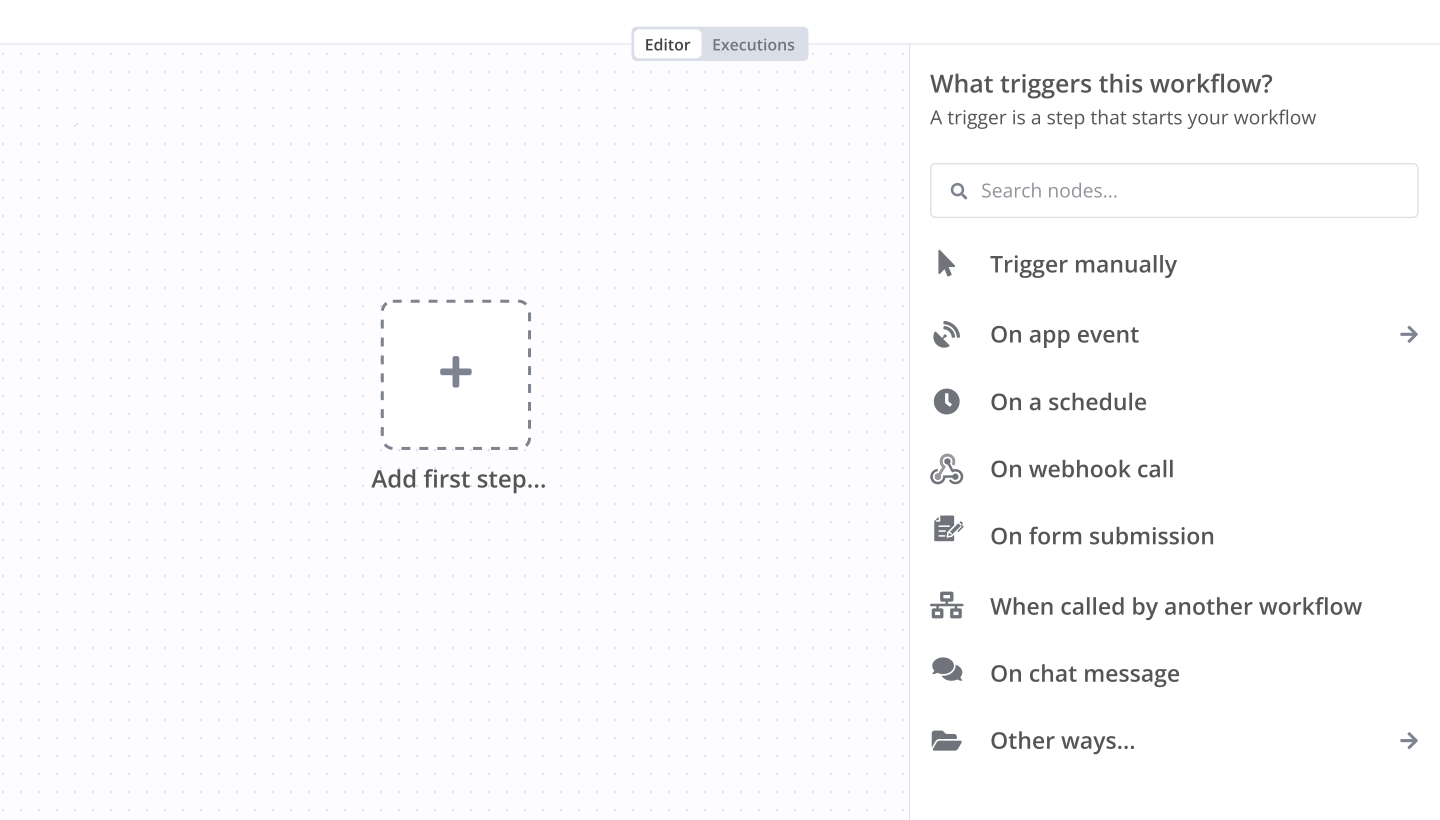
Zendesk and Google Sheets integration: Create a new workflow and add the first step

Step 2: Add and configure Zendesk and Google Sheets nodes

You can find Zendesk and Google Sheets in the nodes panel. Drag them onto your workflow canvas, selecting their actions. Click each node, choose a credential, and authenticate to grant n8n access. Configure Zendesk and Google Sheets nodes one by one: input data on the left, parameters in the middle, and output data on the right.

Zendesk and Google Sheets integration: Add and configure Zendesk and Google Sheets nodes

Step 3: Connect Zendesk and Google Sheets

A connection establishes a link between Zendesk and Google Sheets (or vice versa) to route data through the workflow. Data flows from the output of one node to the input of another. You can have single or multiple connections for each node.

Zendesk and Google Sheets integration: Connect Zendesk and Google Sheets

Step 4: Customize and extend your Zendesk and Google Sheets integration

Use n8n's core nodes such as If, Split Out, Merge, and others to transform and manipulate data. Write custom JavaScript or Python in the Code node and run it as a step in your workflow. Connect Zendesk and Google Sheets with any of n8n’s 1000+ integrations, and incorporate advanced AI logic into your workflows.

Zendesk and Google Sheets integration: Customize and extend your Zendesk and Google Sheets integration

Step 5: Test and activate your Zendesk and Google Sheets workflow

Save and run the workflow to see if everything works as expected. Based on your configuration, data should flow from Zendesk to Google Sheets or vice versa. Easily debug your workflow: you can check past executions to isolate and fix the mistake. Once you've tested everything, make sure to save your workflow and activate it.

Zendesk and Google Sheets integration: Test and activate your Zendesk and Google Sheets workflow

Escalate payment issues with Azure OpenAI, Google Sheets, Slack and Zendesk

📘 Description

This workflow automates payment-related customer support escalation by validating reported issues against transaction data and coordinating all downstream actions in a controlled, auditable way. It is designed for support teams that need to quickly separate valid payment failures from false or incomplete reports—while maintaining consistent customer communication and timely human intervention.

The workflow is triggered via a webhook whenever an external system reports a customer issue. Incoming data is normalized and cross-checked against Google Sheets, which acts as the single source of truth for transaction status, payment confirmation, and order creation. An AI escalation engine then applies strict, rule-based logic to determine whether the issue is confirmed, needs clarification, or not valid, without assuming or inventing missing information.

For confirmed cases, the workflow runs parallel actions: it generates a concise escalation summary for human support, logs full context to Slack, creates a Zendesk ticket for traceable resolution, and sends a calm, customer-safe email acknowledging the issue. Transaction records are then updated to reflect confirmation status. Robust error handling ensures any workflow failure is immediately surfaced in Slack.

⚙️ What This Workflow Does (Step-by-Step)
📥 Webhook Intake
Receives structured payment issue data from external systems.
🧾 Normalize Incoming Payload
Prepares a consistent data structure for processing.
📊 Transaction Lookup (Google Sheets)
Fetches payment and order details from the source of truth.
🧠 AI Escalation Decision
Validates the issue and classifies it as confirmed, needs clarification, or invalid.
🚨 Notify Human Support
Sends escalation email and logs detailed context to Slack.
✉️ Send Customer-Facing Email
Delivers a calm, professional acknowledgement to the customer.
🎫 Create Zendesk Ticket
Opens a support ticket for confirmed cases requiring manual action.
📝 Update Transaction Record
Marks confirmation status in Google Sheets for auditability.
⚠️ Error Handling → Slack Alert
Immediately alerts the team if any workflow step fails.

🧩 Prerequisites
• Webhook access for incoming issues
• Google Sheets OAuth2 (source of truth)
• Azure OpenAI credentials
• Gmail OAuth2 for email delivery
• Slack API access
• Zendesk API access

💡 Key Benefits
✔ Prevents false or premature escalations
✔ Uses Google Sheets as an authoritative data source
✔ Consistent, customer-safe communication
✔ Parallel handling for speed and clarity
✔ Full audit trail across Sheets, Slack, Email, and Zendesk
✔ Strong error monitoring and reliability

👥 Perfect For
Customer support teams
Payment and order operations
SaaS and transaction-heavy platforms
Businesses handling high-volume support escalations

Nodes used in this workflow

Popular Zendesk and Google Sheets workflows

+8

Enhance Customer Support with RAG-Powered AI

This workflow automates customer support across multiple channels (Email, Live Chat, WhatsApp, Slack, Discord) using AI-powered responses enhanced with Retrieval Augmented Generation (RAG) and your product documentation. It intelligently handles incoming queries, provides instant and context-aware answers, and escalates complex or negative-sentiment cases to your human support team. All interactions are logged and categorized for easy tracking and reporting. Key Features Omnichannel Support:** Handles customer queries from Email, Live Chat, WhatsApp, Slack, and Discord. AI-Powered Answers:** Uses RAG to generate accurate, context-aware responses based on your product documentation. Automatic Escalation:** Detects low-confidence or negative-sentiment cases and escalates them to your human support team. Conversation Logging:** Automatically logs and categorizes all conversations for future analysis. Weekly Reporting:** Sends automated weekly summaries and metrics to your support team. How It Works Trigger: The workflow starts when a new message is received on any supported channel. Normalization: Incoming messages are normalized into a common format for unified processing. Context Management: Conversation history is fetched and merged with the new query for better AI context. AI Response: The workflow uses RAG to generate a response, referencing your product documentation. Confidence & Sentiment Analysis: The response is scored for confidence and sentiment. Escalation Logic: If the response is low-confidence or negative, the workflow escalates the case to your support team and creates a ticket. Response Delivery: The answer (or escalation notice) is sent back to the customer on the original channel. Logging & Reporting: All interactions are logged, categorized, and included in weekly reports. Configuration Connect Your Channels: Set up triggers for each channel you want to support (Email, Webhook, WhatsApp, Slack, Discord). Add Your Documentation: Integrate your product documentation source (e.g., Google Docs, Notion, or a knowledge base) for the RAG model. Configure AI Model: Set your preferred AI provider and model (e.g., OpenAI, Azure OpenAI, etc.). Set Escalation Rules: Adjust confidence thresholds and escalation logic to fit your support workflow. Integrate Support Tools: Connect your ticketing system (e.g., Zendesk) and reporting tools (e.g., Google Sheets, Slack). Test the Workflow: Send test queries from each channel to ensure correct routing, AI responses, and escalation. Use Cases Provide instant, accurate answers to customer questions 24/7. Reduce manual workload for your support team by automating common queries. Ensure complex or sensitive cases are quickly escalated to human agents. Gain insights into support trends with automated logging and weekly reports. Requirements n8n version 2.0.2 or later Accounts and credentials for your chosen channels and AI provider Access to your product documentation in a supported format Notes Please review and customize the workflow to fit your company’s privacy and data handling policies. For best results, keep your product documentation up to date and well-structured.
+2

Escalate payment issues with Azure OpenAI, Google Sheets, Slack and Zendesk

📘 Description This workflow automates payment-related customer support escalation by validating reported issues against transaction data and coordinating all downstream actions in a controlled, auditable way. It is designed for support teams that need to quickly separate valid payment failures from false or incomplete reports—while maintaining consistent customer communication and timely human intervention. The workflow is triggered via a webhook whenever an external system reports a customer issue. Incoming data is normalized and cross-checked against Google Sheets, which acts as the single source of truth for transaction status, payment confirmation, and order creation. An AI escalation engine then applies strict, rule-based logic to determine whether the issue is confirmed, needs clarification, or not valid, without assuming or inventing missing information. For confirmed cases, the workflow runs parallel actions: it generates a concise escalation summary for human support, logs full context to Slack, creates a Zendesk ticket for traceable resolution, and sends a calm, customer-safe email acknowledging the issue. Transaction records are then updated to reflect confirmation status. Robust error handling ensures any workflow failure is immediately surfaced in Slack. ⚙️ What This Workflow Does (Step-by-Step) 📥 Webhook Intake Receives structured payment issue data from external systems. 🧾 Normalize Incoming Payload Prepares a consistent data structure for processing. 📊 Transaction Lookup (Google Sheets) Fetches payment and order details from the source of truth. 🧠 AI Escalation Decision Validates the issue and classifies it as confirmed, needs clarification, or invalid. 🚨 Notify Human Support Sends escalation email and logs detailed context to Slack. ✉️ Send Customer-Facing Email Delivers a calm, professional acknowledgement to the customer. 🎫 Create Zendesk Ticket Opens a support ticket for confirmed cases requiring manual action. 📝 Update Transaction Record Marks confirmation status in Google Sheets for auditability. ⚠️ Error Handling → Slack Alert Immediately alerts the team if any workflow step fails. 🧩 Prerequisites • Webhook access for incoming issues • Google Sheets OAuth2 (source of truth) • Azure OpenAI credentials • Gmail OAuth2 for email delivery • Slack API access • Zendesk API access 💡 Key Benefits ✔ Prevents false or premature escalations ✔ Uses Google Sheets as an authoritative data source ✔ Consistent, customer-safe communication ✔ Parallel handling for speed and clarity ✔ Full audit trail across Sheets, Slack, Email, and Zendesk ✔ Strong error monitoring and reliability 👥 Perfect For Customer support teams Payment and order operations SaaS and transaction-heavy platforms Businesses handling high-volume support escalations

Proactive SLA Monitoring & Ticket Escalation with Zendesk, Slack and Google Sheets

Description: Ensure your customer SLAs never slip with this n8n automation template. The workflow runs on a schedule, fetching open tickets from Zendesk, calculating SLA time remaining, and sending proactive alerts to Slack when tickets approach breach thresholds (75% and 90%). It also updates ticket priority in Zendesk and logs compliance metrics to Google Sheets for reporting. Perfect for support operations, CX teams, and SaaS companies looking to maintain SLA compliance and reduce response delays automatically. ✅ What This Template Does (Step-by-Step) ⏰ Run Every Hour: Automatically triggers every hour to check for SLA-sensitive tickets. 📥 Fetch All Open Zendesk Tickets: Pulls all tickets via the Zendesk API, returning essential fields: ID, status, created_at, sla_due, and priority. 🔍 Filter Only “Open” Tickets: Excludes closed, on-hold, or pending tickets — monitoring focuses only on actionable cases. ⏱️ Calculate SLA Time Remaining: Computes total SLA duration, remaining minutes, and % of SLA consumed for each ticket. 🟡 Warn at 75% Threshold: When 75% of the SLA window has passed, automatically sends a Slack warning to the #general-information channel. 🔴 Escalate at 90% Threshold: For tickets nearing breach (≥90%), the workflow updates Zendesk ticket priority to “High,” adds escalation notes, and notifies the support team for immediate action. 📊 Log SLA Compliance in Google Sheets: Each ticket’s SLA metrics (ID, % elapsed, time remaining, timestamp) are appended to a Google Sheet for tracking and reporting. ✅ No-Ticket Confirmation: If no open tickets exist, the workflow posts a “✅ No open tickets” message to Slack — keeping teams informed of a clear queue. 🧠 Key Features ⏱️ Automated SLA tracking and escalation 📊 Real-time logging to Google Sheets ⚡ Hourly auto-trigger — no manual checks needed 📢 Slack alerts at warning and critical thresholds 🔄 Dynamic Zendesk ticket updates via API 💼 Use Cases 💬 Proactively manage customer support SLAs 🚨 Automatically escalate critical tickets before breach 📈 Maintain transparent SLA compliance reporting 📢 Keep your support team updated in real time 📦 Required Integrations Zendesk API – for ticket retrieval and updates Slack API – for alert notifications Google Sheets – for compliance and reporting logs 🎯 Why Use This Template? ✅ Prevent SLA breaches before they happen ✅ Automate escalation and communication ✅ Provide real-time visibility to support leads ✅ Build a historical SLA performance dataset

Sync Open Zendesk Tickets to Google Sheets with Zendesk and Google Sheets

Description: Stay on top of your support pipeline with this Ticket Status Digest automation for Zendesk. Built in n8n, this workflow automatically fetches tickets from Zendesk, filters only open ones, enriches them with requester details, and saves them into Google Sheets. 📊 Instead of manually checking Zendesk, you get a real-time digest of pending tickets with full customer details—perfect for support leads who need a quick snapshot of unresolved cases. Whether you’re tracking team workload, prioritizing open issues, or preparing daily status reports, this automation ensures your support data is always structured, centralized, and up to date. 🚀 What This Template Does (Step-by-Step) 🔔 Trigger – Manual Start (or Schedule) Begin workflow with a manual trigger (ideal for testing). Can be switched to scheduled runs (daily, hourly) for automated digests. 🎫 Fetch All Tickets (Zendesk) Pulls all tickets from Zendesk API. Captures ticket ID, subject, description, status, priority, tags, and timestamps. 🔍 Filter Open Tickets Only Includes only tickets where status = open. Skips closed, solved, or pending tickets. 👤 User Information Enrichment Looks up requester details (name, email, organization). Converts raw IDs into human-readable contact info. 📊 Save to Google Sheets Appends/updates ticket rows in “Ticket status dummy → Sheet1”. Columns: Ticket No. | Description | Status | Owner | Email | Tag. Required Integrations: Zendesk API (OAuth or API Key) Google Sheets (OAuth2 credentials) Best For: 🧑‍💼 Support leads monitoring unresolved tickets 📈 Managers building daily ticket status dashboards 🤝 Teams that need centralized visibility of customer issues ⏱️ Anyone tired of manual Zendesk data exports Key Benefits: ✅ Automated ticket sync to Google Sheets ✅ Real-time visibility of open issues ✅ Centralized view with enriched requester details ✅ Reduces manual tracking and reporting ✅ Scalable for daily, weekly, or custom digest runs

Sync Zendesk How-To Tickets to Google Sheets Knowledge Base

Description: Keep your customer knowledge base up to date with this n8n automation template. The workflow connects Zendesk with Google Sheets, automatically fetching tickets tagged as “howto,” enriching them with requester details, and saving them into a structured spreadsheet. This ensures your internal or public knowledge base reflects the latest customer how-to queries—without manual copy-pasting. Perfect for customer support teams, SaaS companies, and service providers who want to streamline documentation workflows. What This Template Does (Step-by-Step) ⚡ Manual Trigger or Scheduling Run the workflow manually for testing/troubleshooting, or configure a schedule trigger for daily/weekly updates. 📥 Fetch All Zendesk Tickets Connects to your Zendesk account and retrieves all available tickets. 🔍 Filter for "howto" Tickets Only Processes only tickets that contain the “howto” tag, ensuring relevance. 👤 Enrich User Data Fetches requester details (name, email, profile info) to provide context. 📊 Update Google Sheets Knowledge Base Saves ticket data—including Ticket No., Description, Status, Tag, Owner Name, and Email. ✔️ Smart update prevents duplicates by matching on description. 🔁 Continuous Sync Each new or updated “howto” ticket is synced automatically into your knowledge base sheet. Key Features 🔍 Tag-based filtering for precise categorization 📊 Smart append-or-update logic in Google Sheets ⚡ Zendesk + Google Sheets integration with OAuth2 ♻️ Keeps knowledge base fresh without manual effort 🔐 Secure API credential handling Use Cases 📖 Maintain a live “how-to” guide from real customer queries 🎓 Build self-service documentation for support teams 📩 Monitor and track recurring help topics 💼 Equip knowledge managers with a ready-to-export dataset Required Integrations Zendesk API (for ticket fetch + user info) Google Sheets (for storing/updating records) Why Use This Template? ✅ Automates repetitive data entry ✅ Ensures knowledge base accuracy & freshness ✅ Reduces support team workload ✅ Easy to extend with more tags, filters, or sheet logic

Gmail to Zendesk Ticket Automation with Google Sheets Logging

Description Turn incoming Gmail messages into Zendesk tickets and keep a synchronized log in Google Sheets. Uses Gmail as the trigger, creates Zendesk tickets, and appends or updates a central sheet for tracking. Gain a clean, auditable pipeline from inbox to support queue. ✨ What This Template Does Fetches new emails via Gmail Trigger. ✉️ Normalizes Gmail payload for consistent fields. 🧹 Creates a Zendesk ticket from the email content. 🎫 Formats data for Sheets and appends or updates a row. 📊 Executes helper sub-workflows and writes logs for traceability. 🔁🧾 Key Benefits Converts emails to actionable support tickets automatically. ⚡ Maintains a single source of truth in Google Sheets. 📒 Reduces manual triage and data entry. 🕒 Improves accountability with structured logs. ✅ Features Gmail Trigger for real-time intake. ⏱️ Normalize Gmail Data for consistent fields. 🧩 Create Zendesk Ticket (create: ticket). 🎟️ Format Sheet Data for clean columns. 🧱 Log to Google Sheets with appendOrUpdate. 🔄 Execute workflow (sub-workflow) steps for modularity. 🧩 Requirements n8n instance (cloud or self-hosted). 🛠️ Gmail credentials configured in n8n (with read access to the monitored inbox). ✉️ Zendesk credentials (API token or OAuth) with permission to create tickets. 🔐 Google Sheets credentials with access to the target spreadsheet for append/update. 📊 Access to any sub-workflows referenced by the Execute workflow nodes. 🔁 Target Audience IT support and helpdesk teams managing email-based requests. 🖥️ Ops teams needing auditable intake logs. 🧾 Agencies and service providers converting client emails to tickets. 🤝 Small teams standardizing email-to-ticket flows. 🧑‍💼 Step-by-Step Setup Instructions Connect Gmail, Zendesk, and Google Sheets in n8n Credentials. 🔑 Set the Gmail Trigger to watch the desired label/inbox. 📨 Map Zendesk fields (description) from normalized Gmail data. 🧭 Point the Google Sheets node to your spreadsheet and confirm appendOrUpdate mode. 📄 Assign credentials to all nodes, including any Execute workflow steps. 🔁 Run once to test end-to-end; then activate the workflow. ✅

Build your own Zendesk and Google Sheets integration

Create custom Zendesk and Google Sheets workflows by choosing triggers and actions. Nodes come with global operations and settings, as well as app-specific parameters that can be configured. You can also use the HTTP Request node to query data from any app or service with a REST API.


Zendesk supported actions

Create
Create a ticket
Delete
Delete a ticket
Get
Get a ticket
Get Many
Get many tickets
Recover
Recover a suspended ticket
Update
Update a ticket
Get
Get a ticket field
Get Many
Get many system and custom ticket fields
Create
Create a user
Delete
Delete a user
Get
Get a user
Get Many
Get many users
Get Organizations
Get a user's organizations
Get Related Data
Get data related to the user
Search
Search users
Update
Update a user
Count
Count organizations
Create
Create an organization
Delete
Delete an organization
Get
Get an organization
Get Many
Get many organizations
Get Related Data
Get data related to the organization
Update
Update a organization

Google Sheets supported actions

Create
Create a spreadsheet
Delete
Delete a spreadsheet
Append or Update Row
Append a new row or update an existing one (upsert)
Append Row
Create a new row in a sheet
Clear
Delete all the contents or a part of a sheet
Create
Create a new sheet
Delete
Permanently delete a sheet
Delete Rows or Columns
Delete columns or rows from a sheet
Get Row(s)
Retrieve one or more rows from a sheet
Update Row
Update an existing row in a sheet

FAQs

  • Can Zendesk connect with Google Sheets?

  • Can I use Zendesk’s API with n8n?

  • Can I use Google Sheets’s API with n8n?

  • Is n8n secure for integrating Zendesk and Google Sheets?

  • How to get started with Zendesk and Google Sheets integration in n8n.io?

Need help setting up your Zendesk and Google Sheets integration?

Discover our latest community's recommendations and join the discussions about Zendesk and Google Sheets integration.
Sergey Komardenkov
sérgio eduardo floresta filho
Julian
therealJMT
Guilherme

Looking to integrate Zendesk and Google Sheets in your company?

Over 3000 companies switch to n8n every single week

Why use n8n to integrate Zendesk with Google Sheets

Build complex workflows, really fast
Build complex workflows, really fast

Handle branching, merging and iteration easily.
Pause your workflow to wait for external events.

Code when you need it, UI when you don't

Simple debugging

Your data is displayed alongside your settings, making edge cases easy to track down.

Use templates to get started fast

Use 1000+ workflow templates available from our core team and our community.

Reuse your work

Copy and paste, easily import and export workflows.

Implement complex processes faster with n8n

red iconyellow iconred iconyellow icon