Back to Integrations
integrationAirtable node
integrationSupabase node

Airtable and Supabase integration

Save yourself the work of writing custom integrations for Airtable and Supabase and use n8n instead. Build adaptable and scalable Data & Storage workflows that work with your technology stack. All within a building experience you will love.

How to connect Airtable and Supabase

  • Step 1: Create a new workflow
  • Step 2: Add and configure nodes
  • Step 3: Connect
  • Step 4: Customize and extend your integration
  • Step 5: Test and activate your workflow

Step 1: Create a new workflow and add the first step

In n8n, click the "Add workflow" button in the Workflows tab to create a new workflow. Add the starting point – a trigger on when your workflow should run: an app event, a schedule, a webhook call, another workflow, an AI chat, or a manual trigger. Sometimes, the HTTP Request node might already serve as your starting point.
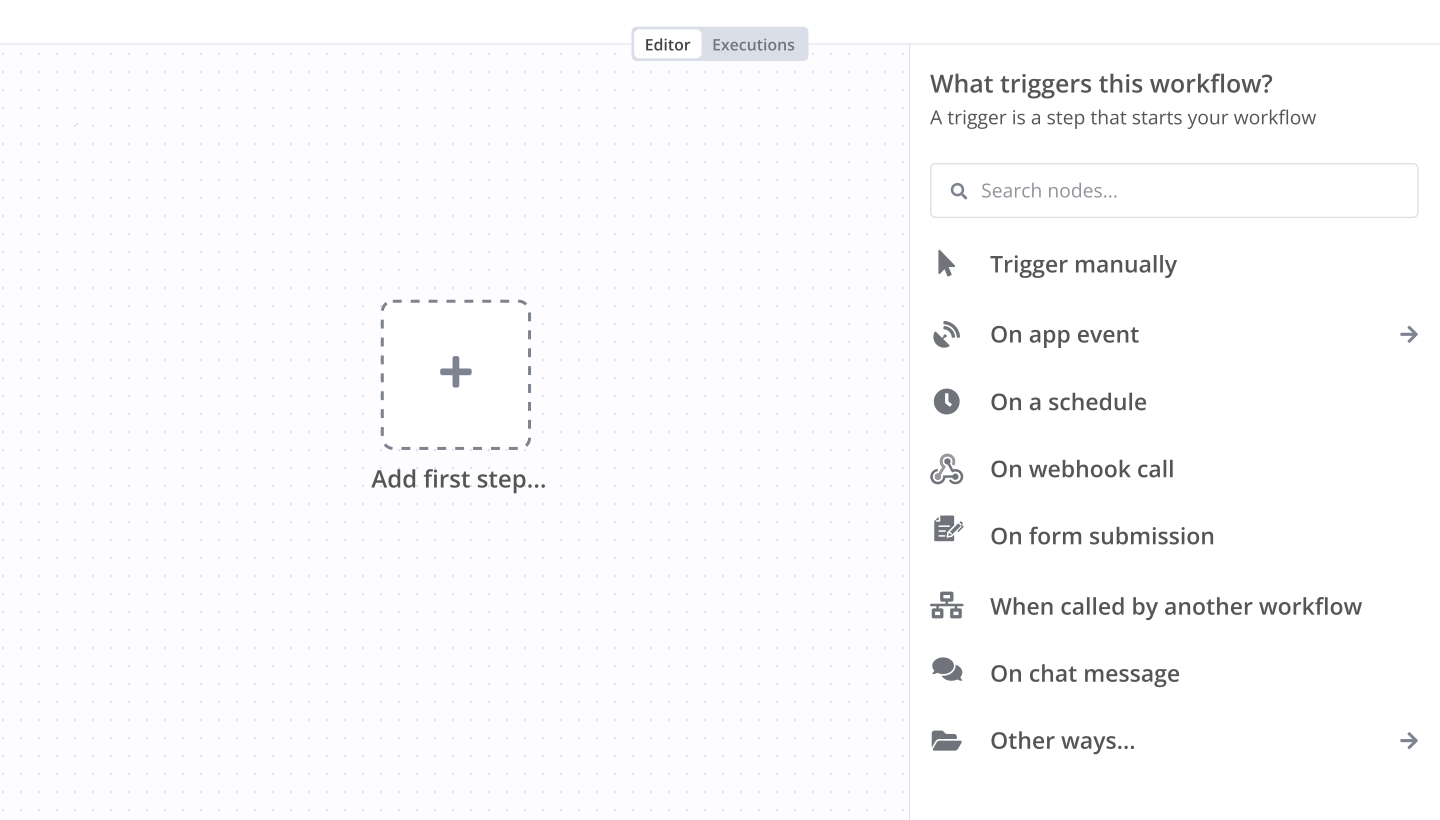
Airtable and Supabase integration: Create a new workflow and add the first step

Step 2: Add and configure Airtable and Supabase nodes

You can find Airtable and Supabase in the nodes panel. Drag them onto your workflow canvas, selecting their actions. Click each node, choose a credential, and authenticate to grant n8n access. Configure Airtable and Supabase nodes one by one: input data on the left, parameters in the middle, and output data on the right.

Airtable and Supabase integration: Add and configure Airtable and Supabase nodes

Step 3: Connect Airtable and Supabase

A connection establishes a link between Airtable and Supabase (or vice versa) to route data through the workflow. Data flows from the output of one node to the input of another. You can have single or multiple connections for each node.

Airtable and Supabase integration: Connect Airtable and Supabase

Step 4: Customize and extend your Airtable and Supabase integration

Use n8n's core nodes such as If, Split Out, Merge, and others to transform and manipulate data. Write custom JavaScript or Python in the Code node and run it as a step in your workflow. Connect Airtable and Supabase with any of n8n’s 1000+ integrations, and incorporate advanced AI logic into your workflows.

Airtable and Supabase integration: Customize and extend your Airtable and Supabase integration

Step 5: Test and activate your Airtable and Supabase workflow

Save and run the workflow to see if everything works as expected. Based on your configuration, data should flow from Airtable to Supabase or vice versa. Easily debug your workflow: you can check past executions to isolate and fix the mistake. Once you've tested everything, make sure to save your workflow and activate it.

Airtable and Supabase integration: Test and activate your Airtable and Supabase workflow

Handle GDPR access and erasure emails with Gmail, GPT-4o, Supabase and Airtable

🚀 How it works

Handles GDPR Article 15 (access) and Article 17 (erasure) requests
end-to-end — from inbound email to legally-compliant response — with
zero manual intervention and a full audit trail.

📬 Monitors Gmail inbox for incoming data subject requests
🤖 AI Agent classifies the request (access or erasure), extracts the
requester email and data subject email with structured JSON output
🗄️ Queries Supabase for all personal data records matching the subject
📋 Queries Airtable CRM for matching contact records
📝 Second AI Agent compiles all found data into a GDPR-compliant HTML report
✉️ Access requests — sends a full data report to the requester
🗑️ Erasure requests — deletes records from both Supabase and Airtable,
then sends a deletion confirmation
🔒 Logs every request to Google Sheets with timestamp for your audit trail

🛠️ Set up steps

Estimated setup time: ~20 minutes

Gmail Trigger — connect Gmail OAuth2; point it at your DSR inbox
OpenAI — connect OpenAI API credential (used by both AI Agent nodes)
Supabase — connect Supabase API credential; update the table name from users to match your schema
Airtable — connect Airtable Personal Access Token; replace YOUR_BASE_ID and YOUR_TABLE_NAME
Google Sheets — connect Google Sheets OAuth2; replace YOUR_AUDIT_SHEET_ID; create a tab named DSR Audit Log
Follow the sticky notes inside the workflow for per-node guidance

📋 Prerequisites

Gmail account receiving GDPR requests
OpenAI API key (GPT-4o)
Supabase project with a users/contacts table
Airtable base with a Contacts table containing an Email field
Google Sheets for audit log

Custom Workflow Request with Personal Dashboard

[email protected]

https://www.smartflowcraft.com/contact

More free templates
https://www.smartflowcraft.com/n8n-templates

Nodes used in this workflow

Popular Airtable and Supabase workflows

+3

Handle GDPR access and erasure emails with Gmail, GPT-4o, Supabase and Airtable

🚀 How it works Handles GDPR Article 15 (access) and Article 17 (erasure) requests end-to-end — from inbound email to legally-compliant response — with zero manual intervention and a full audit trail. 📬 Monitors Gmail inbox for incoming data subject requests 🤖 AI Agent classifies the request (access or erasure), extracts the requester email and data subject email with structured JSON output 🗄️ Queries Supabase for all personal data records matching the subject 📋 Queries Airtable CRM for matching contact records 📝 Second AI Agent compiles all found data into a GDPR-compliant HTML report ✉️ Access requests — sends a full data report to the requester 🗑️ Erasure requests — deletes records from both Supabase and Airtable, then sends a deletion confirmation 🔒 Logs every request to Google Sheets with timestamp for your audit trail 🛠️ Set up steps Estimated setup time: ~20 minutes Gmail Trigger — connect Gmail OAuth2; point it at your DSR inbox OpenAI — connect OpenAI API credential (used by both AI Agent nodes) Supabase — connect Supabase API credential; update the table name from users to match your schema Airtable — connect Airtable Personal Access Token; replace YOUR_BASE_ID and YOUR_TABLE_NAME Google Sheets — connect Google Sheets OAuth2; replace YOUR_AUDIT_SHEET_ID; create a tab named DSR Audit Log Follow the sticky notes inside the workflow for per-node guidance 📋 Prerequisites Gmail account receiving GDPR requests OpenAI API key (GPT-4o) Supabase project with a users/contacts table Airtable base with a Contacts table containing an Email field Google Sheets for audit log Custom Workflow Request with Personal Dashboard [email protected] https://www.smartflowcraft.com/contact More free templates https://www.smartflowcraft.com/n8n-templates
+2

Pick a daily Facebook comment contest winner with OpenAI, Airtable and Telegram

Community Contest Tracker (FB Comments) → Sentiment Analysis → Telegram Winner Alerts + Airtable Proof This workflow automatically monitors a Facebook post, extracts comments, enforces a "past winner" blocklist, analyzes sentiment using AI to find positive entries, randomly selects a winner, stores them in Airtable and announces the result via Telegram. This workflow runs every night to manage your daily community giveaways. It fetches fresh comments from a specific Facebook post and cross-references users against a list of previous winners stored in Airtable to ensure fairness. It uses OpenAI to filter for genuinely positive sentiment (removing spam), selects a random winner, saves the record and sends a celebratory announcement to your Telegram channel. You receive: Daily automated comment collection** Fairness enforcement (Blocklist for past winners)** AI-powered sentiment filtering (Positive vibes only)** Automated winner selection & notification** Ideal for community managers and brand owners who want to run fair, high-engagement contests without manually reading hundreds of comments or tracking past winners in spreadsheets. Quick Start – Implementation Steps Add your Facebook Graph API Credentials in the HTTP Request node. Connect and configure your Airtable base (Winners Table). Add your OpenAI API Key for sentiment analysis. Connect your Telegram Bot credentials and set the Chat ID. Update the Post ID in the "Get FB Comments" node. Activate the workflow — daily contest automation begins instantly. What It Does This workflow automates the entire lifecycle of a social media contest: Daily Trigger: Runs automatically at 9:00 PM every day. Data Ingestion: Fetches the latest comments from Facebook and the full list of past winners from Airtable simultaneously. Pre-Processing: Creates a blocklist of users who won in the last 30 days. Filters out spam, short comments (e.g., single emojis) and blocklisted users. AI Analysis: Uses GPT-4o-mini to analyze the text of eligible comments. Filters specifically for "Positive" sentiment. Selection: Randomly picks one winner from the pool of positive comments. Storage: Saves the winner's Name, Facebook ID and Comment to Airtable. Notification: Sends a "Winner Announcement" to your public Telegram channel. If any errors occur (e.g., DB save fail), logs them to Supabase and alerts the Admin. This ensures your contests are fair, spam-free and consistently managed with zero manual effort. Who’s It For This workflow is ideal for: Social Media Managers Community Moderators Digital Marketing Agencies Brand Owners running daily giveaways Influencers managing high-volume comment sections Customer Experience teams rewarding positive feedback To run this workflow, you will need n8n instance** (cloud or self-hosted) Facebook Developer App** (Graph API Access Token) Airtable Base** + Personal Access Token OpenAI API Key** (or compatible LLM) Telegram Bot Token** Supabase Project** (Optional, for error logging) How It Works Daily Trigger – The schedule node initiates the process. Fetch Data – Comments are pulled from FB; Winners pulled from Airtable. Code Filter – JavaScript node removes past winners and low-quality spam. Sentiment Analysis – AI determines if the comment is Positive, Neutral or Negative. Pick Winner – A randomized logic block selects one "Positive" user. Record Keeping – The winner is officially logged in your database. Broadcast – The winner is announced to the community via Telegram. Setup Steps Import the provided n8n JSON file. Open Get FB Comments node → Add credentials and paste your specific Post ID. Open Get Past Winners node → Link to your Airtable "Winners" table. Open OpenAI Chat Model node → Add your API Key. Open Create a record (Airtable) → Map the fields: Name Facebook ID Date Open Send a text message (Telegram) → Add your Chat ID (e.g., @mychannel). Activate the workflow — done! How To Customize Nodes Customize Filtering Logic Modify the Pre-Filter (Blocklist) Code node: Change the minimum character length (default is 2). Adjust the "Blocklist" duration (e.g., allow users to win again after 7 days instead of 30). Customize AI Criteria Modify the Sentiment Analysis or OpenAI prompt: Look for "Creative" or "Humorous" comments instead of just "Positive". Filter for specific keywords related to your brand. Customize Notifications Replace Telegram with: Slack** (for internal team updates). Discord** (for gaming communities). Email** (SMTP/Gmail) to notify the marketing team. Customize Storage Replace Airtable with: Google Sheets Notion PostgreSQL / MySQL Add-Ons (Optional Enhancements) You can extend this workflow to: Auto-Reply:** Use the Facebook API to reply to the winner's comment automatically ("Congrats! DM us to claim."). Image Generation:** Use OpenAI DALL-E or Bannerbear to generate a "Winner Certificate" image. Cross-Posting:** Automatically post the winner's name to Twitter/X or LinkedIn. Sentiment Report:** Create a weekly summary of overall community sentiment (Positive vs Negative ratio). Prize Tiering:** Assign different prizes based on the quality of the comment. Use Case Examples Daily Product Giveaways Reward one user every day who comments why they love your product. Feedback Drives Encourage users to leave constructive feedback and reward the most helpful positive comment. Community Engagement Keep your group active by automating "Best Comment of the Day" rewards. Brand Loyalty Programs Track "Super Fans" by counting how many times they participate (even if they don't win). Troubleshooting Guide | Issue | Possible Cause | Solution | | :--- | :--- | :--- | | No comments found | Invalid Post ID or Token | Check Facebook Graph API token and Post ID. | | No winner selected | No positive comments | AI found no "Positive" sentiment. Check prompt or input data. | | Airtable Error | Field Mismatch | Ensure column names in Airtable match exactly (Name, Facebook ID). | | Telegram Error | Bot Permissions | Ensure the Bot is an Admin in the channel. | | Workflow Stuck | API Rate Limit | Check OpenAI or Facebook API usage limits. | Need Help? If you need help customizing or extending this workflow, adding multi-platform support (Instagram/YouTube), integrating complex prize logic or setting up advanced dashboards, feel free to hire n8n automation developers at WeblineIndia. We are happy to assist you with advanced automation solutions.

Build your own Airtable and Supabase integration

Create custom Airtable and Supabase workflows by choosing triggers and actions. Nodes come with global operations and settings, as well as app-specific parameters that can be configured. You can also use the HTTP Request node to query data from any app or service with a REST API.


Airtable supported actions

Get Many
List all the bases
Get Schema
Get the schema of the tables in a base
Create
Create a new record in a table
Create or Update
Create a new record, or update the current one if it already exists (upsert)
Delete
Delete a record from a table
Get
Retrieve a record from a table
Search
Search for specific records or list all
Update
Update a record in a table

Supabase supported actions

Create
Create a new row
Delete
Delete a row
Get
Get a row
Get Many
Get many rows
Update
Update a row

FAQs

  • Can Airtable connect with Supabase?

  • Can I use Airtable’s API with n8n?

  • Can I use Supabase’s API with n8n?

  • Is n8n secure for integrating Airtable and Supabase?

  • How to get started with Airtable and Supabase integration in n8n.io?

Need help setting up your Airtable and Supabase integration?

Discover our latest community's recommendations and join the discussions about Airtable and Supabase integration.
Michael Wells

Looking to integrate Airtable and Supabase in your company?

Over 3000 companies switch to n8n every single week

Why use n8n to integrate Airtable with Supabase

Build complex workflows, really fast
Build complex workflows, really fast

Handle branching, merging and iteration easily.
Pause your workflow to wait for external events.

Code when you need it, UI when you don't

Simple debugging

Your data is displayed alongside your settings, making edge cases easy to track down.

Use templates to get started fast

Use 1000+ workflow templates available from our core team and our community.

Reuse your work

Copy and paste, easily import and export workflows.

Implement complex processes faster with n8n

red iconyellow iconred iconyellow icon