Back to Integrations
integrationClickUp node
integrationGoogle Drive node

ClickUp and Google Drive integration

Save yourself the work of writing custom integrations for ClickUp and Google Drive and use n8n instead. Build adaptable and scalable Productivity, Communication, and Data & Storage workflows that work with your technology stack. All within a building experience you will love.

How to connect ClickUp and Google Drive

  • Step 1: Create a new workflow
  • Step 2: Add and configure nodes
  • Step 3: Connect
  • Step 4: Customize and extend your integration
  • Step 5: Test and activate your workflow

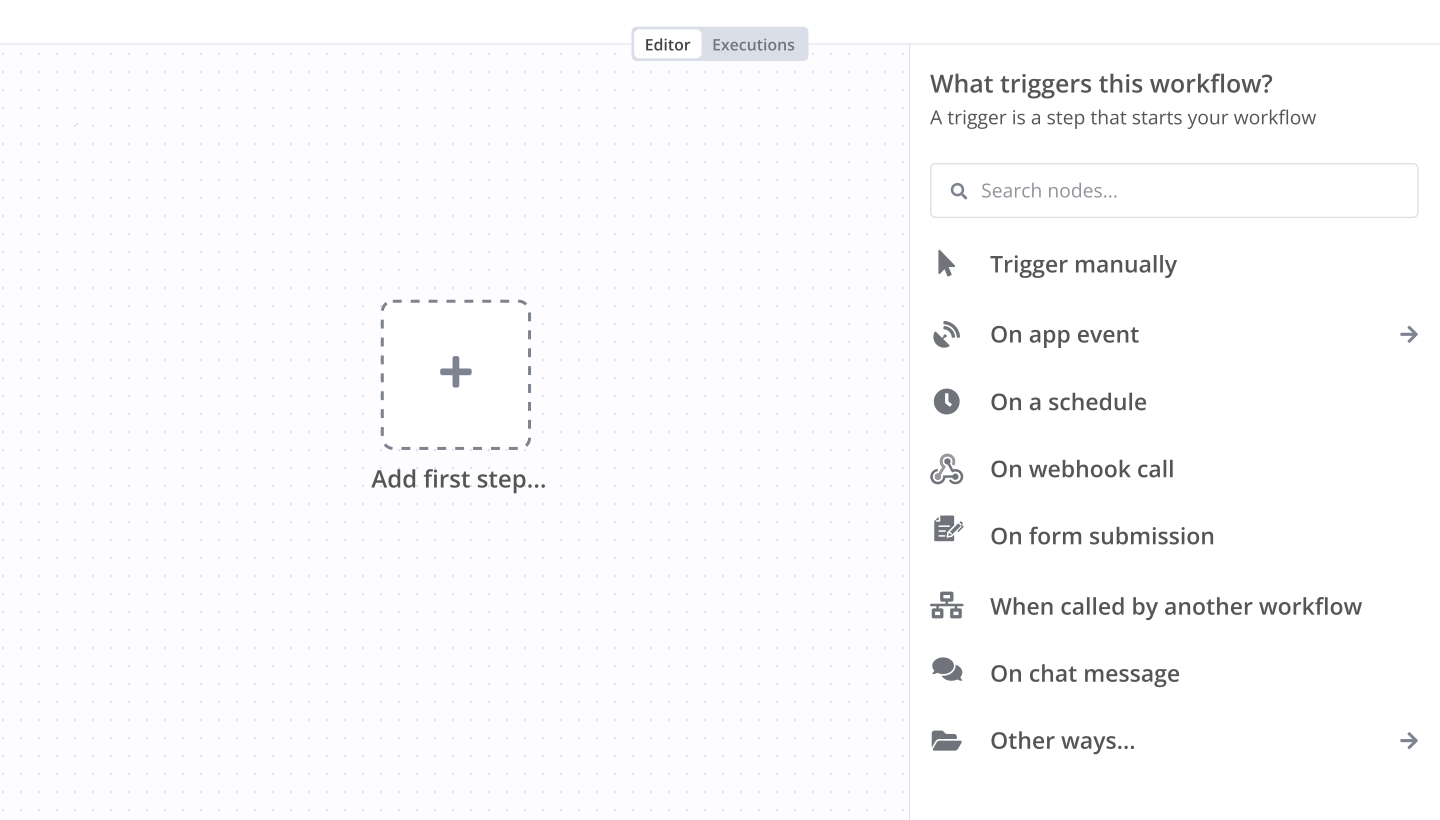
Step 1: Create a new workflow and add the first step

In n8n, click the "Add workflow" button in the Workflows tab to create a new workflow. Add the starting point – a trigger on when your workflow should run: an app event, a schedule, a webhook call, another workflow, an AI chat, or a manual trigger. Sometimes, the HTTP Request node might already serve as your starting point.

ClickUp and Google Drive integration: Create a new workflow and add the first step

Step 2: Add and configure ClickUp and Google Drive nodes

You can find ClickUp and Google Drive in the nodes panel. Drag them onto your workflow canvas, selecting their actions. Click each node, choose a credential, and authenticate to grant n8n access. Configure ClickUp and Google Drive nodes one by one: input data on the left, parameters in the middle, and output data on the right.

ClickUp and Google Drive integration: Add and configure ClickUp and Google Drive nodes

Step 3: Connect ClickUp and Google Drive

A connection establishes a link between ClickUp and Google Drive (or vice versa) to route data through the workflow. Data flows from the output of one node to the input of another. You can have single or multiple connections for each node.

ClickUp and Google Drive integration: Connect ClickUp and Google Drive

Step 4: Customize and extend your ClickUp and Google Drive integration

Use n8n's core nodes such as If, Split Out, Merge, and others to transform and manipulate data. Write custom JavaScript or Python in the Code node and run it as a step in your workflow. Connect ClickUp and Google Drive with any of n8n’s 1000+ integrations, and incorporate advanced AI logic into your workflows.

ClickUp and Google Drive integration: Customize and extend your ClickUp and Google Drive integration

Step 5: Test and activate your ClickUp and Google Drive workflow

Save and run the workflow to see if everything works as expected. Based on your configuration, data should flow from ClickUp to Google Drive or vice versa. Easily debug your workflow: you can check past executions to isolate and fix the mistake. Once you've tested everything, make sure to save your workflow and activate it.

ClickUp and Google Drive integration: Test and activate your ClickUp and Google Drive workflow

Kick off client projects after Stripe payment with Google Drive, ClickUp, Gmail, Sheets, and Slack

Create Job Folders, Tasks, Alerts, and Onboarding Emails After Stripe Payment with Google Drive, ClickUp, and Slack

Categories: Payments, Project Operations, Client Onboarding

This workflow creates a complete payment → project kickoff system for service-based businesses. Once a client pays via Stripe, the system automatically provisions project infrastructure, records the order, notifies the team, and sends clear next steps to the client.

Built for operational reliability rather than flash, this workflow proves that strong client experiences come from consistent execution, not manual coordination.

Benefits

Instant Project Kickoff** – Projects are fully set up the moment payment clears
Operational Consistency** – Every client starts with the same clean structure
Fail‑Loud Safeguards** – Critical errors stop execution and alert the team
Reduced Manual Ops** – No copying data across tools after payment
Professional Client Experience** – Immediate confirmation and next steps
Fully Customizable** – Folder structures and tasks are examples, not constraints

How It Works

Payment & Validation

Listens for successful Stripe payments
Verifies required customer and package data
Prevents partial setup if data is missing

Client & Order Identification

Locates the client in your CRM using email
Creates an internal order record as a source of truth

Project Infrastructure Provisioning

Creates a project folder structure in Google Drive (example configuration)
Creates a ClickUp project list with default tasks (example configuration)

Communication & Handoff

Sends a welcome email with onboarding instructions to the client
Notifies the internal team in Slack that work can begin

Error Handling

Critical failures stop execution and surface alerts
Non‑critical failures alert the team but allow progress

This staged approach keeps the workflow easy to reason about and safe to operate at scale.

Required Setup Configuration

Core Configuration

Update the Workflow Configuration node:

intakeFormUrl – Your onboarding or intake form
parentFolderId – Google Drive folder where client projects live

Required Integrations

Stripe
Google Drive
Google Sheets (CRM + Orders)
ClickUp
Gmail
Slack

Once credentials are connected and configuration values are set, the workflow is ready for testing.

Project Structure (Example Configuration)

The structures below are examples only. They demonstrate how the workflow provisions infrastructure automatically. You can freely rename, remove, or replace folders and tasks to match any service or industry.

Google Drive

Example folder structure:

YYYY-MM — Client Name — Package
├─ 01-Intake
├─ 02-Logo
├─ 03-Brand Kit
├─ 04-Website
└─ 05-Final Delivery

ClickUp

Example default tasks:

Brand Questionnaire Review
Logo Concepts
Brand Kit
Website Build

All task names, counts, and priorities are customizable.

Business Use Cases

Agencies delivering repeatable services
Productized service businesses
Freelancers managing multiple paid engagements
Internal teams onboarding clients or stakeholders

If work begins after payment, this workflow fits.

Business Impact

Faster project start times
Fewer setup errors
Clear ownership between sales and delivery
Improved client confidence after payment
Reduced operational overhead as volume scales

The payment moment becomes a clean handoff instead of an operational bottleneck.

Difficulty & Cost

Difficulty Level:** Intermediate
Estimated Setup Time:** 30–45 minutes
Monthly Operating Cost:** ~$0–$10 (API usage dependent)

Installation Steps

Connect all required credentials
Update the Workflow Configuration node
Run a test Stripe payment
Verify folders, tasks, email, and Slack alerts
Activate the workflow

Customization & Extensions

This workflow is designed to plug cleanly into a larger end‑to‑end sales → delivery automation system. If you are building multiple automations, this template typically sits in the middle of the lifecycle.

How It Fits Into a Larger System

Common upstream and downstream integrations include:

Lead & Opportunity Pipelines**
When combined with lead scraping, enrichment, and qualification workflows, this automation acts as the handoff point where a qualified opportunity becomes a paid project.

Proposal & Payment Flows**
This workflow is commonly triggered after an automated proposal + Stripe checkout flow, ensuring that once payment clears, production begins immediately with no manual coordination.

Client Intake & Brief Generation**
The welcome email can link directly into automated intake form workflows that convert responses into structured briefs, creative direction, or production instructions.

Production & Delivery Pipelines**
Project folders and tasks created here can act as triggers for downstream workflows such as approvals, revision tracking, asset delivery, or website launches.

Typical Expansion Path

For fast ROI, many teams implement these stages in order:

Payment → Project Kickoff (this workflow)
Intake Form → Structured Brief
Production Pipelines (Design / Website / Delivery)

Additional layers such as lead scraping, outbound outreach, and nurture engines can be added before this workflow once delivery operations are stable.

If you’re curious, I’ve built other templates that cover the steps before and after this one (lead gen, proposals, intake, production, etc.). You can find those on my profile — they’re designed to work together, but each one stands on its own.

Nodes used in this workflow

Popular ClickUp and Google Drive workflows

Automate client onboarding with Google Forms, GPT‑4o, ClickUp and Gmail

Client Onboarding Automation: Google Forms → GPT-4o → ClickUp & Gmail Who is this for? Consultants, agencies, freelancers, and SaaS teams handling client onboarding who want automated workspaces + AI task lists without manual setup. What problem is this workflow solving? Onboarding chaos wastes hours: Manual folder/task creation per client Inconsistent project scopes and timelines Forgotten welcome emails and links No standardized AI-scoped task lists This workflow auto-creates everything from intake form to production-ready ClickUp boards. What this workflow does: Trigger: Google Forms submission + proposal PDF AI Analysis: GPT-4o extracts scope → generates 20-30 tasks Google Drive: Client folder creation ClickUp: Folder + lists + detailed tasks with assignees/dues Gmail: Personalized welcome with all links Bonus: Audit trail in Sheets for tracking Setup (5 minutes) Google Forms: Intake + PDF upload OpenAI: API key (GPT-4o-mini) ClickUp: API + Team/Space IDs Google Drive: OAuth2 + parent folder Gmail: OAuth2 credentials Fully configurable via env vars—no hardcoded IDs. How to customize Tasks: Adjust AI prompt for your SOP/industry Tools: Swap ClickUp for Asana/Trello Email: Add Calendly/Zoom + branding Scale: Webhook for 100s clients/month ROI: 4-6 hours saved per client 100% consistent onboarding 30% faster project starts Zero manual workspace creation Need help customizing?: Contact me for consulting and support: LinkedIn / Message Keywords: client onboarding, ClickUp automation,

Kick off client projects after Stripe payment with Google Drive, ClickUp, Gmail, Sheets, and Slack

Create Job Folders, Tasks, Alerts, and Onboarding Emails After Stripe Payment with Google Drive, ClickUp, and Slack Categories: Payments, Project Operations, Client Onboarding This workflow creates a complete payment → project kickoff system for service-based businesses. Once a client pays via Stripe, the system automatically provisions project infrastructure, records the order, notifies the team, and sends clear next steps to the client. Built for operational reliability rather than flash, this workflow proves that strong client experiences come from consistent execution, not manual coordination. Benefits Instant Project Kickoff** – Projects are fully set up the moment payment clears Operational Consistency** – Every client starts with the same clean structure Fail‑Loud Safeguards** – Critical errors stop execution and alert the team Reduced Manual Ops** – No copying data across tools after payment Professional Client Experience** – Immediate confirmation and next steps Fully Customizable** – Folder structures and tasks are examples, not constraints How It Works Payment & Validation Listens for successful Stripe payments Verifies required customer and package data Prevents partial setup if data is missing Client & Order Identification Locates the client in your CRM using email Creates an internal order record as a source of truth Project Infrastructure Provisioning Creates a project folder structure in Google Drive (example configuration) Creates a ClickUp project list with default tasks (example configuration) Communication & Handoff Sends a welcome email with onboarding instructions to the client Notifies the internal team in Slack that work can begin Error Handling Critical failures stop execution and surface alerts Non‑critical failures alert the team but allow progress This staged approach keeps the workflow easy to reason about and safe to operate at scale. Required Setup Configuration Core Configuration Update the Workflow Configuration node: intakeFormUrl – Your onboarding or intake form parentFolderId – Google Drive folder where client projects live Required Integrations Stripe Google Drive Google Sheets (CRM + Orders) ClickUp Gmail Slack Once credentials are connected and configuration values are set, the workflow is ready for testing. Project Structure (Example Configuration) The structures below are examples only. They demonstrate how the workflow provisions infrastructure automatically. You can freely rename, remove, or replace folders and tasks to match any service or industry. Google Drive Example folder structure: YYYY-MM — Client Name — Package ├─ 01-Intake ├─ 02-Logo ├─ 03-Brand Kit ├─ 04-Website └─ 05-Final Delivery ClickUp Example default tasks: Brand Questionnaire Review Logo Concepts Brand Kit Website Build All task names, counts, and priorities are customizable. Business Use Cases Agencies delivering repeatable services Productized service businesses Freelancers managing multiple paid engagements Internal teams onboarding clients or stakeholders If work begins after payment, this workflow fits. Business Impact Faster project start times Fewer setup errors Clear ownership between sales and delivery Improved client confidence after payment Reduced operational overhead as volume scales The payment moment becomes a clean handoff instead of an operational bottleneck. Difficulty & Cost Difficulty Level:** Intermediate Estimated Setup Time:** 30–45 minutes Monthly Operating Cost:** ~$0–$10 (API usage dependent) Installation Steps Connect all required credentials Update the Workflow Configuration node Run a test Stripe payment Verify folders, tasks, email, and Slack alerts Activate the workflow Customization & Extensions This workflow is designed to plug cleanly into a larger end‑to‑end sales → delivery automation system. If you are building multiple automations, this template typically sits in the middle of the lifecycle. How It Fits Into a Larger System Common upstream and downstream integrations include: Lead & Opportunity Pipelines** When combined with lead scraping, enrichment, and qualification workflows, this automation acts as the handoff point where a qualified opportunity becomes a paid project. Proposal & Payment Flows** This workflow is commonly triggered after an automated proposal + Stripe checkout flow, ensuring that once payment clears, production begins immediately with no manual coordination. Client Intake & Brief Generation** The welcome email can link directly into automated intake form workflows that convert responses into structured briefs, creative direction, or production instructions. Production & Delivery Pipelines** Project folders and tasks created here can act as triggers for downstream workflows such as approvals, revision tracking, asset delivery, or website launches. Typical Expansion Path For fast ROI, many teams implement these stages in order: Payment → Project Kickoff (this workflow) Intake Form → Structured Brief Production Pipelines (Design / Website / Delivery) Additional layers such as lead scraping, outbound outreach, and nurture engines can be added before this workflow once delivery operations are stable. If you’re curious, I’ve built other templates that cover the steps before and after this one (lead gen, proposals, intake, production, etc.). You can find those on my profile — they’re designed to work together, but each one stands on its own.
+5

Generate AI-Powered End-of-Day Reports from ClickUp & GoHighLevel to Multi-Channel

Description Automatically generate and distribute detailed End-of-Day (EOD) reports combining task progress from ClickUp and opportunity data from GoHighLevel. This workflow uses AI to analyze daily performance, summarize key metrics, identify blockers, and deliver polished reports directly to Slack, Email, and Google Drive. ⚙️📊💬 What This Template Does Triggers automatically every weekday at 6:00 PM (Mon–Fri). ⏰ Fetches all completed ClickUp tasks and won GoHighLevel opportunities for the day. 📥 Merges and transforms both datasets into a unified structure. 🔄 Uses Azure OpenAI GPT-4 to analyze performance and generate structured summaries. 🤖 Formats three output versions — Slack (Markdown), Email (HTML), and Google Drive (Text). 🧾 Routes and sends reports automatically to connected channels. 📤 Uploads the generated text report to Google Drive with timestamped filenames. ☁️ Key Benefits ✅ Saves time by automating daily performance reporting. ✅ Unifies task and deal data into a single AI-generated summary. ✅ Provides real-time visibility into productivity and outcomes. ✅ Delivers beautifully formatted, channel-specific reports. ✅ Maintains historical reports in Google Drive for reference. ✅ Helps managers identify wins, blockers, and next steps quickly. Features Automated scheduling via cron (Mon–Fri, 6 PM). ClickUp task and GHL opportunity integration for daily data sync. AI-powered analysis for contextual, actionable summaries. Dynamic formatting for Slack, Email, and Drive outputs. Parallel routing for simultaneous delivery across platforms. No manual steps — runs fully hands-free after setup. Requirements ClickUp OAuth2 credentials for task retrieval. GoHighLevel OAuth2 credentials for deal data. Azure OpenAI GPT-4 API credentials. Slack Bot credentials for message posting. SMTP (Gmail/Outlook) credentials for email reports. Google Drive OAuth2 credentials for report upload. Target Audience 🎯 Sales, marketing, and operations teams tracking daily performance. 📈 Project managers monitoring team productivity and blockers. 🤝 Client success teams summarizing EOD outcomes for leadership. 🧠 Business automation teams seeking end-of-day visibility. Step-by-Step Setup Instructions Connect ClickUp, GoHighLevel, Slack, Gmail/SMTP, and Google Drive credentials. 🔑 Set your team, space, folder, and list IDs in the ClickUp node. 📋 Update your Slack channel ID in the Slack node configuration. 💬 Configure your email sender and recipients in the email node. 📧 (Optional) Modify the cron expression for different reporting times. ⏰ Test the workflow manually once, then activate for automated EOD execution. ✅

Automated Workflow Test Runner with Google Drive, Sheets & ClickUp Result Logging

Description This workflow acts as a CI/CD-style test harness for validating other n8n workflows. It executes a target workflow (here: Archive Payment Receipts), evaluates pass/fail outcomes, and generates structured reports. Results are automatically archived to Google Drive, logged in Google Sheets, and synced with ClickUp for visibility. Both success and failure scenarios are handled with standardized formatting. What This Template Does (Step-by-Step) ⚡ Manual Trigger – Start the test run manually. ▶️ Execute Target Workflow Under Test – Calls the specified workflow (Archive Payment Receipts) and captures its output, even if it errors. ✅ Test Result Evaluation (If Node) – Checks if the output contains errors. Pass Path → success formatting + archival. Fail Path → failure formatting + logging. 📄 Format Success Test Result (Set Node) – Creates a structured result object with: Status: ✅ Passed Workflow Name Timestamp 📄 Format Failed Test Result (Set Node) – Same as above, but with ❌ Failed status. 📝 Generate Success/Failure Report Text (Code Node) – Converts structured data into a human-readable report string. 📦 Convert Report to Text File – Transforms the text into a .txt file for archiving. ☁️ Archive Reports to Google Drive – Saves .txt files (success/failure) into the resume store folder with timestamped filenames. ✏️ Update ClickUp Task (Success/Failure) – Posts results directly into a ClickUp task for visibility. 📊 Log Error Details to Error Tracking Sheet (Google Sheets) – Appends raw error objects to an error log sheet for debugging and trend analysis. Prerequisites Target workflow to test (e.g., Archive Payment Receipts) Google Drive folder for report storage Google Sheets (Error Log tab) ClickUp API credentials n8n instance Key Benefits ✅ Automates workflow regression testing ✅ Captures pass/fail outcomes with full audit trail ✅ Maintains error logs for debugging and reliability improvements ✅ Keeps stakeholders updated via ClickUp integration ✅ Supports compliance with archived test reports Perfect For Teams running workflow QA & testing Organizations needing audit-ready test reports DevOps pipelines with continuous validation of automations Stakeholders requiring real-time visibility into workflow health

Process Resumes from Google Drive to ClickUp using GPT-4o and Google Sheets

Description Process new resumes from Google Drive, extract structured candidate data with AI, save to Google Sheets, and auto-create a ClickUp hiring task. Gain a centralized, searchable candidate database and instant task kickoff—no manual data entry. 🚀 What This Template Does Watches a Google Drive folder for new resume PDFs and triggers the workflow. 📂 Downloads the file and converts the PDF to clean, readable text. 📄 Analyzes resume text with an AI Resume Analyzer to extract structured candidate info (name, email, phone, experience, skills, education). 🤖 Cleans and validates the AI JSON output for reliability. 🧹 Appends or updates a candidate row in Google Sheets and creates a ClickUp hiring task. ✅ Key Benefits Save hours with end-to-end, hands-off resume processing. ⏱️ Never miss a candidate—every upload triggers automatically. 🔔 Keep a single source of truth in Sheets, always up-to-date. 📊 Kickstart hiring instantly with auto-created ClickUp tasks. 🗂 Works with varied resume formats using AI extraction. 🧠 Features Google Drive “Watch for New Resumes” trigger (every minute). ⏲ PDF-to-text extraction optimized for text-based PDFs. 📘 AI-powered resume parsing into standardized JSON fields. 🧩 JSON cleanup and validation for safe storage. 🧰 Google Sheets append-or-update for a central candidate database. 📑 ClickUp task creation with candidate-specific titles and assignment. 🎯 Requirements n8n instance (cloud or self-hosted); recommended n8n version 1.106.3 or higher. 🔧 Google Drive access to a dedicated resumes folder (PDF resumes recommended). 📂 Google Sheets credential with edit access to the candidate database sheet. 📈 ClickUp workspace/project access to create tasks for hiring. 📌 AI service credentials for the Resume Analyzer step (add in n8n Credentials). 🤖 Target Audience HR and Talent Acquisition teams needing faster screening. 👥 Recruiters and staffing agencies handling high volumes. 🏢 Startups and ops teams standardizing candidate intake. 🚀 No-code/low-code builders automating hiring workflows. 🧩 Step-by-Step Setup Instructions Connect Google Drive, Google Sheets, ClickUp, and your AI service in n8n Credentials. 🔐 Set the Google Drive “watched” folder (e.g., Resume_store). 📁 Import the workflow, assign credentials to all nodes, and map your Sheets columns. 🗂️ Adjust the ClickUp task details (title pattern, assignee, list). 📝 Run once with a sample PDF to test, then enable scheduling (every 1 minute). ▶️ Optionally rename the email/task nodes for clarity (e.g., “Create Hiring Task in ClickUp”). ✍️
+2

Automate Client Onboarding with GPT-4, Google Drive, ClickUp & Slack

Description This automation streamlines client onboarding by instantly processing a submitted form, extracting key details from an uploaded proposal, and using GPT-4 to generate a full onboarding task list. It then sets up the client workspace across Google Drive, ClickUp, and Slack, and sends a personalized welcome email completing in under a minute from submission. Setup Steps Connect your Google Drive, ClickUp, Slack, Gmail, and OpenAI accounts. Customize the form fields and system prompt to match your business. Test the workflow with a sample client submission to confirm all outputs. Estimated Setup Time: \~30–45 minutes for a first-time user familiar with n8n integrations.

Build your own ClickUp and Google Drive integration

Create custom ClickUp and Google Drive workflows by choosing triggers and actions. Nodes come with global operations and settings, as well as app-specific parameters that can be configured. You can also use the HTTP Request node to query data from any app or service with a REST API.

ClickUp supported actions

Create
Create a checklist
Delete
Delete a checklist
Update
Update a checklist
Create
Create a checklist item
Delete
Delete a checklist item
Update
Update a checklist item
Create
Create a comment
Delete
Delete a comment
Get Many
Get many comments
Update
Update a comment
Create
Create a folder
Delete
Delete a folder
Get
Get a folder
Get Many
Get many folders
Update
Update a folder
Create
Create a goal
Delete
Delete a goal
Get
Get a goal
Get Many
Get many goals
Update
Update a goal
Create
Create a key result
Delete
Delete a key result
Update
Update a key result
Create
Create a list
Custom Fields
Retrieve list's custom fields
Delete
Delete a list
Get
Get a list
Get Many
Get many lists
Member
Get list members
Update
Update a list
Create
Create a space tag
Delete
Delete a space tag
Get Many
Get many space tags
Update
Update a space tag
Create
Create a task
Delete
Delete a task
Get
Get a task
Get Many
Get many tasks
Member
Get task members
Set Custom Field
Set a custom field
Update
Update a task
Create
Create a task dependency
Delete
Delete a task dependency
Add
Add a task to a list
Remove
Remove a task from a list
Add
Add a tag to a task
Remove
Remove a tag from a task
Create
Create a time entry
Delete
Delete a time entry
Get
Get a time entry
Get Many
Get many time entries
Start
Start a time entry
Stop
Stop the current running timer
Update
Update a time Entry
Add
Add tag to time entry
Get Many
Get many time entry tags
Remove
Remove tag from time entry

Google Drive supported actions

Copy
Create a copy of an existing file
Create From Text
Create a file from a provided text
Delete
Permanently delete a file
Download
Download a file
Move
Move a file to another folder
Share
Add sharing permissions to a file
Update
Update a file
Upload
Upload an existing file to Google Drive
Search
Search or list files and folders
Create
Create a folder
Delete
Permanently delete a folder
Share
Add sharing permissions to a folder
Create
Create a shared drive
Delete
Permanently delete a shared drive
Get
Get a shared drive
Get Many
Get the list of shared drives
Update
Update a shared drive

FAQs

  • Can ClickUp connect with Google Drive?

  • Can I use ClickUp’s API with n8n?

  • Can I use Google Drive’s API with n8n?

  • Is n8n secure for integrating ClickUp and Google Drive?

  • How to get started with ClickUp and Google Drive integration in n8n.io?

Need help setting up your ClickUp and Google Drive integration?

Discover our latest community's recommendations and join the discussions about ClickUp and Google Drive integration.
hubschrauber
Jon
David O'Neil
Nikolay Titov
Mikey Ross

Looking to integrate ClickUp and Google Drive in your company?

Over 3000 companies switch to n8n every single week

Why use n8n to integrate ClickUp with Google Drive

Build complex workflows, really fast

Build complex workflows, really fast

Handle branching, merging and iteration easily.
Pause your workflow to wait for external events.

Code when you need it, UI when you don't

Simple debugging

Your data is displayed alongside your settings, making edge cases easy to track down.

Use templates to get started fast

Use 1000+ workflow templates available from our core team and our community.

Reuse your work

Copy and paste, easily import and export workflows.

Implement complex processes faster with n8n

red iconyellow iconred iconyellow icon