Back to Integrations
integrationClickUp node
integrationTelegram node

ClickUp and Telegram integration

Save yourself the work of writing custom integrations for ClickUp and Telegram and use n8n instead. Build adaptable and scalable Productivity, Communication, and HITL workflows that work with your technology stack. All within a building experience you will love.

How to connect ClickUp and Telegram

  • Step 1: Create a new workflow
  • Step 2: Add and configure nodes
  • Step 3: Connect
  • Step 4: Customize and extend your integration
  • Step 5: Test and activate your workflow

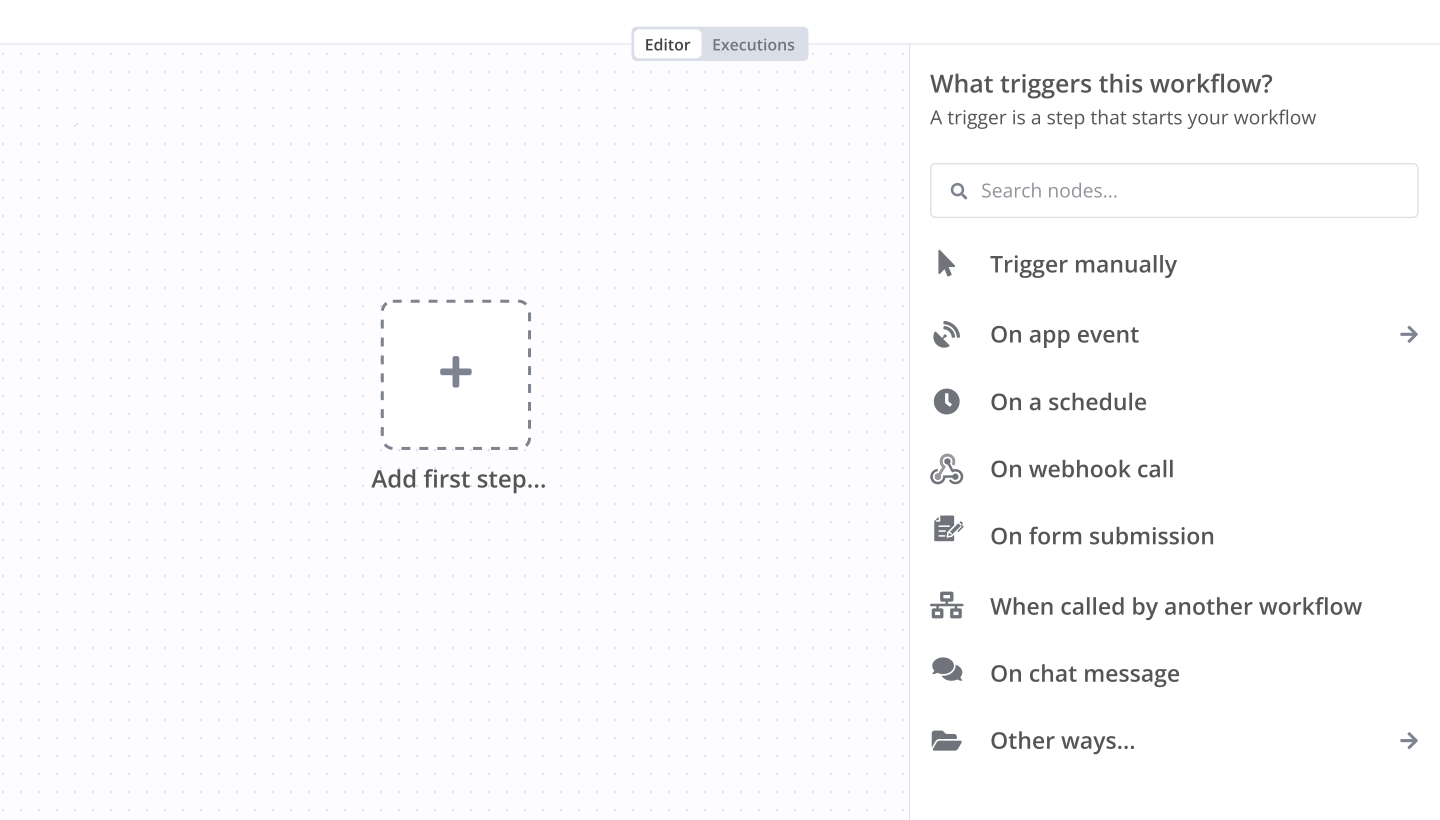
Step 1: Create a new workflow and add the first step

In n8n, click the "Add workflow" button in the Workflows tab to create a new workflow. Add the starting point – a trigger on when your workflow should run: an app event, a schedule, a webhook call, another workflow, an AI chat, or a manual trigger. Sometimes, the HTTP Request node might already serve as your starting point.

ClickUp and Telegram integration: Create a new workflow and add the first step

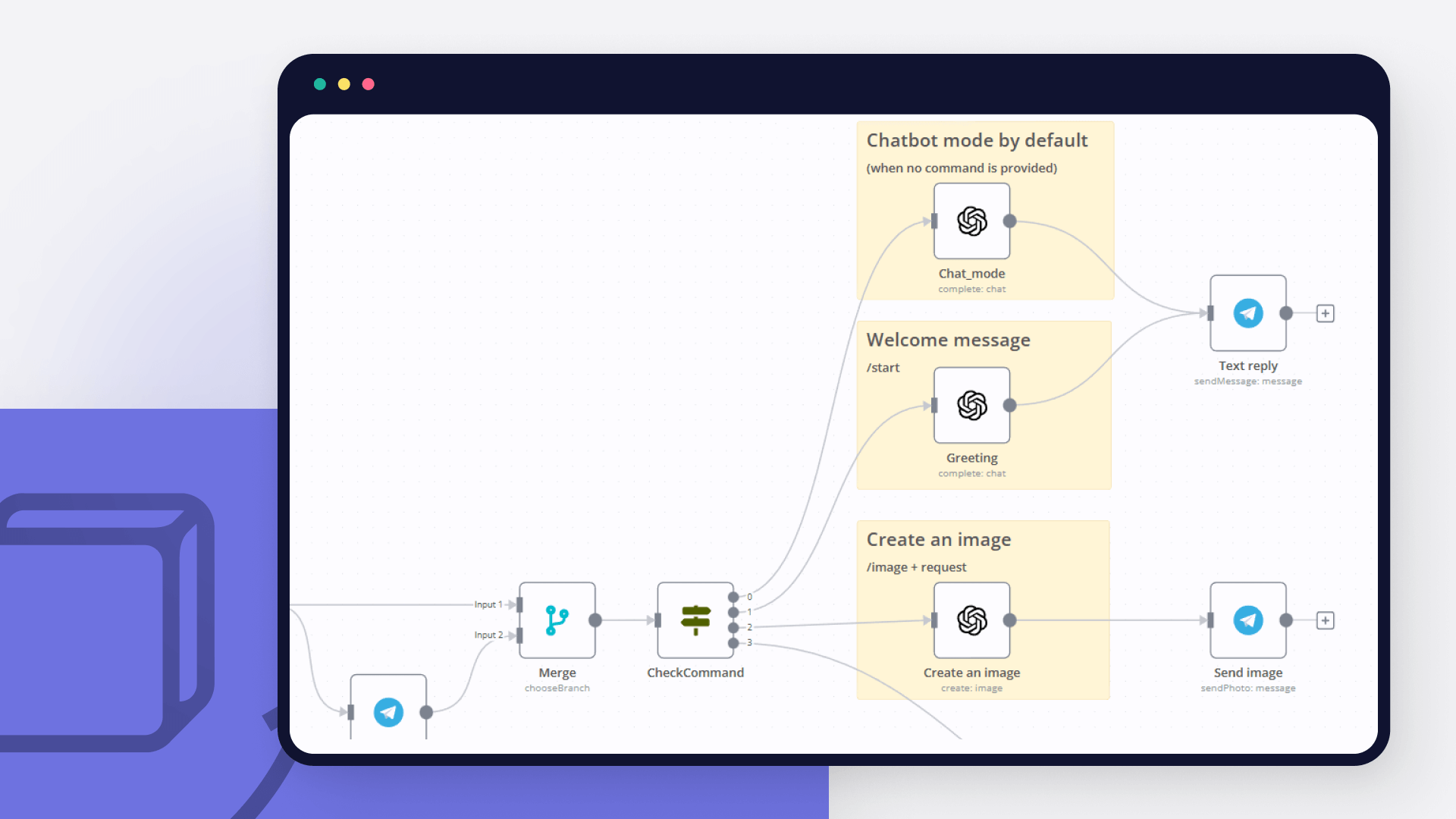
Step 2: Add and configure ClickUp and Telegram nodes

You can find ClickUp and Telegram in the nodes panel. Drag them onto your workflow canvas, selecting their actions. Click each node, choose a credential, and authenticate to grant n8n access. Configure ClickUp and Telegram nodes one by one: input data on the left, parameters in the middle, and output data on the right.

ClickUp and Telegram integration: Add and configure ClickUp and Telegram nodes

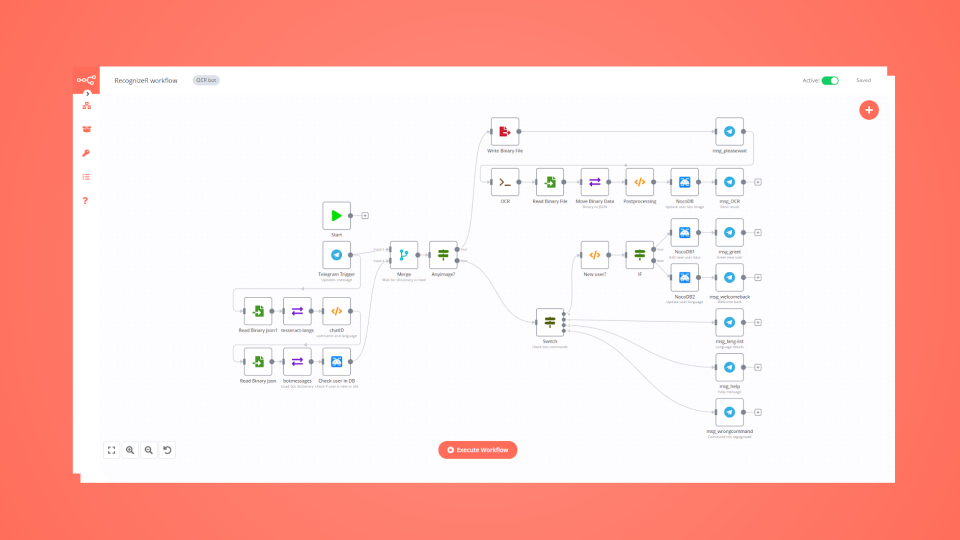
Step 3: Connect ClickUp and Telegram

A connection establishes a link between ClickUp and Telegram (or vice versa) to route data through the workflow. Data flows from the output of one node to the input of another. You can have single or multiple connections for each node.

ClickUp and Telegram integration: Connect ClickUp and Telegram

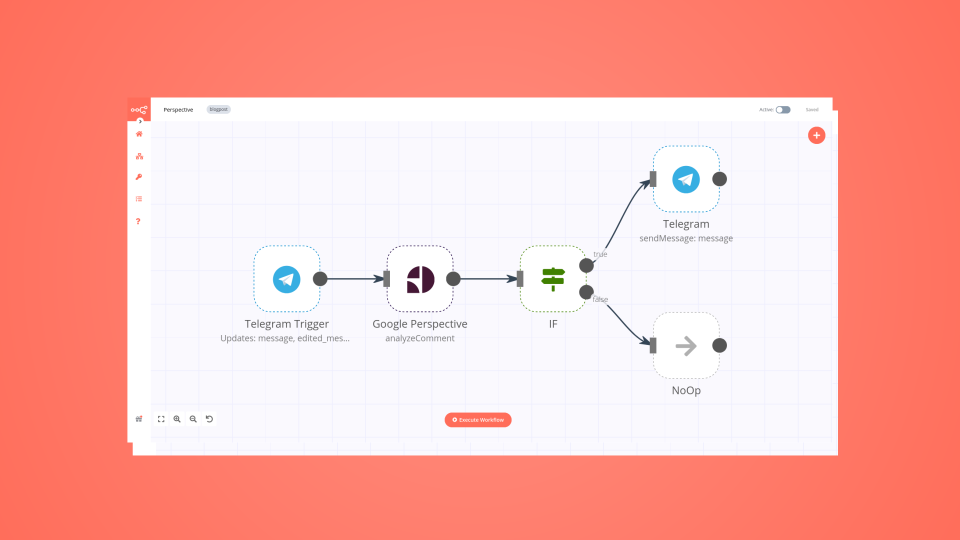
Step 4: Customize and extend your ClickUp and Telegram integration

Use n8n's core nodes such as If, Split Out, Merge, and others to transform and manipulate data. Write custom JavaScript or Python in the Code node and run it as a step in your workflow. Connect ClickUp and Telegram with any of n8n’s 1000+ integrations, and incorporate advanced AI logic into your workflows.

ClickUp and Telegram integration: Customize and extend your ClickUp and Telegram integration

Step 5: Test and activate your ClickUp and Telegram workflow

Save and run the workflow to see if everything works as expected. Based on your configuration, data should flow from ClickUp to Telegram or vice versa. Easily debug your workflow: you can check past executions to isolate and fix the mistake. Once you've tested everything, make sure to save your workflow and activate it.

ClickUp and Telegram integration: Test and activate your ClickUp and Telegram workflow

Track Zoom attendance and create AI summaries with Google Sheets, ClickUp and Telegram

Description

When a Zoom meeting ends, this workflow fires automatically — no manual action needed. It classifies every participant as On Time or Late, logs all attendance data to Google Sheets, and sends you one AI-written summary via Telegram. For every late joiner, a ClickUp follow-up task is created automatically so no one slips through the cracks. Built for team leads, trainers, and operations managers who run recurring Zoom meetings.

What This Workflow Does

Automatic attendance capture** — Receives the Zoom meeting.ended event via webhook and processes all participant data instantly, with zero manual input
Late participant detection** — Classifies each attendee as Attended or Late based on a configurable join delay threshold (default: 5 minutes)
14-column Google Sheets log** — Saves every participant as one row including join time, leave time, time in meeting, join delay, and status
AI-written Telegram summary** — GPT-4o-mini writes a professional attendance summary and sends it once per meeting directly to the host's Telegram
Automated ClickUp follow-up tasks** — Creates one ClickUp task per late joiner with full meeting context, participant details, and a next-day due date
Clean exit for on-time attendees** — Participants who joined on time bypass the task creation step with no noise or extra actions

Setup Requirements

Tools and accounts needed

n8n instance (self-hosted or cloud)
Zoom Marketplace account with a Webhook Only App configured
Google account with Google Sheets access
OpenAI account with API access (GPT-4o-mini)
ClickUp account with API access
Telegram Bot (via BotFather)

Estimated Setup Time: 20–30 minutes

Step-by-Step Setup

Import the workflow — Open n8n, go to Workflows → Import from JSON, paste the workflow JSON, and verify all nodes are connected.

Configure Zoom Webhook — In the 1. Webhook — Zoom Meeting Ended node, copy the webhook URL. Go to your Zoom Marketplace app, open your Webhook Only App, and paste the URL under the meeting.ended event subscription.

Set your config values — Open 2. Set — Config Values and replace all six placeholders:
YOUR_TELEGRAM_CHAT_ID — your Telegram chat ID (get it from @userinfobot)
YOUR_GOOGLE_SHEET_ID — the ID from your Google Sheet URL (the long string between /d/ and /edit)
Attendance Log — rename if your sheet tab has a different name
YOUR HOST NAME — the name that appears in the Telegram summary
5 — change to your preferred late threshold in minutes
YOUR_CLICKUP_LIST_ID — copy from your ClickUp list URL

Connect Google Sheets — Open 4. Google Sheets — Log Participant Row and connect your Google Sheets OAuth2 credential. Authenticate via Google when prompted.

Connect OpenAI — Open 7. OpenAI — GPT-4o-mini Model and connect your OpenAI API credential. Enter your API key from platform.openai.com.

Connect ClickUp — Open 9. ClickUp — Create Late Participant Task and connect your ClickUp API credential. Enter your personal API token from ClickUp Settings → Apps.

Connect Telegram — Open 12. Telegram — Send Meeting Summary and connect your Telegram Bot API credential. Enter the token from BotFather.

Activate the workflow — Toggle the workflow to Active before running your next Zoom meeting.

How It Works (Step by Step)

Step 1 — Webhook: Zoom Meeting Ended
When any Zoom meeting ends, Zoom sends a POST request to this webhook. This is the trigger that starts the entire workflow. No polling or manual action is needed — it fires the moment the meeting closes.

Step 2 — Set: Config Values
This step stores all six configuration values in one place — Telegram chat ID, Google Sheet ID, sheet tab name, host name, late threshold in minutes, and ClickUp list ID. You only set these once, and all downstream steps read from here automatically.

Step 3 — Code: Extract and Classify Participants
This step reads the full participant list from the Zoom payload. For each person, it calculates how many minutes after the meeting start they joined. If the delay exceeds the threshold, they are marked Late. Everyone else is marked Attended. This step outputs one item per participant — every step after this runs once per person.

Step 4 — Google Sheets: Log Participant Row
Every participant — regardless of status — is written as one row in your Google Sheet. The row includes 14 columns: meeting ID, topic, host email, date, start time, duration, participant name, email, join time, leave time, time in meeting, join delay in minutes, status, and the timestamp when the row was logged.

Step 5 — IF: First Row Check
This check gates the Telegram path. Only the first participant item passes through to the summary path (YES). All other participants go to the late-check path (NO). This prevents the host from receiving one Telegram message per attendee.

Step 6 — AI Agent: Write Telegram Summary
Using GPT-4o-mini, this step generates a concise, plain-text Telegram message for the host. The message covers the meeting topic, date, duration, participant counts, one observation about attendance quality, and one action suggestion. It is capped at 80 words and uses no markdown.

Step 7 — OpenAI GPT-4o-mini Model
This is the language model powering the AI Agent in Step 6. It runs with a max token limit of 200 and a temperature of 0.4 for consistent, professional output.

Step 8 — Set: Prepare Telegram Fields
Reads the AI-generated message and the Telegram chat ID, then packages them into a clean output ready to send.

Step 9 — Telegram: Send Meeting Summary
Sends the final AI-written message to the host's Telegram chat. This fires exactly once per meeting — not once per participant.

Step 10 — IF: Is Participant Late?
For every non-first participant, this check reads their status. If status equals Late (YES), they move to the ClickUp task step. If they joined on time (NO), they exit cleanly through the No Action step.

Step 11 — ClickUp: Create Late Participant Task
Creates one ClickUp task per late participant. The task name includes the participant's name and meeting topic. The task body includes full meeting context, participant details, join time, delay in minutes, time in meeting, and three pre-written action items. Due date is automatically set to the next day.

Step 12 — Set: No Action Needed
On-time participants exit here with a simple confirmation message. No task is created and no further action is taken.

Key Features

✅ Zero-click attendance logging — The workflow fires automatically when Zoom ends; you never need to start it manually
✅ Configurable late threshold — Change one value in the config step to adjust what counts as late for your team
✅ One Telegram message per meeting — The first-row gate ensures the host gets one clean summary, not one message per attendee
✅ 14-column Google Sheets record — Every row is complete with time-in-meeting, join delay, and logged-at timestamp for easy reporting
✅ Pre-written ClickUp task body — Late participant tasks include context and three ready-to-act follow-up items out of the box
✅ Next-day due date on tasks — ClickUp tasks are automatically due 24 hours after the meeting ends
✅ GPT-4o-mini for cost efficiency — Telegram summaries use the lightweight model for fast, affordable generation

Customisation Options

Change the late threshold per meeting type — In 2. Set — Config Values, update lateThresholdMinutes to a higher value (e.g., 10) for longer or less structured meetings.

Add email notification for late participants — After 9. ClickUp — Create Late Participant Task, connect a Gmail or SMTP node to automatically email the late participant a summary of what they missed.

Log to multiple sheets by meeting topic — In 4. Google Sheets — Log Participant Row, use an expression to dynamically set the sheet tab name based on the meeting topic — one tab per recurring meeting type.

Add a Slack notification alongside Telegram — Duplicate 12. Telegram — Send Meeting Summary and replace it with a Slack node to send the same summary to a team channel in addition to the host's personal Telegram.

Increase task priority for participants who joined very late — In 9. ClickUp — Create Late Participant Task, add an IF check before the task node to set priority: 1 (urgent) if joinDelayMin exceeds 15 minutes.

Filter out internal test accounts — Before 3. Code — Extract and Classify Participants, add a Code node that removes any participants matching test email domains so they don't pollute your sheet or trigger tasks.

Troubleshooting

Workflow not triggering when the meeting ends:
Confirm the webhook URL from 1. Webhook — Zoom Meeting Ended is pasted correctly in your Zoom Marketplace app
Verify the event subscription is set to meeting.ended specifically — not meeting.ended with a typo or a different event type
Make sure the workflow is activated in n8n before the meeting starts

Google Sheets rows not appearing:
Check that the Sheet ID in 2. Set — Config Values is the correct ID from the sheet URL
Confirm the sheet tab name matches exactly what is written in sheetName — it is case-sensitive
Re-authenticate the Google Sheets OAuth2 credential if you recently changed Google account permissions

Telegram message not sending:
Verify the Telegram chat ID is correct — use @userinfobot in Telegram to retrieve it
Confirm the Telegram Bot token in 12. Telegram — Send Meeting Summary is valid and has not been revoked via BotFather
Make sure the bot has been added to the chat and has permission to send messages

ClickUp tasks not being created:
Check that the ClickUp list ID in 2. Set — Config Values is the correct list — not a space ID or folder ID
Verify the ClickUp API credential is connected and the token has not expired
If no participants are late in your test, the task node will not fire — use a threshold of 0 for initial testing

AI summary is blank or returns an error:
Confirm the OpenAI API key in 7. OpenAI — GPT-4o-mini Model is valid and has available credits
Check that the credential is connected properly in n8n — reconnect and re-enter the key if needed

Support

Need help setting this up or want a custom version built for your team or agency?

📧 Email:[email protected]
🌐 Website:https://isawow.com

Nodes used in this workflow

Popular ClickUp and Telegram workflows

Track Zoom attendance and create AI summaries with Google Sheets, ClickUp and Telegram

Description When a Zoom meeting ends, this workflow fires automatically — no manual action needed. It classifies every participant as On Time or Late, logs all attendance data to Google Sheets, and sends you one AI-written summary via Telegram. For every late joiner, a ClickUp follow-up task is created automatically so no one slips through the cracks. Built for team leads, trainers, and operations managers who run recurring Zoom meetings. What This Workflow Does Automatic attendance capture** — Receives the Zoom meeting.ended event via webhook and processes all participant data instantly, with zero manual input Late participant detection** — Classifies each attendee as Attended or Late based on a configurable join delay threshold (default: 5 minutes) 14-column Google Sheets log** — Saves every participant as one row including join time, leave time, time in meeting, join delay, and status AI-written Telegram summary** — GPT-4o-mini writes a professional attendance summary and sends it once per meeting directly to the host's Telegram Automated ClickUp follow-up tasks** — Creates one ClickUp task per late joiner with full meeting context, participant details, and a next-day due date Clean exit for on-time attendees** — Participants who joined on time bypass the task creation step with no noise or extra actions Setup Requirements Tools and accounts needed n8n instance (self-hosted or cloud) Zoom Marketplace account with a Webhook Only App configured Google account with Google Sheets access OpenAI account with API access (GPT-4o-mini) ClickUp account with API access Telegram Bot (via BotFather) Estimated Setup Time: 20–30 minutes Step-by-Step Setup Import the workflow — Open n8n, go to Workflows → Import from JSON, paste the workflow JSON, and verify all nodes are connected. Configure Zoom Webhook — In the 1. Webhook — Zoom Meeting Ended node, copy the webhook URL. Go to your Zoom Marketplace app, open your Webhook Only App, and paste the URL under the meeting.ended event subscription. Set your config values — Open 2. Set — Config Values and replace all six placeholders: YOUR_TELEGRAM_CHAT_ID — your Telegram chat ID (get it from @userinfobot) YOUR_GOOGLE_SHEET_ID — the ID from your Google Sheet URL (the long string between /d/ and /edit) Attendance Log — rename if your sheet tab has a different name YOUR HOST NAME — the name that appears in the Telegram summary 5 — change to your preferred late threshold in minutes YOUR_CLICKUP_LIST_ID — copy from your ClickUp list URL Connect Google Sheets — Open 4. Google Sheets — Log Participant Row and connect your Google Sheets OAuth2 credential. Authenticate via Google when prompted. Connect OpenAI — Open 7. OpenAI — GPT-4o-mini Model and connect your OpenAI API credential. Enter your API key from platform.openai.com. Connect ClickUp — Open 9. ClickUp — Create Late Participant Task and connect your ClickUp API credential. Enter your personal API token from ClickUp Settings → Apps. Connect Telegram — Open 12. Telegram — Send Meeting Summary and connect your Telegram Bot API credential. Enter the token from BotFather. Activate the workflow — Toggle the workflow to Active before running your next Zoom meeting. How It Works (Step by Step) Step 1 — Webhook: Zoom Meeting Ended When any Zoom meeting ends, Zoom sends a POST request to this webhook. This is the trigger that starts the entire workflow. No polling or manual action is needed — it fires the moment the meeting closes. Step 2 — Set: Config Values This step stores all six configuration values in one place — Telegram chat ID, Google Sheet ID, sheet tab name, host name, late threshold in minutes, and ClickUp list ID. You only set these once, and all downstream steps read from here automatically. Step 3 — Code: Extract and Classify Participants This step reads the full participant list from the Zoom payload. For each person, it calculates how many minutes after the meeting start they joined. If the delay exceeds the threshold, they are marked Late. Everyone else is marked Attended. This step outputs one item per participant — every step after this runs once per person. Step 4 — Google Sheets: Log Participant Row Every participant — regardless of status — is written as one row in your Google Sheet. The row includes 14 columns: meeting ID, topic, host email, date, start time, duration, participant name, email, join time, leave time, time in meeting, join delay in minutes, status, and the timestamp when the row was logged. Step 5 — IF: First Row Check This check gates the Telegram path. Only the first participant item passes through to the summary path (YES). All other participants go to the late-check path (NO). This prevents the host from receiving one Telegram message per attendee. Step 6 — AI Agent: Write Telegram Summary Using GPT-4o-mini, this step generates a concise, plain-text Telegram message for the host. The message covers the meeting topic, date, duration, participant counts, one observation about attendance quality, and one action suggestion. It is capped at 80 words and uses no markdown. Step 7 — OpenAI GPT-4o-mini Model This is the language model powering the AI Agent in Step 6. It runs with a max token limit of 200 and a temperature of 0.4 for consistent, professional output. Step 8 — Set: Prepare Telegram Fields Reads the AI-generated message and the Telegram chat ID, then packages them into a clean output ready to send. Step 9 — Telegram: Send Meeting Summary Sends the final AI-written message to the host's Telegram chat. This fires exactly once per meeting — not once per participant. Step 10 — IF: Is Participant Late? For every non-first participant, this check reads their status. If status equals Late (YES), they move to the ClickUp task step. If they joined on time (NO), they exit cleanly through the No Action step. Step 11 — ClickUp: Create Late Participant Task Creates one ClickUp task per late participant. The task name includes the participant's name and meeting topic. The task body includes full meeting context, participant details, join time, delay in minutes, time in meeting, and three pre-written action items. Due date is automatically set to the next day. Step 12 — Set: No Action Needed On-time participants exit here with a simple confirmation message. No task is created and no further action is taken. Key Features ✅ Zero-click attendance logging — The workflow fires automatically when Zoom ends; you never need to start it manually ✅ Configurable late threshold — Change one value in the config step to adjust what counts as late for your team ✅ One Telegram message per meeting — The first-row gate ensures the host gets one clean summary, not one message per attendee ✅ 14-column Google Sheets record — Every row is complete with time-in-meeting, join delay, and logged-at timestamp for easy reporting ✅ Pre-written ClickUp task body — Late participant tasks include context and three ready-to-act follow-up items out of the box ✅ Next-day due date on tasks — ClickUp tasks are automatically due 24 hours after the meeting ends ✅ GPT-4o-mini for cost efficiency — Telegram summaries use the lightweight model for fast, affordable generation Customisation Options Change the late threshold per meeting type — In 2. Set — Config Values, update lateThresholdMinutes to a higher value (e.g., 10) for longer or less structured meetings. Add email notification for late participants — After 9. ClickUp — Create Late Participant Task, connect a Gmail or SMTP node to automatically email the late participant a summary of what they missed. Log to multiple sheets by meeting topic — In 4. Google Sheets — Log Participant Row, use an expression to dynamically set the sheet tab name based on the meeting topic — one tab per recurring meeting type. Add a Slack notification alongside Telegram — Duplicate 12. Telegram — Send Meeting Summary and replace it with a Slack node to send the same summary to a team channel in addition to the host's personal Telegram. Increase task priority for participants who joined very late — In 9. ClickUp — Create Late Participant Task, add an IF check before the task node to set priority: 1 (urgent) if joinDelayMin exceeds 15 minutes. Filter out internal test accounts — Before 3. Code — Extract and Classify Participants, add a Code node that removes any participants matching test email domains so they don't pollute your sheet or trigger tasks. Troubleshooting Workflow not triggering when the meeting ends: Confirm the webhook URL from 1. Webhook — Zoom Meeting Ended is pasted correctly in your Zoom Marketplace app Verify the event subscription is set to meeting.ended specifically — not meeting.ended with a typo or a different event type Make sure the workflow is activated in n8n before the meeting starts Google Sheets rows not appearing: Check that the Sheet ID in 2. Set — Config Values is the correct ID from the sheet URL Confirm the sheet tab name matches exactly what is written in sheetName — it is case-sensitive Re-authenticate the Google Sheets OAuth2 credential if you recently changed Google account permissions Telegram message not sending: Verify the Telegram chat ID is correct — use @userinfobot in Telegram to retrieve it Confirm the Telegram Bot token in 12. Telegram — Send Meeting Summary is valid and has not been revoked via BotFather Make sure the bot has been added to the chat and has permission to send messages ClickUp tasks not being created: Check that the ClickUp list ID in 2. Set — Config Values is the correct list — not a space ID or folder ID Verify the ClickUp API credential is connected and the token has not expired If no participants are late in your test, the task node will not fire — use a threshold of 0 for initial testing AI summary is blank or returns an error: Confirm the OpenAI API key in 7. OpenAI — GPT-4o-mini Model is valid and has available credits Check that the credential is connected properly in n8n — reconnect and re-enter the key if needed Support Need help setting this up or want a custom version built for your team or agency? 📧 Email:[email protected] 🌐 Website:https://isawow.com
+4

Generate AI camera moves with Seedance and build a previs review board

📘 Description This workflow is an AI-powered virtual cinematography and previs generation pipeline designed for film and VFX production. It transforms a director’s shot description into multiple camera choreography options, generates AI-driven previs videos, extracts key frames, and delivers a complete previs board package for supervisor review—enabling faster creative decision-making with zero manual setup. ⚙️ Step-by-Step Flow The workflow begins with a form-based trigger that captures a structured shot brief from the production team, including shot code, script snippet, camera and lens specifications, plate image reference, and movement complexity. This input is validated and normalized into a clean data structure, ensuring consistency across the pipeline. The processed brief is then sent to an AI agent powered by GPT-4o, which interprets the creative intent and generates three distinct camera choreography options. Each option includes a cinematic description, technical movement style, supervisor guidance, and a fully structured Seedance-ready prompt—effectively translating creative direction into executable camera logic. These AI-generated options are parsed and expanded into individual processing units, where each one is converted into a structured API request for video generation. The pipeline attaches the provided plate image as a visual reference to ensure all outputs remain grounded in the real environment. Each request is then submitted to the Seedance AI model as an asynchronous job, enabling parallel generation of all camera variations. A polling system continuously checks the status of each render at fixed intervals, ensuring that the workflow proceeds only after successful completion of all outputs. Once rendering is complete, the system collects each generated video and enriches it with production-ready metadata, including resolution, duration, and predefined key frames representing the opening, peak motion, and final composition. In parallel, the workflow downloads each video and archives it to Google Drive, creating a structured library of lighting references for downstream teams such as compositing and look development. An aggregation layer then compiles all camera options into a unified previs board package, formatting them into structured outputs for different platforms, including visual option cards, Jira descriptions, and a complete HTML lookbook. Finally, the delivery system distributes the previs package across multiple production tools simultaneously. A Slack message presents all options in an easy A/B/C selection format for supervisors, a Jira task is created for tracking and approval, a ClickUp record is logged for production management, and a Telegram message is sent for quick mobile access. This ensures that all stakeholders receive synchronized, actionable outputs, enabling fast and informed decision-making in the previs stage. 🚨 Error Handling • AI parsing fallback to handle invalid JSON outputs • Retry loop for incomplete Seedance jobs (polling system) • Dedicated error trigger with instant Slack alerts • Telegram alert if AI agent fails to generate valid output • Prevents pipeline breaks and ensures reliability 🧩 Prerequisites • Azure OpenAI (GPT-4o or similar model) • Seedance API (AI video generation) • Google Drive OAuth2 (asset storage) • Slack OAuth2 (team communication) • Jira API (task tracking) • ClickUp API (production management) • Telegram Bot (optional notifications) • Form/Webhook trigger (input layer) 💡 Key Benefits ✔ Converts creative intent into technical camera choreography automatically ✔ Generates multiple previs options for faster decision-making ✔ Maintains visual consistency using plate image reference ✔ Auto-extracts key frames for editorial and layout guidance ✔ Centralized previs board generation (ready for review) ✔ Multi-platform delivery (Slack, Jira, ClickUp, Telegram) ✔ Builds a reusable lighting reference archive 👥 Perfect For Directors and cinematographers VFX previs and layout teams Virtual production workflows Film and episodic production pipelines Studios handling complex camera choreography

Fast-Track VIP Tickets with Google Sheets, ClickUp, and Telegram

Description: Accelerate VIP support handling with this n8n workflow template that automatically identifies high-priority customers and ensures their tickets get instant attention. This automation pulls customer ticket data from Google Sheets, checks for the VIP tag, and seamlessly creates a priority task in ClickUp, while sending an instant Telegram alert to your team. What This Template Does: 🔍 Detects VIP-tagged customers in real time 📝 Creates high-priority ClickUp tasks for their tickets 📱 Sends Telegram alerts with ticket details (subject + requester email) 📊 Organizes VIP workload for easy tracking in ClickUp Built-in logic ensures: • Only VIP-tagged customers are escalated • Priority tasks are auto-assigned without delays • Teams receive instant notifications for fast response • No missed high-value customer interactions Requirements: • Google Sheets API credentials • ClickUp API credentials • Telegram Bot token & Chat ID • n8n instance (self-hosted or cloud) Perfect For: Customer support teams, sales organizations, and service-based businesses who need to prioritize VIP tickets instantly and streamline customer experience.

Zendesk Ticket Escalation to ClickUp with Telegram Alerts

Description This workflow automates Zendesk ticket escalation by creating ClickUp tasks for urgent cases and notifying the support team in Telegram. It ensures that high-priority tickets are instantly visible to the right team members, avoiding delays in resolution. What This Template Does (Step-by-Step) 🟢 Trigger (Manual Test or Later Zendesk Trigger) Currently uses a manual trigger (Execute Workflow) for testing. In production, this would start whenever a pending Zendesk ticket appears. 🎫 Fetch Zendesk Tickets Pulls all pending tickets assigned to a group. Sorts them by status and date. 🧹 Select Latest Ticket Sorts by created_at and keeps only the newest ticket. Outputs: id, subject, description, requester_id, created_at. 📧 Fetch Requester Email Retrieves requester details (name, email, timezone) from Zendesk Users API. 🔀 Merge Ticket & Requester Data Combines both streams: ticket info + requester info. Ensures the ClickUp task payload has everything it needs. 📝 Prepare ClickUp Task Payload Builds a structured task: Task Name: [Escalation] {Subject} (Ticket #ID) Description: Ticket + requester details + escalation message Priority: 3 (default, can be adjusted) Tags: zendesk, escalation 📂 Create ClickUp Task Pushes the structured task into ClickUp under the escalation list. Assigns it to a predefined team member. 📨 Format Telegram Alert Message Generates a concise but urgent message: Ticket subject + ID Requester name + email Direct ClickUp link Adds urgency formatting (🚨 Immediate Attention Required). 📢 Send Telegram Escalation Alert Posts the alert into the chosen Telegram chat/team. Ensures managers/stakeholders know instantly. Prerequisites Zendesk account + API credentials ClickUp account + API credentials Telegram bot token & chat ID n8n instance (cloud or self-hosted) Customization Ideas ⚡ Replace manual trigger with Zendesk “Ticket Created” trigger. 🎯 Add SLA-based conditions (e.g., escalate only if response > 4 hrs). 📊 Auto-assign ClickUp tasks by ticket category. 🔔 Add Slack/Email notification along with Telegram. 📂 Store escalation logs into Notion or Google Sheets. Key Benefits ✅ Zero delay in handling critical tickets ✅ Automatically creates ClickUp task + Telegram alert ✅ Reduces manual handoff between support → escalation team ✅ Keeps everyone aligned in real-time Perfect For 🎯 Support teams needing fast escalations 📈 SaaS companies managing large ticket volumes 🚀 Agencies ensuring VIP clients never wait

Build your own ClickUp and Telegram integration

Create custom ClickUp and Telegram workflows by choosing triggers and actions. Nodes come with global operations and settings, as well as app-specific parameters that can be configured. You can also use the HTTP Request node to query data from any app or service with a REST API.

ClickUp supported actions

Create
Create a checklist
Delete
Delete a checklist
Update
Update a checklist
Create
Create a checklist item
Delete
Delete a checklist item
Update
Update a checklist item
Create
Create a comment
Delete
Delete a comment
Get Many
Get many comments
Update
Update a comment
Create
Create a folder
Delete
Delete a folder
Get
Get a folder
Get Many
Get many folders
Update
Update a folder
Create
Create a goal
Delete
Delete a goal
Get
Get a goal
Get Many
Get many goals
Update
Update a goal
Create
Create a key result
Delete
Delete a key result
Update
Update a key result
Create
Create a list
Custom Fields
Retrieve list's custom fields
Delete
Delete a list
Get
Get a list
Get Many
Get many lists
Member
Get list members
Update
Update a list
Create
Create a space tag
Delete
Delete a space tag
Get Many
Get many space tags
Update
Update a space tag
Create
Create a task
Delete
Delete a task
Get
Get a task
Get Many
Get many tasks
Member
Get task members
Set Custom Field
Set a custom field
Update
Update a task
Create
Create a task dependency
Delete
Delete a task dependency
Add
Add a task to a list
Remove
Remove a task from a list
Add
Add a tag to a task
Remove
Remove a tag from a task
Create
Create a time entry
Delete
Delete a time entry
Get
Get a time entry
Get Many
Get many time entries
Start
Start a time entry
Stop
Stop the current running timer
Update
Update a time Entry
Add
Add tag to time entry
Get Many
Get many time entry tags
Remove
Remove tag from time entry

Telegram supported actions

Get
Get up to date information about a chat
Get Administrators
Get the Administrators of a chat
Get Member
Get the member of a chat
Leave
Leave a group, supergroup or channel
Set Description
Set the description of a chat
Set Title
Set the title of a chat
Answer Query
Send answer to callback query sent from inline keyboard
Answer Inline Query
Send answer to callback query sent from inline bot
Get
Get a file
Delete Chat Message
Delete a chat message
Edit Message Text
Edit a text message
Pin Chat Message
Pin a chat message
Send Animation
Send an animated file
Send Audio
Send a audio file
Send Chat Action
Send a chat action
Send Document
Send a document
Send Location
Send a location
Send Media Group
Send group of photos or videos to album
Send Message
Send a text message
Send and Wait for Response
Send a message and wait for response
Send Photo
Send a photo
Send Sticker
Send a sticker
Send Video
Send a video
Unpin Chat Message
Unpin a chat message

FAQs

  • Can ClickUp connect with Telegram?

  • Can I use ClickUp’s API with n8n?

  • Can I use Telegram’s API with n8n?

  • Is n8n secure for integrating ClickUp and Telegram?

  • How to get started with ClickUp and Telegram integration in n8n.io?

Need help setting up your ClickUp and Telegram integration?

Discover our latest community's recommendations and join the discussions about ClickUp and Telegram integration.
Trigi Digital
Nikolay Titov
Mikey Ross

Looking to integrate ClickUp and Telegram in your company?

Over 3000 companies switch to n8n every single week

Why use n8n to integrate ClickUp with Telegram

Build complex workflows, really fast

Build complex workflows, really fast

Handle branching, merging and iteration easily.
Pause your workflow to wait for external events.

Code when you need it, UI when you don't

Simple debugging

Your data is displayed alongside your settings, making edge cases easy to track down.

Use templates to get started fast

Use 1000+ workflow templates available from our core team and our community.

Reuse your work

Copy and paste, easily import and export workflows.

Implement complex processes faster with n8n

red iconyellow iconred iconyellow icon