Back to Integrations
integrationFacebook Graph API node
integrationMicrosoft Outlook node

Facebook Graph API and Microsoft Outlook integration

Save yourself the work of writing custom integrations for Facebook Graph API and Microsoft Outlook and use n8n instead. Build adaptable and scalable Development, Communication, and HITL workflows that work with your technology stack. All within a building experience you will love.

How to connect Facebook Graph API and Microsoft Outlook

  • Step 1: Create a new workflow
  • Step 2: Add and configure nodes
  • Step 3: Connect
  • Step 4: Customize and extend your integration
  • Step 5: Test and activate your workflow

Step 1: Create a new workflow and add the first step

In n8n, click the "Add workflow" button in the Workflows tab to create a new workflow. Add the starting point – a trigger on when your workflow should run: an app event, a schedule, a webhook call, another workflow, an AI chat, or a manual trigger. Sometimes, the HTTP Request node might already serve as your starting point.
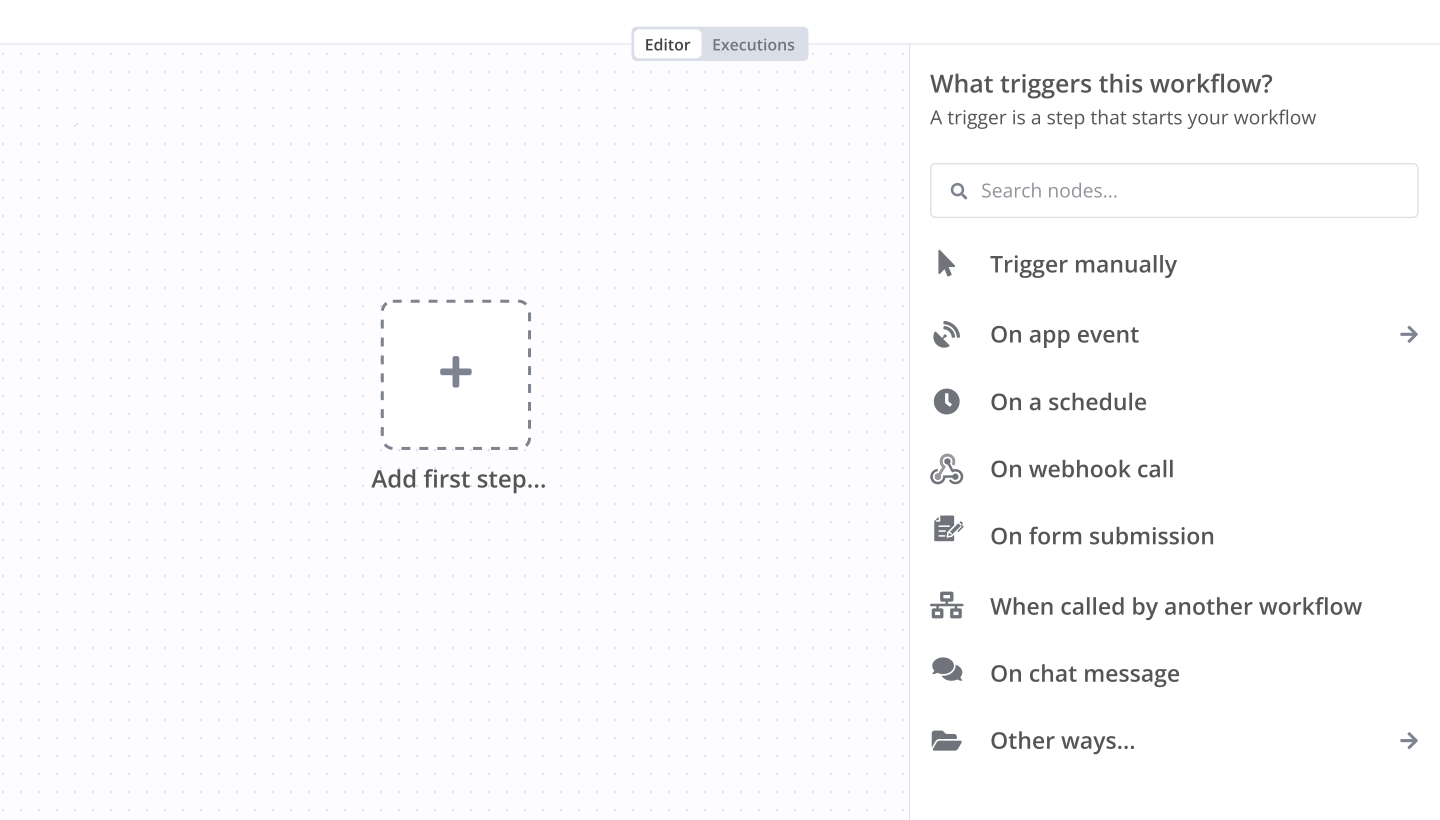
Facebook Graph API and Microsoft Outlook integration: Create a new workflow and add the first step

Step 2: Add and configure Facebook Graph API and Microsoft Outlook nodes

You can find Facebook Graph API and Microsoft Outlook in the nodes panel. Drag them onto your workflow canvas, selecting their actions. Click each node, choose a credential, and authenticate to grant n8n access. Configure Facebook Graph API and Microsoft Outlook nodes one by one: input data on the left, parameters in the middle, and output data on the right.

Facebook Graph API and Microsoft Outlook integration: Add and configure Facebook Graph API and Microsoft Outlook nodes

Step 3: Connect Facebook Graph API and Microsoft Outlook

A connection establishes a link between Facebook Graph API and Microsoft Outlook (or vice versa) to route data through the workflow. Data flows from the output of one node to the input of another. You can have single or multiple connections for each node.

Facebook Graph API and Microsoft Outlook integration: Connect Facebook Graph API and Microsoft Outlook

Step 4: Customize and extend your Facebook Graph API and Microsoft Outlook integration

Use n8n's core nodes such as If, Split Out, Merge, and others to transform and manipulate data. Write custom JavaScript or Python in the Code node and run it as a step in your workflow. Connect Facebook Graph API and Microsoft Outlook with any of n8n’s 1000+ integrations, and incorporate advanced AI logic into your workflows.

Facebook Graph API and Microsoft Outlook integration: Customize and extend your Facebook Graph API and Microsoft Outlook integration

Step 5: Test and activate your Facebook Graph API and Microsoft Outlook workflow

Save and run the workflow to see if everything works as expected. Based on your configuration, data should flow from Facebook Graph API to Microsoft Outlook or vice versa. Easily debug your workflow: you can check past executions to isolate and fix the mistake. Once you've tested everything, make sure to save your workflow and activate it.

Facebook Graph API and Microsoft Outlook integration: Test and activate your Facebook Graph API and Microsoft Outlook workflow

Analyze Facebook comment sentiment with GPT-4, Slack, Sheets & Outlook reports

📊 Description
Automatically analyze the sentiment of Facebook posts and their audience comments using GPT-4 to identify trends and potential PR risks. 🧠💬
This workflow fetches recent posts via the Facebook Graph API, performs AI-powered sentiment analysis on both posts and comments, routes negative results to Slack for immediate attention, logs all data into Google Sheets, and sends a beautifully formatted sentiment summary report via Outlook. 📈📧

What This Template Does
1️⃣ Trigger – Runs daily at 10 AM to fetch the latest Facebook posts. ⏰
2️⃣ Data Extraction – Pulls post text, reactions, and up to 100 comments per post using Facebook Graph API. 📲
3️⃣ Formatting – Structures and cleans Facebook data for AI analysis. 🧩
4️⃣ AI Sentiment Analysis – GPT-4 evaluates post tone and audience sentiment with confidence scores and explanations. 🤖
5️⃣ Routing – Sends negative sentiment alerts directly to Slack for quick response. ⚠️
6️⃣ Logging – Records all sentiment metrics in Google Sheets, including positivity ratio and engagement data. 📊
7️⃣ Reporting – Generates a color-coded HTML email report and delivers it via Outlook. 💌
8️⃣ Error Handling – Sends Slack alerts if any node in the workflow fails. 🛡️

Key Benefits
✅ Monitors brand reputation automatically across Facebook comments
✅ Provides structured AI sentiment reports for data-driven decisions
✅ Flags negative audience sentiment for timely intervention
✅ Maintains an always-updated sentiment log in Google Sheets
✅ Delivers professional HTML summary emails to teams

Features
Automated daily trigger for post sentiment scanning
Facebook Graph API integration for posts and comments
GPT-4–powered comment tone and sentiment scoring
Slack notifications for negative sentiment alerts
Google Sheets sentiment dashboard logging
Beautiful HTML report delivery through Microsoft Outlook
Built-in error detection with Slack fallback alerts

Requirements
Facebook Graph API credentials with pages_read_engagement access
OpenAI API key for GPT-4 or GPT-4o
Slack Bot token with chat:write permission
Google Sheets OAuth2 credentials with edit rights
Microsoft Outlook OAuth2 credentials for email delivery

Target Audience
Social media and marketing teams monitoring brand perception 📣
PR teams managing engagement or audience sentiment 🧾
Analysts building data dashboards from engagement metrics 📊
Agencies offering automated reporting for client pages 🧑‍💼

Step-by-Step Setup Instructions
1️⃣ Connect Facebook Graph API credentials and set your page ID.
2️⃣ Add OpenAI credentials for GPT-4 sentiment analysis.
3️⃣ Configure Slack and provide your channel ID for alerts.
4️⃣ Set Google Sheets credentials and specify sheet ID and name.
5️⃣ Connect Microsoft Outlook for email report delivery.
6️⃣ Adjust the daily schedule (default 10 AM) as needed.
7️⃣ Run once manually to verify setup, then enable automation. ✅

Nodes used in this workflow

Popular Facebook Graph API and Microsoft Outlook workflows

+4

Analyze Facebook Comment Sentiment with GPT-4, Slack, Sheets & Outlook Reports

📊 Description Automatically analyze the sentiment of Facebook posts and their audience comments using GPT-4 to identify trends and potential PR risks. 🧠💬 This workflow fetches recent posts via the Facebook Graph API, performs AI-powered sentiment analysis on both posts and comments, routes negative results to Slack for immediate attention, logs all data into Google Sheets, and sends a beautifully formatted sentiment summary report via Outlook. 📈📧 What This Template Does 1️⃣ Trigger – Runs daily at 10 AM to fetch the latest Facebook posts. ⏰ 2️⃣ Data Extraction – Pulls post text, reactions, and up to 100 comments per post using Facebook Graph API. 📲 3️⃣ Formatting – Structures and cleans Facebook data for AI analysis. 🧩 4️⃣ AI Sentiment Analysis – GPT-4 evaluates post tone and audience sentiment with confidence scores and explanations. 🤖 5️⃣ Routing – Sends negative sentiment alerts directly to Slack for quick response. ⚠️ 6️⃣ Logging – Records all sentiment metrics in Google Sheets, including positivity ratio and engagement data. 📊 7️⃣ Reporting – Generates a color-coded HTML email report and delivers it via Outlook. 💌 8️⃣ Error Handling – Sends Slack alerts if any node in the workflow fails. 🛡️ Key Benefits ✅ Monitors brand reputation automatically across Facebook comments ✅ Provides structured AI sentiment reports for data-driven decisions ✅ Flags negative audience sentiment for timely intervention ✅ Maintains an always-updated sentiment log in Google Sheets ✅ Delivers professional HTML summary emails to teams Features Automated daily trigger for post sentiment scanning Facebook Graph API integration for posts and comments GPT-4–powered comment tone and sentiment scoring Slack notifications for negative sentiment alerts Google Sheets sentiment dashboard logging Beautiful HTML report delivery through Microsoft Outlook Built-in error detection with Slack fallback alerts Requirements Facebook Graph API credentials with pages_read_engagement access OpenAI API key for GPT-4 or GPT-4o Slack Bot token with chat:write permission Google Sheets OAuth2 credentials with edit rights Microsoft Outlook OAuth2 credentials for email delivery Target Audience Social media and marketing teams monitoring brand perception 📣 PR teams managing engagement or audience sentiment 🧾 Analysts building data dashboards from engagement metrics 📊 Agencies offering automated reporting for client pages 🧑‍💼 Step-by-Step Setup Instructions 1️⃣ Connect Facebook Graph API credentials and set your page ID. 2️⃣ Add OpenAI credentials for GPT-4 sentiment analysis. 3️⃣ Configure Slack and provide your channel ID for alerts. 4️⃣ Set Google Sheets credentials and specify sheet ID and name. 5️⃣ Connect Microsoft Outlook for email report delivery. 6️⃣ Adjust the daily schedule (default 10 AM) as needed. 7️⃣ Run once manually to verify setup, then enable automation. ✅
+4

Automate Instagram Engagement & Sentiment Analysis with GPT-4 and Slack Reports

📊 Description Automatically analyze your Instagram posts’ engagement and audience sentiment using GPT-4 to uncover top-performing content and improvement opportunities. 💬📈 This workflow fetches your latest Instagram posts using the Facebook Graph API, evaluates likes, comments, and tone, then generates structured performance insights. The results are logged into Google Sheets, shared via Slack alerts, and emailed through Outlook — empowering your social media team with daily, AI-powered engagement intelligence. 🚀 What This Template Does 1️⃣ Trigger – Runs daily at 10 AM to fetch the latest Instagram posts. ⏰ 2️⃣ Data Fetching – Uses the Facebook Graph API to extract post data, captions, likes, and comments. 📲 3️⃣ Formatting – Cleans and structures post and comment data for analysis. 🧩 4️⃣ AI Evaluation – GPT-4 analyzes engagement metrics and comment sentiment to score post performance. 🤖 5️⃣ Decision Routing – Flags high- and low-performing posts for separate processing. ⚙️ 6️⃣ Notifications – Sends positive performance summaries or negative alerts to Slack. 💬 7️⃣ Logging – Records engagement metrics, sentiment labels, and AI recommendations in Google Sheets. 📊 8️⃣ Reporting – Emails detailed performance summaries to the marketing team via Outlook. 💌 Key Benefits ✅ Automates social performance tracking across Instagram posts ✅ Provides AI-driven sentiment and engagement insights ✅ Flags top or underperforming content for immediate action ✅ Delivers Slack and email reports for team visibility ✅ Centralizes analytics in Google Sheets for trend tracking Features Facebook Graph API integration for Instagram post and comment retrieval GPT-4 sentiment and engagement evaluation Structured JSON insights and recommendations Slack alerts for both positive and negative performance Google Sheets data logging with trend metrics Outlook email reporting for management visibility Customizable scheduling and thresholds Requirements Facebook Graph API credentials connected to your Instagram Business account OpenAI API key for GPT-4 or GPT-4o-mini Slack Bot token with chat:write permissions Google Sheets OAuth2 credentials with edit rights Microsoft Outlook OAuth2 credentials for email delivery Optional environment variables for IDs: SHEET_ID, SLACK_CHANNEL_ID, OUTLOOK_EMAIL Target Audience Marketing and social media teams optimizing engagement 📣 Agencies managing multiple Instagram accounts 🧑‍💼 Analysts tracking performance metrics and audience tone 📊 Brands automating daily performance reports 📅 Step-by-Step Setup Instructions 1️⃣ Connect your Facebook Graph API to your Instagram Business Account. 2️⃣ Add OpenAI API credentials (use GPT-4 model for best results). 3️⃣ Configure Slack for team notifications and specify the channel ID. 4️⃣ Link Google Sheets and set your sheet ID for data logging. 5️⃣ Connect Microsoft Outlook for daily performance email reports. 6️⃣ Adjust the schedule (default: 10 AM daily) to suit your workflow. 7️⃣ Run a test once, verify data mapping, and enable automation. ✅

Auto-Publish Facebook Posts from Google Sheets with Slack & Email Alerts

📊 Description Simplify your social media publishing process by automating post scheduling from Google Sheets directly to Meta (Facebook Pages). 📅💬 This workflow detects pending posts, uploads images with captions to your Facebook Page, updates the sheet status, and sends real-time notifications via Slack and email — keeping your marketing team always in sync. 🚀 What This Template Does 1️⃣ Trigger – Monitors a Google Sheet for new or pending posts every minute. ⏰ 2️⃣ Filter – Identifies the latest “pending” entry for publishing. 🔍 3️⃣ Extract – Captures post details like caption, image URL, and ID. 🧾 4️⃣ Publish – Uploads the post to your Meta (Facebook) Page using the Graph API. 📤 5️⃣ Validate – Confirms success or failure of the post operation. ✅ 6️⃣ Notify – Sends instant Slack and email updates on publishing status. 💌 7️⃣ Update – Marks the published post as “Completed” in Google Sheets. 📊 Key Benefits ✅ Hands-free publishing from Google Sheets to Meta ✅ Instant Slack and email alerts for post outcomes ✅ Prevents duplicate or failed post uploads ✅ Centralized content tracking and status updates ✅ Improves consistency and speed in social media operations Features Google Sheets trigger for post scheduling Facebook Graph API integration for auto-posting Slack and Outlook notifications for success/error alerts Automatic sheet updates post-publication Error handling and reporting for failed posts Requirements Google Sheets OAuth2 credentials Facebook Page Access Token via Graph API Slack Bot token for notifications Outlook or SMTP credentials for email updates Target Audience Marketing teams managing Facebook content calendars 📆 Social media managers seeking automated posting 📣 Agencies coordinating client content delivery 📋 Teams tracking campaign publishing performance 📊

Build your own Facebook Graph API and Microsoft Outlook integration

Create custom Facebook Graph API and Microsoft Outlook workflows by choosing triggers and actions. Nodes come with global operations and settings, as well as app-specific parameters that can be configured. You can also use the HTTP Request node to query data from any app or service with a REST API.

Microsoft Outlook supported actions

Create
Create a new calendar
Delete
Delete a calendar
Get
Retrieve a calendar
Get Many
List and search calendars
Update
Update a calendar
Create
Create a new contact
Delete
Delete a contact
Get
Retrieve a contact
Get Many
List and search contacts
Update
Update a contact
Create
Create a new email draft
Delete
Delete an email draft
Get
Retrieve an email draft
Send
Send an existing email draft
Update
Update an email draft
Create
Create a new event
Delete
Delete an event
Get
Retrieve an event
Get Many
List and search events
Update
Update an event
Create
Create a mail folder in the root folder of the user's mailbox
Delete
Delete a folder
Get
Retrieve a folder
Get Many
Get many folders
Update
Update a folder
Get Many
Retrieves the messages in a folder
Delete
Delete a message
Get
Retrieve a single message
Get Many
List and search messages
Move
Move a message to a folder
Reply
Create a reply to a message
Send
Send a message
Send and Wait for Response
Send a message and wait for response
Update
Update a message
Add
Add an attachment to a message
Download
Download an attachment from a message
Get
Retrieve information about an attachment of a message
Get Many
Retrieve information about the attachments of a message

Facebook Graph API and Microsoft Outlook integration details

integrationFacebook Graph API node
Facebook Graph API

Facebook needs no introduction. It is an online social networking and media service that gathers people from all parts of the world, from different backgrounds, and allows them to promote their businesses and services, share, react to and comment on all types of content, and communicate and message their friends.

Use case

Save engineering resources

Reduce time spent on customer integrations, engineer faster POCs, keep your customer-specific functionality separate from product all without having to code.

Learn more

FAQs

  • Can Facebook Graph API connect with Microsoft Outlook?

  • Can I use Facebook Graph API’s API with n8n?

  • Can I use Microsoft Outlook’s API with n8n?

  • Is n8n secure for integrating Facebook Graph API and Microsoft Outlook?

  • How to get started with Facebook Graph API and Microsoft Outlook integration in n8n.io?

Looking to integrate Facebook Graph API and Microsoft Outlook in your company?

Over 3000 companies switch to n8n every single week

Why use n8n to integrate Facebook Graph API with Microsoft Outlook

Build complex workflows, really fast
Build complex workflows, really fast

Handle branching, merging and iteration easily.
Pause your workflow to wait for external events.

Code when you need it, UI when you don't

Simple debugging

Your data is displayed alongside your settings, making edge cases easy to track down.

Use templates to get started fast

Use 1000+ workflow templates available from our core team and our community.

Reuse your work

Copy and paste, easily import and export workflows.

Implement complex processes faster with n8n

red iconyellow iconred iconyellow icon