Back to Integrations
integrationFacebook Graph API node
integrationSlack node

Facebook Graph API and Slack integration

Save yourself the work of writing custom integrations for Facebook Graph API and Slack and use n8n instead. Build adaptable and scalable Development, Communication, and HITL workflows that work with your technology stack. All within a building experience you will love.

How to connect Facebook Graph API and Slack

  • Step 1: Create a new workflow
  • Step 2: Add and configure nodes
  • Step 3: Connect
  • Step 4: Customize and extend your integration
  • Step 5: Test and activate your workflow

Step 1: Create a new workflow and add the first step

In n8n, click the "Add workflow" button in the Workflows tab to create a new workflow. Add the starting point – a trigger on when your workflow should run: an app event, a schedule, a webhook call, another workflow, an AI chat, or a manual trigger. Sometimes, the HTTP Request node might already serve as your starting point.
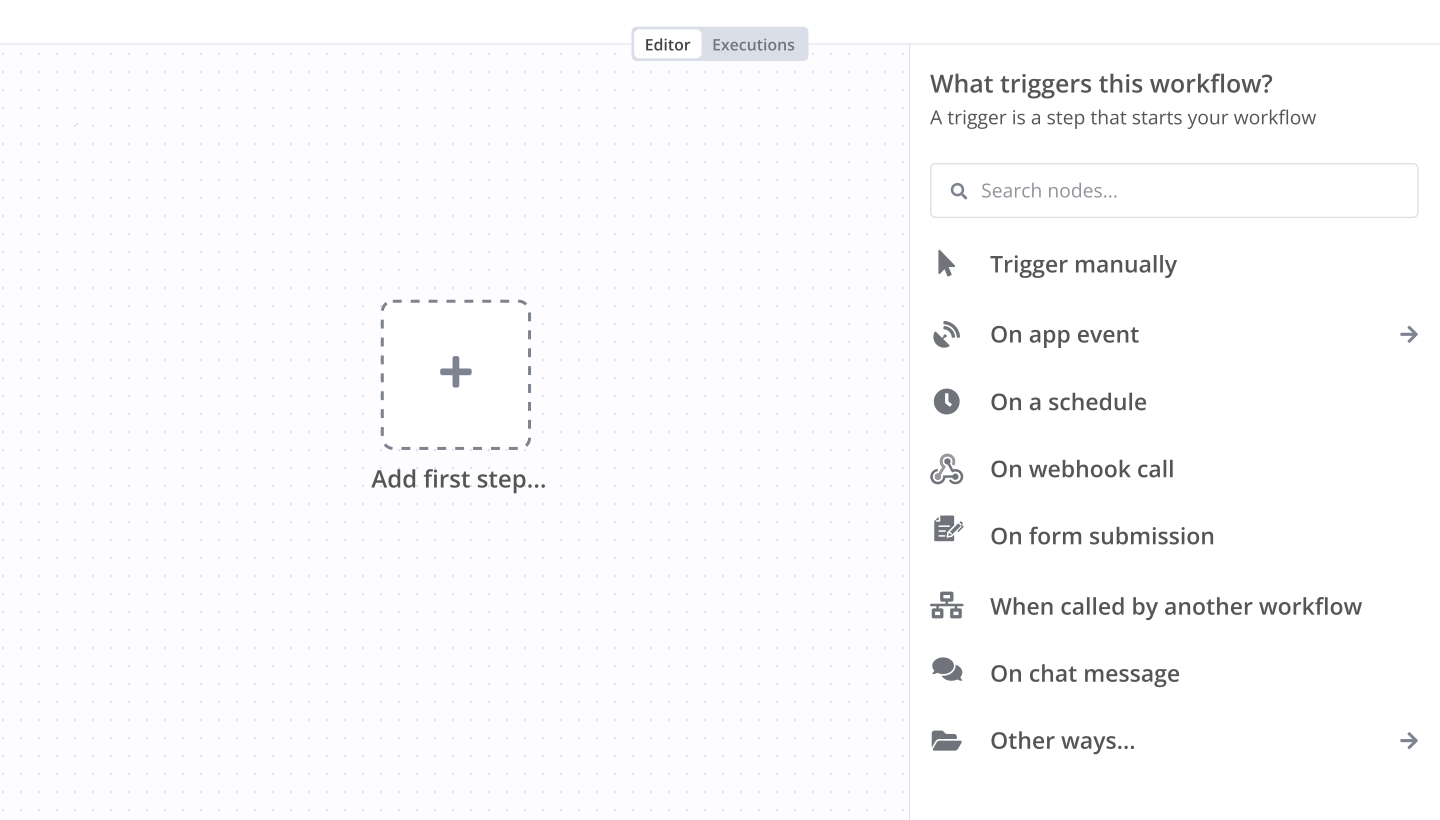
Facebook Graph API and Slack integration: Create a new workflow and add the first step

Step 2: Add and configure Facebook Graph API and Slack nodes

You can find Facebook Graph API and Slack in the nodes panel. Drag them onto your workflow canvas, selecting their actions. Click each node, choose a credential, and authenticate to grant n8n access. Configure Facebook Graph API and Slack nodes one by one: input data on the left, parameters in the middle, and output data on the right.

Facebook Graph API and Slack integration: Add and configure Facebook Graph API and Slack nodes

Step 3: Connect Facebook Graph API and Slack

A connection establishes a link between Facebook Graph API and Slack (or vice versa) to route data through the workflow. Data flows from the output of one node to the input of another. You can have single or multiple connections for each node.

Facebook Graph API and Slack integration: Connect Facebook Graph API and Slack

Step 4: Customize and extend your Facebook Graph API and Slack integration

Use n8n's core nodes such as If, Split Out, Merge, and others to transform and manipulate data. Write custom JavaScript or Python in the Code node and run it as a step in your workflow. Connect Facebook Graph API and Slack with any of n8n’s 1000+ integrations, and incorporate advanced AI logic into your workflows.

Facebook Graph API and Slack integration: Customize and extend your Facebook Graph API and Slack integration

Step 5: Test and activate your Facebook Graph API and Slack workflow

Save and run the workflow to see if everything works as expected. Based on your configuration, data should flow from Facebook Graph API to Slack or vice versa. Easily debug your workflow: you can check past executions to isolate and fix the mistake. Once you've tested everything, make sure to save your workflow and activate it.

Facebook Graph API and Slack integration: Test and activate your Facebook Graph API and Slack workflow

Ai-driven Instagram reels creation and publishing with GPT, Creatomate and Slack

Automate your Instagram growth strategy by generating and posting viral Reels using AI and Creatomate. This workflow plans content topics based on trends, generates video assets, and handles the approval and posting process—all without manual video editing.

How it works

Schedule Trigger: Runs every day at 9:00 AM.
Topic Planning: Checks past topics from Google Sheets to avoid duplicates, then uses OpenAI (GPT-4o) to generate a new quiz-style content plan.
Video Generation: Uses Creatomate to generate a video based on a template, dynamically inserting the AI-generated text and images.
Approval Loop: Sends the generated video to Slack for human review.
Posting: Once approved in Slack, the workflow automatically uploads the Reel to Instagram.
Logging: Saves the new topic to Google Sheets and notifies Slack upon successful publication.

Setup steps

Configure Credentials:
OpenAI: For generating content plans.
Creatomate: For video rendering.
Google Sheets: For tracking past topics.
Slack: For approval notifications.
Facebook Graph API: For Instagram publishing.

Google Sheets Setup:
Create a Google Sheet with columns: Question, Answer, Title, Date.
Update the Get Past Topics and Save New Topic nodes with your Sheet ID.

Creatomate Setup:
Create a template in Creatomate or use an existing one.
Update the Generate Video node with your template_id in the JSON body.

Slack Setup:
Create a channel for approvals.
Update the Slack Approval Request and Slack Notification nodes with your Channel ID.

Activate:
Turn on the workflow to start automating your content pipeline!

Nodes used in this workflow

Popular Facebook Graph API and Slack workflows

+2

AI-Driven Instagram Reels Creation and Publishing with GPT, Creatomate and Slack

Automate your Instagram growth strategy by generating and posting viral Reels using AI and Creatomate. This workflow plans content topics based on trends, generates video assets, and handles the approval and posting process—all without manual video editing. How it works Schedule Trigger: Runs every day at 9:00 AM. Topic Planning: Checks past topics from Google Sheets to avoid duplicates, then uses OpenAI (GPT-4o) to generate a new quiz-style content plan. Video Generation: Uses Creatomate to generate a video based on a template, dynamically inserting the AI-generated text and images. Approval Loop: Sends the generated video to Slack for human review. Posting: Once approved in Slack, the workflow automatically uploads the Reel to Instagram. Logging: Saves the new topic to Google Sheets and notifies Slack upon successful publication. Setup steps Configure Credentials: OpenAI: For generating content plans. Creatomate: For video rendering. Google Sheets: For tracking past topics. Slack: For approval notifications. Facebook Graph API: For Instagram publishing. Google Sheets Setup: Create a Google Sheet with columns: Question, Answer, Title, Date. Update the Get Past Topics and Save New Topic nodes with your Sheet ID. Creatomate Setup: Create a template in Creatomate or use an existing one. Update the Generate Video node with your template_id in the JSON body. Slack Setup: Create a channel for approvals. Update the Slack Approval Request and Slack Notification nodes with your Channel ID. Activate: Turn on the workflow to start automating your content pipeline!
+4

Recover Shopify Abandoned Carts with Email, SMS, WhatsApp & Facebook Retargeting

This workflow is a complete, production-ready solution for recovering abandoned carts in Shopify stores using a multi-channel, multi-touch approach. It automates personalized follow-ups via Email, SMS, and WhatsApp, tracks every customer interaction for multi-touch attribution, and enables advanced retargeting and analytics. Key features: Multi-step, timed recovery sequence (Email → SMS → Email → WhatsApp) Customer segmentation (new, returning, VIP) and A/B testing Dynamic discounting and personalized messaging Touchpoint logging to Google Sheets for attribution analysis Facebook Custom Audience retargeting for unrecovered carts Slack notifications for high-value cart recoveries What does this workflow do? Listens for abandoned cart events from Shopify (or any e-commerce platform) via webhook. Normalizes and enriches cart data by fetching full cart details and customer purchase history. Predicts the likely reason for abandonment (e.g., price sensitivity, checkout complexity, technical issues) using rule-based logic. Segments the customer (new, returning, VIP), assigns an A/B test group, and generates a personalized discount and checkout URL. Runs a timed, multi-channel recovery sequence: 1 hour after abandonment: Checks if the order is completed. If not, sends a personalized Email #1 and logs the touchpoint. 4 hours after abandonment: Checks again. If not recovered, sends an SMS with a discount code and logs the touchpoint. 24 hours after abandonment: Checks again. If not recovered, sends Email #2 (with social proof/urgency) and logs the touchpoint. 48 hours after abandonment: Final check. If not recovered, sends a WhatsApp reminder and logs the touchpoint. If the cart is still not recovered: Hashes customer identifiers and adds them to a Facebook Custom Audience for retargeting. Logs every touchpoint (email, SMS, WhatsApp) to a Google Sheet for multi-touch attribution analysis. Sends a Slack notification if a high-value cart is recovered. Why is this workflow useful? Boosts recovery rates:** By using multiple channels and personalized timing, you maximize the chance of recovering lost sales. Improves attribution:** Every customer interaction is logged, so you can analyze which channels and messages drive conversions. Enables advanced retargeting:** Unrecovered carts are automatically added to a Facebook Custom Audience for paid retargeting. Saves time:** Fully automated, with easy configuration for your store, messaging, and analytics. Scalable and extensible:** Easily adapt the sequence, add more channels, or integrate with other tools. How to install and configure Prerequisites n8n instance (v2.0.2+ recommended) Shopify store with API access Accounts and API credentials for: SendGrid (email) Twilio (SMS) WhatsApp Business API Google Sheets (service account) Facebook Graph API (for Custom Audiences) Slack (for notifications) Setup steps Import the workflow into your n8n instance. Configure the “Workflow Configuration” node: Set your Shopify domain, API URLs, Google Sheets ID, and high-value threshold. Connect all required credentials in the respective nodes: Shopify, SendGrid, Twilio, WhatsApp, Google Sheets, Facebook Graph API, Slack. Create a Google Sheet named “Touchpoints” with columns: cart_id, customer_id, touchpoint_type, timestamp, channel, ab_group. Set up the webhook in your Shopify store (or e-commerce platform) to trigger the workflow on cart abandonment. Test the workflow with a sample abandoned cart event to ensure emails, SMS, WhatsApp, and logging work as expected. Enable the workflow in n8n for live operation. Node-by-node breakdown Abandoned Cart Webhook:** Receives abandoned cart events. Workflow Configuration:** Stores global settings (API URLs, Shopify domain, Google Sheets ID, high-value threshold). Normalize Cart Data:** Cleans and standardizes incoming cart data. Fetch Cart Details / Fetch Customer History:** Enriches data with full cart and customer info. Predict Abandonment Reason:** Uses business logic to guess why the cart was abandoned. Personalization Engine:** Segments the customer, assigns A/B group, calculates discount, and builds checkout URL. Customer Segment Check / Device Type Check:** Applies routing logic for personalized messaging. Wait / Check Order Status / Generate & Send Messages:** Timed sequence for Email, SMS, and WhatsApp, with order status checks at each step. Log Touchpoint (Google Sheets):** Records every message sent for attribution. Attribution Merge:** Combines all touchpoints into a single journey for analysis. Hash Customer Data for Facebook / Add to Retargeting Audience:** Adds unrecovered carts to a Facebook Custom Audience. Check Cart Value Threshold / Notify High-Value Recovery:** Sends Slack alerts for high-value recoveries. Customization tips Adjust wait times and message content to fit your brand and audience. Add or remove channels (e.g., push notifications, phone calls) as needed. Expand the Google Sheet for deeper analytics (e.g., add UTM parameters, campaign IDs). Integrate with your CRM or analytics platform for end-to-end tracking. Troubleshooting Make sure all API credentials are set and tested. Check Google Sheets permissions for the service account. Test each channel (email, SMS, WhatsApp) individually before going live. Review the workflow execution logs in n8n for errors or failed steps.
+4

Analyze Facebook Comment Sentiment with GPT-4, Slack, Sheets & Outlook Reports

📊 Description Automatically analyze the sentiment of Facebook posts and their audience comments using GPT-4 to identify trends and potential PR risks. 🧠💬 This workflow fetches recent posts via the Facebook Graph API, performs AI-powered sentiment analysis on both posts and comments, routes negative results to Slack for immediate attention, logs all data into Google Sheets, and sends a beautifully formatted sentiment summary report via Outlook. 📈📧 What This Template Does 1️⃣ Trigger – Runs daily at 10 AM to fetch the latest Facebook posts. ⏰ 2️⃣ Data Extraction – Pulls post text, reactions, and up to 100 comments per post using Facebook Graph API. 📲 3️⃣ Formatting – Structures and cleans Facebook data for AI analysis. 🧩 4️⃣ AI Sentiment Analysis – GPT-4 evaluates post tone and audience sentiment with confidence scores and explanations. 🤖 5️⃣ Routing – Sends negative sentiment alerts directly to Slack for quick response. ⚠️ 6️⃣ Logging – Records all sentiment metrics in Google Sheets, including positivity ratio and engagement data. 📊 7️⃣ Reporting – Generates a color-coded HTML email report and delivers it via Outlook. 💌 8️⃣ Error Handling – Sends Slack alerts if any node in the workflow fails. 🛡️ Key Benefits ✅ Monitors brand reputation automatically across Facebook comments ✅ Provides structured AI sentiment reports for data-driven decisions ✅ Flags negative audience sentiment for timely intervention ✅ Maintains an always-updated sentiment log in Google Sheets ✅ Delivers professional HTML summary emails to teams Features Automated daily trigger for post sentiment scanning Facebook Graph API integration for posts and comments GPT-4–powered comment tone and sentiment scoring Slack notifications for negative sentiment alerts Google Sheets sentiment dashboard logging Beautiful HTML report delivery through Microsoft Outlook Built-in error detection with Slack fallback alerts Requirements Facebook Graph API credentials with pages_read_engagement access OpenAI API key for GPT-4 or GPT-4o Slack Bot token with chat:write permission Google Sheets OAuth2 credentials with edit rights Microsoft Outlook OAuth2 credentials for email delivery Target Audience Social media and marketing teams monitoring brand perception 📣 PR teams managing engagement or audience sentiment 🧾 Analysts building data dashboards from engagement metrics 📊 Agencies offering automated reporting for client pages 🧑‍💼 Step-by-Step Setup Instructions 1️⃣ Connect Facebook Graph API credentials and set your page ID. 2️⃣ Add OpenAI credentials for GPT-4 sentiment analysis. 3️⃣ Configure Slack and provide your channel ID for alerts. 4️⃣ Set Google Sheets credentials and specify sheet ID and name. 5️⃣ Connect Microsoft Outlook for email report delivery. 6️⃣ Adjust the daily schedule (default 10 AM) as needed. 7️⃣ Run once manually to verify setup, then enable automation. ✅
+5

Monitor agency profitability with Facebook Ads, Shopify, Stripe, Clockify, Google Sheets, Slack and Gemini

Overview Stop guessing your agency's actual margins. This workflow acts as a centralized financial brain for digital marketing agencies. It aggregates real-time data from your time-tracking, ad platforms, and payment processors to calculate precise profitability metrics (Gross Profit, Net Margin, ROAS, and Efficiency). It doesn't just crunch numbers; it uses Google Gemini to act as a virtual CFO, analyzing the data and sending an executive summary to Slack with actionable insights, while simultaneously archiving the data to Google Sheets for historical trending. Key Features Multi-Source Aggregation: Pulls data from Facebook Ads, Google Ads, Shopify, Stripe, and Clockify. Smart Cost Allocation: Automatically calculates overhead (default 30%) and software costs against your gross revenue. AI Analysis: Uses Google Gemini to review the calculated metrics and draft a "Human-readable" executive summary for Slack. Dual Output: Sends instant alerts to Slack and logs granular data to Google Sheets. How to Setup Configure Credentials Ensure you have authenticated credentials for: Clockify Stripe & Shopify Facebook Marketing API & Google Ads Google Sheets & Google Gemini (PaLM) Slack Prepare Google Sheet Create a new Google Sheet with the following headers in Row 1: timestamp, date, totalRevenue, totalAdSpend, facebookAdSpend, googleAdSpend, totalTimeCost, grossProfit, profitMargin, roas. Adjust Logic Configuration Open the "Code in JavaScript" node. At the very top, you will see a CONFIG object. Edit these values to match your agency's model: const CONFIG = { platformFeeRate: 0.029, // Stripe/Shopify fees monthlySoftwareCosts: 500, // Fixed monthly SaaS costs overheadRate: 0.30, // Overhead % (rent, admin, etc) minProfitMargin: 20 // Target margin % }; Remove Mock Data The template includes "Set" nodes with mock data for testing purposes. Simply bypass these nodes and connect the API nodes directly to the "Merge" node when you are ready to go live.
+5

YouTube Video Optimization & Cross-Platform Distribution with GPT-4o

This workflow automates the post-publish process for YouTube videos, combining advanced SEO optimization, cross-platform promotion, and analytics reporting. It is designed for creators, marketers, and agencies who want to maximize the reach and performance of their YouTube content with minimal manual effort. Features SEO Automation** Fetches video metadata and analyzes competitor and trending data. Uses AI to generate SEO-optimized titles, descriptions, and tags. Calculates an SEO score and applies A/B testing logic to select the best title. Updates the video metadata on YouTube automatically. Cross-Platform Promotion** Generates platform-specific promotional content (LinkedIn, X/Twitter, Instagram, Facebook, etc.) using AI. Publishes posts to each connected social channel. Extracts video clips and analyzes thumbnails for enhanced promotion. Engagement Monitoring & Analytics** Monitors YouTube comments, detects negative sentiment, and drafts AI-powered replies. Logs all key data (videos, comments, analytics) to Google Sheets for tracking and reporting. Runs a weekly analytics job to aggregate performance, calculate engagement/viral indicators, and email a detailed report. Notifications & Alerts** Sends Slack alerts when a new video is published or when viral potential/negative comments are detected. How It Works Trigger The workflow starts automatically when a new YouTube video is published (via webhook) or on a weekly schedule for analytics. Video Intake & SEO Fetches video details (title, description, tags, stats). Gathers competitor and trending topic data. Uses AI to generate improved SEO assets and calculates an SEO score. Selects the best title (A/B test) and updates the video metadata. Clip & Thumbnail Processing If the video is long enough, runs thumbnail analysis and extracts short clips for social media. Cross-Platform Promotion Generates and formats promotional posts for each social platform. Publishes automatically to enabled channels. Engagement & Comment Monitoring Fetches comments, detects negative sentiment, and drafts AI-powered replies. Logs comments and responses to Google Sheets. Analytics & Reporting Aggregates weekly analytics, calculates engagement and viral indicators. Logs insights and sends a weekly report via email. Notifications Sends Slack alerts for new video publications and viral/negative comment detection. Setup Instructions Connect YouTube Set up YouTube API credentials and required IDs in the Workflow Configuration node. Connect OpenAI Add your OpenAI credentials for AI-powered content generation. Connect Slack Configure Slack credentials and specify alert channels. Connect Google Sheets Set up service account credentials for logging video, comment, and analytics data. Configure Social Platforms Add credentials for LinkedIn, Twitter (X), Instagram, and Facebook as needed. Test the Workflow Publish a test video and verify that metadata updates, social posts, logging, and weekly reports are working as expected. Use Cases YouTube Creators:** Automate SEO, promotion, and analytics to grow your channel faster. Marketing Teams:** Streamline multi-channel video campaigns and reporting. Agencies:** Deliver consistent, data-driven YouTube growth for multiple clients. Requirements YouTube API credentials OpenAI API key Slack API token Google Sheets service account (Optional) LinkedIn, Twitter, Instagram, Facebook API credentials Limitations Requires valid API credentials for all connected services. AI-powered features depend on OpenAI API access. Social posting is limited to platforms with available n8n nodes and valid credentials. Tip: You can easily customize prompts, scoring logic, and enabled platforms to fit your channel’s unique needs.

Create & Publish Instagram Carousels with AI Research, Nano Banana Pro & Slack

This workflow allows you to complete the entire process of creating and publishing detailed Instagram Carousels—from research to posting—without ever leaving Slack. It leverages Nano Banana Pro, a state-of-the-art image generation model capable of rendering perfect text, to create professional "consultant-style" slides that AI previously struggled with. How it works Start in Slack: You trigger the workflow by entering a topic ensuring the entire process starts in Slack. Research (AI Agent): An AI agent searches the web for deep insights on the topic. Drafting (AI Agent): Structures research into a carousel format designed for engagement. Review in Slack: The draft is sent to Slack as a formatted message. You approve it with a single click. Image Generation: Upon approval, Nano Banana Pro generates professional infographic-style images with legible, high-density text. Final Review in Slack: The created images and caption are sent back to Slack. Publish from Slack: One final approval in Slack automatically publishes the Carousel to Instagram. Setup steps Configure Credentials: OpenAI API: Required for the Research and Drafting agents (GPT-4o/GPT-5 recommended). Slack API: Required for notifications and approval buttons. Kie.ai (Nano Banana Pro): Required for high-quality text-in-image generation. Facebook Graph API: Required for publishing to Instagram. Set IDs: Open the "Slack Approval" nodes and set your Channel ID. Open the "Instagram" nodes and set your Instagram Business Account ID. Customize Prompts (Optional): Adjust the system prompts in the AI nodes to match your brand's tone of voice. Requirements n8n version**: 1.0+ (AI nodes required) Kie.ai Account**: For using the Nano Banana Pro model (excellent at rendering text). Slack Workspace**: For the Human-in-the-loop approval process.

Build your own Facebook Graph API and Slack integration

Create custom Facebook Graph API and Slack workflows by choosing triggers and actions. Nodes come with global operations and settings, as well as app-specific parameters that can be configured. You can also use the HTTP Request node to query data from any app or service with a REST API.

Slack supported actions

Archive
Archives a conversation
Close
Closes a direct message or multi-person direct message
Create
Initiates a public or private channel-based conversation
Get
Get information about a channel
Get Many
Get many channels in a Slack team
History
Get a conversation's history of messages and events
Invite
Invite a user to a channel
Join
Joins an existing conversation
Kick
Removes a user from a channel
Leave
Leaves a conversation
Member
List members of a conversation
Open
Opens or resumes a direct message or multi-person direct message
Rename
Renames a conversation
Replies
Get a thread of messages posted to a channel
Set Purpose
Sets the purpose for a conversation
Set Topic
Sets the topic for a conversation
Unarchive
Unarchives a conversation
Get
Get Many
Get & filters team files
Upload
Create or upload an existing file
Delete
Get Permalink
Search
Send
Send and Wait for Response
Update
Add
Adds a reaction to a message
Get
Get the reactions of a message
Remove
Remove a reaction of a message
Add
Add a star to an item
Delete
Delete a star from an item
Get Many
Get many stars of autenticated user
Get
Get information about a user
Get Many
Get a list of many users
Get User's Profile
Get a user's profile
Get User's Status
Get online status of a user
Update User's Profile
Update a user's profile
Add Users
Create
Disable
Enable
Get Many
Get Users
Update

Facebook Graph API and Slack integration details

integrationFacebook Graph API node
Facebook Graph API

Facebook needs no introduction. It is an online social networking and media service that gathers people from all parts of the world, from different backgrounds, and allows them to promote their businesses and services, share, react to and comment on all types of content, and communicate and message their friends.

Use case

Save engineering resources

Reduce time spent on customer integrations, engineer faster POCs, keep your customer-specific functionality separate from product all without having to code.

Learn more

FAQs

  • Can Facebook Graph API connect with Slack?

  • Can I use Facebook Graph API’s API with n8n?

  • Can I use Slack’s API with n8n?

  • Is n8n secure for integrating Facebook Graph API and Slack?

  • How to get started with Facebook Graph API and Slack integration in n8n.io?

Need help setting up your Facebook Graph API and Slack integration?

Discover our latest community's recommendations and join the discussions about Facebook Graph API and Slack integration.
Nicolas N
Muhammed Iqbal P B
Nicolas N

Looking to integrate Facebook Graph API and Slack in your company?

Over 3000 companies switch to n8n every single week

Why use n8n to integrate Facebook Graph API with Slack

Build complex workflows, really fast
Build complex workflows, really fast

Handle branching, merging and iteration easily.
Pause your workflow to wait for external events.

Code when you need it, UI when you don't

Simple debugging

Your data is displayed alongside your settings, making edge cases easy to track down.

Use templates to get started fast

Use 1000+ workflow templates available from our core team and our community.

Reuse your work

Copy and paste, easily import and export workflows.

Implement complex processes faster with n8n

red iconyellow iconred iconyellow icon