

Back to Integrations
integrationGitHub node
integrationTelegram node

GitHub and Telegram integration

Save yourself the work of writing custom integrations for GitHub and Telegram and use n8n instead. Build adaptable and scalable Development, Communication, and HITL workflows that work with your technology stack. All within a building experience you will love.

How to connect GitHub and Telegram

  • Step 1: Create a new workflow
  • Step 2: Add and configure nodes
  • Step 3: Connect
  • Step 4: Customize and extend your integration
  • Step 5: Test and activate your workflow

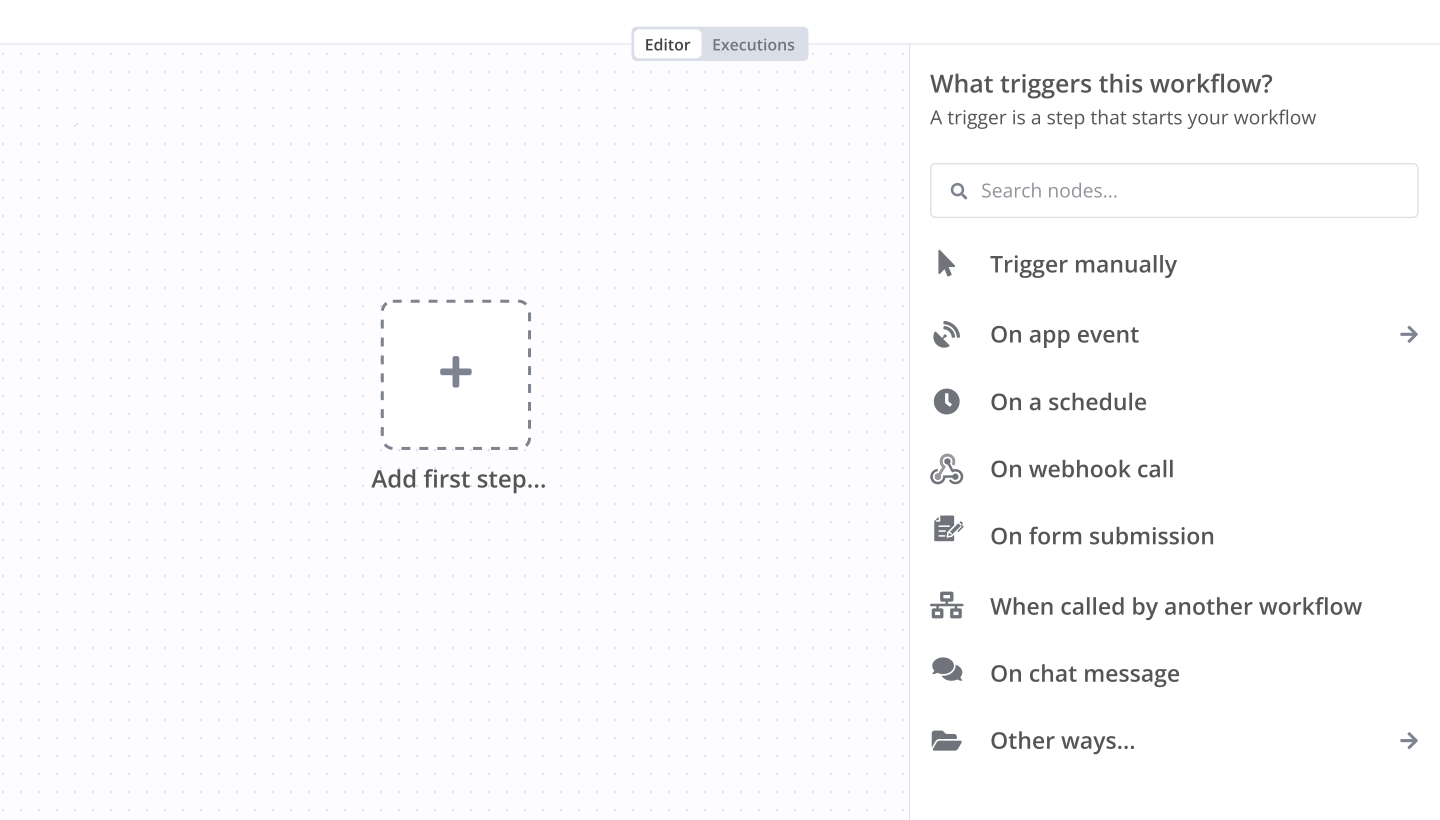
Step 1: Create a new workflow and add the first step

In n8n, click the "Add workflow" button in the Workflows tab to create a new workflow. Add the starting point – a trigger on when your workflow should run: an app event, a schedule, a webhook call, another workflow, an AI chat, or a manual trigger. Sometimes, the HTTP Request node might already serve as your starting point.

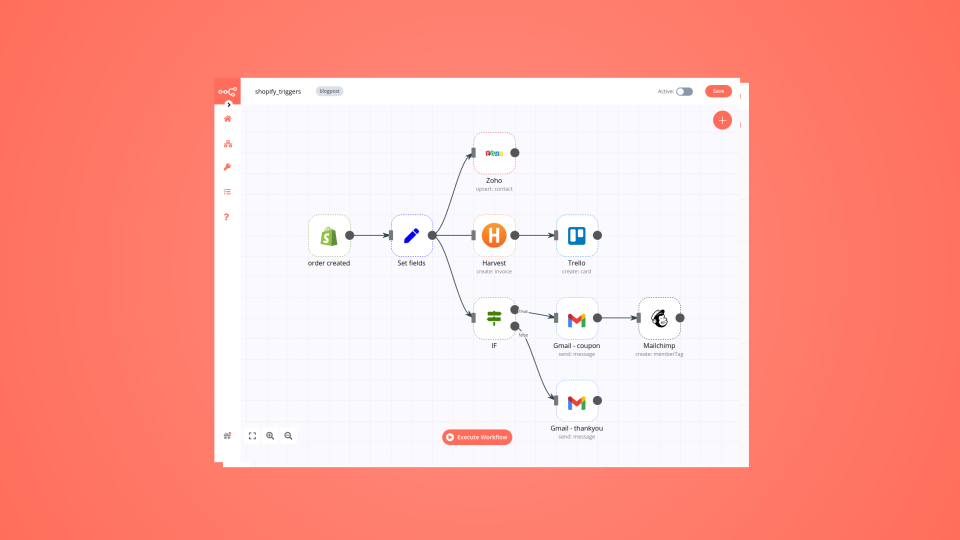
GitHub and Telegram integration: Create a new workflow and add the first step

Step 2: Add and configure GitHub and Telegram nodes

You can find GitHub and Telegram in the nodes panel. Drag them onto your workflow canvas, selecting their actions. Click each node, choose a credential, and authenticate to grant n8n access. Configure GitHub and Telegram nodes one by one: input data on the left, parameters in the middle, and output data on the right.

GitHub and Telegram integration: Add and configure GitHub and Telegram nodes

Step 3: Connect GitHub and Telegram

A connection establishes a link between GitHub and Telegram (or vice versa) to route data through the workflow. Data flows from the output of one node to the input of another. You can have single or multiple connections for each node.

GitHub and Telegram integration: Connect GitHub and Telegram

Step 4: Customize and extend your GitHub and Telegram integration

Use n8n's core nodes such as If, Split Out, Merge, and others to transform and manipulate data. Write custom JavaScript or Python in the Code node and run it as a step in your workflow. Connect GitHub and Telegram with any of n8n’s 1000+ integrations, and incorporate advanced AI logic into your workflows.

GitHub and Telegram integration: Customize and extend your GitHub and Telegram integration

Step 5: Test and activate your GitHub and Telegram workflow

Save and run the workflow to see if everything works as expected. Based on your configuration, data should flow from GitHub to Telegram or vice versa. Easily debug your workflow: you can check past executions to isolate and fix the mistake. Once you've tested everything, make sure to save your workflow and activate it.

GitHub and Telegram integration: Test and activate your GitHub and Telegram workflow

Release a new version via Telegram bot command

This workflow allows you to release a new version via a Telegram bot command. This workflow can be used in your Continous Delivery pipeline.

Telegram Trigger node: This node will trigger the workflow when a message is sent to the bot. If you want to trigger the workflow via a different messaging platform or a service, replace the Telegram Trigger node with the Trigger node of that service.

IF node The IF node checks for the incoming command. If the command is not deploy, the IF node will return false, otherwise true.

Set node: This node extracts the value of the version from the Telegram message and sets the value. This value is used later in the workflow.

GitHub node: This node creates a new version release. It uses the version from the Set node to create the tag.

NoOp node: Adding this node is optional.

Nodes used in this workflow

Popular GitHub and Telegram workflows

+6

Personalize Resumes & Cover Letters with AI, GitHub Pages and Google Drive

🧠 Automated Resume & Cover Letter Generator This project is an automation workflow that generates a personalized resume and cover letter for each job listing. 🚀 Features Automated Resume Crafting Generates an HTML resume from your data. Hosts it live on GitHub Pages. Converts it to PDF using Gotenberg and saves it to Google Drive. Automated Cover Letter Generation Uses an LLM to create a tailored cover letter for each job listing. Simple Input Database Agent Stores your experience in an n8n Data Table with the following fields: role, summary, task, skills, tools, industry. The main agent pulls this data using RAG (Retrieval-Augmented Generation) to personalize the outputs. One-Time GitHub Setup Initializes a blank GitHub repository to host HTML files online, allowing Gotenberg to access and convert them. 🧩 Tech Stack Gotenberg** – Converts HTML to PDF GitHub Pages** – Hosts live HTML files n8n** – Handles data tables and workflow automation LLM (OpenAI / Cohere / etc.)** – Generates cover letters Google Drive** – Stores the final PDFs ⚙️ Installation & Setup Create a GitHub Repository This repo will host your HTML resume through GitHub Pages. Set the Webhook URL In the notify-n8n.yml file, replace: role | summary | task | skills | tools | industry Create the n8n Data Table Add the following columns: role | summary | task | skills | tools | industry Create a Google Spreadsheet Add these columns: company | cover_letter | resume Install Gotenberg Follow the installation instructions on the Gotenberg GitHub repository: https://github.com/thecodingmachine/gotenberg Customize the HTML Template Modify the HTML resume to your liking. You can use an LLM to locate and edit specific sections. Add Authentication and Link Your GitHub Repo Ensure your workflow has permission to push updates to your GitHub Pages branch. Run the Workflow Once everything is connected, trigger the workflow to automatically generate and save personalized resumes and cover letters. 📝 How to Use Copy and paste the job listing description into the Telegram bot. Wait for the "Done" notification before submitting another job. Do not use the bot again until the notification appears. The process usually takes a few minutes to complete. ✅ Notes This workflow is designed to save time and personalize your job applications efficiently. By combining n8n automation, LLMs, and open-source tools like Gotenberg, you can maintain full control over your data while generating high-quality resumes and cover letters for every job opportunity.

GitHub Fork Status Monitor

This workflow helps you keep an eye on your GitHub forks, notifying you when they fall behind or pull ahead of their upstream repositories. How It Works Fetches All Your Repos: The workflow starts by grabbing a list of all repositories owned by your GitHub account. Filters for Forks: It then intelligently filters this list to identify only your forked repositories. Compares Branches: For each identified fork, it compares its default branch against the upstream repository's default branch to find out how many commits it's ahead or behind. Filters for Changes: Only forks that are either ahead or behind their upstream (i.e., not perfectly in sync) are processed further. Generates Report: A concise, well-formatted report is compiled, highlighting the status and commit differences for each relevant fork. Sends Telegram Notification: Finally, this report is sent directly to your Telegram chat, keeping you informed in real-time. Setup Steps Copy the template Update triggers ( optional ) Update the credentials Prerequisites GitHub Credentials**: You'll need to provide your GitHub personal access token for the "Get All Repositories" and "Compare Branches API Call" nodes. Telegram Bot Setup**: Configure a Telegram Bot and obtain its API token and your chat ID for the "Send Report" node. Github Owner Username**: Update the "Get All Repositories" node with the GitHub username of the repository owner whose forks you want to monitor. Explore & Fine-Tune: All detailed instructions and explanations, including how to adjust the filtering logic or output formatting, are provided in sticky notes directly within the workflow canvas.

Get GitHub Issue Updates and Send Notifications to Telegram

Who is this for? This workflow is ideal for: Developers** who want to stay updated on issues without constantly checking GitHub. Managers** tracking issue progress in a Telegram group. DevOps teams that need automated notification alerts for new or updated issues. What problem does this workflow solve? Keeping track of GitHub issues manually can be tedious. Teams often miss critical updates because notifications are buried in emails or dashboards. This workflow automates the process by fetching new or open GitHub issues and instantly sending notifications to a specified Telegram chat. What this workflow does This workflow connects GitHub and Telegram to provide real-time issue notifications: Fetch GitHub Issues – Retrieves new or open issues from a selected GitHub repository. Format the Issue Details – Extracts key information like issue title, number, status, and URL. Send to Telegram – Posts the formatted issue details to a Telegram group or private chat. Setup Guide Prerequisites Before setting up the workflow, ensure you have: GitHub Personal Access Token**: Required to fetch issue details. Generate it under Developer Settings with repo or public_repo permissions. Telegram Bot Token**: Create a bot via BotFather on Telegram and obtain the token. Telegram Chat ID**: Find the chat ID where the bot should send messages using this method. Step-by-Step Setup Set Up GitHub Node Authenticate using your GitHub token. Choose the repository you want to track. Configure filters (e.g., fetch only open issues). Format Issue Details Extract key details like title, issue number, assignee, and status. Customize the message structure for better readability. Send Message to Telegram Add the Telegram node and enter your bot token. Use the Chat ID to define the recipient. Format the message to include issue details and links. Schedule the Workflow (Optional) Use the Cron node to run this workflow periodically (e.g., every hour). How to Customize This Workflow Filter Issues by Labels**: Modify the GitHub node to fetch only issues with specific labels. Include Additional Fields**: Add issue comments, priority, or assignee details in the message. Send Alerts Based on Priority**: Use conditional logic to send high-priority issues to a different chat. Trigger on Issue Events**: Instead of fetching periodically, use GitHub webhooks (if permitted in the repo) to trigger the workflow on issue creation or updates. Why Use This Workflow? Automates GitHub issue tracking** without manually checking repositories. Instant notifications in Telegram** ensure quick response times. Fully customizable** to fit different team workflows.

Daily Pull Request Summaries from GitHub to Telegram using GPT-4o-mini

Stay informed about the latest n8n updates automatically! This workflow monitors the n8n GitHub repository for new pull requests, filters updates from today, generates an AI-powered summary, and sends notifications to your Telegram channel. Who's it for n8n users who want to stay up-to-date with platform changes Development teams tracking n8n updates Anyone managing n8n workflows who needs to know about breaking changes or new features How it works Daily scheduled check at 10 AM for new pull requests Fetches latest PR from n8n GitHub repository Filters to only process today's updates Extracts the pull request summary AI generates a clear, technical summary in English Sends notification to your Telegram channel

Automated Workflow Backup System with Google Drive, GitHub & Messaging Alerts

Why You Need This Right Now 💡 Stop the panic attacks. We've all been there - accidentally deleted a workflow that took hours to build, or worse, corrupted your entire automation setup. This workflow is your safety net. Save your weekends. Instead of spending hours recreating lost work, get back to what matters. One setup protects everything, automatically. Sleep better at night. Your workflows are safely stored in two places with full version history. If something breaks, you're back online in minutes, not days. Perfect For These Situations ⚡ ✅ Business owners running critical automations ✅ Agencies managing client workflows ✅ Teams who need audit trails ✅ Anyone who values their time and sanity How It Actually Works 🔧 Think of it like having a personal assistant who: Checks your workflows twice daily (you can change this) Creates organized backups with timestamps Stores them safely in Google Drive AND GitHub Tells you it's done via Telegram or Discord Keeps everything tidy with smart folder organization The result? A timestamped folder in your Google Drive and organized files in your GitHub repo. Everything is searchable, restorable, and audit-ready. Quick 5-Minute Setup 🚀 Import this workflow to your n8n Connect your accounts (Google Drive, GitHub, optional notifications) Set your preferences (which folder, which repo, how often) Test it once to make sure everything works Relax knowing your workflows are protected What You'll Need 📋 Your n8n instance (obviously!) Google Drive account (free works fine) GitHub account (free works too) 5 minutes of setup time Optional: Telegram or Discord for notifications Pro Tips for Power Users 🧠 Want to level up? Here are some ideas: Add encryption** for sensitive workflows Create restore workflows** for one-click recovery Set up pull requests** for team review of changes Customize schedules** based on your workflow update frequency Created by: khaisa Studio - Automation experts who actually use this stuff daily Tags: backup, automation, n8n, google-drive, github, workflow-protection, business-continuity Questions? Get in touch - I'm always happy to help fellow automation enthusiasts! Remember: The best backup is the one you set up before you need it. Your future self will thank you!

Automated Workflow Backup with Intelligent Change Detection using GitHub

Advanced n8n Workflow Sync with GitHub A robust workflow to back up and synchronize your n8n workflows to a GitHub repository, with intelligent change detection and support for file renames. 🎯 Who's it for? This workflow is for n8n administrators, developers, and power users who want a reliable, automated way to: Keep a version-controlled history of their workflows. Collaborate on workflows using GitHub's infrastructure. Prevent data loss and have a disaster recovery plan for their n8n instance. ✨ Key Features (What it does) Intelligent Sync**: Backs up all your n8n workflows to a designated GitHub repository. Human-Readable Filenames**: Saves workflows with filenames based on their actual names in n8n (e.g., My Awesome Workflow.json). Reliable Matching**: Uses the unique n8n workflow ID to reliably track files, even if their names change. Rename Detection**: If you rename a workflow in n8n, it intelligently deletes the old file and creates a new one in a single logical operation. Efficient Commits**: Commits changes to GitHub only when there are actual modifications to a workflow's logic or structure. It performs a deep comparison, ignoring metadata changes. Clear Commit History**: Generates clean, informative commit messages: create: workflowName update: workflowName rename: oldName - newName ⚙️ How It Works (Simple Steps) Get n8n Workflows: The workflow starts by fetching all your current workflows from n8n. Get GitHub Files: At the same time, it lists all existing workflow files from your GitHub repository. Compare & Decide: It then compares each n8n workflow with its GitHub counterpart. It checks if anything changed, if it was renamed, or if it's new. Take Action: If a workflow is new, it's created on GitHub. If a workflow is updated, the file content is changed on GitHub. If a workflow was renamed, the old file is deleted, and a new one is created. If nothing changed, the workflow is skipped. Send Report: Finally, it can send a summary report to Telegram about what happened. 🚀 How to Set Up Credentials: GitHub: Go to Credentials > New and add your GitHub credentials. You'll need a token with repo permissions. n8n API: In the same Credentials section, create n8n API credentials. You'll need your n8n instance's Base URL and an API key (you can create one in your n8n user settings). Telegram (Optional): If you want notifications, add your Telegram Bot credentials. Configure the Workflow: Open the Configuration node (the green one at the start). Fill in the following values: repo.owner: Your GitHub username or organization name. repo.name: The name of the repository for backups. repo.path: The folder inside the repository to store workflows (e.g., workflows/). report.tg.chatID (Optional): Your Telegram chat ID for notifications. Set to 0 to disable. report.verbose: Set to true to receive a report even if there were no changes. Connect Credentials: Select your newly created credentials in the following nodes: Get all workflows: Select your n8n API credentials. All GitHub nodes (e.g., List files, Create new file): Select your GitHub credentials. Send a message (Telegram): Select your Telegram credentials. Set the Schedule: In the Schedule Trigger node, configure how often you want the backup to run (e.g., every hour, once a day). Activate the Workflow: Save the workflow and toggle it to "Active". 🔧 How to Customize Change Report Destination**: The final part of the workflow sends a report to Telegram. You can easily replace the Send a message node with a node for Slack, Discord, or email to change where notifications go. The message is pre-formatted in the Render summary node. 💡 What's Next? (Future Updates) This workflow is actively maintained! Here's a sneak peek at what's planned for future versions: Automatic Archive Handling**: The next major update will introduce logic to automatically detect when a workflow is archived in n8n and move it to a dedicated archived/ folder in your GitHub repository, keeping your main backup directory clean. Performance Optimizations**: I'm exploring ways to reduce API traffic by intelligently checking for changes before fetching full workflow data. To get the latest version with these features when it's released, be sure to follow my profile for new workflow publications!

Build your own GitHub and Telegram integration

Create custom GitHub and Telegram workflows by choosing triggers and actions. Nodes come with global operations and settings, as well as app-specific parameters that can be configured. You can also use the HTTP Request node to query data from any app or service with a REST API.

GitHub supported actions

Create
Create a new file in repository
Delete
Delete a file in repository
Edit
Edit a file in repository
Get
Get the data of a single file
List
List contents of a folder
Create
Create a new issue
Create Comment
Create a new comment on an issue
Edit
Edit an issue
Get
Get the data of a single issue
Lock
Lock an issue
Get Repositories
Returns all repositories of an organization
Create
Creates a new release
Delete
Delete a release
Get
Get a release
Get Many
Get many repository releases
Update
Update a release
Get
Get the data of a single repository
Get Issues
Returns issues of a repository
Get License
Returns the contents of the repository's license file, if one is detected
Get Profile
Get the community profile of a repository with metrics, health score, description, license, etc
Get Pull Requests
Returns pull requests of a repository
List Popular Paths
Get the top 10 popular content paths over the last 14 days
List Referrers
Get the top 10 referrering domains over the last 14 days
Create
Creates a new review
Get
Get a review for a pull request
Get Many
Get many reviews for a pull request
Update
Update a review
Get Repositories
Returns the repositories of a user
Get Issues
Returns the issues assigned to the user
Invite
Invites a user to an organization
Disable
Disable a workflow
Dispatch
Dispatch a workflow event
Dispatch and Wait for Completion
Dispatch a workflow event and wait for a webhook to be called before proceeding
Enable
Enable a workflow
Get
Get a workflow
Get Usage
Get the usage of a workflow
List
List workflows

Telegram supported actions

Get
Get up to date information about a chat
Get Administrators
Get the Administrators of a chat
Get Member
Get the member of a chat
Leave
Leave a group, supergroup or channel
Set Description
Set the description of a chat
Set Title
Set the title of a chat
Answer Query
Send answer to callback query sent from inline keyboard
Answer Inline Query
Send answer to callback query sent from inline bot
Get
Get a file
Delete Chat Message
Delete a chat message
Edit Message Text
Edit a text message
Pin Chat Message
Pin a chat message
Send Animation
Send an animated file
Send Audio
Send a audio file
Send Chat Action
Send a chat action
Send Document
Send a document
Send Location
Send a location
Send Media Group
Send group of photos or videos to album
Send Message
Send a text message
Send and Wait for Response
Send a message and wait for response
Send Photo
Send a photo
Send Sticker
Send a sticker
Send Video
Send a video
Unpin Chat Message
Unpin a chat message

FAQs

  • Can GitHub connect with Telegram?

  • Can I use GitHub’s API with n8n?

  • Can I use Telegram’s API with n8n?

  • Is n8n secure for integrating GitHub and Telegram?

  • How to get started with GitHub and Telegram integration in n8n.io?

Need help setting up your GitHub and Telegram integration?

Discover our latest community's recommendations and join the discussions about GitHub and Telegram integration.
Trigi Digital

Looking to integrate GitHub and Telegram in your company?

Over 3000 companies switch to n8n every single week

Why use n8n to integrate GitHub with Telegram

Build complex workflows, really fast

Build complex workflows, really fast

Handle branching, merging and iteration easily.
Pause your workflow to wait for external events.

Code when you need it, UI when you don't

Simple debugging

Your data is displayed alongside your settings, making edge cases easy to track down.

Use templates to get started fast

Use 1000+ workflow templates available from our core team and our community.

Reuse your work

Copy and paste, easily import and export workflows.

Implement complex processes faster with n8n

red iconyellow iconred iconyellow icon