HR Date Management Automation - Complete Setup Guide
🎯 How It Works
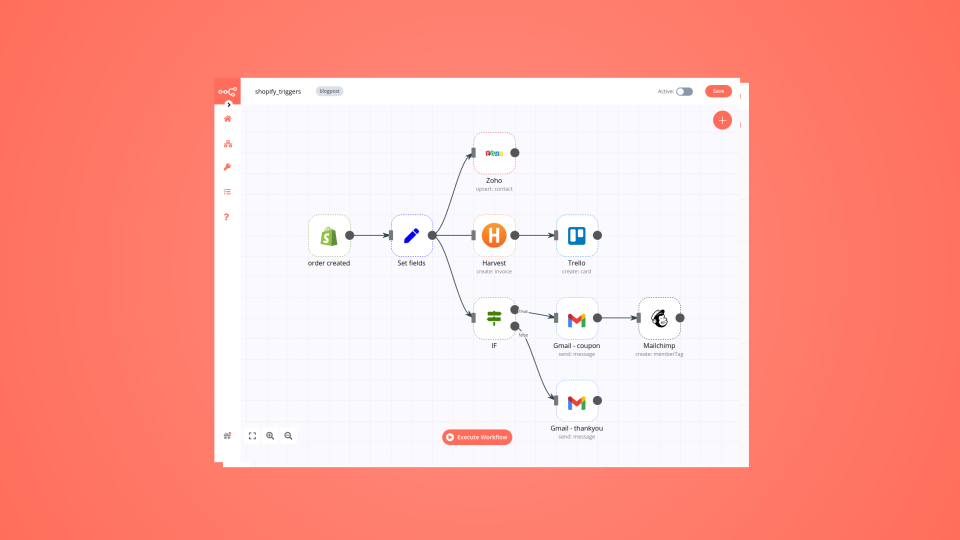
This n8n workflow transforms your HR department from reactive to proactive by automatically monitoring 5 critical employee timelines and generating smart alerts before deadlines hit.
Core Components
Data Input → Employee information (hire dates, contracts, certifications)
Date Analysis Engine → Calculates days until critical events
Smart Categorization → Sorts employees by urgency level
Reminder Scheduler → Creates proactive notifications
Multi-Format Export → Sends alerts to your preferred systems
Business Value
Prevents compliance violations** ($5K-50K+ in fines)
Reduces HR workload** (15-20 hours/month saved)
Improves employee experience** (no missed reviews/renewals)
Provides management visibility** (dashboard reporting)
🚀 Quick Start Test
Import the Workflow
Download the Javascript_Hr.json file
Open n8n and click “Import from file”
Select the downloaded JSON file
Click “Import”
Test with Sample Data
Click the “Execute Workflow” button
Review the sample output in each node
Check the final export data format
What you’ll see:
5 sample employees with different scenarios
Calculated days until contract/certification expiry
Priority levels (high/medium/low)
Scheduled reminders with recipient emails
Export data in multiple formats
🔧 Real-World Integration Setup
Option 1: Google Sheets Integration (Most Popular)
Step 1: Prepare Your Employee Data
Create a Google Sheet with these columns:
| Employee ID | Name | Email | Department | Hire Date | Contract End | Certification Expiry | Last Review | Probation End | Vacation Days | Status |
Sample data format:
| 1 | John Smith |
[email protected] | IT | 2024-01-15 | 2025-12-31 | 2025-03-20 | 2024-06-15 | 2024-07-15 | 20 | active |
Step 2: Replace Sample Data Generator
Delete the “Sample Data Generator” node
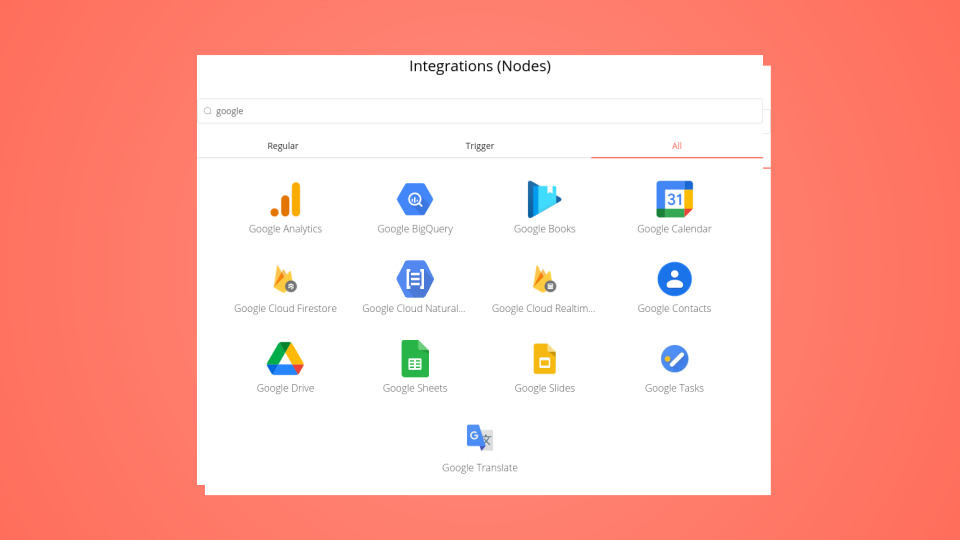
Add “Google Sheets” node
Connect to your Google account
Configure these settings:
Operation**: Read
Document**: Your employee spreadsheet
Sheet**: Employee data sheet
Range**: A1:K100 (adjust for your data size)
Options**: ✅ RAW data, ✅ Header row
Step 3: Map Your Data
Add a “Set” node after Google Sheets to standardize field names:
// Map your sheet columns to workflow format
{
"id": "{{ $json['Employee ID'] }}",
"name": "{{ $json['Name'] }}",
"email": "{{ $json['Email'] }}",
"department": "{{ $json['Department'] }}",
"hiredOn": "{{ $json['Hire Date'] }}",
"contractEndDate": "{{ $json['Contract End'] }}",
"certificationExpiry": "{{ $json['Certification Expiry'] }}",
"lastReviewDate": "{{ $json['Last Review'] }}",
"probationEndDate": "{{ $json['Probation End'] }}",
"vacationDays": "{{ $json['Vacation Days'] }}",
"status": "{{ $json['Status'] }}"
}
Option 2: HRIS Integration (BambooHR Example)
Step 1: BambooHR API Setup
Get your BambooHR API key from Settings > API Keys
Note your company subdomain (e.g., yourcompany.bamboohr.com)
Step 2: Replace Sample Data Generator
Delete the “Sample Data Generator” node
Add “HTTP Request” node
Configure these settings:
Method**: GET
URL**: https://api.bamboohr.com/api/gateway.php/[SUBDOMAIN]/v1/employees/directory
Authentication**: Basic Auth
Username**: Your API key
Password**: x (leave as ‘x’)
Headers**: Accept: application/json
Step 3: Transform BambooHR Data
Add a “Code” node to transform the API response:
// Transform BambooHR response to workflow format
const employees = [];
for (const employee of $input.all()) {
const emp = employee.json;
employees.push({
id: emp.id,
name: ${emp.firstName} ${emp.lastName},
email: emp.workEmail,
department: emp.department,
hiredOn: emp.hireDate,
contractEndDate: emp.terminationDate || "2025-12-31", // Default if not set
certificationExpiry: emp.customCertDate || "2025-12-31",
lastReviewDate: emp.customReviewDate || null,
probationEndDate: emp.customProbationDate || null,
vacationDays: emp.paidTimeOff || 20,
status: emp.employeeStatus || "active"
});
}
return employees.map(emp => ({ json: emp }));
Option 3: CSV File Upload
Step 1: Prepare CSV File
Create a CSV with the same structure as the Google Sheets format.
Step 2: Use CSV Parser
Replace “Sample Data Generator” with “Read Binary File” node
Add “CSV Parser” node
Configure settings:
Include Headers**: Yes
Delimiter**: Comma
Skip Empty Lines**: Yes
📧 Output Integration Setup
Email Notifications
Step 1: Add Email Node
Add “Email” node after “Reminder Scheduler”
Connect to your email provider (Gmail/Outlook)
Step 2: Configure Email Templates
// Dynamic email content based on reminder type
const reminder = $json;
const emailTemplates = {
contract_renewal: {
subject: 🚨 Contract Renewal Required - ${reminder.employeeName},
body: `
Hi HR Team,
${reminder.employeeName}'s contract expires on ${reminder.dueDate}.
Days remaining: ${Math.ceil((new Date(reminder.dueDate) - new Date()) / (10006060*24))}
Please initiate renewal process immediately.
Best regards,
HR Automation System
`
},
certification_renewal: {
subject: 📜 Certification Renewal Reminder - ${reminder.employeeName},
body: `
Hi ${reminder.employeeName},
Your certification expires on ${reminder.dueDate}.
Please renew your certification to maintain compliance.
Contact HR if you need assistance.
Best regards,
HR Team
`
}
};
const template = emailTemplates[reminder.type];
return {
to: reminder.recipientEmail,
subject: template.subject,
body: template.body
};
Slack Integration
Step 1: Add Slack Node
Add “Slack” node after “Advanced Date Filters”
Connect to your Slack workspace
Step 2: Configure Channel Alerts
// Send summary to #hr-alerts channel
const summary = $json.summary;
const message = `
🏢 Daily HR Report
👥 Total Employees: ${summary.totalEmployees}
🆕 New Hires: ${summary.newHires}
⚠️ High Priority Actions: ${summary.highPriority}
📋 Contracts Expiring: ${summary.contractsExpiring}
🎓 Certifications Expiring: ${summary.certificationsExpiring}
Generated: ${new Date().toLocaleDateString()}
`;
return {
channel: '#hr-alerts',
text: message
};
Google Calendar Integration
Step 1: Add Calendar Node
Add “Google Calendar” node after “Reminder Scheduler”
Connect to your Google account
Step 2: Create Calendar Events
// Create calendar events for upcoming deadlines
const reminder = $json;
const eventTitles = {
contract_renewal: Contract Renewal - ${reminder.employeeName},
certification_renewal: Certification Renewal - ${reminder.employeeName},
performance_review: Performance Review - ${reminder.employeeName},
probation_review: Probation Review - ${reminder.employeeName}
};
return {
calendarId: '
[email protected]',
summary: eventTitles[reminder.type],
description: reminder.message,
start: {
dateTime: reminder.dueDate,
timeZone: 'America/New_York'
},
end: {
dateTime: reminder.dueDate,
timeZone: 'America/New_York'
},
attendees: [
{ email: '
[email protected]' },
{ email: reminder.recipientEmail }
]
};
🎯 Scheduling & Automation
Daily Monitoring Setup
Step 1: Add Cron Trigger
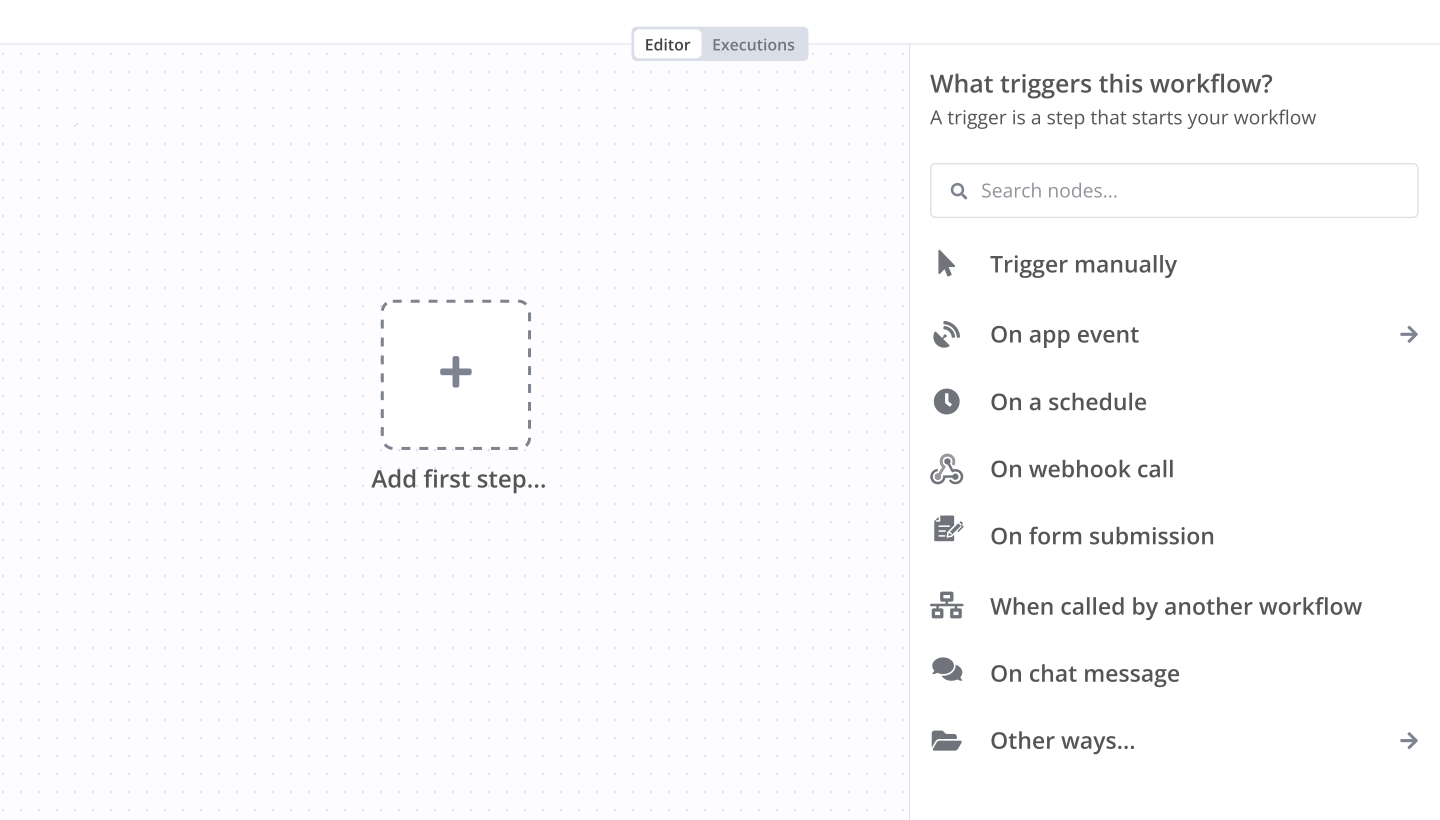
Replace “Manual Trigger” with “Cron” node
Set schedule: 0 9 * * 1-5 (9 AM, Monday-Friday)
Configure timezone to your business hours
Step 2: Error Handling
Add “Error Trigger” node
Connect to email notification for failures
Set up retry logic for failed integrations
Weekly Reports
Step 1: Create Weekly Summary
Add separate “Cron” trigger for weekly reports
Set schedule: 0 9 * * 1 (9 AM every Monday)
Modify the filtering logic to show weekly trends
🔍 Customization Options
Adjust Alert Timings
In the “Date Analysis & Categorization” node:
// Modify these values to change alert timing
const isContractExpiringSoon = daysUntilContractEnd <= 90; // Change from 90 days
const isCertificationExpiringSoon = daysUntilCertificationExpiry <= 60; // Change from 60 days
const needsReview = daysSinceLastReview >= 365; // Change from 365 days
Add Custom Employee Categories
// Add new categories in the analysis node
const isContractor = employee.employeeType === 'contractor';
const isRemoteWorker = employee.location === 'remote';
const isHighRisk = employee.performanceRating === 'needs_improvement';
Custom Date Formats
Modify the “Date Formatting & Export” node to add your preferred formats:
// Add custom date format
const formatters = {
custom: (date) => {
const options = {
year: 'numeric',
month: 'long',
day: 'numeric',
weekday: 'long'
};
return date.toLocaleDateString('en-US', options);
}
};
🎚️ Testing & Validation
Step 1: Data Validation
Test with 2-3 sample employees first
Verify all dates are parsing correctly
Check that calculations match manual calculations
Step 2: Alert Testing
Create test scenarios with dates 30/60/90 days out
Verify emails are sent to correct recipients
Test Slack notifications in a test channel
Step 3: Performance Testing
Test with your full employee dataset
Monitor execution time (should be under 30 seconds)
Check for memory usage with large datasets
🆘 Troubleshooting Guide
Common Issues
Date Parsing Errors
// Add date validation in the analysis node
const parseDate = (dateStr) => {
const date = new Date(dateStr);
if (isNaN(date.getTime())) {
console.error(Invalid date: ${dateStr});
return null;
}
return date;
};
Missing Data Fields
// Add data validation
const validateEmployee = (employee) => {
const required = ['name', 'email', 'hiredOn'];
const missing = required.filter(field => !employee[field]);
if (missing.length > 0) {
console.error(Missing required fields for ${employee.name}: ${missing.join(', ')});
return false;
}
return true;
};
API Rate Limits
Add “Wait” nodes between API calls
Implement retry logic with exponential backoff
Cache API responses when possible
🚀 Advanced Features
Multi-Company Support
// Add company filtering in the analysis node
const processEmployeesByCompany = (employees, companyId) => {
return employees.filter(emp => emp.companyId === companyId);
};
Custom Notification Rules
// Advanced notification logic
const shouldNotify = (employee, eventType) => {
const rules = {
contract_renewal: employee.department !== 'intern',
certification_renewal: employee.role === 'certified_professional',
performance_review: employee.status === 'active'
};
return rules[eventType] || false;
};
Integration with Time Tracking
// Connect to time tracking APIs
const calculateWorkingDays = (startDate, endDate) => {
// Implementation for working days calculation
// Excluding weekends and holidays
};
This workflow transforms your HR department from reactive to proactive, preventing costly compliance issues while improving employee experience. The modular design allows you to start simple and add complexity as needed.