Back to Integrations
integrationGoogle Analytics node
integrationMicrosoft Outlook node

Google Analytics and Microsoft Outlook integration

Save yourself the work of writing custom integrations for Google Analytics and Microsoft Outlook and use n8n instead. Build adaptable and scalable Analytics, Communication, and HITL workflows that work with your technology stack. All within a building experience you will love.

How to connect Google Analytics and Microsoft Outlook

  • Step 1: Create a new workflow
  • Step 2: Add and configure nodes
  • Step 3: Connect
  • Step 4: Customize and extend your integration
  • Step 5: Test and activate your workflow

Step 1: Create a new workflow and add the first step

In n8n, click the "Add workflow" button in the Workflows tab to create a new workflow. Add the starting point – a trigger on when your workflow should run: an app event, a schedule, a webhook call, another workflow, an AI chat, or a manual trigger. Sometimes, the HTTP Request node might already serve as your starting point.
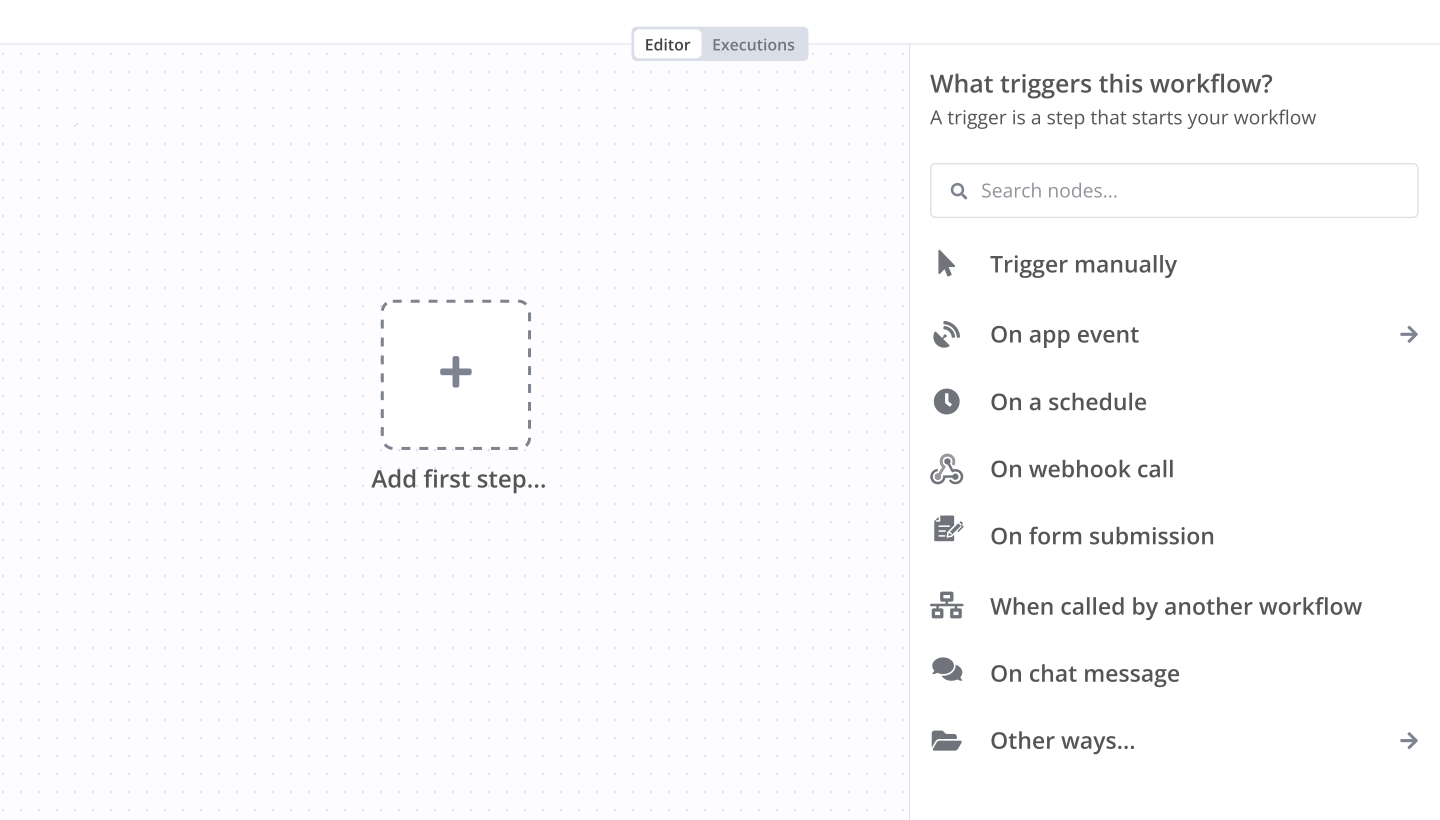
Google Analytics and Microsoft Outlook integration: Create a new workflow and add the first step

Step 2: Add and configure Google Analytics and Microsoft Outlook nodes

You can find Google Analytics and Microsoft Outlook in the nodes panel. Drag them onto your workflow canvas, selecting their actions. Click each node, choose a credential, and authenticate to grant n8n access. Configure Google Analytics and Microsoft Outlook nodes one by one: input data on the left, parameters in the middle, and output data on the right.

Google Analytics and Microsoft Outlook integration: Add and configure Google Analytics and Microsoft Outlook nodes

Step 3: Connect Google Analytics and Microsoft Outlook

A connection establishes a link between Google Analytics and Microsoft Outlook (or vice versa) to route data through the workflow. Data flows from the output of one node to the input of another. You can have single or multiple connections for each node.

Google Analytics and Microsoft Outlook integration: Connect Google Analytics and Microsoft Outlook

Step 4: Customize and extend your Google Analytics and Microsoft Outlook integration

Use n8n's core nodes such as If, Split Out, Merge, and others to transform and manipulate data. Write custom JavaScript or Python in the Code node and run it as a step in your workflow. Connect Google Analytics and Microsoft Outlook with any of n8n’s 1000+ integrations, and incorporate advanced AI logic into your workflows.

Google Analytics and Microsoft Outlook integration: Customize and extend your Google Analytics and Microsoft Outlook integration

Step 5: Test and activate your Google Analytics and Microsoft Outlook workflow

Save and run the workflow to see if everything works as expected. Based on your configuration, data should flow from Google Analytics to Microsoft Outlook or vice versa. Easily debug your workflow: you can check past executions to isolate and fix the mistake. Once you've tested everything, make sure to save your workflow and activate it.

Google Analytics and Microsoft Outlook integration: Test and activate your Google Analytics and Microsoft Outlook workflow

Automate multi-website Google Analytics reports with GPT processing to email & Slack

🟡 DESCRIPTION

This n8n workflow automates the daily generation of comprehensive analytics reports from multiple websites, processes them using OpenAI's powerful language models, and then delivers the insights directly to your email and Slack channels.

Designed for digital marketers, website administrators, and data analysts, this template streamlines the tedious process of manually collecting and interpreting website performance data, offering immediate, actionable intelligence.

The core problem this workflow solves is the fragmentation and manual effort involved in monitoring numerous website analytics. Instead of logging into multiple Google Analytics accounts or properties daily, this workflow centralizes data extraction, enriches it with AI-powered summaries, and distributes it to your preferred communication platforms.

This significantly reduces the time spent on routine reporting, allowing you to focus on strategy and decision-making.

Users who would benefit most from this template include:

Digital Marketing Agencies: Efficiently generate and share client reports across multiple properties.

E-commerce Businesses: Monitor performance of various product sites or regional domains.

Content Creators: Track the success of different blogs or content platforms.

Anyone managing a portfolio of websites: Gain a unified view of their digital assets' performance.

🟡 SETUP

Before importing and running this workflow, ensure you have the following prerequisites in place:

► Google Analytics API Setup:

Go to the Google Cloud Console (https://console.cloud.google.com/).

Create a new project or select an existing one.

Navigate to "APIs & Services" > "Enabled APIs & services."

Search for and enable the "Google Analytics Data API" (for GA4) or "Google Analytics Reporting API" (for Universal Analytics, if still in use).

Go to "APIs & Services" > "Credentials."

Create "OAuth client ID" credentials for a "Web application."

Copy your client ID and client secret.

In n8n, add a new Google Analytics credential using the "OAuth2" authentication method.
Provide the Client ID and Client Secret. You will need to authorize n8n to access your Google Analytics data.
Scopes https://www.googleapis.com/auth/analytics.readonly (read-only) or https://www.googleapis.com/auth/analytics (manage)
OAuth Redirect URL Already pre-filled by n8n (copy this when creating the Google client)

Click Sign in with Google, choose the GA account, and approve the requested scopes.

Click Save – n8n tests the token and stores it encrypted.

For each yourwebsite.com node, select these credentials and specify the correct Google Analytics View ID (for Universal Analytics) or Property ID (for GA4).

► Email Credentials (SMTP):

In n8n, add a new SMTP credential.

Provide your SMTP host, port, username, and password. This will be used to send the aggregated reports.

► Slack Credentials:

In n8n, add a new Slack credential.

Follow the instructions to create a Slack App and generate a Bot User OAuth Token. This token will allow n8n to post messages to your Slack channels.

► OpenAI Credentials:

Sign up for an OpenAI account (https://platform.openai.com/).

Generate an API Key from your account dashboard.

In n8n, add a new OpenAI credential and paste your API Key.

► Website Configuration:

The workflow currently includes nodes for yourwebsite.com (1 to 8).

For each "Get Report" node (e.g., yourwebsite.com, yourwebsite.com 2, etc.), duplicate or remove them as needed to match the number of Google Analytics properties you wish to monitor.
Replace the names and number of websites inside the report maker agent.

🟡 Usage

Once you have configured the credentials, you can customize the workflow to fit your specific needs, including leveraging various alternative nodes for sending notifications and reports. This flexibility allows you to integrate seamlessly with your preferred communication tools such as Gmail, Telegram, Outlook, or any other service supported by n8n's extensive node library.

Nodes used in this workflow

Popular Google Analytics and Microsoft Outlook workflows

+4

Automate Multi-Website Google Analytics Reports with GPT Processing to Email & Slack

🟡 DESCRIPTION This n8n workflow automates the daily generation of comprehensive analytics reports from multiple websites, processes them using OpenAI's powerful language models, and then delivers the insights directly to your email and Slack channels. Designed for digital marketers, website administrators, and data analysts, this template streamlines the tedious process of manually collecting and interpreting website performance data, offering immediate, actionable intelligence. The core problem this workflow solves is the fragmentation and manual effort involved in monitoring numerous website analytics. Instead of logging into multiple Google Analytics accounts or properties daily, this workflow centralizes data extraction, enriches it with AI-powered summaries, and distributes it to your preferred communication platforms. This significantly reduces the time spent on routine reporting, allowing you to focus on strategy and decision-making. Users who would benefit most from this template include: Digital Marketing Agencies: Efficiently generate and share client reports across multiple properties. E-commerce Businesses: Monitor performance of various product sites or regional domains. Content Creators: Track the success of different blogs or content platforms. Anyone managing a portfolio of websites: Gain a unified view of their digital assets' performance. 🟡 SETUP Before importing and running this workflow, ensure you have the following prerequisites in place: ► Google Analytics API Setup: Go to the Google Cloud Console (https://console.cloud.google.com/). Create a new project or select an existing one. Navigate to "APIs & Services" > "Enabled APIs & services." Search for and enable the "Google Analytics Data API" (for GA4) or "Google Analytics Reporting API" (for Universal Analytics, if still in use). Go to "APIs & Services" > "Credentials." Create "OAuth client ID" credentials for a "Web application." Copy your client ID and client secret. In n8n, add a new Google Analytics credential using the "OAuth2" authentication method. Provide the Client ID and Client Secret. You will need to authorize n8n to access your Google Analytics data. Scopes https://www.googleapis.com/auth/analytics.readonly (read-only) or https://www.googleapis.com/auth/analytics (manage) OAuth Redirect URL Already pre-filled by n8n (copy this when creating the Google client) Click Sign in with Google, choose the GA account, and approve the requested scopes. Click Save – n8n tests the token and stores it encrypted. For each yourwebsite.com node, select these credentials and specify the correct Google Analytics View ID (for Universal Analytics) or Property ID (for GA4). ► Email Credentials (SMTP): In n8n, add a new SMTP credential. Provide your SMTP host, port, username, and password. This will be used to send the aggregated reports. ► Slack Credentials: In n8n, add a new Slack credential. Follow the instructions to create a Slack App and generate a Bot User OAuth Token. This token will allow n8n to post messages to your Slack channels. ► OpenAI Credentials: Sign up for an OpenAI account (https://platform.openai.com/). Generate an API Key from your account dashboard. In n8n, add a new OpenAI credential and paste your API Key. ► Website Configuration: The workflow currently includes nodes for yourwebsite.com (1 to 8). For each "Get Report" node (e.g., yourwebsite.com, yourwebsite.com 2, etc.), duplicate or remove them as needed to match the number of Google Analytics properties you wish to monitor. Replace the names and number of websites inside the report maker agent. 🟡 Usage Once you have configured the credentials, you can customize the workflow to fit your specific needs, including leveraging various alternative nodes for sending notifications and reports. This flexibility allows you to integrate seamlessly with your preferred communication tools such as Gmail, Telegram, Outlook, or any other service supported by n8n's extensive node library.

Build your own Google Analytics and Microsoft Outlook integration

Create custom Google Analytics and Microsoft Outlook workflows by choosing triggers and actions. Nodes come with global operations and settings, as well as app-specific parameters that can be configured. You can also use the HTTP Request node to query data from any app or service with a REST API.

Google Analytics supported actions

Get
Return the analytics data
Search
Return user activity data

Microsoft Outlook supported actions

Create
Create a new calendar
Delete
Delete a calendar
Get
Retrieve a calendar
Get Many
List and search calendars
Update
Update a calendar
Create
Create a new contact
Delete
Delete a contact
Get
Retrieve a contact
Get Many
List and search contacts
Update
Update a contact
Create
Create a new email draft
Delete
Delete an email draft
Get
Retrieve an email draft
Send
Send an existing email draft
Update
Update an email draft
Create
Create a new event
Delete
Delete an event
Get
Retrieve an event
Get Many
List and search events
Update
Update an event
Create
Create a mail folder in the root folder of the user's mailbox
Delete
Delete a folder
Get
Retrieve a folder
Get Many
Get many folders
Update
Update a folder
Get Many
Retrieves the messages in a folder
Delete
Delete a message
Get
Retrieve a single message
Get Many
List and search messages
Move
Move a message to a folder
Reply
Create a reply to a message
Send
Send a message
Send and Wait for Response
Send a message and wait for response
Update
Update a message
Add
Add an attachment to a message
Download
Download an attachment from a message
Get
Retrieve information about an attachment of a message
Get Many
Retrieve information about the attachments of a message

FAQs

  • Can Google Analytics connect with Microsoft Outlook?

  • Can I use Google Analytics’s API with n8n?

  • Can I use Microsoft Outlook’s API with n8n?

  • Is n8n secure for integrating Google Analytics and Microsoft Outlook?

  • How to get started with Google Analytics and Microsoft Outlook integration in n8n.io?

Looking to integrate Google Analytics and Microsoft Outlook in your company?

Over 3000 companies switch to n8n every single week

Why use n8n to integrate Google Analytics with Microsoft Outlook

Build complex workflows, really fast

Build complex workflows, really fast

Handle branching, merging and iteration easily.
Pause your workflow to wait for external events.

Code when you need it, UI when you don't

Simple debugging

Your data is displayed alongside your settings, making edge cases easy to track down.

Use templates to get started fast

Use 1000+ workflow templates available from our core team and our community.

Reuse your work

Copy and paste, easily import and export workflows.

Implement complex processes faster with n8n

red iconyellow iconred iconyellow icon