Back to Integrations
integrationGoogle Analytics node
integrationMicrosoft Teams node

Google Analytics and Microsoft Teams integration

Save yourself the work of writing custom integrations for Google Analytics and Microsoft Teams and use n8n instead. Build adaptable and scalable Analytics, Communication, and HITL workflows that work with your technology stack. All within a building experience you will love.

How to connect Google Analytics and Microsoft Teams

  • Step 1: Create a new workflow
  • Step 2: Add and configure nodes
  • Step 3: Connect
  • Step 4: Customize and extend your integration
  • Step 5: Test and activate your workflow

Step 1: Create a new workflow and add the first step

In n8n, click the "Add workflow" button in the Workflows tab to create a new workflow. Add the starting point – a trigger on when your workflow should run: an app event, a schedule, a webhook call, another workflow, an AI chat, or a manual trigger. Sometimes, the HTTP Request node might already serve as your starting point.
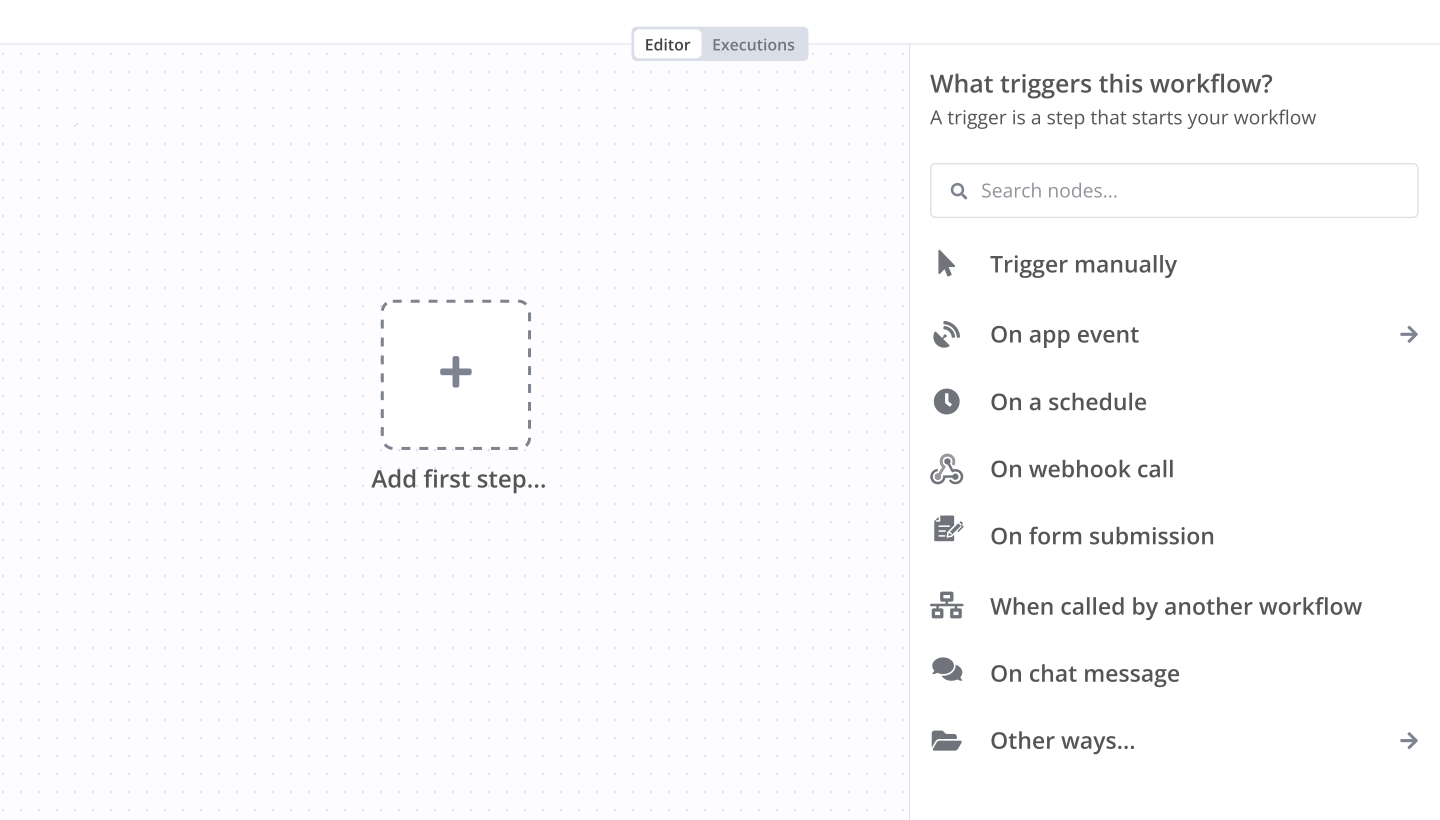
Google Analytics and Microsoft Teams integration: Create a new workflow and add the first step

Step 2: Add and configure Google Analytics and Microsoft Teams nodes

You can find Google Analytics and Microsoft Teams in the nodes panel. Drag them onto your workflow canvas, selecting their actions. Click each node, choose a credential, and authenticate to grant n8n access. Configure Google Analytics and Microsoft Teams nodes one by one: input data on the left, parameters in the middle, and output data on the right.

Google Analytics and Microsoft Teams integration: Add and configure Google Analytics and Microsoft Teams nodes

Step 3: Connect Google Analytics and Microsoft Teams

A connection establishes a link between Google Analytics and Microsoft Teams (or vice versa) to route data through the workflow. Data flows from the output of one node to the input of another. You can have single or multiple connections for each node.

Google Analytics and Microsoft Teams integration: Connect Google Analytics and Microsoft Teams

Step 4: Customize and extend your Google Analytics and Microsoft Teams integration

Use n8n's core nodes such as If, Split Out, Merge, and others to transform and manipulate data. Write custom JavaScript or Python in the Code node and run it as a step in your workflow. Connect Google Analytics and Microsoft Teams with any of n8n’s 1000+ integrations, and incorporate advanced AI logic into your workflows.

Google Analytics and Microsoft Teams integration: Customize and extend your Google Analytics and Microsoft Teams integration

Step 5: Test and activate your Google Analytics and Microsoft Teams workflow

Save and run the workflow to see if everything works as expected. Based on your configuration, data should flow from Google Analytics to Microsoft Teams or vice versa. Easily debug your workflow: you can check past executions to isolate and fix the mistake. Once you've tested everything, make sure to save your workflow and activate it.

Google Analytics and Microsoft Teams integration: Test and activate your Google Analytics and Microsoft Teams workflow

Generate monthly SEO analytics reports with GA4, Search Console, GPT-4.1 and Slack/Teams

Who it's for
This advanced n8n workflow is designed for SEO specialists, digital agency owners, webmasters, and marketing managers who need a comprehensive, automated solution to track and improve their website's search engine performance. It acts as a virtual SEO analyst, automatically gathering data from multiple sources (Google Analytics, Search Console, PageSpeed Insights, and technical audits), analyzing them with AI agents, and delivering actionable insights via various communication channels.

Features
Multi-Source Data Collection**: Automatically fetches data from Google Analytics (GA4), Google Search Console, PageSpeed Insights, and performs on-page technical audits.
Dual Trigger Modes**: Run the report automatically on a monthly schedule or trigger it instantly via Telegram by sending an "SEO Analysis" command.
AI-Powered Analysis**: Utilizes specialized LangChain Agents (Analytics, Performance, SEO, Technical) to analyze raw data and generate human-readable insights.
History Tracking**: Reads and writes historical data to Google Sheets, allowing AI agents to compare current performance against past data for trend analysis.
Technical SEO Audit**: Crawls the website homepage to extract meta tags, headings (H1), and image alt attributes to calculate an on-page SEO score.
Executive Summaries**: Generates a comprehensive "Master Analyst" report that aggregates findings from all agents into a unified action plan.
Multi-Channel Reporting**: Sends the final SEO report simultaneously to Slack, Microsoft Teams, Discord, WhatsApp (via Rapiwa), and Telegram.
Smart Filtering**: Includes Telegram verification logic to restrict report generation to authorized admins or alert the admin when a user requests an analysis.

Requirements
Google APIs**: Credentials for Google Analytics (GA4), Google Search Console, and Google Sheets OAuth2.
OpenAI API**: Required for the LangChain Agents (using models like gpt-4.1-mini and gpt-4.1-nano) to process data and generate insights.
Telegram API**: For triggering the workflow and receiving the final report.
Slack API**: To post messages to a specific Slack channel.
Microsoft Teams API**: To send notifications to a Team or channel.
Discord Bot API**: To post rich embed updates to a Discord server.
Rapiwa (WhatsApp)**: To send the report via WhatsApp messages.

Important Notes
Permissions**: Ensure your Google Cloud Project has access to the specific View ID for Analytics and the Site URL for Search Console.
Telegram Setup**: You must update the Chat ID in the "Send SEO Report Message" node to ensure the report goes to the correct recipient. The workflow includes a check to validate the user ID against an admin list.
Data Aggregation**: The workflow uses a "Merge" node to combine outputs from four different AI agents. Ensure all agents complete successfully before the merge step.
Sheet ID**: The Google Sheets nodes (Append row, Get GA History, etc.) require the specific Document ID and Sheet Name to be populated to read/write history correctly.
Target Domain**: Update the Edit Fields (Add Your Target Website URL) node with your specific domain (e.g., https://yourwebsite.com) before activating.

Support & Help
WhatsApp**: Chat on WhatsApp
Discord**: SpaGreen Community
Facebook Group**: SpaGreen Support
Website**: spagreen.net
Developer Portfolio**: Codecanyon SpaGreen

Nodes used in this workflow

Popular Google Analytics and Microsoft Teams workflows

+5

Generate monthly SEO analytics reports with GA4, Search Console, GPT-4.1 and Slack/Teams

Who it's for This advanced n8n workflow is designed for SEO specialists, digital agency owners, webmasters, and marketing managers who need a comprehensive, automated solution to track and improve their website's search engine performance. It acts as a virtual SEO analyst, automatically gathering data from multiple sources (Google Analytics, Search Console, PageSpeed Insights, and technical audits), analyzing them with AI agents, and delivering actionable insights via various communication channels. Features Multi-Source Data Collection**: Automatically fetches data from Google Analytics (GA4), Google Search Console, PageSpeed Insights, and performs on-page technical audits. Dual Trigger Modes**: Run the report automatically on a monthly schedule or trigger it instantly via Telegram by sending an "SEO Analysis" command. AI-Powered Analysis**: Utilizes specialized LangChain Agents (Analytics, Performance, SEO, Technical) to analyze raw data and generate human-readable insights. History Tracking**: Reads and writes historical data to Google Sheets, allowing AI agents to compare current performance against past data for trend analysis. Technical SEO Audit**: Crawls the website homepage to extract meta tags, headings (H1), and image alt attributes to calculate an on-page SEO score. Executive Summaries**: Generates a comprehensive "Master Analyst" report that aggregates findings from all agents into a unified action plan. Multi-Channel Reporting**: Sends the final SEO report simultaneously to Slack, Microsoft Teams, Discord, WhatsApp (via Rapiwa), and Telegram. Smart Filtering**: Includes Telegram verification logic to restrict report generation to authorized admins or alert the admin when a user requests an analysis. Requirements Google APIs**: Credentials for Google Analytics (GA4), Google Search Console, and Google Sheets OAuth2. OpenAI API**: Required for the LangChain Agents (using models like gpt-4.1-mini and gpt-4.1-nano) to process data and generate insights. Telegram API**: For triggering the workflow and receiving the final report. Slack API**: To post messages to a specific Slack channel. Microsoft Teams API**: To send notifications to a Team or channel. Discord Bot API**: To post rich embed updates to a Discord server. Rapiwa (WhatsApp)**: To send the report via WhatsApp messages. Important Notes Permissions**: Ensure your Google Cloud Project has access to the specific View ID for Analytics and the Site URL for Search Console. Telegram Setup**: You must update the Chat ID in the "Send SEO Report Message" node to ensure the report goes to the correct recipient. The workflow includes a check to validate the user ID against an admin list. Data Aggregation**: The workflow uses a "Merge" node to combine outputs from four different AI agents. Ensure all agents complete successfully before the merge step. Sheet ID**: The Google Sheets nodes (Append row, Get GA History, etc.) require the specific Document ID and Sheet Name to be populated to read/write history correctly. Target Domain**: Update the Edit Fields (Add Your Target Website URL) node with your specific domain (e.g., https://yourwebsite.com) before activating. Support & Help WhatsApp**: Chat on WhatsApp Discord**: SpaGreen Community Facebook Group**: SpaGreen Support Website**: spagreen.net Developer Portfolio**: Codecanyon SpaGreen

Build your own Google Analytics and Microsoft Teams integration

Create custom Google Analytics and Microsoft Teams workflows by choosing triggers and actions. Nodes come with global operations and settings, as well as app-specific parameters that can be configured. You can also use the HTTP Request node to query data from any app or service with a REST API.

Google Analytics supported actions

Get
Return the analytics data
Search
Return user activity data

Microsoft Teams supported actions

Create
Create a channel
Delete
Delete a channel
Get
Get a channel
Get Many
Get many channels
Update
Update a channel
Create
Create a message in a channel
Get Many
Get many messages from a channel
Create
Create a message in a chat
Get
Get a message from a chat
Get Many
Get many messages from a chat
Send and Wait for Response
Send a message and wait for response
Create
Create a task
Delete
Delete a task
Get
Get a task
Get Many
Get many tasks
Update
Update a task

FAQs

  • Can Google Analytics connect with Microsoft Teams?

  • Can I use Google Analytics’s API with n8n?

  • Can I use Microsoft Teams’s API with n8n?

  • Is n8n secure for integrating Google Analytics and Microsoft Teams?

  • How to get started with Google Analytics and Microsoft Teams integration in n8n.io?

Looking to integrate Google Analytics and Microsoft Teams in your company?

Over 3000 companies switch to n8n every single week

Why use n8n to integrate Google Analytics with Microsoft Teams

Build complex workflows, really fast
Build complex workflows, really fast

Handle branching, merging and iteration easily.
Pause your workflow to wait for external events.

Code when you need it, UI when you don't

Simple debugging

Your data is displayed alongside your settings, making edge cases easy to track down.

Use templates to get started fast

Use 1000+ workflow templates available from our core team and our community.

Reuse your work

Copy and paste, easily import and export workflows.

Implement complex processes faster with n8n

red iconyellow iconred iconyellow icon