
Back to Integrations
integrationMicrosoft Teams node
integrationMicrosoft Outlook node

Microsoft Teams and Microsoft Outlook integration

Save yourself the work of writing custom integrations for Microsoft Teams and Microsoft Outlook and use n8n instead. Build adaptable and scalable Communication, and HITL workflows that work with your technology stack. All within a building experience you will love.

How to connect Microsoft Teams and Microsoft Outlook

  • Step 1: Create a new workflow
  • Step 2: Add and configure nodes
  • Step 3: Connect
  • Step 4: Customize and extend your integration
  • Step 5: Test and activate your workflow

Step 1: Create a new workflow and add the first step

In n8n, click the "Add workflow" button in the Workflows tab to create a new workflow. Add the starting point – a trigger on when your workflow should run: an app event, a schedule, a webhook call, another workflow, an AI chat, or a manual trigger. Sometimes, the HTTP Request node might already serve as your starting point.
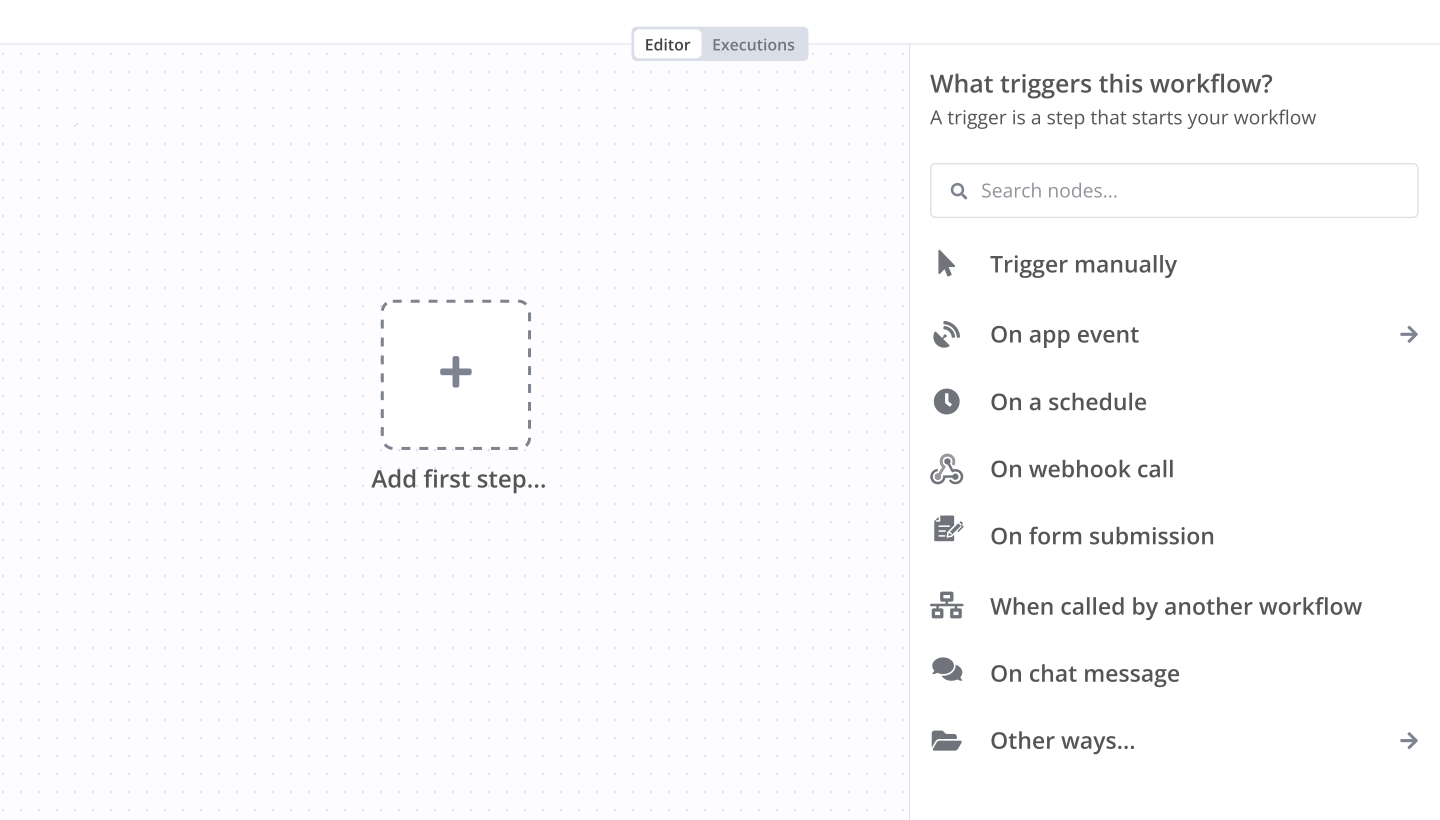
Microsoft Teams and Microsoft Outlook integration: Create a new workflow and add the first step

Step 2: Add and configure Microsoft Teams and Microsoft Outlook nodes

You can find Microsoft Teams and Microsoft Outlook in the nodes panel. Drag them onto your workflow canvas, selecting their actions. Click each node, choose a credential, and authenticate to grant n8n access. Configure Microsoft Teams and Microsoft Outlook nodes one by one: input data on the left, parameters in the middle, and output data on the right.

Microsoft Teams and Microsoft Outlook integration: Add and configure Microsoft Teams and Microsoft Outlook nodes

Step 3: Connect Microsoft Teams and Microsoft Outlook

A connection establishes a link between Microsoft Teams and Microsoft Outlook (or vice versa) to route data through the workflow. Data flows from the output of one node to the input of another. You can have single or multiple connections for each node.

Microsoft Teams and Microsoft Outlook integration: Connect Microsoft Teams and Microsoft Outlook

Step 4: Customize and extend your Microsoft Teams and Microsoft Outlook integration

Use n8n's core nodes such as If, Split Out, Merge, and others to transform and manipulate data. Write custom JavaScript or Python in the Code node and run it as a step in your workflow. Connect Microsoft Teams and Microsoft Outlook with any of n8n’s 1000+ integrations, and incorporate advanced AI logic into your workflows.

Microsoft Teams and Microsoft Outlook integration: Customize and extend your Microsoft Teams and Microsoft Outlook integration

Step 5: Test and activate your Microsoft Teams and Microsoft Outlook workflow

Save and run the workflow to see if everything works as expected. Based on your configuration, data should flow from Microsoft Teams to Microsoft Outlook or vice versa. Easily debug your workflow: you can check past executions to isolate and fix the mistake. Once you've tested everything, make sure to save your workflow and activate it.

Microsoft Teams and Microsoft Outlook integration: Test and activate your Microsoft Teams and Microsoft Outlook workflow

Automate daily Outlook calendar digests to Microsoft Teams

This workflow sends an automatic daily summary of your Microsoft Outlook calendar events into a Microsoft Teams channel. Perfect for team visibility or personal reminders.

This automation is ideal for team leads, project managers, and remote workers who need to keep stakeholders informed of scheduled events without manual effort. It saves time, ensures consistent communication, and reduces the chance of missing important meetings.

How it works
Scheduled Trigger
The workflow runs automatically every midnight (00:00 UTC).

Create filter for "TODAY" value (Code Node)
The code node generates the date value for "today"
Calculates UTC start and end of the current day
Builds a Microsoft Graph-compatible filter string

Microsoft Outlook Node: Get Today’s Events
Resource : Event
Operation : Get Many
Uses {{ $json.filter }}, which is generated from today's date, to retrieve only relevant entries

Format Events as HTML (Code Node)
Code node transforms each event into a formatted HTML message

Meeting Time: 2025-07-08T10:00:00Z
Subject: Weekly Sync
Summary:
Discuss project milestones and blockers.

Microsoft Teams Node: Send Summary Message
Chat Message | Create | Selected Channel | HTML content
Uses the htmlMessage field from the previous node as the message body

How to Use

Import the Workflow
Load the .json file into your n8n instance via “Import from File” or directly via the workflow UI.

Set Up Credentials
Go to Credentials in n8n.
Add or configure your Microsoft Outlook OAuth2 API credential.
Add or configure your Microsoft Teams OAuth2 API credential.
Assign these credentials to the corresponding nodes in the workflow.

Adjust Timezone and Schedule
Edit the Schedule Trigger node to reflect your local timezone or preferred time.

Configure the Microsoft Outlook Node
Ensure the correct Outlook calendar is targeted.
Confirm the Get Many node includes this expression in the filter field:
{{ $json.filter }}

Customize the HTML Output (Optional)
Open the “Format Events” Code node to:
Add new fields like Location, Organizer, or Attendees.
Adjust date formatting to local time if needed.

Target the Correct Teams Channel
Open the Microsoft Teams node, select the team and channel where messages should be posted.
Message type must be set to HTML if sending formatted content.

Test the Workflow
Run it manually to verify:
Events are fetched correctly.
The message is well-formatted and appears in the correct Teams channel.
If you see no events, double-check the date filter logic or ensure events exist for today.

Example Use Cases

Team Syncs**: Automatically notify your project channel every morning with today's meetings.
Remote Work**: Help remote teams stay aligned on shared calendars.
Personal Assistant**: Keep track of your own day’s agenda with an automatic Teams message.

Requirements

Microsoft Outlook**
Account must have permission to access calendar events via Graph API.
OAuth2 credential must be configured in n8n Credential Manager.

Microsoft Teams**
Requires permission to post messages to specific channels.
OAuth2 credential must be configured and authorized.

Nodes used in this workflow

Popular Microsoft Teams and Microsoft Outlook workflows

Send pre-meeting context briefings with Outlook, SharePoint, Entra ID and Teams

Quick overview This workflow runs every 30 minutes to scan VIP Microsoft Outlook calendars, look up attendee details in Microsoft Entra ID via Microsoft Graph, search SharePoint for related documents, and send a pre-meeting context briefing to a Microsoft Teams chat. How it works Runs every 30 minutes and loads configuration such as the VIP mailbox list, time window, and Microsoft Teams chat destination. Iterates through each VIP mailbox and retrieves up to 10 upcoming Microsoft Outlook calendar events. Filters events starting soon and skips meetings that have already been briefed using workflow static data to prevent duplicates. For each qualifying event, extracts attendee email addresses and fetches attendee profile details from Microsoft Entra ID using a Microsoft Graph $batch request (or skips the lookup if there are no attendees). Builds a Microsoft Graph search query from the meeting subject and searches SharePoint for up to five recently modified related documents. Compiles a briefing message with the meeting details, attendee profiles, related SharePoint documents, and the meeting description, then sends it to Microsoft Teams. If the Teams message is sent successfully it marks the event as briefed; otherwise it posts an error alert to the same Teams chat. Setup Add Microsoft Graph OAuth2 credentials with permission to read the target Outlook calendars, read user profiles in Entra ID, and run SharePoint search queries. Add Microsoft Teams credentials with permission to post messages to the destination chat. Update the Config values for VIP mailbox addresses, the Teams chat ID (and optional team/channel IDs), the recipient user ID, and any timing settings such as minutesBefore. Requirements Microsoft 365 Credentials: Active OAuth2 configurations in n8n for Microsoft Outlook, Microsoft Teams, and the Microsoft Graph API. Graph API Permissions: Your Entra ID app requires scopes for Calendars.Read (or similar calendar access), User.Read.All (for attendee batch lookups), and Files.Read.All (for Microsoft Search/SharePoint queries). Environment Configuration: Your n8n instance must allow the Luxon library. Ensure NODE_FUNCTION_ALLOW_EXTERNAL=luxon is set in your Docker/environment variables. Target IDs: You will need your target Microsoft Teams Chat ID and SharePoint Site ID ready to paste into the configuration node. Customization Targeting & Timing: Easily swap out the VIP mailbox array, Teams destination, and the "minutes before meeting" trigger window directly in the Set Config Parameters node. Attendee Enrichment: Modify the URL in the Build Attendee Request Payload node to pull additional Entra ID profile data points (like manager names or mobile numbers) into the Graph $batch request. Briefing Design: The final Teams output is compiled in the Compile Event Briefing node using standard Markdown. You can easily adjust the emojis, spacing, and data mapping to match your organization's brand standards.

Convert Outlook emails to Planner tasks and monitor Secure Score with Teams alerts in M365

Keep your IT operations moving, every action email becomes a tracked task, and every security alert lands where it belongs, automatically. Every IT team deals with the same two problems: important emails that should become tasks but don't, and security posture scores that nobody checks until something breaks. This workflow solves both automatically. It scans your Outlook inbox every 30 minutes for actionable emails and converts them into Microsoft Planner tasks, while a separate Monday morning pipeline monitors your Microsoft Secure Score and creates a priority-1 alert task if you drop below 80%. How it works The workflow runs two independent pipelines on a single Microsoft Graph OAuth2 credential: Pipeline 1: Email-to-Task Parser (every 30 minutes) Email Ingestion: Polls Outlook for unread emails every 30 minutes. Exits cleanly if the inbox is empty. Splits emails into a sequential batch loop for one-at-a-time processing. Keyword Extraction & Date Parsing: Strips HTML from the email body and scans subject and body for configurable action keywords (URGENT, ACTION REQUIRED, TASK:, PLEASE REVIEW, CRITICAL). Extracts due dates from ISO format (2025-06-30), structured prefixes (due: 30.6.2025), or relative phrases (today, tomorrow, end of week, Friday). Task Creation Chain: Creates a Planner task via Graph API with the correct priority and due date, attaches the sender details and a 500-character body preview as the task description, posts a Teams notification, sends an auto-reply to the sender, and marks the email as read. Every node runs with Continue on Fail so a single API error does not crash the batch. Poison Pill Guard & Rate Limit: Checks upstream nodes for silent failures before continuing. Waits 2 seconds between emails to respect Graph API rate limits, then loops back for the next email. Pipeline 2: Security Score Monitor (every Monday at 08:00) Score Fetch & Calculation: Fetches the latest Microsoft Secure Score from the Graph Security API and calculates it as a percentage of the maximum achievable score. Alert Routing & Deduplication: If below 80%, checks whether an open alert task already exists in Planner to avoid duplicate accumulation across weekly runs. Creates a new task or updates the existing one with the latest score. Security Task & Teams Alert: Creates or updates a priority-1 Planner task with a 24-hour due date and a Defender portal reference. Posts a Teams alert with current score, maximum score, and scan date. If the score is healthy, posts a green summary instead. Key benefits Keyword-driven task creation:** Configurable keyword list means no hardcoded triggers, adapt it to your team's exact email language without touching code Smart date extraction:** Parses ISO dates, structured due:/by: prefixes, and natural language relative phrases in a single pass, timezone-aware for Europe/Helsinki Deduplication guard:** The security monitor checks for open alert tasks before creating new ones, so your Planner bucket stays clean across repeated weekly runs Poison Pill Guard:** Catches silent node failures after each email is processed without crashing the batch loop, failed emails are flagged, not lost Continue on Fail throughout:** A Teams API failure does not prevent the Planner task from being created or the email from being marked read Global error handling:** A dedicated Error Trigger catches any catastrophic workflow failure and sends a structured HTML alert email via Graph API with execution ID, failed node name, and timestamp Setup Credentials: Connect your Microsoft Graph OAuth2 credential to all nodes (covers Outlook, Planner, and Teams) Workflow variables: Set the following in the n8n Variables panel: PLANNER_PLAN_ID PLANNER_BUCKET_ID TASK_ASSIGNEE_USER_ID TEAMS_TEAM_ID TEAMS_CHANNEL_ID MONITORED_MAILBOX (UPN of the Outlook mailbox to scan) ACTION_KEYWORDS (comma-separated, defaults to: ACTION REQUIRED,URGENT,TASK:,PLEASE REVIEW,CRITICAL) Error alert: Update the recipient address in the Send Error Notification Email node ([email protected]) Timezone: Set the REPORT_TIMEZONE environment variable if your team is not in Europe/Helsinki (defaults to Europe/Helsinki) Graph API permissions: Ensure your registered Azure App has Mail.ReadWrite, Tasks.ReadWrite, ChannelMessage.Send, and SecurityEvents.Read.All Activate: Turn the workflow on Pipeline 1 starts on the next 30-minute interval, Pipeline 2 fires the following Monday at 08:00 Who this is for IT Operations teams** managing a Microsoft 365 environment who want action emails automatically converted to tracked tasks without manual triage IT managers and security leads** who need a weekly automated check on tenant security posture without logging into Defender every Monday MSPs and internal IT departments** looking to standardize ITSM intake through email without deploying a full helpdesk platform Small and mid-size teams** that live in Microsoft 365 and want automation that stays entirely within the M365 ecosystem Required credentials Microsoft Graph OAuth2 (covers all M365 nodes: Outlook, Planner, Teams) Required Graph API permissions Mail.ReadWrite Tasks.ReadWrite ChannelMessage.Send SecurityEvents.Read.All How to customize it Change the keyword list:** Update the ACTION_KEYWORDS workflow variable to match your team's exact email language no code changes needed Adjust the security threshold:** Change the 80% threshold in the Is Score Below 80%? node to match your organization's compliance baseline Add more task destinations:** Fan out from Keyword Match Found? to also create Jira tickets, ServiceNow incidents, or send a dedicated Slack message Extend the date parser:** Add additional relative phrase patterns to the Extract Task from Email code node to handle phrases like "next week" or "end of month" Change the schedule:** Modify the trigger intervals run the email parser every 15 minutes for high-volume inboxes, or shift the security check to Friday afternoons
+2

Orchestrate M365 employee onboarding with SharePoint, OneDrive, Teams, Outlook and Claude

Stop managing onboarding as a checklist. Let automation handle the infrastructure so you can focus on the people. Manually provisioning a new hire's digital workspace is a recipe for human error and "Day 1" friction. This workflow orchestrates the entire Microsoft 365 onboarding stack in a single, parallel execution. It doesn't just run tasks; it verifies them, handles API failures gracefully, and reports a live status dashboard directly back to HR. How it works The workflow operates in four synchronized stages: Ingestion & Smart Parsing: The workflow triggers via Microsoft Agent 365 (Teams @mentions or Outlook emails). A JavaScript engine parses the unstructured HR request using flexible regex to extract the employee's name, role, department, and start date. True Parallel Execution: Once parsed, the data fans out into four independent branches: SharePoint: Creates a structured entry in the HR Onboarding master list. OneDrive: Provisions a personal root folder and automatically generates 5 templated sub-folders (Contracts, Equipment, Training, etc.). Teams: Creates a private onboarding channel for the employee's cohort. AI Communications: Leverages Claude 3.5 Sonnet to draft a warm, personalized welcome email based on the specific role and department, then sends it via Outlook. Fault-Tolerant Merging: The workflow uses a multi-stage Merge Cascade. Every node is configured with Continue on Fail logic. This means if one branch hits an API limit or error, it passes an error object forward rather than crashing the entire process. Verified Status Delivery: The final stage gathers all outputs, validates whether each task actually returned a success ID/URL, and generates a Microsoft Teams Adaptive Card. HR receives a clean summary with live links to provisioned assets and clear ❌ markers for any step that requires manual intervention. Key Benefits Zero-Hang Resilience:** Built with "Continue on Fail" logic. If SharePoint is down, the employee still gets their welcome email and OneDrive folder. Live Asset Verification:** The final report doesn't just "hope" things worked; it checks for live IDs and URLs from the Microsoft Graph API before showing a green checkmark. Parallel Performance:** Provisioning happens concurrently. The total wait time is only as long as the slowest single task (usually the AI generation). Global Error Handling:* Includes a dedicated Error Trigger* flow that catches catastrophic system crashes and alerts IT with a full stack trace and the name of the failed node. Setup Credentials: Add credentials for Microsoft SharePoint, OneDrive, Teams, Outlook, and Anthropic (Claude). Environment Config: Open the Parse New Hire + Config node and replace the placeholder IDs with your specific SharePoint Site ID, List ID, and Teams Team ID. Entra ID Permissions: Ensure your registered Azure App has the necessary Graph API permissions (Sites.ReadWrite.All, Files.ReadWrite.All, Channel.Create, Mail.Send). Activate: Turn the workflow on and trigger it by @mentioning your Agent in Teams with new hire details. Who this is for IT Operations Teams** looking to standardize M365 provisioning without expensive third-party SaaS. HR Departments** that want immediate, transparent feedback on onboarding progress. Managed Service Providers (MSPs)** providing automated "Hiring-as-a-Service" for their clients. Required APIs & Credentials Microsoft 365 Stack:** SharePoint, OneDrive, Teams, Outlook. AI Provider:** Anthropic (Claude 3.5 Sonnet) or OpenAI (GPT-4o). How to customise it Add More Branches:** Easily add nodes for Jira, Slack, or HRIS updates by fanning out from the Parser and adding them to the Merge Cascade. Adjust Folder Templates:** Modify the Build SubFolder Paths code node to match your company's specific folder structure. Modify AI Tone:** Change the System Message in the AI node to match your company's unique brand voice. Custom Triggers:** Swap the Agent 365 trigger for a Webhook (to connect to Workday/HiBob) or a Typeform trigger.

Automatic Microsoft Outlook attachment storage to OneDrive with Excel logging

📥 Save Email Attachments to OneDrive & Log Them in Excel This workflow watches your Outlook inbox, automatically downloads file attachments (for example invoices), saves them into a specific OneDrive folder, and logs each file name into an Excel table. Optionally, it also posts a Microsoft Teams message to let you know that a new attachment has been processed. ✨ What this workflow does Monitors a Microsoft Outlook mailbox for new emails. Fetches all attachments from each incoming message. Processes attachments one by one so every file is handled cleanly. Downloads each attachment as binary data. Uploads the file into a OneDrive folder (looked up by name). Appends a new row with the filename to an Excel table for tracking. Sends a Teams chat notification once an attachment has been uploaded (optional). 🧑‍💼 Who this is for This workflow is ideal for: Finance / accounting teams who receive invoices by email and want them stored centrally. Anyone who wants an “email → OneDrive → Excel log” pipeline without manual downloading and renaming. n8n users who work in a Microsoft 365 environment (Outlook, OneDrive, Excel, Teams). ✅ Requirements Before you run the workflow, you’ll need: A Microsoft Outlook account with permissions to read emails and attachments. A OneDrive / SharePoint drive with a target folder (the example uses a folder whose name matches the search in the Get Folder ID node, e.g. Testn8n). An Excel workbook stored in OneDrive with: A worksheet and table already created. A column named Filename (or adjust the Set Filename + Excel node to match your column name). n8n credentials set up for: Microsoft Outlook Microsoft OneDrive Microsoft Excel Microsoft Teams (optional but used in this template) 🛠️ Setup steps Import the workflow JSON into your n8n instance. Configure credentials: Set your Outlook, OneDrive, Excel, and Teams credentials on the respective nodes. Adjust the mail trigger (On Mail Received): Optionally add filters (subject, sender, folder) if you only want to process invoices or a specific mailbox/folder. Set the OneDrive folder search (Get Folder ID): Update the query parameter to the exact name of the folder where attachments should be stored. Point the Excel node to your workbook (Append to Excel Log): Use the dropdowns to select your workbook, worksheet and table. Ensure there’s a Filename column (or rename the field in Set Filename to match your actual column). Activate the workflow: Once active, every new email that hits the trigger will have its attachments stored in OneDrive and logged in Excel. 🔗 Integrations used Microsoft Outlook** – trigger on incoming emails and download attachments. Microsoft OneDrive** – search for folders and upload files. Microsoft Excel** – append rows to a table in a workbook. Microsoft Teams** – send notifications when attachments are processed.

Automate daily Outlook calendar digests to Microsoft Teams

This workflow sends an automatic daily summary of your Microsoft Outlook calendar events into a Microsoft Teams channel. Perfect for team visibility or personal reminders. This automation is ideal for team leads, project managers, and remote workers who need to keep stakeholders informed of scheduled events without manual effort. It saves time, ensures consistent communication, and reduces the chance of missing important meetings. How it works Scheduled Trigger The workflow runs automatically every midnight (00:00 UTC). Create filter for "TODAY" value (Code Node) The code node generates the date value for "today" Calculates UTC start and end of the current day Builds a Microsoft Graph-compatible filter string Microsoft Outlook Node: Get Today’s Events Resource : Event Operation : Get Many Uses {{ $json.filter }}, which is generated from today's date, to retrieve only relevant entries Format Events as HTML (Code Node) Code node transforms each event into a formatted HTML message Meeting Time: 2025-07-08T10:00:00Z Subject: Weekly Sync Summary: Discuss project milestones and blockers. Microsoft Teams Node: Send Summary Message Chat Message | Create | Selected Channel | HTML content Uses the htmlMessage field from the previous node as the message body How to Use Import the Workflow Load the .json file into your n8n instance via “Import from File” or directly via the workflow UI. Set Up Credentials Go to Credentials in n8n. Add or configure your Microsoft Outlook OAuth2 API credential. Add or configure your Microsoft Teams OAuth2 API credential. Assign these credentials to the corresponding nodes in the workflow. Adjust Timezone and Schedule Edit the Schedule Trigger node to reflect your local timezone or preferred time. Configure the Microsoft Outlook Node Ensure the correct Outlook calendar is targeted. Confirm the Get Many node includes this expression in the filter field: {{ $json.filter }} Customize the HTML Output (Optional) Open the “Format Events” Code node to: Add new fields like Location, Organizer, or Attendees. Adjust date formatting to local time if needed. Target the Correct Teams Channel Open the Microsoft Teams node, select the team and channel where messages should be posted. Message type must be set to HTML if sending formatted content. Test the Workflow Run it manually to verify: Events are fetched correctly. The message is well-formatted and appears in the correct Teams channel. If you see no events, double-check the date filter logic or ensure events exist for today. Example Use Cases Team Syncs**: Automatically notify your project channel every morning with today's meetings. Remote Work**: Help remote teams stay aligned on shared calendars. Personal Assistant**: Keep track of your own day’s agenda with an automatic Teams message. Requirements Microsoft Outlook** Account must have permission to access calendar events via Graph API. OAuth2 credential must be configured in n8n Credential Manager. Microsoft Teams** Requires permission to post messages to specific channels. OAuth2 credential must be configured and authorized.

Build your own Microsoft Teams and Microsoft Outlook integration

Create custom Microsoft Teams and Microsoft Outlook workflows by choosing triggers and actions. Nodes come with global operations and settings, as well as app-specific parameters that can be configured. You can also use the HTTP Request node to query data from any app or service with a REST API.

Microsoft Teams supported actions

Create
Create a channel
Delete
Delete a channel
Get
Get a channel
Get Many
Get many channels
Update
Update a channel
Create
Create a message in a channel
Get Many
Get many messages from a channel
Create
Create a message in a chat
Get
Get a message from a chat
Get Many
Get many messages from a chat
Send and Wait for Response
Send a message and wait for response
Create
Create a task
Delete
Delete a task
Get
Get a task
Get Many
Get many tasks
Update
Update a task

Microsoft Outlook supported actions

Create
Create a new calendar
Delete
Delete a calendar
Get
Retrieve a calendar
Get Many
List and search calendars
Update
Update a calendar
Create
Create a new contact
Delete
Delete a contact
Get
Retrieve a contact
Get Many
List and search contacts
Update
Update a contact
Create
Create a new email draft
Delete
Delete an email draft
Get
Retrieve an email draft
Send
Send an existing email draft
Update
Update an email draft
Create
Create a new event
Delete
Delete an event
Get
Retrieve an event
Get Many
List and search events
Update
Update an event
Create
Create a mail folder in the root folder of the user's mailbox
Delete
Delete a folder
Get
Retrieve a folder
Get Many
Get many folders
Update
Update a folder
Get Many
Retrieves the messages in a folder
Delete
Delete a message
Get
Retrieve a single message
Get Many
List and search messages
Move
Move a message to a folder
Reply
Create a reply to a message
Send
Send a message
Send and Wait for Response
Send a message and wait for response
Update
Update a message
Add
Add an attachment to a message
Download
Download an attachment from a message
Get
Retrieve information about an attachment of a message
Get Many
Retrieve information about the attachments of a message

FAQs

  • Can Microsoft Teams connect with Microsoft Outlook?

  • Can I use Microsoft Teams’s API with n8n?

  • Can I use Microsoft Outlook’s API with n8n?

  • Is n8n secure for integrating Microsoft Teams and Microsoft Outlook?

  • How to get started with Microsoft Teams and Microsoft Outlook integration in n8n.io?

Looking to integrate Microsoft Teams and Microsoft Outlook in your company?

Over 3000 companies switch to n8n every single week

Why use n8n to integrate Microsoft Teams with Microsoft Outlook

Build complex workflows, really fast

Build complex workflows, really fast

Handle branching, merging and iteration easily.
Pause your workflow to wait for external events.

Code when you need it, UI when you don't

Simple debugging

Your data is displayed alongside your settings, making edge cases easy to track down.

Use templates to get started fast

Use 1000+ workflow templates available from our core team and our community.

Reuse your work

Copy and paste, easily import and export workflows.

Implement complex processes faster with n8n

red iconyellow iconred iconyellow icon