
Back to Integrations
integrationGoogle Docs node
integrationMicrosoft Teams node

Google Docs and Microsoft Teams integration

Save yourself the work of writing custom integrations for Google Docs and Microsoft Teams and use n8n instead. Build adaptable and scalable Miscellaneous, Communication, and HITL workflows that work with your technology stack. All within a building experience you will love.

How to connect Google Docs and Microsoft Teams

  • Step 1: Create a new workflow
  • Step 2: Add and configure nodes
  • Step 3: Connect
  • Step 4: Customize and extend your integration
  • Step 5: Test and activate your workflow

Step 1: Create a new workflow and add the first step

In n8n, click the "Add workflow" button in the Workflows tab to create a new workflow. Add the starting point – a trigger on when your workflow should run: an app event, a schedule, a webhook call, another workflow, an AI chat, or a manual trigger. Sometimes, the HTTP Request node might already serve as your starting point.
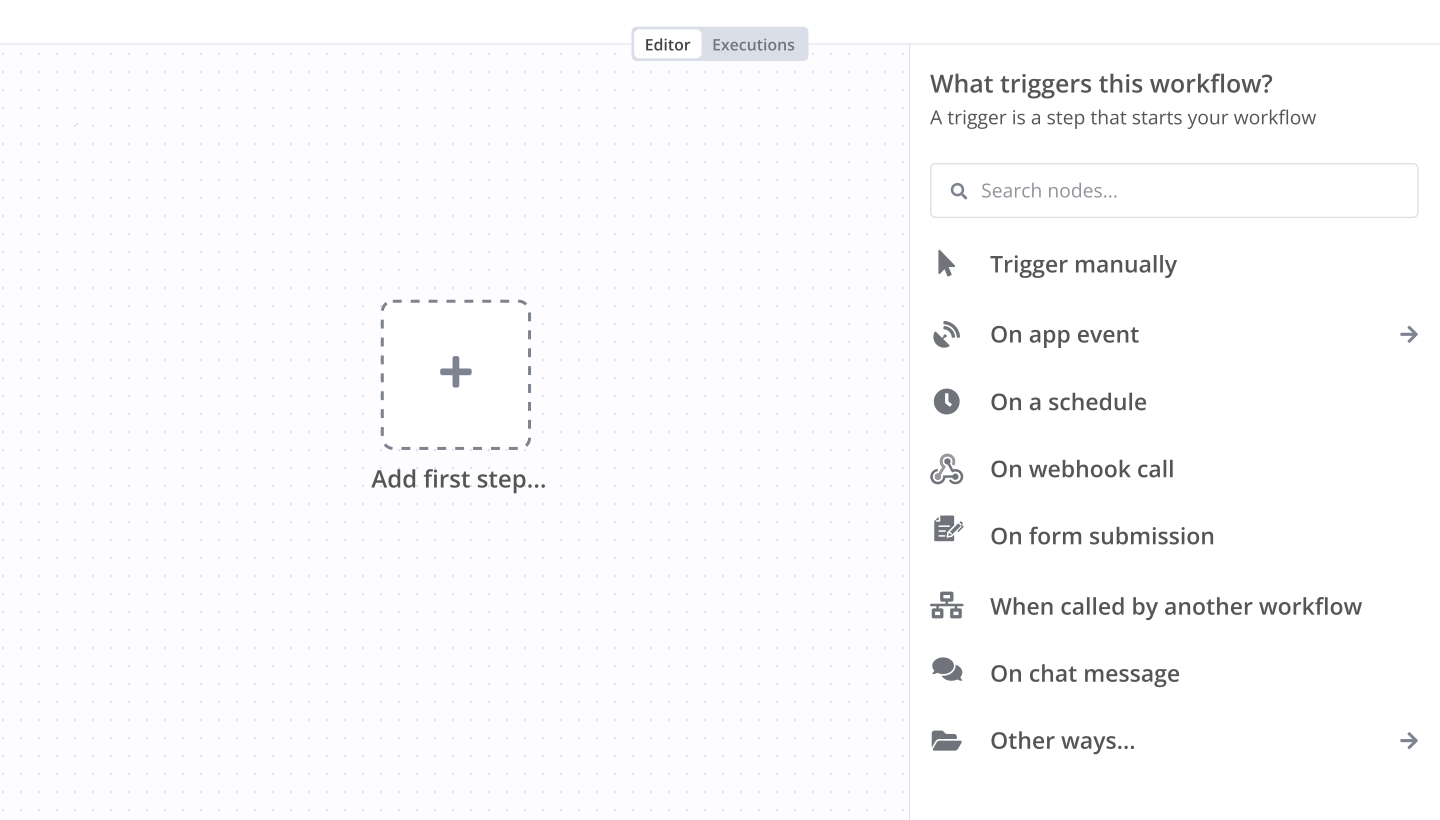
Google Docs and Microsoft Teams integration: Create a new workflow and add the first step

Step 2: Add and configure Google Docs and Microsoft Teams nodes

You can find Google Docs and Microsoft Teams in the nodes panel. Drag them onto your workflow canvas, selecting their actions. Click each node, choose a credential, and authenticate to grant n8n access. Configure Google Docs and Microsoft Teams nodes one by one: input data on the left, parameters in the middle, and output data on the right.

Google Docs and Microsoft Teams integration: Add and configure Google Docs and Microsoft Teams nodes

Step 3: Connect Google Docs and Microsoft Teams

A connection establishes a link between Google Docs and Microsoft Teams (or vice versa) to route data through the workflow. Data flows from the output of one node to the input of another. You can have single or multiple connections for each node.

Google Docs and Microsoft Teams integration: Connect Google Docs and Microsoft Teams

Step 4: Customize and extend your Google Docs and Microsoft Teams integration

Use n8n's core nodes such as If, Split Out, Merge, and others to transform and manipulate data. Write custom JavaScript or Python in the Code node and run it as a step in your workflow. Connect Google Docs and Microsoft Teams with any of n8n’s 1000+ integrations, and incorporate advanced AI logic into your workflows.

Google Docs and Microsoft Teams integration: Customize and extend your Google Docs and Microsoft Teams integration

Step 5: Test and activate your Google Docs and Microsoft Teams workflow

Save and run the workflow to see if everything works as expected. Based on your configuration, data should flow from Google Docs to Microsoft Teams or vice versa. Easily debug your workflow: you can check past executions to isolate and fix the mistake. Once you've tested everything, make sure to save your workflow and activate it.

Google Docs and Microsoft Teams integration: Test and activate your Google Docs and Microsoft Teams workflow

Generate job descriptions from briefing notes with OpenAI and Google Docs

Auto-generate job descriptions from briefing notes with OpenAI and Google Docs

Who is this for

Recruiters, HR teams, and hiring managers who conduct role briefing conversations and want to convert their meeting notes into polished, structured job descriptions automatically -- without manual copywriting.

What this workflow does

This workflow watches a Google Drive folder for new briefing documents, extracts structured job data using AI, generates a professional HTML job description, sends it to Microsoft Teams for approval, and exports the final version as a PDF to Google Drive.

How it works

Trigger -- A Google Drive Trigger detects when a new Google Doc (e.g. a briefing transcript) is created in a watched folder.
File organization -- A timestamped subfolder is created and the document is moved into it for clean project structure.
Document reading -- The Google Doc content is fetched via the Google Docs API.
AI data extraction -- An OpenAI AI Agent analyzes the transcript (supports German input) and extracts structured job data: title, department, responsibilities, skills, benefits, tech stack, and more -- output as JSON.
Data logging -- The extracted fields are appended to a Google Sheets tracker for reference and audit.
Prompt assembly -- A Code node builds a detailed prompt from the structured data, choosing between "create" mode (first draft) or "revise" mode (feedback loop).
JD generation -- A second AI Agent (JD-Writer) generates a complete, styled HTML job description following a professional template with sections like responsibilities, profile, benefits, and diversity statement.
Human review -- The draft is sent to a Microsoft Teams chat with an approve/reject form and an optional feedback field.
Approval path -- If approved, the HTML is converted to PDF and uploaded to the Google Drive subfolder alongside the original briefing.
Revision loop -- If rejected, the feedback is routed back to the JD-Writer for targeted revisions, and the updated draft is re-sent for approval.

Setup steps

Google Drive & Docs -- Create OAuth2 credentials. Set the folder ID in the Google Drive Trigger node to the folder where briefing documents are saved.
Google Sheets -- Create a spreadsheet with columns for all job data fields (job_title, department, responsibilities, hard_skills, soft_skills, etc.). Update the Sheet ID in the Google Sheets node.
OpenAI -- Add your API key as an OpenAI credential. Used for both the data extraction agent (reads the transcript) and the JD-Writer agent (generates the job description).
Microsoft Teams -- Create OAuth2 credentials. Set the Teams chat ID in the approval node to the chat or channel where drafts should be reviewed.
HTML-to-PDF -- Install the community node n8n-nodes-htmlcsstopdf (self-hosted only). Add the API credential.

Requirements

Community node:* n8n-nodes-htmlcsstopdf -- self-hosted n8n only*
OpenAI API key (GPT-4 or newer recommended)
Google Drive, Docs & Sheets OAuth2 credentials
Microsoft Teams OAuth2 credentials

How to customize

AI extraction prompt** -- Edit the system message in the "Extract job data from transcript" node to adjust which fields are extracted or to support different transcript languages.
JD template style** -- Modify the prompt in the "Build JD-Writer prompt" Code node to change tone, section order, or formatting style of the generated job description.
Approval channel** -- Change the Teams chat ID to route drafts to a different team or channel.
Output format** -- Swap the HTML-to-PDF node for a different converter, or skip PDF and use the raw HTML output directly.
Tracker columns** -- Add or remove columns in Google Sheets to match your internal job data schema.
Revision depth** -- The approval loop supports unlimited revision cycles. The JD-Writer applies feedback minimally without rewriting from scratch.

Nodes used in this workflow

Popular Google Docs and Microsoft Teams workflows

+2

Generate job descriptions from briefing notes with OpenAI and Google Docs

Auto-generate job descriptions from briefing notes with OpenAI and Google Docs Who is this for Recruiters, HR teams, and hiring managers who conduct role briefing conversations and want to convert their meeting notes into polished, structured job descriptions automatically -- without manual copywriting. What this workflow does This workflow watches a Google Drive folder for new briefing documents, extracts structured job data using AI, generates a professional HTML job description, sends it to Microsoft Teams for approval, and exports the final version as a PDF to Google Drive. How it works Trigger -- A Google Drive Trigger detects when a new Google Doc (e.g. a briefing transcript) is created in a watched folder. File organization -- A timestamped subfolder is created and the document is moved into it for clean project structure. Document reading -- The Google Doc content is fetched via the Google Docs API. AI data extraction -- An OpenAI AI Agent analyzes the transcript (supports German input) and extracts structured job data: title, department, responsibilities, skills, benefits, tech stack, and more -- output as JSON. Data logging -- The extracted fields are appended to a Google Sheets tracker for reference and audit. Prompt assembly -- A Code node builds a detailed prompt from the structured data, choosing between "create" mode (first draft) or "revise" mode (feedback loop). JD generation -- A second AI Agent (JD-Writer) generates a complete, styled HTML job description following a professional template with sections like responsibilities, profile, benefits, and diversity statement. Human review -- The draft is sent to a Microsoft Teams chat with an approve/reject form and an optional feedback field. Approval path -- If approved, the HTML is converted to PDF and uploaded to the Google Drive subfolder alongside the original briefing. Revision loop -- If rejected, the feedback is routed back to the JD-Writer for targeted revisions, and the updated draft is re-sent for approval. Setup steps Google Drive & Docs -- Create OAuth2 credentials. Set the folder ID in the Google Drive Trigger node to the folder where briefing documents are saved. Google Sheets -- Create a spreadsheet with columns for all job data fields (job_title, department, responsibilities, hard_skills, soft_skills, etc.). Update the Sheet ID in the Google Sheets node. OpenAI -- Add your API key as an OpenAI credential. Used for both the data extraction agent (reads the transcript) and the JD-Writer agent (generates the job description). Microsoft Teams -- Create OAuth2 credentials. Set the Teams chat ID in the approval node to the chat or channel where drafts should be reviewed. HTML-to-PDF -- Install the community node n8n-nodes-htmlcsstopdf (self-hosted only). Add the API credential. Requirements Community node:* n8n-nodes-htmlcsstopdf -- self-hosted n8n only* OpenAI API key (GPT-4 or newer recommended) Google Drive, Docs & Sheets OAuth2 credentials Microsoft Teams OAuth2 credentials How to customize AI extraction prompt** -- Edit the system message in the "Extract job data from transcript" node to adjust which fields are extracted or to support different transcript languages. JD template style** -- Modify the prompt in the "Build JD-Writer prompt" Code node to change tone, section order, or formatting style of the generated job description. Approval channel** -- Change the Teams chat ID to route drafts to a different team or channel. Output format** -- Swap the HTML-to-PDF node for a different converter, or skip PDF and use the raw HTML output directly. Tracker columns** -- Add or remove columns in Google Sheets to match your internal job data schema. Revision depth** -- The approval loop supports unlimited revision cycles. The JD-Writer applies feedback minimally without rewriting from scratch.

Build your own Google Docs and Microsoft Teams integration

Create custom Google Docs and Microsoft Teams workflows by choosing triggers and actions. Nodes come with global operations and settings, as well as app-specific parameters that can be configured. You can also use the HTTP Request node to query data from any app or service with a REST API.

Google Docs supported actions

Create
Get
Update

Microsoft Teams supported actions

Create
Create a channel
Delete
Delete a channel
Get
Get a channel
Get Many
Get many channels
Update
Update a channel
Create
Create a message in a channel
Get Many
Get many messages from a channel
Create
Create a message in a chat
Get
Get a message from a chat
Get Many
Get many messages from a chat
Send and Wait for Response
Send a message and wait for response
Create
Create a task
Delete
Delete a task
Get
Get a task
Get Many
Get many tasks
Update
Update a task

FAQs

  • Can Google Docs connect with Microsoft Teams?

  • Can I use Google Docs’s API with n8n?

  • Can I use Microsoft Teams’s API with n8n?

  • Is n8n secure for integrating Google Docs and Microsoft Teams?

  • How to get started with Google Docs and Microsoft Teams integration in n8n.io?

Looking to integrate Google Docs and Microsoft Teams in your company?

Over 3000 companies switch to n8n every single week

Why use n8n to integrate Google Docs with Microsoft Teams

Build complex workflows, really fast

Build complex workflows, really fast

Handle branching, merging and iteration easily.
Pause your workflow to wait for external events.

Code when you need it, UI when you don't

Simple debugging

Your data is displayed alongside your settings, making edge cases easy to track down.

Use templates to get started fast

Use 1000+ workflow templates available from our core team and our community.

Reuse your work

Copy and paste, easily import and export workflows.

Implement complex processes faster with n8n

red iconyellow iconred iconyellow icon