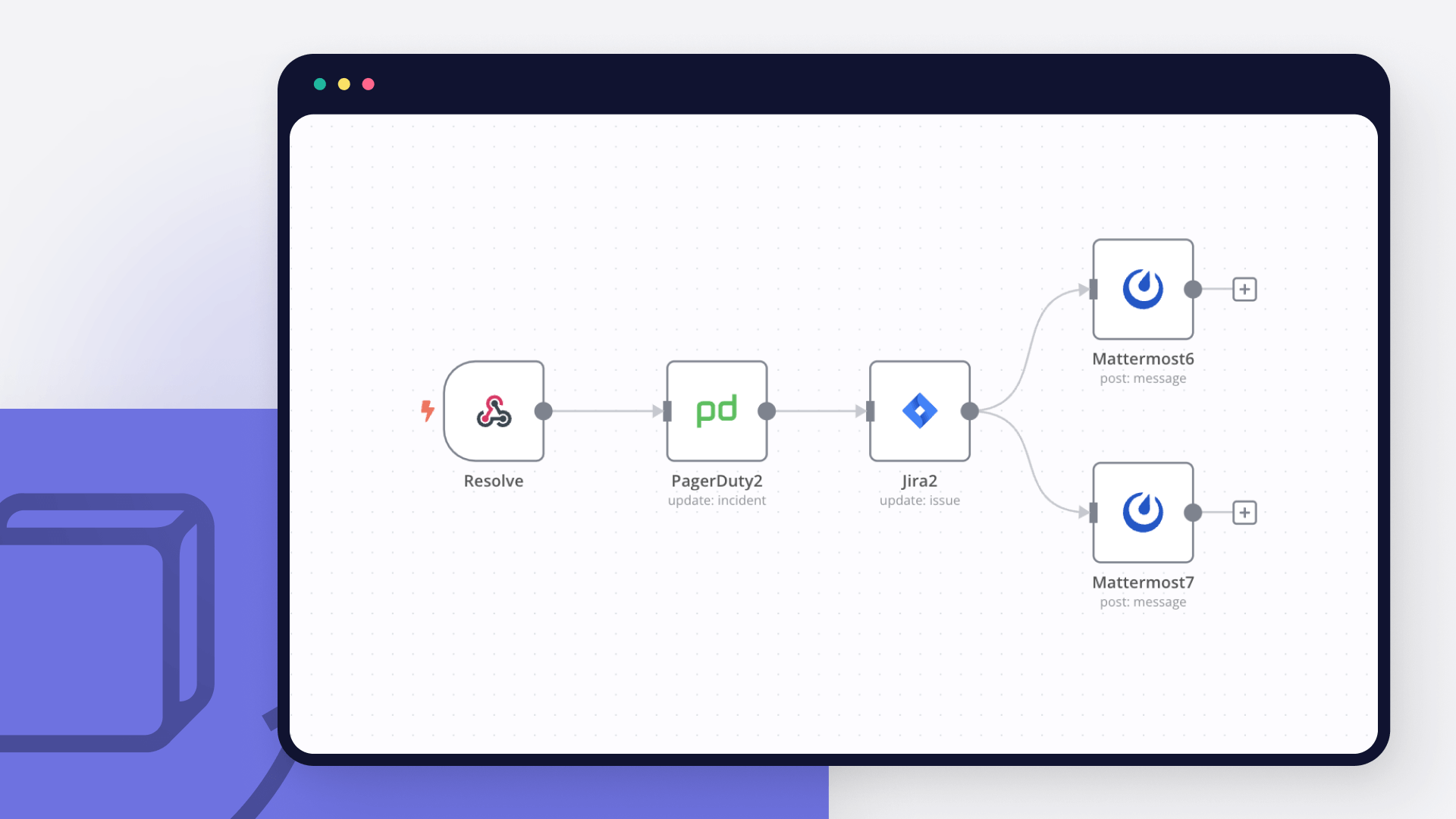
Back to Integrations
integrationJira Software node
integrationMicrosoft Outlook node

Jira Software and Microsoft Outlook integration

Save yourself the work of writing custom integrations for Jira Software and Microsoft Outlook and use n8n instead. Build adaptable and scalable Development, Productivity, Communication, and HITL workflows that work with your technology stack. All within a building experience you will love.

How to connect Jira Software and Microsoft Outlook

  • Step 1: Create a new workflow
  • Step 2: Add and configure nodes
  • Step 3: Connect
  • Step 4: Customize and extend your integration
  • Step 5: Test and activate your workflow

Step 1: Create a new workflow and add the first step

In n8n, click the "Add workflow" button in the Workflows tab to create a new workflow. Add the starting point – a trigger on when your workflow should run: an app event, a schedule, a webhook call, another workflow, an AI chat, or a manual trigger. Sometimes, the HTTP Request node might already serve as your starting point.

Jira Software and Microsoft Outlook integration: Create a new workflow and add the first step

Step 2: Add and configure Jira Software and Microsoft Outlook nodes

You can find Jira Software and Microsoft Outlook in the nodes panel. Drag them onto your workflow canvas, selecting their actions. Click each node, choose a credential, and authenticate to grant n8n access. Configure Jira Software and Microsoft Outlook nodes one by one: input data on the left, parameters in the middle, and output data on the right.

Jira Software and Microsoft Outlook integration: Add and configure Jira Software and Microsoft Outlook nodes

Step 3: Connect Jira Software and Microsoft Outlook

A connection establishes a link between Jira Software and Microsoft Outlook (or vice versa) to route data through the workflow. Data flows from the output of one node to the input of another. You can have single or multiple connections for each node.

Jira Software and Microsoft Outlook integration: Connect Jira Software and Microsoft Outlook

Step 4: Customize and extend your Jira Software and Microsoft Outlook integration

Use n8n's core nodes such as If, Split Out, Merge, and others to transform and manipulate data. Write custom JavaScript or Python in the Code node and run it as a step in your workflow. Connect Jira Software and Microsoft Outlook with any of n8n’s 1000+ integrations, and incorporate advanced AI logic into your workflows.

Jira Software and Microsoft Outlook integration: Customize and extend your Jira Software and Microsoft Outlook integration

Step 5: Test and activate your Jira Software and Microsoft Outlook workflow

Save and run the workflow to see if everything works as expected. Based on your configuration, data should flow from Jira Software to Microsoft Outlook or vice versa. Easily debug your workflow: you can check past executions to isolate and fix the mistake. Once you've tested everything, make sure to save your workflow and activate it.

Jira Software and Microsoft Outlook integration: Test and activate your Jira Software and Microsoft Outlook workflow

Analyze & sort suspicious email contents with ChatGPT

Analyze & Sort Suspicious Email Contents with ChatGPT and Jira

Who is this for?
This workflow is tailored for IT security teams, managed service providers (MSPs), and organizations aiming to streamline the detection and reporting of phishing emails. It's especially useful for teams handling high email volumes and requiring quick, automated analysis.

What problem is this workflow solving?
Phishing emails pose a significant cybersecurity threat, and manual review processes are time-consuming and prone to human error. This workflow automates the identification of malicious emails, provides AI-driven insights, and generates structured reports, enabling faster and more efficient responses to email-based threats.

What this workflow does
This workflow integrates Gmail or Microsoft Outlook to monitor and capture incoming emails. It processes the email content and headers, converts the email's body to a visual screenshot for clarity, and uses ChatGPT's advanced AI to analyze the email for phishing indicators. Based on the analysis, it categorizes emails as potentially malicious or benign, creating detailed Jira tickets for each case. Attachments, including the email body and screenshots, are automatically uploaded for comprehensive reporting.

Key steps include:
Email Integration: Captures emails from Gmail or Microsoft Outlook.
Content Processing: Extracts and organizes email content and metadata.
AI Analysis: Uses ChatGPT to evaluate email content and headers.
Classification: Categorizes emails as malicious or benign.
Automated Reporting: Creates Jira tickets with detailed analysis and attachments.

Setup
Authentication: Configure Gmail or Microsoft Outlook credentials in n8n.
API Keys: Add credentials for the HTML screenshot service (hcti.io) and OpenAI.
Jira Configuration: Set up project and issue types in the Jira nodes.
Customization: Update sticky notes and nodes to fit your organizational requirements, such as modifying the AI prompt or Jira ticket fields.

How to customize this workflow to your needs
Adjust email triggers to include or exclude specific senders or subjects.
Refine the AI prompt in the ChatGPT node to tailor phishing detection criteria.
Modify Jira ticket content to include additional fields or match specific workflows.

This workflow is ideal for automating email threat detection, reducing response times, and enhancing overall cybersecurity processes. By leveraging AI-powered insights, it helps organizations stay ahead of phishing attacks.

Nodes used in this workflow

Popular Jira Software and Microsoft Outlook workflows

Monitor and Report OKR Variance from Monday.com and Jira via Slack and Email

Description Synchronize OKRs (Objectives and Key Results) between Monday.com and Jira to automatically calculate progress variance, update dashboards, and share variance reports via Slack and Outlook. This workflow ensures teams have accurate, real-time visibility into performance metrics and project alignment — without manual reconciliation. 🎯📈💬 What This Template Does Step 1: Triggers daily at a scheduled time to fetch the latest OKRs from Monday.com. ⏰ Step 2: Extracts Key Results and their linked Jira epic keys from the OKR board. 🔗 Step 3: Fetches corresponding Jira epic details such as status, assignee, and last updated date. 🧩 Step 4: Merges Monday.com KR data with Jira epic progress through SQL-style joins. 📋 Step 5: Calculates real-time progress and variance against target goals. 📊 Step 6: Updates Monday.com KR items with actual progress, variance percentage, and status (“On Track”, “At Risk”, or “Ahead”). 🔄 Step 7: Aggregates all KR data into a consolidated report for communication. 📦 Step 8: Sends formatted variance reports to Slack and Outlook, with summaries of owner, progress, and variance metrics. 📢 Key Benefits ✅ Automates end-to-end OKR and Jira synchronization ✅ Eliminates manual progress tracking errors ✅ Provides daily visibility on team and project health ✅ Enables proactive risk detection via variance thresholds ✅ Keeps all stakeholders updated via Slack and Outlook ✅ Centralizes OKR performance metrics for reporting Features Daily scheduled trigger for automatic OKR sync Monday.com → Jira data integration via API Real-time variance computation logic Automatic updates of OKR fields in Monday.com SQL-style data merging and aggregation Slack notification with variance summaries Outlook email digest with formatted HTML tables Requirements Monday.com API credentials with board access Jira API credentials with permission to view epics Slack Bot token with chat:write permissions Microsoft Outlook OAuth2 credentials for sending emails Environment variables for board, channel, and recipient configuration Target Audience Product and engineering teams managing OKRs across platforms 🎯 Project managers tracking cross-tool performance metrics 📋 Leadership teams needing automated OKR reporting 💼 Operations and strategy teams monitoring execution health 🧭 Step-by-Step Setup Instructions Connect your Monday.com, Jira, Slack, and Outlook credentials in n8n. 🔑 Replace MONDAY_BOARD_ID, GROUP_ID, and column identifiers with your own. 🧩 Set environment variables for SLACK_CHANNEL_ID and REPORT_RECIPIENT_EMAIL. 💬 Adjust the cron expression to define your sync frequency (e.g., daily at 9 AM). ⏰ Test the workflow with a single OKR item to confirm successful synchronization. 🧠 Enable the workflow to automate daily OKR variance tracking and reporting. ✅

Automatically Create JIRA Issues from Outlook Email Support Requests

This n8n template watches an outlook shared inbox for support messages and creates an equivalent issue item in JIRA. How it works A scheduled trigger fetches recent Outlook messages from an shared inbox which collects support requests. These support requests are filtered to ensure they are only processed once and their HTML body is converted to markdown for easier parsing. Each support request is then triaged via an AI Agent which adds appropriate labels, assesses priority and summarises a title and description of the original request. Finally, the AI generated values are used to create an issue in JIRA to be actioned. How to use Ensure the messages fetched are solely support requests otherwise you'll need to classify messages before processing them. Specify the labels and priorities to use in the system prompt of the AI agent. Requirements Outlook for incoming support OpenAI for LLM JIRA for issue management Customising this workflow Consider automating more steps after the issue is created such as attempting issue resolution or capacity planning.

Analyze & Sort Suspicious Email Contents with ChatGPT

Analyze & Sort Suspicious Email Contents with ChatGPT and Jira Who is this for? This workflow is tailored for IT security teams, managed service providers (MSPs), and organizations aiming to streamline the detection and reporting of phishing emails. It's especially useful for teams handling high email volumes and requiring quick, automated analysis. What problem is this workflow solving? Phishing emails pose a significant cybersecurity threat, and manual review processes are time-consuming and prone to human error. This workflow automates the identification of malicious emails, provides AI-driven insights, and generates structured reports, enabling faster and more efficient responses to email-based threats. What this workflow does This workflow integrates Gmail or Microsoft Outlook to monitor and capture incoming emails. It processes the email content and headers, converts the email's body to a visual screenshot for clarity, and uses ChatGPT's advanced AI to analyze the email for phishing indicators. Based on the analysis, it categorizes emails as potentially malicious or benign, creating detailed Jira tickets for each case. Attachments, including the email body and screenshots, are automatically uploaded for comprehensive reporting. Key steps include: Email Integration: Captures emails from Gmail or Microsoft Outlook. Content Processing: Extracts and organizes email content and metadata. AI Analysis: Uses ChatGPT to evaluate email content and headers. Classification: Categorizes emails as malicious or benign. Automated Reporting: Creates Jira tickets with detailed analysis and attachments. Setup Authentication: Configure Gmail or Microsoft Outlook credentials in n8n. API Keys: Add credentials for the HTML screenshot service (hcti.io) and OpenAI. Jira Configuration: Set up project and issue types in the Jira nodes. Customization: Update sticky notes and nodes to fit your organizational requirements, such as modifying the AI prompt or Jira ticket fields. How to customize this workflow to your needs Adjust email triggers to include or exclude specific senders or subjects. Refine the AI prompt in the ChatGPT node to tailor phishing detection criteria. Modify Jira ticket content to include additional fields or match specific workflows. This workflow is ideal for automating email threat detection, reducing response times, and enhancing overall cybersecurity processes. By leveraging AI-powered insights, it helps organizations stay ahead of phishing attacks.

Analyze Suspicious Email Contents with ChatGPT Vision

Phishing Email Detection and Reporting with n8n Who is this for? This workflow is designed for IT teams, security professionals, and managed service providers (MSPs) looking to automate the process of detecting, analyzing, and reporting phishing emails. What problem is this workflow solving? Phishing emails are a significant cybersecurity threat, and manually detecting and reporting them is time-consuming and prone to errors. This workflow streamlines the process by automating email analysis, generating detailed reports, and logging incidents in a centralized system like Jira. What this workflow does This workflow automates phishing email detection and reporting by integrating Gmail and Microsoft Outlook email triggers, analyzing the content and headers of incoming emails, and generating Jira tickets for flagged phishing emails. Here’s what happens: Email Triggers: Captures incoming emails from Gmail or Microsoft Outlook. Email Analysis: Extracts email content, headers, and metadata for analysis. HTML Screenshot: Converts the email’s HTML body into a visual screenshot. AI Phishing Detection: Leverages ChatGPT to analyze the email and detect potential phishing indicators. Jira Integration: Automatically creates a Jira ticket with detailed analysis and attaches the email screenshot for review by the security team. Customizable Reports: Includes options to customize ticket descriptions and adapt the workflow to organizational needs. Setup Authentication: Set up Gmail and Microsoft Outlook OAuth credentials in n8n to access your email accounts securely. API Keys: Add API credentials for the HTML screenshot service (hcti.io) and ChatGPT. Jira Integration: Configure your Jira project and issue types in the workflow. Workflow Configuration: Update sticky notes and nodes to include any additional setup or configuration details unique to your system. How to customize this workflow to your needs Email Filters**: Modify email triggers to filter specific subjects or sender addresses. Analysis Scope**: Adjust the ChatGPT prompt to refine phishing detection logic. Integration**: Replace Jira with your preferred ticketing system or modify the ticket fields to include additional information. This workflow provides an end-to-end automated solution for phishing email management, enhancing efficiency and reducing security risks. It’s perfect for teams looking to minimize manual effort and improve incident response times.
+5

Analyze Customer Feedback with Azure GPT-4, Jira Tasks & Outlook Reports from Monday.com

Description Automate customer feedback analysis and action planning by integrating Monday.com, Azure OpenAI, Jira, Google Sheets, and Outlook. This workflow classifies customer feedback with AI, calculates business impact, creates Jira tasks for high-priority issues, and sends weekly performance summaries — turning raw feedback into actionable insights. 💬📈🤖 What This Template Does Step 1: Triggers automatically every Monday at 9:00 AM to fetch new customer feedback from Monday.com. ⏰ Step 2: Normalizes and structures data into consistent fields (title, account, ARR, NPS, etc.). 🧩 Step 3: Uses Azure OpenAI GPT-4 to classify sentiment and identify feedback themes (e.g., “UI Design,” “App Crash”). 🧠 Step 4: Calculates a business impact score based on ARR, NPS delta, and sentiment weightings. ⚙️ Step 5: Creates Jira tasks for high-impact feedback items for product or engineering follow-up. 🎫 Step 6: Logs all feedback and impact scores into Google Sheets for analytics dashboards. 📊 Step 7: Generates a professional HTML report summarizing metrics, wins, and risks, then emails it via Outlook. 📧 Step 8: Sends automated error-alert emails if any node fails during execution. 🚨 Key Benefits ✅ Converts qualitative feedback into measurable business intelligence ✅ Identifies critical customer issues automatically using AI ✅ Reduces manual effort in triaging and prioritizing feedback ✅ Creates real-time visibility for product and CX teams ✅ Provides weekly executive summaries and performance insights Features Weekly scheduled trigger (every Monday 9 AM) Monday.com data fetching and field normalization Azure OpenAI GPT-4-based sentiment and theme detection Impact scoring combining ARR + NPS + sentiment weighting Jira issue creation with context-rich descriptions Google Sheets logging for dashboards and historical records Outlook HTML email reports for leadership visibility Automated Gmail error-notification system Requirements Monday.com API credentials with board access Azure OpenAI GPT-4 API credentials Jira Software Cloud API credentials Google Sheets OAuth2 credentials with edit permissions Microsoft Outlook OAuth2 credentials for email delivery Gmail OAuth2 credentials for error alerting Target Audience Product and CX teams analyzing customer sentiment SaaS businesses tracking post-implementation feedback Customer-success and support operations teams Product managers prioritizing improvements based on impact Leadership teams monitoring customer health and satisfaction Step-by-Step Setup Instructions 1️⃣ Connect Monday.com API and update your boardId and groupId. 2️⃣ Configure Azure OpenAI GPT-4 credentials for the AI classifier. 3️⃣ Set Jira project ID and issue type for ticket creation. 4️⃣ Link Google Sheets and replace YOUR_SHEET_ID. 5️⃣ Connect Outlook OAuth2 and add recipient email for reports. 6️⃣ Configure Gmail OAuth2 for error alerts. 7️⃣ Adjust the cron expression (0 9 * * 1) to fit your timezone. 8️⃣ Test the workflow end-to-end with sample data. 9️⃣ Enable automation for seamless weekly feedback intelligence. ✅

AI-Powered Support Automation with Outlook, OpenAI & JIRA Ticketing

This workflow automatically processes customer support requests from emails and web forms, uses AI to classify and either auto-resolve simple issues or intelligently route complex ones to the right team members with proper JIRA tickets and SLA tracking. Key Benefits Multi-channel support (email + web forms) Smart routing to qualified agents based on expertise Consistent ticket creation with full context in JIRA Perfect For Support teams handling 50+ requests/day SaaS companies with tiered customer support Organizations wanting to scale support without hiring Teams needing consistent ticket classification Requirements Microsoft Outlook (email monitoring) OpenAI API (AI classification) JIRA Cloud (ticket management) n8n instance with AI nodes

Build your own Jira Software and Microsoft Outlook integration

Create custom Jira Software and Microsoft Outlook workflows by choosing triggers and actions. Nodes come with global operations and settings, as well as app-specific parameters that can be configured. You can also use the HTTP Request node to query data from any app or service with a REST API.


Jira Software supported actions

Changelog
Get issue changelog
Create
Create a new issue
Delete
Delete an issue
Get
Get an issue
Get Many
Get many issues
Notify
Create an email notification for an issue and add it to the mail queue
Status
Return either all transitions or a transition that can be performed by the user on an issue, based on the issue's status
Update
Update an issue
Add
Add attachment to issue
Get
Get an attachment
Get Many
Get many attachments
Remove
Remove an attachment
Add
Add comment to issue
Get
Get a comment
Get Many
Get many comments
Remove
Remove a comment
Update
Update a comment
Create
Create a new user
Delete
Delete a user
Get
Retrieve a user

Microsoft Outlook supported actions

Create
Create a new calendar
Delete
Delete a calendar
Get
Retrieve a calendar
Get Many
List and search calendars
Update
Update a calendar
Create
Create a new contact
Delete
Delete a contact
Get
Retrieve a contact
Get Many
List and search contacts
Update
Update a contact
Create
Create a new email draft
Delete
Delete an email draft
Get
Retrieve an email draft
Send
Send an existing email draft
Update
Update an email draft
Create
Create a new event
Delete
Delete an event
Get
Retrieve an event
Get Many
List and search events
Update
Update an event
Create
Create a mail folder in the root folder of the user's mailbox
Delete
Delete a folder
Get
Retrieve a folder
Get Many
Get many folders
Update
Update a folder
Get Many
Retrieves the messages in a folder
Delete
Delete a message
Get
Retrieve a single message
Get Many
List and search messages
Move
Move a message to a folder
Reply
Create a reply to a message
Send
Send a message
Send and Wait for Response
Send a message and wait for response
Update
Update a message
Add
Add an attachment to a message
Download
Download an attachment from a message
Get
Retrieve information about an attachment of a message
Get Many
Retrieve information about the attachments of a message

FAQs

  • Can Jira Software connect with Microsoft Outlook?

  • Can I use Jira Software’s API with n8n?

  • Can I use Microsoft Outlook’s API with n8n?

  • Is n8n secure for integrating Jira Software and Microsoft Outlook?

  • How to get started with Jira Software and Microsoft Outlook integration in n8n.io?

Looking to integrate Jira Software and Microsoft Outlook in your company?

Over 3000 companies switch to n8n every single week

Why use n8n to integrate Jira Software with Microsoft Outlook

Build complex workflows, really fast
Build complex workflows, really fast

Handle branching, merging and iteration easily.
Pause your workflow to wait for external events.

Code when you need it, UI when you don't

Simple debugging

Your data is displayed alongside your settings, making edge cases easy to track down.

Use templates to get started fast

Use 1000+ workflow templates available from our core team and our community.

Reuse your work

Copy and paste, easily import and export workflows.

Implement complex processes faster with n8n

red iconyellow iconred iconyellow icon