Back to Integrations
integrationJira Software node
integrationNotion node

Jira Software and Notion integration

Save yourself the work of writing custom integrations for Jira Software and Notion and use n8n instead. Build adaptable and scalable Development, and Productivity workflows that work with your technology stack. All within a building experience you will love.

How to connect Jira Software and Notion

  • Step 1: Create a new workflow
  • Step 2: Add and configure nodes
  • Step 3: Connect
  • Step 4: Customize and extend your integration
  • Step 5: Test and activate your workflow

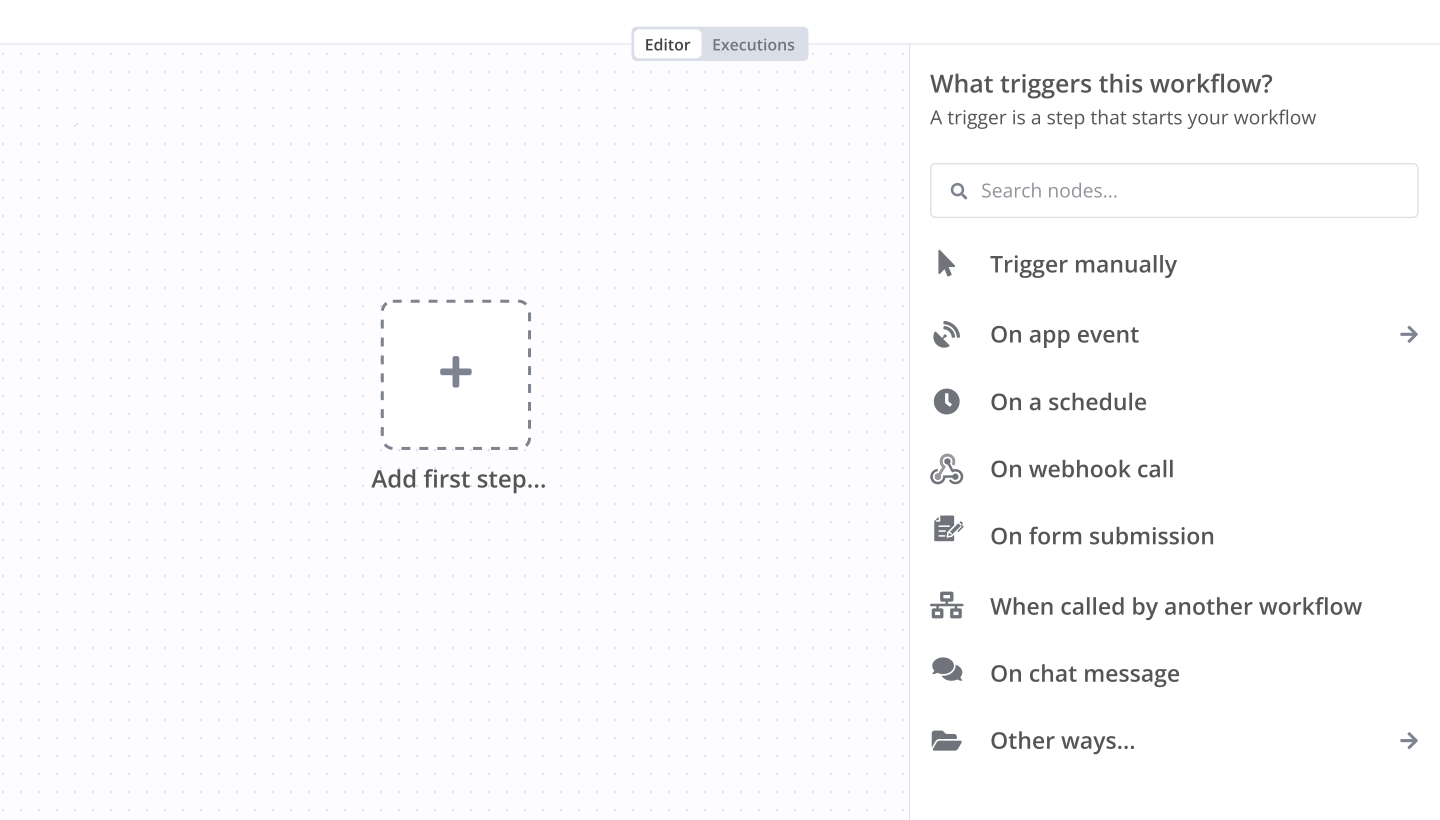
Step 1: Create a new workflow and add the first step

In n8n, click the "Add workflow" button in the Workflows tab to create a new workflow. Add the starting point – a trigger on when your workflow should run: an app event, a schedule, a webhook call, another workflow, an AI chat, or a manual trigger. Sometimes, the HTTP Request node might already serve as your starting point.

Jira Software and Notion integration: Create a new workflow and add the first step

Step 2: Add and configure Jira Software and Notion nodes

You can find Jira Software and Notion in the nodes panel. Drag them onto your workflow canvas, selecting their actions. Click each node, choose a credential, and authenticate to grant n8n access. Configure Jira Software and Notion nodes one by one: input data on the left, parameters in the middle, and output data on the right.

Jira Software and Notion integration: Add and configure Jira Software and Notion nodes

Step 3: Connect Jira Software and Notion

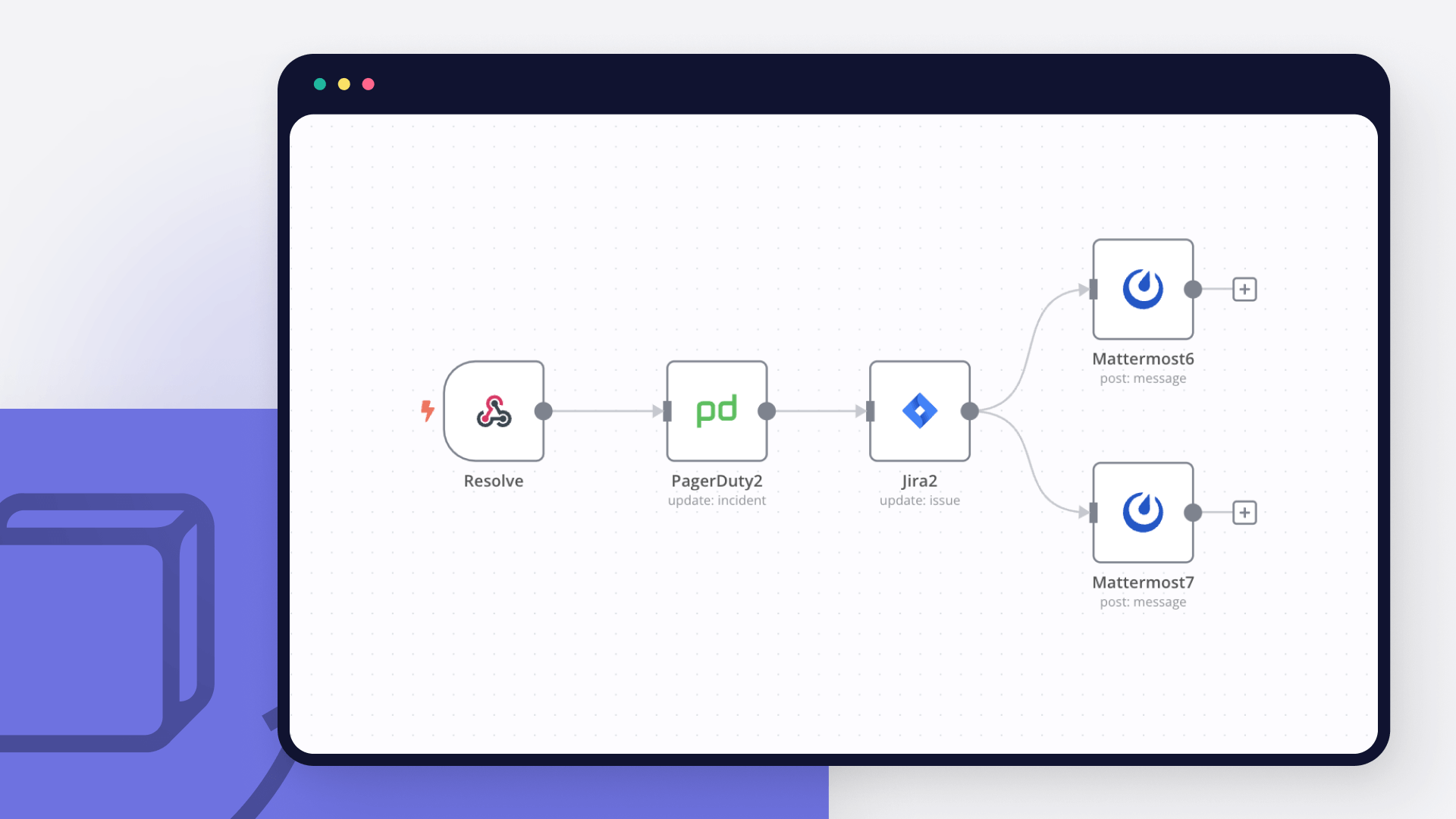
A connection establishes a link between Jira Software and Notion (or vice versa) to route data through the workflow. Data flows from the output of one node to the input of another. You can have single or multiple connections for each node.

Jira Software and Notion integration: Connect Jira Software and Notion

Step 4: Customize and extend your Jira Software and Notion integration

Use n8n's core nodes such as If, Split Out, Merge, and others to transform and manipulate data. Write custom JavaScript or Python in the Code node and run it as a step in your workflow. Connect Jira Software and Notion with any of n8n’s 1000+ integrations, and incorporate advanced AI logic into your workflows.

Jira Software and Notion integration: Customize and extend your Jira Software and Notion integration

Step 5: Test and activate your Jira Software and Notion workflow

Save and run the workflow to see if everything works as expected. Based on your configuration, data should flow from Jira Software to Notion or vice versa. Easily debug your workflow: you can check past executions to isolate and fix the mistake. Once you've tested everything, make sure to save your workflow and activate it.

Jira Software and Notion integration: Test and activate your Jira Software and Notion workflow

Auto-create GitHub PRs & JIRA updates from git commit commands (multi-repo)

This n8n template from Intuz provides a complete and automated solution for scaling your DevOps practices across multiple repositories.

Are you tired of the repetitive dance between git push, creating a pull request in GitHub, updating the corresponding task in JIRA, and then manually notifying your team in Slack, or Notion?

This template puts your entire post-commit workflow on autopilot, creating a seamless and intelligent bridge between your code and your project management.

By embedding specific keywords and a JIRA issue ID into your git commit commands, this workflow automatically creates a Pull Request in the correct GitHub repository and updates the corresponding JIRA ticket. This creates a complete, centralized system that keeps all your projects synchronized, providing a massive efficiency boost for teams managing a diverse portfolio of codebases.

Who This Template Is For?

This template is a must-have for any organization looking to streamline its software development lifecycle (SDLC). It’s perfect for:

Development Teams: Eliminate tedious, manual tasks and enforce a consistent workflow, allowing developers to stay focused on coding.
DevOps Engineers: A ready-to-deploy solution that integrates key developer tools without weeks of custom scripting.
Engineering Managers & Team Leads: Gain real-time visibility into development progress and ensure processes are followed without constant check-ins.
Project Managers: Get accurate, automatic updates in JIRA the moment development work is completed, improving project tracking and forecasting.

Step-by-Step Setup Instructions

Follow these steps carefully to configure the workflow for your environment.

  1. Connect Your Tools (Credentials)
    GitHub: Create credentials with repo scope to allow PR creation.
    JIRA: Create an API token and connect your JIRA Cloud or Server instance.
    Slack: Connect your Slack workspace using OAuth2.
    Notion: Connect your Notion integration token.

  2. Configure the GitHub Webhook (For Each Repository)

This workflow is triggered by a GitHub webhook. You must add it to every repository you want to automate.
First, Save and Activate the n8n workflow to ensure the webhook URL is live.
In the n8n workflow, copy the Production URL from the Webhook node.
Go to your GitHub repository and navigate to Settings > Webhooks > Add webhook.
In the Payload URL field, paste the n8n webhook URL.
Change the Content type to application/json.
Under "Which events would you like to trigger this webhook?", select "Just the push event."
Click "Add webhook." Repeat this for all relevant repositories.

  1. Configure the JIRA Nodes (Crucial Step)

Your JIRA project has unique IDs for its statuses. You must update the workflow to match yours.

Find the two JIRA nodes named "Update task status after PR" and "Update the task status without PR."
In each node, go to the Status ID field.
Click the dropdown and select the status that corresponds to "Done" or "Development Done" in your specific JIRA project workflow. The list is fetched directly from your connected JIRA instance.

  1. Configure Notification Nodes

Tell the workflow where to send updates.

For Slack: Open the two nodes named "Send message in slack..." and select your desired channel from the Channel ID dropdown.
For Notion: Open the two nodes named "Append a block in notion..." and paste the URL of the target Notion page or database into the Block ID field.

  1. Final Activation

Once all configurations are complete, ensure the workflow is Saved and the toggle switch is set to Active. You are now ready to automate!

Customization Guidance

This template is a powerful foundation. Here’s how you can adapt it to your team's specific needs.

  1. Changing the PR Title or Body:

Go to the "Request to create PR" (HTTP Request) node.
In the JSON Body field, you can edit the title and body expressions. For example, you could add the committer's name ({{$('Webhook').item.json.body.pusher.name }}) or a link back to the JIRA task.

  1. Adapting to a Fixed Branching Strategy:

If your team always creates pull requests against a single branch (e.g., develop), you can simplify the workflow.
In the "Request to create PR" node, change the base value in the JSON body from {{...}} to your static branch name: "base": "develop".
You can then remove the base branch logic from the "Commit Message Breakdown" (Code) node.

  1. Modifying Notification Messages:
    The text sent to Slack and Notion is fully customizable.
    Open any of the Slack or Notion nodes and edit the text fields. You can include any data from previous nodes, such as the PR URL ({{ $('Request to create PR').item.json.body.html_url }}) or the repository name.

  2. Adjusting the Commit Regex for Different Conventions:

This is an advanced customization. If your team uses a different commit format (e.g., (DEV-123) instead of DEV-123), you can edit the regular expression in the "Commit Message Breakdown" (Code) node. Be sure to test your changes carefully.

  1. Adding/Removing Notification Channels:

Don't use Notion? Simply delete the two Notion nodes.
Want to send an email instead? Add a Gmail or SMTP node in parallel with a Slack node and configure it with the same data.

Connect with us
Website: https://www.intuz.com/n8n-workflow-automation-templates
Email: [email protected]
LinkedIn: https://www.linkedin.com/company/intuz
Get Started: https://n8n.partnerlinks.io/intuz

For Custom Worflow Automation
Click here- Get Started

Nodes used in this workflow

Popular Jira Software and Notion workflows

Send pre-meeting Slack briefings using Google Calendar, Notion, GitHub, and Jira

This n8n template from Intuz provides a complete and automated solution for preparing and delivering context-rich briefings directly to attendees before every meeting. It acts as an AI-powered executive assistant, gathering relevant information from all your key work tools to ensure everyone arrives prepared and aligned. Who's this workflow for? Engineering Managers & Team Leads Product Managers & Project Managers Scrum Masters & Agile Coaches Any team that holds regular status, planning, or technical meetings. How it works Trigger on New Calendar Event: The workflow starts automatically whenever a new meeting is created in a designated Google Calendar. Fetch Previous Context: It immediately connects to Notion to retrieve the notes from the most recent past meeting, ensuring continuity. Wait for the Right Moment: The workflow calculates a time 15 minutes before the meeting's scheduled start and pauses its execution until then. Gather Real-Time Project Data: Just before the meeting, the workflow wakes up and: Extracts keywords from the meeting title. Searches GitHub for recent Pull Requests (PRs) relevant to those keywords. Searches Jira for any tickets or issues that match the meeting's topic. Build the Intelligent Briefing: It assembles all the gathered information—previous notes from Notion, current PRs from GitHub, and relevant tickets from Jira—into a single, beautifully formatted Slack message. Deliver to Each Attendee: The workflow identifies all attendees from the Google Calendar invite, finds their corresponding Slack profiles via email, and sends the personalized briefing as a Direct Message (DM) to each one, ensuring everyone is prepared just in time. Key Requirements to Use This Template n8n Instance: An active n8n account (Cloud or self-hosted). Google Calendar Account: To trigger the workflow on new events. Notion Account: With a dedicated database for storing meeting notes. GitHub Account: To search for relevant pull requests. Jira Cloud Account: To search for relevant project tickets. Slack Workspace & App: A Slack workspace where you have permission to install an app. You will need a Bot Token with the necessary permissions. Setup Instructions Google Calendar Trigger: In the "Capture New Google Calendar Event" node, connect your Google Calendar account and select the calendar you want to monitor. Notion Connection: In the "Get Last Meeting Notes" node, connect your Notion account. Select the Notion Database ID that contains your meeting notes. GitHub & Jira Connections: In the "Get PRs from Repo" node, connect your GitHub account and select the repository to search. In the "Get Jira Issues Related to Meeting" node, connect your Jira Cloud account. You can customize the JQL query if needed. Slack Configuration (Crucial Step): Create a Slack App: Go to api.slack.com/apps, create a new app, and install it to your workspace. Set Permissions: In your app's "OAuth & Permissions" settings, add the following Bot Token Scopes: chat:write (to send messages) and users:read.email (this is critical for looking up attendees). Reinstall the app to your workspace. Get Bot Token: Copy the "Bot User OAuth Token" (it starts with xoxb-). Connect in n8n: In the "Get User Slack Info from Email" node, click "Header Parameters" and replace {{ slack oauth token }} with your actual Bot Token. In the "Send Meeting Context in Slack DM" node, connect your Slack credentials using the same Bot Token. Activate the Workflow: Save the workflow and toggle the "Active" switch to ON. Your automated pre-meeting bot is now live! Connect with us Website: https://www.intuz.com/n8n-workflow-automation-templates Email: [email protected] LinkedIn: https://www.linkedin.com/company/intuz Get Started: https://n8n.partnerlinks.io/intuz For Custom Workflow Automation Click here: Get Started
+3

Onboard new hires with GPT-4, Notion, Jira, Google Drive, Gmail and Slack

⚖️ HR Sovereign: AI-Powered Onboarding Hub A high-fidelity employee onboarding engine: Intake → Role-Based Enrichment → AI Personalization → IT Provisioning. ⚙️ Core Sovereign Logic Enrichment:** Auto-classifies Tech, Sales, and Leadership roles to drive specific logic tracks. Intelligence:* Uses AI Agent (GPT-4)* to generate personalized welcome messaging based on job DNA. Atomization:* Merge PDF* node assembles role-specific policies and benefits into a single high-res package. Provisioning:* Dynamically generates Jira hardware/access tickets and Notion* tracking dashboards. Delivery:* Sends branded HTML emails via Gmail and announces hires on Slack*. 📋 Setup & Prerequisites Intake: Connect your HRIS (BambooHR/Workday) to the Webhook URL. Assets: Organize Drive folders into "Technical", "Leadership", and "Standard" templates. Tracking: Connect your Notion Onboarding Database and Jira IT Project. Metrics: Time_to_Provision, Engagement_Score, Document_Integrity_Hash.
+2

Triage product UAT feedback with OpenAI, Jira, Slack, Notion and Google Sheets

Description Automatically triage Product UAT feedback using AI, route it to the right tools and teams, and close the feedback loop with testers, all in one workflow. This workflow analyzes raw UAT feedback, classifies it (critical bug, feature request, UX improvement, or noise), validates AI confidence, escalates when human review is needed, and synchronizes everything across Jira, Slack, Notion, Google Sheets, and email. Context Product teams often receive unstructured UAT feedback from multiple sources (forms, Slack, internal tools), making triage slow, inconsistent, and error-prone. This workflow ensures: Faster bug detection Consistent categorization Zero feedback lost Clear accountability between Product, Engineering, and Design It combines AI automation with human-in-the-loop control, making it safe for real production environments. Who is this for? Product Managers running UAT or beta programs Project Managers coordinating QA and release validation Product Ops / PMO teams Engineering teams who want faster, cleaner bug escalation Any team managing high-volume UAT feedback Perfect for teams that want speed without sacrificing control. Requirements Webhook trigger (form, internal tool, Slack integration, etc.) OpenAI account (for AI triage) Jira (bug tracking) Slack (team notifications) Notion (product roadmap / UX backlog) Google Sheets (UAT feedback log) Gmail (tester & manual review notifications) How it works Trigger The workflow starts when UAT feedback is submitted via a webhook (form, Slack, or internal tool). Normalize & Clean Incoming data is normalized into a consistent structure (tester, build, page, message) and cleaned to be AI-ready. AI Triage An AI model analyzes the feedback and returns: Type (Critical Bug, Feature Request, UX Improvement, Noise) Severity & sentiment Summary and suggested title Confidence score Quality Control If the AI output is unreliable (low confidence or parsing error), the feedback is automatically routed to manual review via email and Slack. Routing & Actions If confidence is sufficient: Critical Bugs → Jira issue + Engineering Slack alert Feature Requests → Notion roadmap UX Improvements → Design / UX tracking Noise → Archived but traceable Closed Loop The tester is notified via Slack or email, and the workflow responds to the original webhook with a structured status payload. What you get One unified UAT triage system Faster bug escalation Clean product and UX backlogs Full traceability of every feedback Automatic tester communication Safe AI usage with human fallback About me : I’m Yassin a Product Manager Scaling tech products with a data-driven mindset. 📬 Feel free to connect with me on Linkedin

Automated Failed Login Detection with Jira Tasks, Slack Alerts & Notion Logging

Automated Failed Login Detection with Jira Security Tasks, Slack Notifications Webhook: Failed Login Attempts → Jira Security Case → Slack Warnings This n8n workflow monitors failed login attempts from any application, normalizes incoming data, detects repeated attempts within a configurable time window and automatically: Sends detailed alerts to Slack, Creates Jira security tasks (single or grouped based on repetition), Logs all failed login attempts into a Notion database. It ensures fast, structured and automated responses to potential account compromise or brute-force attempts while maintaining persistent records. Quick Implementation Steps Import this JSON workflow into n8n. Connect your application to the failed-login webhook endpoint. Add Jira Cloud API credentials. Add Slack API credentials. Add Notion API credentials and configure the database for storing login attempts. Enable the workflow — done! What It Does Receives Failed Login Data Accepts POST requests containing failed login information. Normalizes the data, ensuring consistent fields: username, ip, timestamp and error. Validates Input Checks for missing username or IP. Sends a Slack alert if any required field is missing. Detects Multiple Attempts Uses a sliding time window (default: 5 minutes) to detect multiple failed login attempts from the same username + IP. Single attempts → standard Jira task + Slack notification. Multiple attempts → grouped Jira task + detailed Slack notification. Logs Attempts in Notion Records all failed login events into a Notion database with fields: Username, IP, Total Attempts, Attempt List, Attempt Type. Formats Slack Alerts Single attempt → lightweight notification. Multiple attempts → summary including timestamps, errors, total attempts, and Jira ticket link. Who’s It For This workflow is ideal for: Security teams monitoring authentication logs. DevOps/SRE teams maintaining infrastructure access logs. SaaS platform teams with high login traffic. Organizations aiming to automate breach detection. Teams using Jira + Slack + Notion + n8n for incident workflows. Requirements n8n (Self-Hosted or Cloud). Your application must POST failed login data to the webhook. Jira Software Cloud credentials (Email, API Token, Domain). Slack Bot Token with message-posting permissions. Notion API credentials with access to a database. Basic understanding of your login event sources. How It Works Webhook Trigger: Workflow starts when a failed-login event is sent to the failed-login webhook. Normalization: Converts single objects or arrays into a uniform format. Ensures username, IP, timestamp and error are present. Prepares a logMessage for Slack and Jira nodes. Validation: IF node checks whether username and IP exist. If missing → Slack alert for missing information. Multiple Attempt Detection: Function node detects repeated login attempts within a 5-minute sliding window. Flags attempts as multiple: true or false. Branching: Multiple attempts → build summary, create Jira ticket, format Slack message, store in Notion. Single attempts → create Jira ticket, format Slack message, store in Notion. Slack Alerts: Single attempt → concise message Multiple attempts → detailed summary with timestamps and Jira ticket link Notion Logging: Stores username, IP, total attempts, attempt list, attempt type in a dedicated database for recordkeeping. How To Set Up Import Workflow → Workflows → Import from File in n8n. Webhook Setup → copy the URL from Faield Login Trigger node and integrate with your application. Jira Credentials → connect your Jira account to both Jira nodes and configure project/issue type. Slack Credentials → connect your Slack Bot and select the alert channel. Notion Credentials → connect your Notion account and select the database for storing login attempts. Test the Workflow → send sample events: missing fields, single attempts, multiple attempts. Enable Workflow → turn on workflow once testing passes. Logic Overview | Step Node | Description | |---------------------------------|-----------------------------------------------| | Normalize input | Normalize Login Event — Ensures each event has required fields and prepares a logMessage. | | Validate fields | Check Username & IP present — IF node → alerts Slack if data is incomplete. | | Detect repeats | Detect Multiple Attempts — Finds multiple attempts within a 5-minute window; sets multiple flag. | | Multiple attempts | IF - Multiple Attempts + Build Multi-Attempt Summary — Prepares grouped summary for Slack & Jira. | | Single attempt | Create Ticket - Single Attempt — Creates Jira task & Slack alert for one-off events. | | Multiple attempt ticket | Create Ticket - Multiple Attempts — Creates detailed Jira task. | | Slack alert formatting | Format Fields For Single/Multiple Attempt — Prepares structured message for Slack. | | Slack alert delivery | Slack Alert - Single/Multiple Attempts — Posts alert in selected Slack channel. | | Notion logging | Login Attempts Data Store in DB — Stores structured attempt data in Notion database. | Customization Options Webhook Node** → adjust endpoint path for your application. Normalization Function** → add fields such as device, OS, location or user-agent. Multiple Attempt Logic** → change the sliding window duration or repetition threshold. Jira Nodes** → modify issue type, labels or project. Slack Nodes** → adjust markdown formatting, channel routing or severity-based channels. Notion Node** → add or modify database fields to store additional context. Optional Enhancements: Geo-IP lookup for country/city info. Automatic IP blocking via firewall or WAF. User notification for suspicious login attempts. Database logging in MySQL/Postgres/MongoDB. Threat intelligence enrichment (e.g., AbuseIPDB). Use Case Examples Detect brute-force attacks targeting user accounts. Identify credential stuffing across multiple users. Monitor admin portal access failures with Jira task creation. Alert security teams instantly when login attempts originate from unusual locations. Centralize failed login monitoring across multiple applications with Notion logging. Troubleshooting Guide | Issue | Possible Cause | Solution | |-------------------------------|---------------------------------------------------|-------------------------------------------------------------| | Workflow not receiving data | Webhook misconfigured | Verify webhook URL & POST payload format | | Jira ticket creation fails | Invalid credentials or insufficient permissions | Update Jira API token and project access | | Slack alert not sent | Incorrect channel ID or missing bot scopes | Fix Slack credentials and permissions | | Multiple attempts not detected| Sliding window logic misaligned | Adjust Detect Multiple Attempts node code | | Notion logging fails | Incorrect database ID or missing credentials | Update Notion node credentials and database configuration | | Errors in normalization | Payload format mismatch | Update Normalize Login Event function code | Need Help? If you need help setting up, customizing or extending this workflow, WeblineIndia can assist with full n8n development, workflow automation, security event processing and custom integrations.
+2

Monitor Data Quality with Notion Rules, SQL Checks & AI-Powered Alerts

Description This workflow continuously validates data quality using rules stored in Notion, runs anomaly checks against your SQL database, generates AI-powered diagnostics, and alerts your team only when real issues occur. Notion holds all data quality rules (source, field, condition, severity). n8n reads them on schedule, converts them into live SQL queries, and aggregates anomalies into a global run summary. The workflow then scores data health, creates a Notion run record, optionally opens a Jira issue, and sends a Slack/email alert including AI-generated root cause & recommended fixes. Target users Perfect for: DataOps Analytics Product Data BI Compliance ETL/ELT pipelines Platform reliability teams. Workflow steps How it works 1) Notion → Rules Database Each entry defines a check (table, field, condition, severity). 2) n8n → Dynamic Query Execution Rules are converted into SQL and checked automatically. 3) Summary Engine Aggregates anomalies, computes data quality score. 4) AI Diagnostic Layer Root cause analysis + recommended fix plan. 5) Incident Handling Notion Run Page + optional Slack/Email/Jira escalation. Silent exit when no anomaly = zero noise. Setup Instructions Create two Notion databases: Data Quality Rules → source / field / rule / severity / owner Data Quality Runs → run_id / timestamp / score / anomalies / trend / AI summary/recommendation Connect SQL database (Postgres / Supabase / Redshift etc.) Add OpenAI credentials for AI analysis Connect Slack + Gmail + Jira for incident alerts Set your execution schedule (daily/weekly) Expected outcomes Fully automated, rule-based data quality monitoring with minimal maintenance and zero manual checking. When everything is healthy, runs remain silent. When data breaks, the team is notified instantly: with context, root cause insight, and a structured remediation output. Tutorial video Watch the Youtube Tutorial video About me : I’m Yassin a Project & Product Manager Scaling tech products with data-driven project management. 📬 Feel free to connect with me on Linkedin
+2

Multi-Channel Feedback to Jira Pipeline with AI Analysis & Notion Reporting

Description This workflow turns scattered user feedback into a structured product backlog pipeline. It collects feedback from three channels (Telegram bot, Google Form/Sheets, and Gmail), normalizes it, and sends it to an AI model that: Classifies the feedback (bug, feature request, question, etc.) Extracts sentiment and pain level Estimates business impact and implementation effort Generates a short summary Then a custom RICE-style priority score is computed, a Jira ticket is created automatically, a Notion page is generated for documentation, and a monthly product report is sent by email to stakeholders. It helps product & support teams move from “random feedback in multiple tools” to a repeatable, data-driven product intake process with zero manual triage. Context In most teams, feedback is: spread across emails, forms, and chat messages manually copy–pasted into Jira (when someone remembers) hard to prioritize objectively nearly impossible to review at the end of the month This workflow solves that by: Centralizing feedback from Telegram, Google Forms/Sheets, and Gmail Automatically normalizing all inputs into the same JSON structure Using AI to categorize, tag, summarize, and score each request Calculating a RICE-based priority adapted to your tiers (free / pro / enterprise) Creating a Jira issue with all the context and acceptance criteria Generating a Notion page for each feedback+ticket pair Sending a monthly “Product Intelligence Report” by email with insights & recommendations The result: less manual work, better prioritization, and a clear story of what users are asking for. Target Users This template is designed for: Product Managers and Product Owners SaaS teams with multiple feedback channels Support / CS teams that need a structured escalation path Project Managers who want objective, data-driven prioritization Any team that wants “feedback → backlog” automation without building a custom platform Technical Requirements You’ll need: Google Sheets credential Gmail credential Telegram Bot + Chat ID Google Form connected to a Google Sheet Jira credential (Jira Cloud) Notion credential OpenAI/ Anthropic credential for the AI analysis node An existing Jira project where tickets will be created A Notion database or parent page where feedback pages will be stored Workflow Steps The workflow is organized into four main sections: 1) Triggers (Multi-channel Intake) Telegram Trigger – Listens for new messages sent to your bot Google Form / Sheet Trigger – Listens for new form responses / rows Gmail Trigger – Listens for new emails matching your filter (e.g. [Feedback] in subject) All three paths send their payloads into a “Data Normalizer” node that outputs a unified structure: 2) Request Treated and Enriched (AI Analysis) Instant Reply (Telegram only) – Sends a quick “Thanks, we’re analysing your feedback” message User Enrichment – Enriches user tier based on mapping Message a Model (AI) classifies the feedback extracts tags scores sentiment, pain, business impact, effort generates a short summary & acceptance criteria JSON Parse / Merge – Merges AI output back into the original feedback object 3) Priority Calculation & Jira Ticket Creation Priority Calculator applies a RICE-style formula using: pain level business impact implementation effort user tier weight assigns internal priority: P0 / P1 / P2 / P3 maps to Jira priority: Highest / High / Medium / Low Create Jira Issue – Creates a ticket with: summary from AI description including raw feedback, AI analysis, and RICE breakdown labels based on tags priority based on the calculator Post-processing – Prepares a clean payload for notifications & logging IF (Source = Telegram) – Sends a rich Telegram message back to the user with: Jira key + URL category, priority, RICE score, tags, and estimated handling time Append to Google Sheet (Analytics Log) – Logs each feedback with: source, user, category, sentiment, RICE score, priority, Jira key, Jira URL Create Notion Page – Creates a documentation page linking: the feedback the Jira ticket AI analysis acceptance criteria 4) Monthly Reporting (Product Intelligence Report) Monthly Trigger – Runs once a month Query Google Sheet – Fetches all feedback logs for the previous month Aggregate Monthly Stats – Computes: feedback volume breakdown by category / sentiment / source / tier / priority average RICE, pain, and impact top P0/P1 issues and top feature requests Message a Model (AI) – Generates a written “Product Intelligence Report” with: executive summary key insights & trends top pain points strategic recommendations Parse Response: Extracts structured insights + short summary Create Notion Report Page with: metrics, charts-ready tables, insights, and recommendations Append Monthly Log to Google Sheet – Stores high-level stats for historical tracking Send Email with a formatted HTML report to stakeholders with: key metrics top issues recommendations link to the full Notion report Key Features Multi-channel intake: Telegram + Google Forms/Sheets + Gmail AI-powered triage: automatic category, sentiment, tags, and summary RICE-style priority scoring with tier weighting Automatic Jira ticket creation with full context Notion documentation for each feedback and for monthly reports Google Sheets analytics log for exploration and dashboards Monthly “Product Intelligence Report” sent automatically by email Designed to be adaptable: you can plug in your own labels, tiers, and scoring rules Expected Output When the workflow is running, you can expect: A Jira issue created automatically for each relevant feedback A confirmation email A Telegram confirmation message when the feedback comes from Telegram A Google Sheet filled with normalized feedback and scoring data A Notion page per feedback/ticket with AI analysis and acceptance criteria Every month: a Notion “Monthly Product Intelligence Report” page a summary email with key metrics and insights for your stakeholders How it works Trigger – Listens to Telegram / Google Forms / Gmail Normalize – Converts all inputs to a unified feedback format Enrich with AI – Category, sentiment, pain, impact, effort, tags, summary Score – Computes RICE-style priority and maps to Jira priority Create Ticket – Opens a Jira issue + Notion page + logs to Google Sheets Notify – Sends Telegram confirmation (if source is Telegram) Report – Once a month, aggregates everything and sends a Product Intelligence Report Tutorial Video Tutorial video: Watch the Youtube Tutorial video About me I’m Yassin a Project & Product Manager Scaling tech products with data-driven project management. 📬 Feel free to connect with me on Linkedin

Build your own Jira Software and Notion integration

Create custom Jira Software and Notion workflows by choosing triggers and actions. Nodes come with global operations and settings, as well as app-specific parameters that can be configured. You can also use the HTTP Request node to query data from any app or service with a REST API.

Jira Software supported actions

Changelog
Get issue changelog
Create
Create a new issue
Delete
Delete an issue
Get
Get an issue
Get Many
Get many issues
Notify
Create an email notification for an issue and add it to the mail queue
Status
Return either all transitions or a transition that can be performed by the user on an issue, based on the issue's status
Update
Update an issue
Add
Add attachment to issue
Get
Get an attachment
Get Many
Get many attachments
Remove
Remove an attachment
Add
Add comment to issue
Get
Get a comment
Get Many
Get many comments
Remove
Remove a comment
Update
Update a comment
Create
Create a new user
Delete
Delete a user
Get
Retrieve a user

Notion supported actions

Append After
Append a block
Get Child Blocks
Get many child blocks
Get
Get a database
Get Many
Get many databases
Search
Search databases using text search
Get
Get a database
Get Many
Get many databases
Create
Create a page in a database
Get
Get a page in a database
Get Many
Get many pages in a database
Update
Update pages in a database
Create
Create a pages in a database
Get Many
Get many pages in a database
Update
Update pages in a database
Create
Create a page
Get
Get a page
Search
Text search of pages
Archive
Archive a page
Create
Create a page
Search
Text search of pages
Get
Get a user
Get Many
Get many users

Jira Software and Notion integration: Step-by-step video guide

FAQs

  • Can Jira Software connect with Notion?

  • Can I use Jira Software’s API with n8n?

  • Can I use Notion’s API with n8n?

  • Is n8n secure for integrating Jira Software and Notion?

  • How to get started with Jira Software and Notion integration in n8n.io?

Need help setting up your Jira Software and Notion integration?

Discover our latest community's recommendations and join the discussions about Jira Software and Notion integration.
Justin Cheu
Cris A. Works
Martin
Liam Skaff
AyS 0908

Looking to integrate Jira Software and Notion in your company?

Over 3000 companies switch to n8n every single week

Why use n8n to integrate Jira Software with Notion

Build complex workflows, really fast

Build complex workflows, really fast

Handle branching, merging and iteration easily.
Pause your workflow to wait for external events.

Code when you need it, UI when you don't

Simple debugging

Your data is displayed alongside your settings, making edge cases easy to track down.

Use templates to get started fast

Use 1000+ workflow templates available from our core team and our community.

Reuse your work

Copy and paste, easily import and export workflows.

Implement complex processes faster with n8n

red iconyellow iconred iconyellow icon