Back to Integrations
integrationLinkedIn node
integrationSlack node

LinkedIn and Slack integration

Save yourself the work of writing custom integrations for LinkedIn and Slack and use n8n instead. Build adaptable and scalable Marketing, Communication, and HITL workflows that work with your technology stack. All within a building experience you will love.

How to connect LinkedIn and Slack

  • Step 1: Create a new workflow
  • Step 2: Add and configure nodes
  • Step 3: Connect
  • Step 4: Customize and extend your integration
  • Step 5: Test and activate your workflow

Step 1: Create a new workflow and add the first step

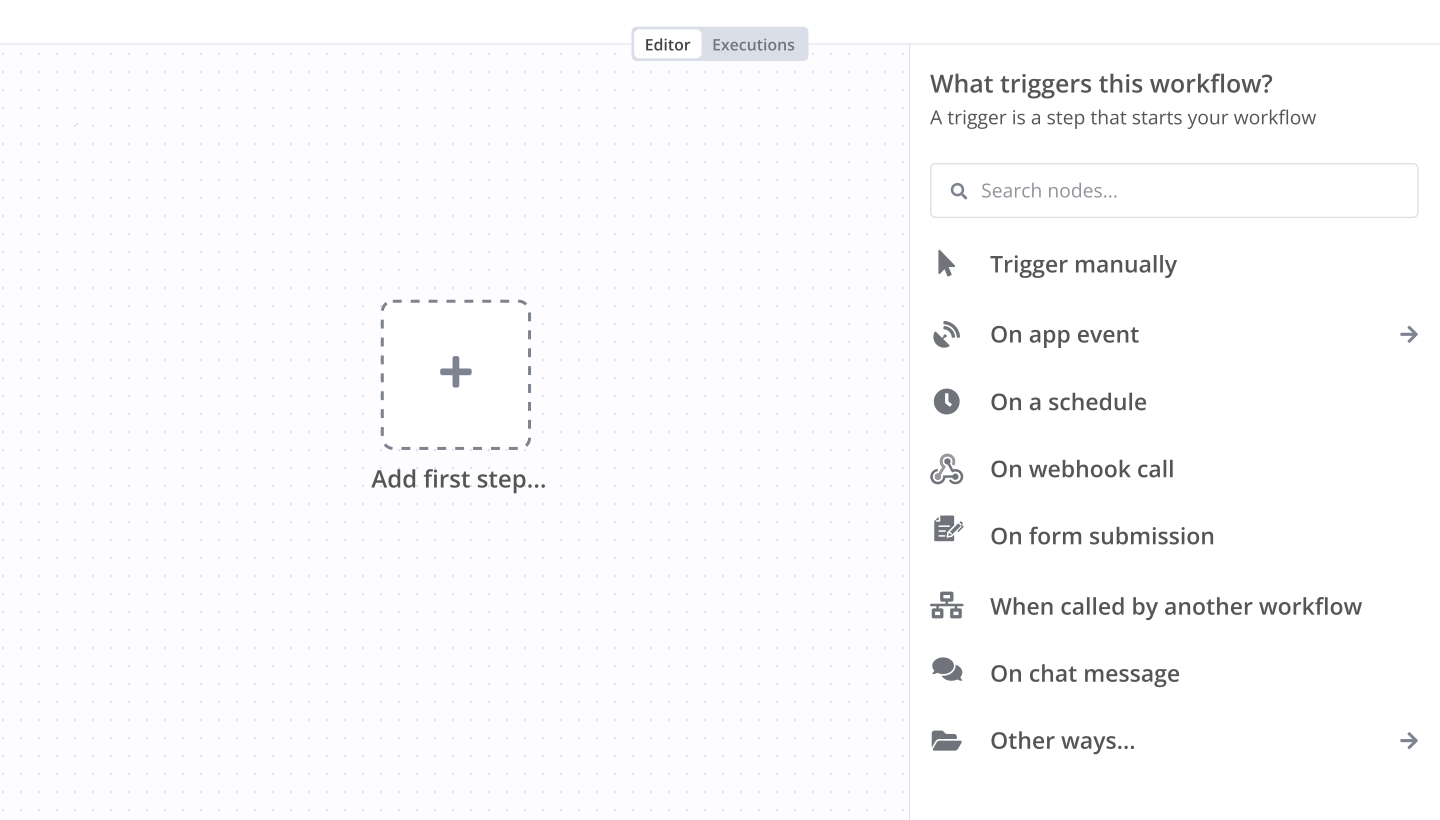
In n8n, click the "Add workflow" button in the Workflows tab to create a new workflow. Add the starting point – a trigger on when your workflow should run: an app event, a schedule, a webhook call, another workflow, an AI chat, or a manual trigger. Sometimes, the HTTP Request node might already serve as your starting point.

LinkedIn and Slack integration: Create a new workflow and add the first step

Step 2: Add and configure LinkedIn and Slack nodes

You can find LinkedIn and Slack in the nodes panel. Drag them onto your workflow canvas, selecting their actions. Click each node, choose a credential, and authenticate to grant n8n access. Configure LinkedIn and Slack nodes one by one: input data on the left, parameters in the middle, and output data on the right.

LinkedIn and Slack integration: Add and configure LinkedIn and Slack nodes

Step 3: Connect LinkedIn and Slack

A connection establishes a link between LinkedIn and Slack (or vice versa) to route data through the workflow. Data flows from the output of one node to the input of another. You can have single or multiple connections for each node.

LinkedIn and Slack integration: Connect LinkedIn and Slack

Step 4: Customize and extend your LinkedIn and Slack integration

Use n8n's core nodes such as If, Split Out, Merge, and others to transform and manipulate data. Write custom JavaScript or Python in the Code node and run it as a step in your workflow. Connect LinkedIn and Slack with any of n8n’s 1000+ integrations, and incorporate advanced AI logic into your workflows.

LinkedIn and Slack integration: Customize and extend your LinkedIn and Slack integration

Step 5: Test and activate your LinkedIn and Slack workflow

Save and run the workflow to see if everything works as expected. Based on your configuration, data should flow from LinkedIn to Slack or vice versa. Easily debug your workflow: you can check past executions to isolate and fix the mistake. Once you've tested everything, make sure to save your workflow and activate it.

LinkedIn and Slack integration: Test and activate your LinkedIn and Slack workflow

Generate & schedule social posts with Gemini/OpenAI for X and LinkedIn

💼 LinkedIn Content Machine – AI-Powered Post Generator & Scheduler for X and LinkedIn

How it works:
This end-to-end workflow automates your personal or brand content strategy by:
🧠 Using Google Gemini or OpenAI to generate engaging LinkedIn/X content from a title or trending posts.
🗓️ Posting directly to LinkedIn and X (formerly Twitter).
📊 Pulling high-performing LinkedIn posts to inspire new ideas.
✍️ Saving AI-generated drafts to Google Sheets for review.
🔔 Notifying your team on Slack when drafts are ready.

Steps to set up:
Add your API keys for Google Gemini or OpenAI.
Set up your LinkedIn, X (Twitter), Google Sheets, and Slack credentials.
Customize prompt logic or post filters if needed.
Schedule the idea generation module or trigger it manually.
Start generating and posting consistent, high-quality content with zero manual effort!

Nodes used in this workflow

Popular LinkedIn and Slack workflows

+4

Generate & Schedule Social Posts with Gemini/OpenAI for X and LinkedIn

💼 LinkedIn Content Machine – AI-Powered Post Generator & Scheduler for X and LinkedIn How it works: This end-to-end workflow automates your personal or brand content strategy by: 🧠 Using Google Gemini or OpenAI to generate engaging LinkedIn/X content from a title or trending posts. 🗓️ Posting directly to LinkedIn and X (formerly Twitter). 📊 Pulling high-performing LinkedIn posts to inspire new ideas. ✍️ Saving AI-generated drafts to Google Sheets for review. 🔔 Notifying your team on Slack when drafts are ready. Steps to set up: Add your API keys for Google Gemini or OpenAI. Set up your LinkedIn, X (Twitter), Google Sheets, and Slack credentials. Customize prompt logic or post filters if needed. Schedule the idea generation module or trigger it manually. Start generating and posting consistent, high-quality content with zero manual effort!
+4

Repurpose YouTube videos into blogs and social posts with GPT-4o, WordPress, LinkedIn, X and Instagram

Overview This workflow turns a single YouTube video into multiple content formats and publishes them across different platforms with an optional human approval step. It helps content creators, marketers, and agencies repurpose long-form video content into blog posts and social media updates automatically. How it works Fetches the transcript from a YouTube video Uses AI to generate blog and social media content Optionally waits for manual approval Publishes content to selected platforms Logs the result for tracking Setup steps Add your API credentials (AI, transcript, and social platforms) Paste a YouTube video URL Choose auto-publish or approval mode Run the workflow Use cases Content repurposing for YouTube creators Automated blog and social media publishing Marketing automation for agencies AI-assisted content production pipelines 🧑‍💻 Creator Information Developed by: Adem Tasin 🌐 Website: ademtasin.com 💼 LinkedIn: Adem Tasin
+2

Schedule and optimize Twitter and LinkedIn posts from Google Sheets with OpenAI GPT-4o-mini

Schedule and optimize social media posts to Twitter and LinkedIn using AI This workflow automates the entire lifecycle of social media management—from fetching draft content to AI-driven optimization and multi-platform publishing. Who’s it for Social media managers, marketing teams, and content creators who use Google Sheets to plan their content but want to leverage AI for better engagement and automate the repetitive task of cross-platform posting. How it works The workflow is triggered either hourly or manually via a webhook. It fetches scheduled content from a designated Google Sheet and identifies posts ready for publication. An AI Agent (OpenAI) then analyzes the raw content to generate two optimized versions: a punchy, character-limited post for Twitter and a more professional, detailed version for LinkedIn. After generating relevant hashtags and engagement tips, the workflow publishes the posts simultaneously. Finally, it logs the live URLs back to your spreadsheet and sends a performance summary to a Slack channel for easy tracking. How to set up Google Sheet: Create a sheet with columns for status, content, platforms, scheduled_time, hashtags, and tone. Credentials: Connect your Google Sheets, OpenAI, Twitter (X), LinkedIn, and Slack accounts. Node Configuration: Select your specific spreadsheet and worksheet in both the "Fetch Content" and "Update Content" nodes. Slack: Specify the channel name or ID in the Slack node to receive notifications. Activation: Test with the Manual Webhook, then toggle the workflow to "Active." Requirements Google Sheets OAuth2** OpenAI API Key** (using GPT-4o-mini or higher) Twitter (X) OAuth2** LinkedIn OAuth2** Slack Bot Token** How to customize the workflow AI Tone**: Modify the "System Message" in the AI Content Optimizer node to match your brand's unique voice. Additional Platforms**: Extend the branching logic after the AI Parse node to include platforms like Discord, Facebook, or Mastodon. Advanced Scheduling**: Adjust the Filter node's JavaScript code if you use a different date format or status labels in your spreadsheet.
+5

YouTube Video Optimization & Cross-Platform Distribution with GPT-4o

This workflow automates the post-publish process for YouTube videos, combining advanced SEO optimization, cross-platform promotion, and analytics reporting. It is designed for creators, marketers, and agencies who want to maximize the reach and performance of their YouTube content with minimal manual effort. Features SEO Automation** Fetches video metadata and analyzes competitor and trending data. Uses AI to generate SEO-optimized titles, descriptions, and tags. Calculates an SEO score and applies A/B testing logic to select the best title. Updates the video metadata on YouTube automatically. Cross-Platform Promotion** Generates platform-specific promotional content (LinkedIn, X/Twitter, Instagram, Facebook, etc.) using AI. Publishes posts to each connected social channel. Extracts video clips and analyzes thumbnails for enhanced promotion. Engagement Monitoring & Analytics** Monitors YouTube comments, detects negative sentiment, and drafts AI-powered replies. Logs all key data (videos, comments, analytics) to Google Sheets for tracking and reporting. Runs a weekly analytics job to aggregate performance, calculate engagement/viral indicators, and email a detailed report. Notifications & Alerts** Sends Slack alerts when a new video is published or when viral potential/negative comments are detected. How It Works Trigger The workflow starts automatically when a new YouTube video is published (via webhook) or on a weekly schedule for analytics. Video Intake & SEO Fetches video details (title, description, tags, stats). Gathers competitor and trending topic data. Uses AI to generate improved SEO assets and calculates an SEO score. Selects the best title (A/B test) and updates the video metadata. Clip & Thumbnail Processing If the video is long enough, runs thumbnail analysis and extracts short clips for social media. Cross-Platform Promotion Generates and formats promotional posts for each social platform. Publishes automatically to enabled channels. Engagement & Comment Monitoring Fetches comments, detects negative sentiment, and drafts AI-powered replies. Logs comments and responses to Google Sheets. Analytics & Reporting Aggregates weekly analytics, calculates engagement and viral indicators. Logs insights and sends a weekly report via email. Notifications Sends Slack alerts for new video publications and viral/negative comment detection. Setup Instructions Connect YouTube Set up YouTube API credentials and required IDs in the Workflow Configuration node. Connect OpenAI Add your OpenAI credentials for AI-powered content generation. Connect Slack Configure Slack credentials and specify alert channels. Connect Google Sheets Set up service account credentials for logging video, comment, and analytics data. Configure Social Platforms Add credentials for LinkedIn, Twitter (X), Instagram, and Facebook as needed. Test the Workflow Publish a test video and verify that metadata updates, social posts, logging, and weekly reports are working as expected. Use Cases YouTube Creators:** Automate SEO, promotion, and analytics to grow your channel faster. Marketing Teams:** Streamline multi-channel video campaigns and reporting. Agencies:** Deliver consistent, data-driven YouTube growth for multiple clients. Requirements YouTube API credentials OpenAI API key Slack API token Google Sheets service account (Optional) LinkedIn, Twitter, Instagram, Facebook API credentials Limitations Requires valid API credentials for all connected services. AI-powered features depend on OpenAI API access. Social posting is limited to platforms with available n8n nodes and valid credentials. Tip: You can easily customize prompts, scoring logic, and enabled platforms to fit your channel’s unique needs.
+4

Transform Blog Posts to Multi-Platform Content with GPT-4o, Unsplash and Airtable

How it works • RSS feed monitors your blog for new posts automatically • Extracts and cleans full article content from the blog post • AI Chain (GPT-4o) transforms content into 5 platform-optimized formats (LinkedIn, Twitter, Instagram, Email, Video) • Unsplash API suggests relevant images for each content piece • Slack notification alerts content team with preview of all formats • Airtable logs everything for content calendar tracking • Optional auto-posting to LinkedIn and Twitter (disabled by default) • Structured output parser ensures all 5 formats are generated correctly with proper character limits Set up steps • Time to set up: 10-15 minutes • Replace RSS feed URL with your blog's feed (common formats: /feed, /rss, /feed.xml) • Get Slack channel ID for content team notifications • Create Airtable base with 14 columns (Original_Title, Original_URL, Published_Date, LinkedIn_Post, LinkedIn_Hashtags, Twitter_Thread, Twitter_Hashtags, Instagram_Caption, Instagram_Hashtags, Email_Subject, Email_Body, Video_Script, Suggested_Images, Status) • Add credentials: OpenAI (GPT-4o), Unsplash API, Slack OAuth2, Airtable Token • Replace placeholder IDs in Slack and Airtable nodes • Optional: Enable LinkedIn/Twitter auto-posting nodes and add OAuth2 credentials What you'll need • OpenAI API - GPT-4o access for AI content repurposing • Unsplash API - Free tier available for image suggestions • Slack - Standard workspace for team notifications • Airtable - Free plan works for content tracking • Blog with RSS feed - WordPress, Ghost, Medium, Webflow all supported • LinkedIn/Twitter OAuth2 (optional) - For auto-posting feature Who this is for Content creators, marketing teams, and agencies that want to maximize content ROI by automatically repurposing blog posts into platform-specific content. Perfect for B2B companies publishing regular blog content who need consistent multi-platform presence without manual reformatting.

Automate Social Media Content Distribution with Google Sheets & Slack

Okay, here are the "How It Works" and "Setup Steps" for your "Automated Social Media Content Distribution System," presented clearly in Markdown. How It Works (Workflow Stages) ⚙️ This system transforms manual, repetitive tasks into a smooth, automated content distribution pipeline: Content Submission & Trigger: You add a new row to your designated Google Sheet with all the content details (Title, URL, Short_Description, Image_URL, Hashtags, and boolean flags for which platforms to post to). The Google Sheets Trigger node immediately detects this new entry, initiating the workflow. Content Preparation: The Set node takes the raw data from your Google Sheet and formats it into a cohesive text string (social_media_text_core) that is suitable for posting across different social media platforms. Conditional Social Media Posting: A series of If nodes (Check Facebook Post, Check Twitter Post, Check LinkedIn Post) sequentially check your preferences (based on the Post_to_Facebook, Post_to_Twitter, Post_to_LinkedIn columns in your sheet). If a platform is marked TRUE, the corresponding social media node (Facebook, Twitter, LinkedIn) is activated to publish your content. If FALSE, that platform is skipped, and the workflow moves to the next check. Status Update & Notification: After attempting to post to all selected platforms, the Google Sheets (Update) node updates the Publication_Status column of your original row to "Published." This prevents re-posting and provides a clear record. Finally, the Slack (Notification) node sends an alert to your chosen Slack channel, confirming that the content has been successfully distributed. Setup Steps 🛠️ (Build It Yourself!) Follow these detailed steps to build and implement this workflow in your n8n instance: Prepare Your Google Sheet: Create a new Google Sheet (e.g., named "Social Media Posts"). Set up the following exact column headers in the first row: Title, URL, Short_Description, Image_URL, Hashtags, Post_to_Facebook, Post_to_Twitter, Post_to_LinkedIn, Publication_Status Fill in a test row with some sample data, ensuring TRUE/FALSE values for the posting flags. Gather Your API Keys & Credentials: Google Sheets Credential: You'll need an OAuth2 credential for Google Sheets in n8n to allow read/write access to your sheet. Facebook Credential: An OAuth2 credential for Facebook with permissions to post to your selected Page. Twitter Credential: A Twitter API credential (API Key, API Secret, Access Token, Access Token Secret) from your Twitter Developer App. LinkedIn Credential: An OAuth2 credential for LinkedIn with permissions to share updates to your profile or organization page. Slack Credential: A Slack API token (Bot User OAuth Token) for sending messages to your channel. Build the n8n Workflow Manually (10 Nodes): Start a new workflow in n8n. Drag and drop each of the following nodes onto the canvas and connect them as described below: Google Sheets Trigger Name: Google Sheets Trigger Parameters: Authentication: Select your Google Sheets credential. Spreadsheet ID: [Copy the ID from your Google Sheet's URL] Sheet Name: [Your Sheet Name, e.g., 'Sheet1' or 'Content'] Watch For: Rows Events: Added Connections: Output to Set Content Parameters. Set Name: Set Content Parameters Parameters: Values to Set: Add a new value: Type: String Name: social_media_text_core Value: ={{ $json.Title }} - {{ $json.Short_Description }}\nRead more: {{ $json.URL }}\n{{ $json.Hashtags }} Connections: Output to Check Facebook Post. If Name: Check Facebook Post Parameters: Value 1: ={{ $json.Post_to_Facebook }} Operation: is true Connections: True output to Post Facebook Message. False output to Check Twitter Post. Facebook Name: Post Facebook Message Parameters: Authentication: Select your Facebook credential. Page ID: [YOUR_FACEBOOK_PAGE_ID] Message: ={{ $json.social_media_text_core }} Link: ={{ $json.URL }} Picture: ={{ $json.Image_URL }} Options: Published (checked) Connections: Output to Check Twitter Post. If Name: Check Twitter Post Parameters: Value 1: ={{ $json.Post_to_Twitter }} Operation: is true Connections: True output to Create Tweet. False output to Check LinkedIn Post. Twitter Name: Create Tweet Parameters: Authentication: Select your Twitter credential. Tweet: ={{ $json.social_media_text_core }} Image URL: ={{ $json.Image_URL }} Connections: Output to Check LinkedIn Post. If Name: Check LinkedIn Post Parameters: Value 1: ={{ $json.Post_to_LinkedIn }} Operation: is true Connections: True output to Share LinkedIn Update. False output to Update Publication Status. LinkedIn Name: Share LinkedIn Update Parameters: Authentication: Select your LinkedIn credential. Resource: Share Update Type: Organization or Personal (Choose as appropriate) Organization ID: [YOUR_LINKEDIN_ORG_ID] (If Organization type selected) Content: ={{ $json.social_media_text_core }} Content URL: ={{ $json.URL }} Image URL: ={{ $json.Image_URL }} Connections: Output to Update Publication Status. Google Sheets Name: Update Publication Status Parameters: Authentication: Select your Google Sheets credential. Spreadsheet ID: [YOUR_GOOGLE_SHEET_CONTENT_ID] Sheet Name: [Your Sheet Name, e.g., 'Sheet1' or 'Content'] Operation: Update Row Key Column: URL Key Value: ={{ $json.URL }} Values: Add a new value: Column: Publication_Status Value: Published Connections: Receives connections from both Share LinkedIn Update and the False branch of Check LinkedIn Post. Slack Name: Send Slack Notification Parameters: Authentication: Select your Slack credential. Chat ID: [YOUR_SLACK_CHANNEL_ID] Text: New content "{{ $json.Title }}" successfully published to social media! 🎉 Check: {{ $json.URL }} Connections: Output to Update Publication Status. Final Steps & Activation: Test the Workflow: Before activating, manually add a new row to your Google Sheet or use n8n's "Execute Workflow" button (if available for triggers). Observe the flow through each node to ensure it behaves as expected and posts to your social media accounts. Activate Workflow: Once you are confident it's working correctly, turn the workflow "Active" in the top right corner of your n8n canvas.


Build your own LinkedIn and Slack integration

Create custom LinkedIn and Slack workflows by choosing triggers and actions. Nodes come with global operations and settings, as well as app-specific parameters that can be configured. You can also use the HTTP Request node to query data from any app or service with a REST API.


LinkedIn supported actions

Create
Create a new post

Slack supported actions

Archive
Archives a conversation
Close
Closes a direct message or multi-person direct message
Create
Initiates a public or private channel-based conversation
Get
Get information about a channel
Get Many
Get many channels in a Slack team
History
Get a conversation's history of messages and events
Invite
Invite a user to a channel
Join
Joins an existing conversation
Kick
Removes a user from a channel
Leave
Leaves a conversation
Member
List members of a conversation
Open
Opens or resumes a direct message or multi-person direct message
Rename
Renames a conversation
Replies
Get a thread of messages posted to a channel
Set Purpose
Sets the purpose for a conversation
Set Topic
Sets the topic for a conversation
Unarchive
Unarchives a conversation
Get
Get Many
Get & filters team files
Upload
Create or upload an existing file
Delete
Get Permalink
Search
Send
Send and Wait for Response
Update
Add
Adds a reaction to a message
Get
Get the reactions of a message
Remove
Remove a reaction of a message
Add
Add a star to an item
Delete
Delete a star from an item
Get Many
Get many stars of autenticated user
Get
Get information about a user
Get Many
Get a list of many users
Get User's Profile
Get a user's profile
Get User's Status
Get online status of a user
Update User's Profile
Update a user's profile
Add Users
Create
Disable
Enable
Get Many
Get Users
Update

FAQs

  • Can LinkedIn connect with Slack?

  • Can I use LinkedIn’s API with n8n?

  • Can I use Slack’s API with n8n?

  • Is n8n secure for integrating LinkedIn and Slack?

  • How to get started with LinkedIn and Slack integration in n8n.io?

Need help setting up your LinkedIn and Slack integration?

Discover our latest community's recommendations and join the discussions about LinkedIn and Slack integration.
Nicolas N
Muhammed Iqbal P B
Nicolas N

Looking to integrate LinkedIn and Slack in your company?

Over 3000 companies switch to n8n every single week

Why use n8n to integrate LinkedIn with Slack

Build complex workflows, really fast

Build complex workflows, really fast

Handle branching, merging and iteration easily.
Pause your workflow to wait for external events.

Code when you need it, UI when you don't

Simple debugging

Your data is displayed alongside your settings, making edge cases easy to track down.

Use templates to get started fast

Use 1000+ workflow templates available from our core team and our community.

Reuse your work

Copy and paste, easily import and export workflows.

Implement complex processes faster with n8n

red iconyellow iconred iconyellow icon