Back to Integrations
integrationMicrosoft Outlook node
integrationPostgres node

Microsoft Outlook and Postgres integration

Save yourself the work of writing custom integrations for Microsoft Outlook and Postgres and use n8n instead. Build adaptable and scalable Communication, HITL, Development, and Data & Storage workflows that work with your technology stack. All within a building experience you will love.

How to connect Microsoft Outlook and Postgres

  • Step 1: Create a new workflow
  • Step 2: Add and configure nodes
  • Step 3: Connect
  • Step 4: Customize and extend your integration
  • Step 5: Test and activate your workflow

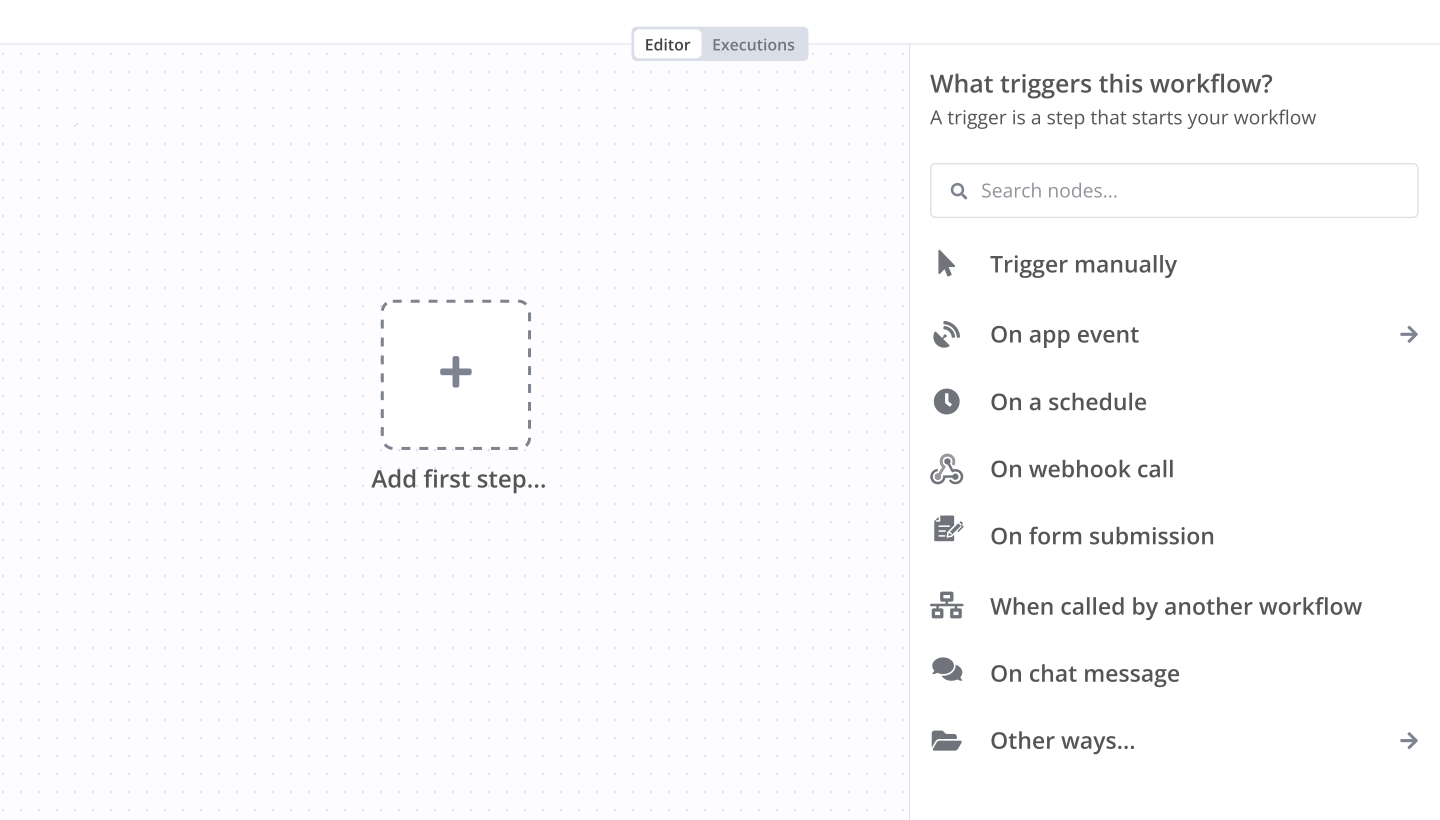
Step 1: Create a new workflow and add the first step

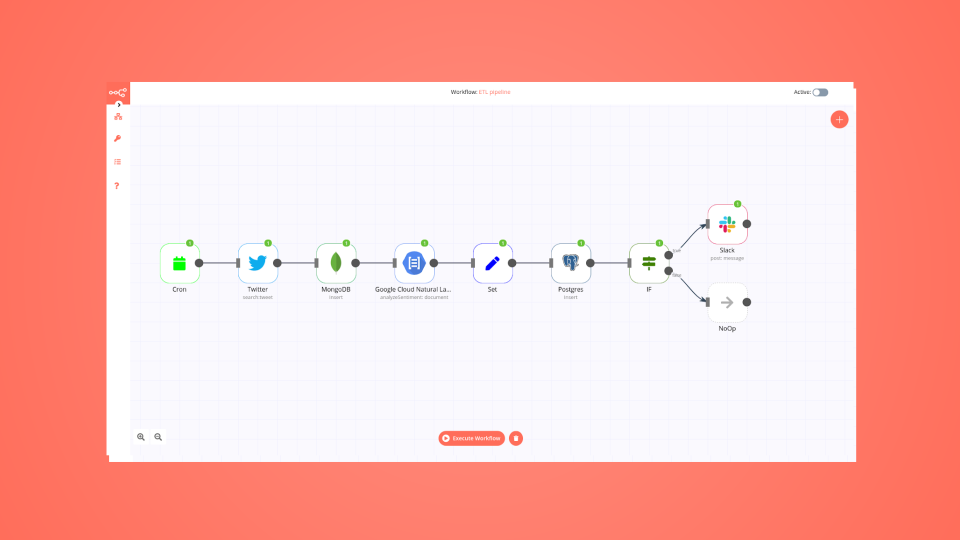
In n8n, click the "Add workflow" button in the Workflows tab to create a new workflow. Add the starting point – a trigger on when your workflow should run: an app event, a schedule, a webhook call, another workflow, an AI chat, or a manual trigger. Sometimes, the HTTP Request node might already serve as your starting point.

Microsoft Outlook and Postgres integration: Create a new workflow and add the first step

Step 2: Add and configure Microsoft Outlook and Postgres nodes

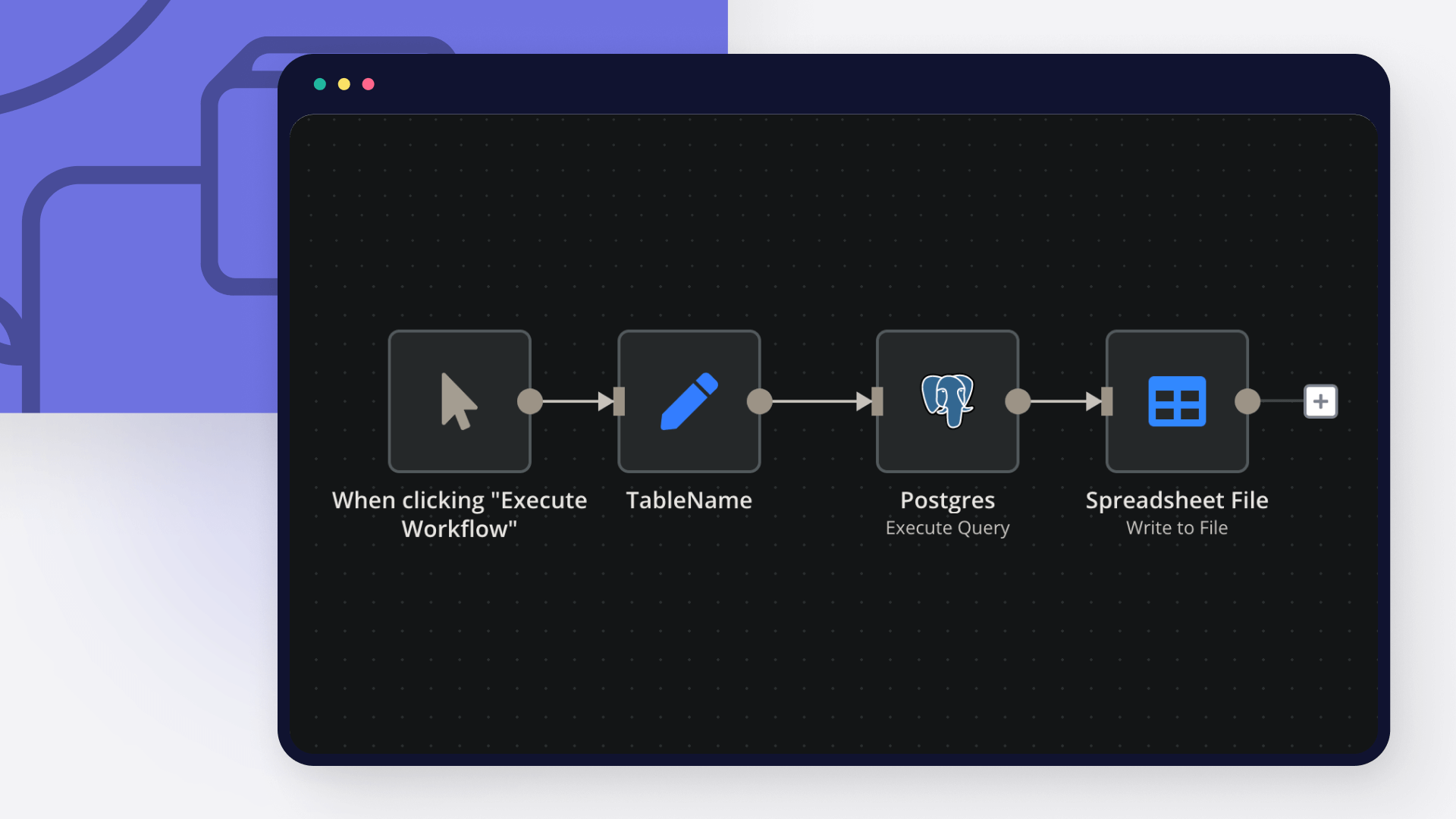
You can find Microsoft Outlook and Postgres in the nodes panel. Drag them onto your workflow canvas, selecting their actions. Click each node, choose a credential, and authenticate to grant n8n access. Configure Microsoft Outlook and Postgres nodes one by one: input data on the left, parameters in the middle, and output data on the right.

Microsoft Outlook and Postgres integration: Add and configure Microsoft Outlook and Postgres nodes

Step 3: Connect Microsoft Outlook and Postgres

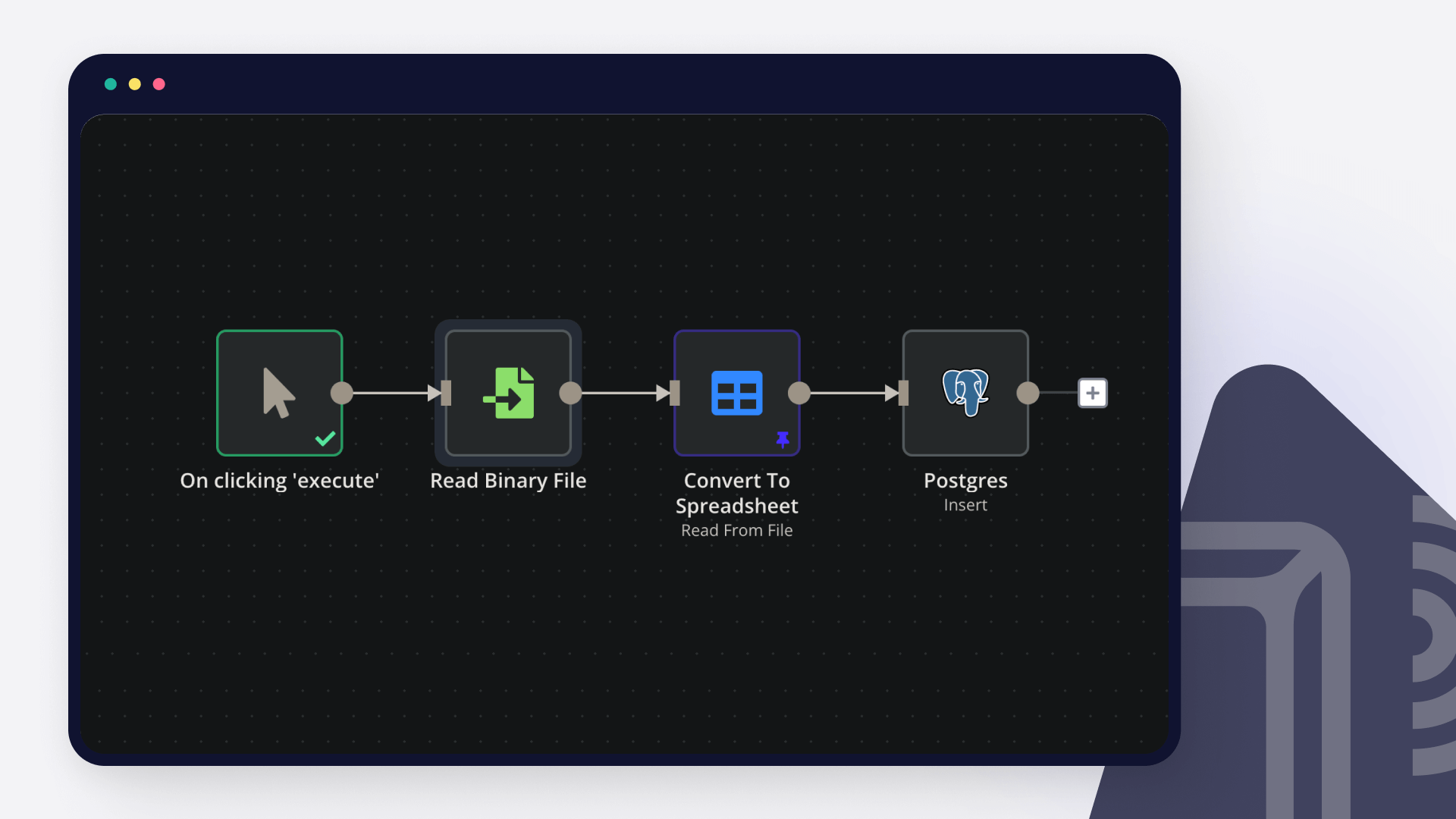
A connection establishes a link between Microsoft Outlook and Postgres (or vice versa) to route data through the workflow. Data flows from the output of one node to the input of another. You can have single or multiple connections for each node.

Microsoft Outlook and Postgres integration: Connect Microsoft Outlook and Postgres

Step 4: Customize and extend your Microsoft Outlook and Postgres integration

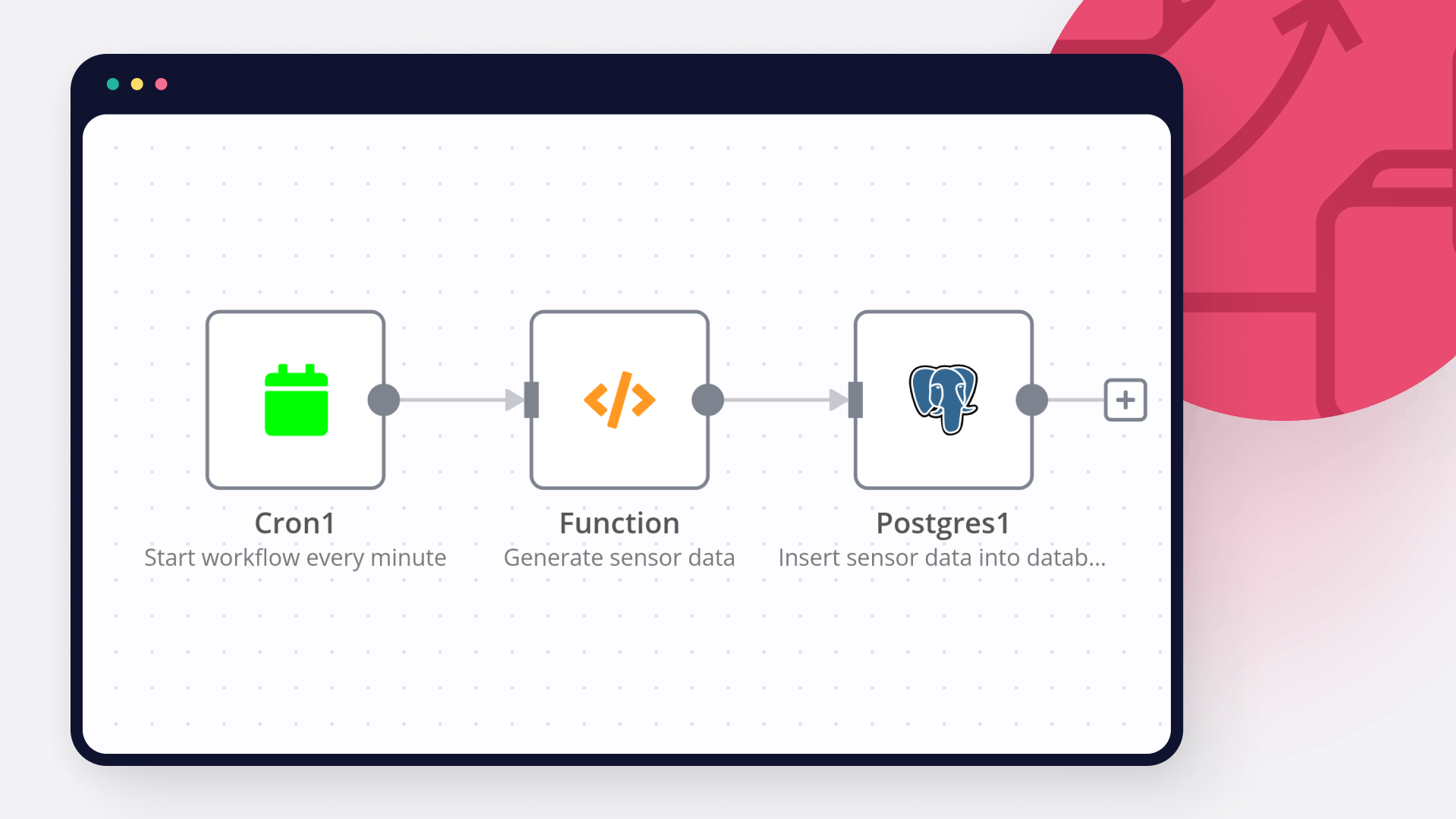
Use n8n's core nodes such as If, Split Out, Merge, and others to transform and manipulate data. Write custom JavaScript or Python in the Code node and run it as a step in your workflow. Connect Microsoft Outlook and Postgres with any of n8n’s 1000+ integrations, and incorporate advanced AI logic into your workflows.

Microsoft Outlook and Postgres integration: Customize and extend your Microsoft Outlook and Postgres integration

Step 5: Test and activate your Microsoft Outlook and Postgres workflow

Save and run the workflow to see if everything works as expected. Based on your configuration, data should flow from Microsoft Outlook to Postgres or vice versa. Easily debug your workflow: you can check past executions to isolate and fix the mistake. Once you've tested everything, make sure to save your workflow and activate it.

Microsoft Outlook and Postgres integration: Test and activate your Microsoft Outlook and Postgres workflow

Automate Microsoft Teams meeting analysis with GPT-4.1, Outlook & Mem.ai

Automate Microsoft Teams Meeting Analysis with GPT-4.1, Outlook & Mem.ai

Watch the YouTube video to get started
Follow along with the blog post

Template Overview

This advanced n8n template automates Microsoft Teams meeting analysis, knowledge base creation, and email drafting directly from meeting recordings and transcripts.

It provides end-to-end automation for the following use cases:

Meeting Analysis

Connects to Microsoft Graph to retrieve meeting recordings, chat messages, and transcripts.
Analyses meeting content using AI models.
Extracts key points, action items, questions, and themes from meetings automatically.

AI-Powered Web App

Automatically creates a detailed report from past meetings.
Stores meeting summaries, metadata, and insights into an easy-to-browse frontend.
New meetings are added dynamically without manual work.
**
Knowledge Base Indexing (via Mem.ai)**

Uploads extracted meeting data into a structured knowledge base.
Supports categorisation, search and chat functionality across meetings.
Draft Follow-Up Emails**

Draft personalised follow-up emails for meeting participants.
Email drafts include:
Meeting summary
Key decisions
Action items
Emails can be sent manually with a human in the loop context via Microsoft Outlook integration.

Core Components

Microsoft Graph API for accessing meetings, chats, files, and user profiles.
SharePoint API for file storage and search.
n8n Webhooks to trigger processes dynamically.
Generic OAuth2 authentication for seamless Microsoft access.
JavaScript Code Nodes for flexible, intelligent parsing and structuring of meeting data.
AI/LLM nodes for summarisation and content creation.

Designed to be scalable, modular, and easily customisable for different organisation sizes and industries.

🛡️ Note

Failure to correctly configure Azure permissions will prevent the template from functioning. Ensure admin approval is fully completed during setup.

Important Prerequisites

⚠️ Administrator consent is required

This template requires a Microsoft 365 Global Administrator or Application Administrator to grant admin consent to a set of Microsoft Graph and SharePoint API scopes.

Basic Azure App Registration knowledge is required:

You need to set up an Azure App Registration manually, configure OAuth2 authentication, and assign specific API permissions.

A setup guide is included, but familiarity with:

App registrations
API permissions
Client secrets
OAuth2 flows

is highly recommended.

Knowledge of Postgres is required
The template includes a SQL script to create the required Postgres table (see blog post).

You are responsible for hosting your own database (You can use Supabase with the Postgres connection string).

Nodes used in this workflow

Popular Microsoft Outlook and Postgres workflows

+2

Automate Microsoft Teams Meeting Analysis with GPT-4.1, Outlook & Mem.ai

Automate Microsoft Teams Meeting Analysis with GPT-4.1, Outlook & Mem.ai Watch the YouTube video to get started Follow along with the blog post Template Overview This advanced n8n template automates Microsoft Teams meeting analysis, knowledge base creation, and email drafting directly from meeting recordings and transcripts. It provides end-to-end automation for the following use cases: Meeting Analysis Connects to Microsoft Graph to retrieve meeting recordings, chat messages, and transcripts. Analyses meeting content using AI models. Extracts key points, action items, questions, and themes from meetings automatically. AI-Powered Web App Automatically creates a detailed report from past meetings. Stores meeting summaries, metadata, and insights into an easy-to-browse frontend. New meetings are added dynamically without manual work. ** Knowledge Base Indexing (via Mem.ai)** Uploads extracted meeting data into a structured knowledge base. Supports categorisation, search and chat functionality across meetings. Draft Follow-Up Emails** Draft personalised follow-up emails for meeting participants. Email drafts include: Meeting summary Key decisions Action items Emails can be sent manually with a human in the loop context via Microsoft Outlook integration. Core Components Microsoft Graph API for accessing meetings, chats, files, and user profiles. SharePoint API for file storage and search. n8n Webhooks to trigger processes dynamically. Generic OAuth2 authentication for seamless Microsoft access. JavaScript Code Nodes for flexible, intelligent parsing and structuring of meeting data. AI/LLM nodes for summarisation and content creation. Designed to be scalable, modular, and easily customisable for different organisation sizes and industries. 🛡️ Note Failure to correctly configure Azure permissions will prevent the template from functioning. Ensure admin approval is fully completed during setup. Important Prerequisites ⚠️ Administrator consent is required This template requires a Microsoft 365 Global Administrator or Application Administrator to grant admin consent to a set of Microsoft Graph and SharePoint API scopes. Basic Azure App Registration knowledge is required: You need to set up an Azure App Registration manually, configure OAuth2 authentication, and assign specific API permissions. A setup guide is included, but familiarity with: App registrations API permissions Client secrets OAuth2 flows is highly recommended. Knowledge of Postgres is required The template includes a SQL script to create the required Postgres table (see blog post). You are responsible for hosting your own database (You can use Supabase with the Postgres connection string).
+8

Automated Email Responses with GPT-4O & Supabase Conversation Memory

This n8n workflow lets you delegate inbox management to an AI agent. It automatically replies to emails when a suitable response is found in your knowledge base. If no match is found, the message is forwarded to a human for review. This ensures all replies follow company guidelines and prevent misinformation or misrepresentation. Use Case Ideal for businesses that receive frequent inquiries about products or services and want to automate responses, freeing up time to focus on core operations. How It Works Polls your inbox for new incoming emails Cleans HTML to reduce token usage and filters spam Categorizes emails for better organization Retrieves conversation history from Supabase (if available) to give the AI proper context Uses the AI agent to query your FAQ database for relevant answers Replies automatically if a suitable answer is found Sends a placeholder email and forwards to a human if no accurate answer exists Ingests all processed emails into Supabase to retain conversation history and improve future AI accuracy Customization You can connect any email provider or LLM model. The workflow can also be expanded to let the AI schedule meetings, answer availability questions, or handle other inbox tasks. If you'd like help tailoring this workflow to your business, feel free to reach out: Upwork Profile

Build your own Microsoft Outlook and Postgres integration

Create custom Microsoft Outlook and Postgres workflows by choosing triggers and actions. Nodes come with global operations and settings, as well as app-specific parameters that can be configured. You can also use the HTTP Request node to query data from any app or service with a REST API.

Microsoft Outlook supported actions

Create
Create a new calendar
Delete
Delete a calendar
Get
Retrieve a calendar
Get Many
List and search calendars
Update
Update a calendar
Create
Create a new contact
Delete
Delete a contact
Get
Retrieve a contact
Get Many
List and search contacts
Update
Update a contact
Create
Create a new email draft
Delete
Delete an email draft
Get
Retrieve an email draft
Send
Send an existing email draft
Update
Update an email draft
Create
Create a new event
Delete
Delete an event
Get
Retrieve an event
Get Many
List and search events
Update
Update an event
Create
Create a mail folder in the root folder of the user's mailbox
Delete
Delete a folder
Get
Retrieve a folder
Get Many
Get many folders
Update
Update a folder
Get Many
Retrieves the messages in a folder
Delete
Delete a message
Get
Retrieve a single message
Get Many
List and search messages
Move
Move a message to a folder
Reply
Create a reply to a message
Send
Send a message
Send and Wait for Response
Send a message and wait for response
Update
Update a message
Add
Add an attachment to a message
Download
Download an attachment from a message
Get
Retrieve information about an attachment of a message
Get Many
Retrieve information about the attachments of a message

Postgres supported actions

Delete
Delete an entire table or rows in a table
Execute Query
Execute an SQL query
Insert
Insert rows in a table
Insert or Update
Insert or update rows in a table
Select
Select rows from a table
Update
Update rows in a table

FAQs

  • Can Microsoft Outlook connect with Postgres?

  • Can I use Microsoft Outlook’s API with n8n?

  • Can I use Postgres’s API with n8n?

  • Is n8n secure for integrating Microsoft Outlook and Postgres?

  • How to get started with Microsoft Outlook and Postgres integration in n8n.io?

Need help setting up your Microsoft Outlook and Postgres integration?

Discover our latest community's recommendations and join the discussions about Microsoft Outlook and Postgres integration.
Mikhail Savenkov
Honza Pav
Vyacheslav Karbovnichy
Dennis
Dennis

Looking to integrate Microsoft Outlook and Postgres in your company?

Over 3000 companies switch to n8n every single week

Why use n8n to integrate Microsoft Outlook with Postgres

Build complex workflows, really fast

Build complex workflows, really fast

Handle branching, merging and iteration easily.
Pause your workflow to wait for external events.

Code when you need it, UI when you don't

Simple debugging

Your data is displayed alongside your settings, making edge cases easy to track down.

Use templates to get started fast

Use 1000+ workflow templates available from our core team and our community.

Reuse your work

Copy and paste, easily import and export workflows.

Implement complex processes faster with n8n

red iconyellow iconred iconyellow icon