Back to Integrations
integrationWebhook node
integrationClickUp node

Webhook and ClickUp integration

Save yourself the work of writing custom integrations for Webhook and ClickUp and use n8n instead. Build adaptable and scalable Development, Core Nodes, Productivity, and Communication workflows that work with your technology stack. All within a building experience you will love.

How to connect Webhook and ClickUp

  • Step 1: Create a new workflow
  • Step 2: Add and configure nodes
  • Step 3: Connect
  • Step 4: Customize and extend your integration
  • Step 5: Test and activate your workflow

Step 1: Create a new workflow and add the first step

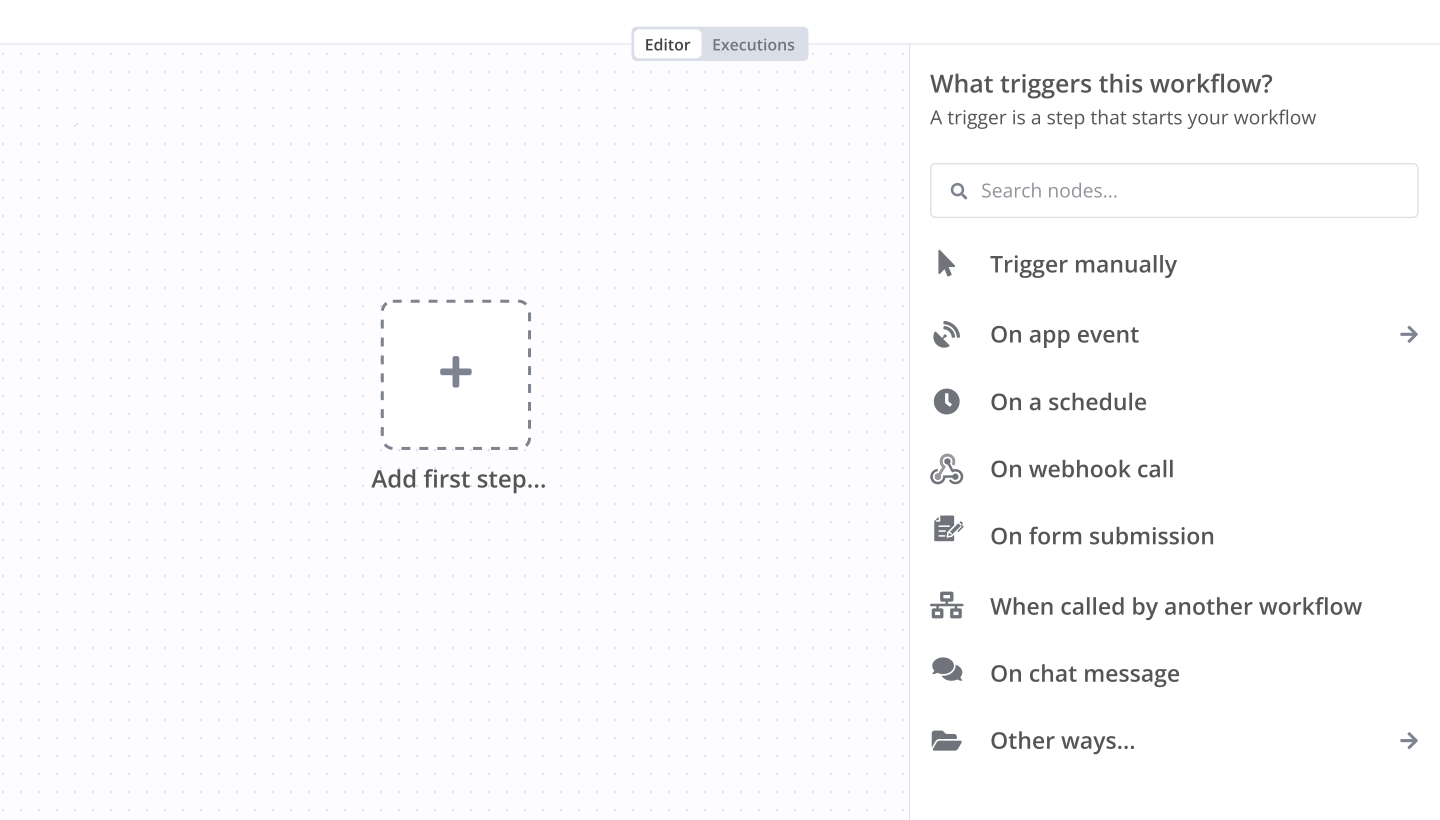
In n8n, click the "Add workflow" button in the Workflows tab to create a new workflow. Add the starting point – a trigger on when your workflow should run: an app event, a schedule, a webhook call, another workflow, an AI chat, or a manual trigger. Sometimes, the HTTP Request node might already serve as your starting point.

Webhook and ClickUp integration: Create a new workflow and add the first step

Step 2: Add and configure Webhook and ClickUp nodes

You can find Webhook and ClickUp in the nodes panel. Drag them onto your workflow canvas, selecting their actions. Click each node, choose a credential, and authenticate to grant n8n access. Configure Webhook and ClickUp nodes one by one: input data on the left, parameters in the middle, and output data on the right.

Webhook and ClickUp integration: Add and configure Webhook and ClickUp nodes

Step 3: Connect Webhook and ClickUp

A connection establishes a link between Webhook and ClickUp (or vice versa) to route data through the workflow. Data flows from the output of one node to the input of another. You can have single or multiple connections for each node.

Webhook and ClickUp integration: Connect Webhook and ClickUp

Step 4: Customize and extend your Webhook and ClickUp integration

Use n8n's core nodes such as If, Split Out, Merge, and others to transform and manipulate data. Write custom JavaScript or Python in the Code node and run it as a step in your workflow. Connect Webhook and ClickUp with any of n8n’s 1000+ integrations, and incorporate advanced AI logic into your workflows.

Webhook and ClickUp integration: Customize and extend your Webhook and ClickUp integration

Step 5: Test and activate your Webhook and ClickUp workflow

Save and run the workflow to see if everything works as expected. Based on your configuration, data should flow from Webhook to ClickUp or vice versa. Easily debug your workflow: you can check past executions to isolate and fix the mistake. Once you've tested everything, make sure to save your workflow and activate it.

Webhook and ClickUp integration: Test and activate your Webhook and ClickUp workflow

Create new Clickup tasks from Slack commands

Create new Clickup Tasks from Slack commands
This workflow aims to make it easy to create new tasks on Clickup from normal Slack messages using simple slack command.

For example We can have a slack command as

/newTask Set task to update new contacts on CRM and assign them to the sales team
This will have an new task on Clickup with the same title and description on Clickup

For most teams, getting tasks from Slack to Clickup involves manually entering the new tasks into Clickup. What if we could do this with a simple slash command?

Step 1
The first step is to Create an endpoint URL for your slack command by creating an events API from the link [below] https://api.slack.com/apps/)

STEP 2
Next step is defining the endpoint for your URL
Create a new webhook endpoint from your n8n with a POST and paste the endpoint URL to your event API. This will send all slash commands associated with the Slash to the desired endpoint

Step 3
Log on to slack API (https://api.slack.com/) and create an application. This is the one we use to run all automation and commands from Slack. Once your app is ready, navigate to the Slash Commands and create a new command

This will include the command, the webhook URL and a description of what the slash command is all about

Now that this is saved you can do a test by sending a demo task to your endpoint

Once you have tested the webhook slash command is working with the webhook, create a new Clickup API that can be used to create new tasks in ClickUp

This workflow creates a new task with the start dates on Clikup that can be assigned to the respective team members

More details about the document setup can be found on this document below

Happy Productivity

Nodes used in this workflow

Popular Webhook and ClickUp workflows

Fireflies Transcripts to Meeting Summaries & Task Extractor to Slack & ClickUp

AI-powered Meeting Summaries and Action Items to Slack and ClickUp How it Works Webhook Trigger: The workflow starts when Fireflies notifies that a transcription has finished. Transcript Retrieval: The transcript is pulled from Fireflies based on the meeting ID. Pre-processing: The transcript is split into sentences and then aggregated into a raw text block. AI Summarization: The aggregated transcript is sent to Google Gemini, which generates a short summary and a structured list of action items. Post-processing: The AI response is cleaned and formatted into JSON. Action items are mapped to titles and descriptions. Distribution: The meeting summary is posted to Slack. Action items are created as tasks in ClickUp. Use Case This workflow is designed for teams that want to reduce the manual effort of writing meeting notes and extracting action items. Automatically generate a clear and concise meeting summary Share the summary instantly with your team on Slack Ensure action items are not lost by automatically creating tasks in ClickUp Ideal for distributed teams, project managers, and product teams managing recurring meetings Requirements n8n instance** set up and running Fireflies.ai account** with API access to meeting transcripts Google Gemini API (via PaLM credentials)** for AI-powered summarization Slack account** with OAuth2 credentials connected in n8n ClickUp account** with OAuth2 credentials connected in n8n

Generate AI matte painting video variations with Seedance for VFX review

📘 Description This workflow is a fully automated AI matte painting generation system for VFX pipelines, designed to convert a single environment prompt into multiple cinematic background variations. It handles generation, validation, multi-variant rendering, compositing preparation, review workflows, and final delivery—eliminating manual coordination between artists, supervisors, and production systems. ⚙️ Step-by-Step Flow The process begins with a webhook trigger that serves as the shot request intake layer, receiving a POST request containing the environment prompt, shot code, optional plate image URL, and metadata such as project, sequence, and supervisor details. This input is then passed through a validation and normalization stage, ensuring all required fields are present while standardizing elements like sequence codes, project IDs, Slack channels, and timestamps. Once validated, the system fans out the request into four distinct cinematic variations—day (overcast realism), dusk (golden hour lighting), night (moonlit cinematic), and fog (atmospheric depth)—with each variant assigned a custom-engineered prompt. At the core of the workflow, a dynamic mode selection logic determines whether to use image-to-video generation (if a plate image is provided) or text-to-video generation (if no reference is available), while also configuring parameters such as audio generation, aspect ratio, and duration. Each variation is then submitted as an independent job to the Seedance API for AI video generation, returning unique job IDs for tracking. A polling loop handles asynchronous processing by checking the status of each job every 20 seconds until all reach a “succeeded” state, operating independently per variation. Once completed, the system constructs detailed metadata for each asset, including video URL, atmosphere type, variant ID, resolution, duration, and tags such as AI-generated and review status. In parallel, it generates an auto-configured Nuke compositing template with pre-built nodes for plate input, AI background, merge setup, color grading placeholders, and output writing. For production tracking, a Jira review task is created for each variation, while all assets are logged within the ClickUp system. An aggregation layer then consolidates all four variations into a single structured summary, formatted for seamless Slack delivery. A Slack notification is sent to the supervisor with the complete review package, including links to all variations, Jira tickets, inline Nuke scripts, and associated metadata. Finally, the system downloads the generated video assets and completes the workflow by sending an email to the requester with the video attachments and full production context, ensuring a smooth end-to-end delivery pipeline. 🚨 Error Handling • Global error trigger • Instant Slack alert • Prevents silent failures across pipeline 🧩 Prerequisites • Seedance API (video generation) • Slack OAuth2 • Gmail OAuth2 • Jira Cloud • ClickUp API • Webhook integration (input system) 💡 Key Benefits ✔ Parallel generation of multiple cinematic variations ✔ Automatic decision between image-to-video vs text-to-video ✔ Built-in compositing (Nuke script auto-generation) ✔ Full production pipeline (generation → review → delivery) ✔ Async-safe with polling loop ✔ Centralized asset tracking (Jira + ClickUp) ✔ Zero manual VFX coordination 👥 Perfect For VFX studios Film/TV production pipelines AI-driven matte painting workflows Previsualization teams Creative automation systems

Launch job vacancies from ATS to Google Calendar, ClickUp and LinkedIn with GPT-4o

Overview: Automated Vacancy Launch & AI Marketing This workflow streamlines the entire job opening process by connecting your ATS to your operational and marketing tools. It not only manages deadlines but also automates the promotion of the vacancy. Key Features: Schedule: Creates SLA and Expiration events in Google Calendar based on ATS dates. Track: Creates a central task in ClickUp to manage the selection process. Content Generation: Uses GPT-4o to analyze the job description and write a compelling marketing post. Publish: Automatically posts the job to LinkedIn and logs the action back in the ClickUp task. Setup Instructions Webhook: Configure your Recrutei ATS (or similar) to trigger this workflow. Google Calendar: Select the calendar for deadline tracking. ClickUp: Map the Team, Space, and List where vacancy tasks should be created. OpenAI: Ensure you have a valid API Key. LinkedIn: Connect your profile or company page.
+3

Generate Multi-Channel Release Notes from ClickUp Tasks with GPT-4o, Notion & Slack

This workflow converts raw ClickUp task updates—received directly through a webhook—into fully automated release documentation. It validates incoming payloads, fetches and cleans task details, enriches them with AI-generated metadata, produces structured release notes using GPT-4o, publishes them to Notion, notifies stakeholders on Slack, emails a formatted summary, and logs the release into Google Sheets. The system handles malformed events gracefully by logging invalid payloads and continues only when a valid task_id is present. It extracts structured fields (title, description, links, priority, assignee), then augments them with AI-driven classifications such as risk level, change type, module, and impact score. GPT-4o generates polished release notes following a strict template. Finally, the workflow distributes the release across multiple channels while maintaining an auditable, centralized history. ⚙️ What This Workflow Does (Step-by-Step) 🟢 Webhook — Receive ClickUp Task Update Captures incoming events from ClickUp via POST and forwards the raw body for parsing. 🧹 Code in JavaScript — Extract task_id Parses the raw webhook body and safely extracts task_id. Invalid JSON → forwarded to error logging. 🔍 Validate Incoming ClickUp Task Event Checks if task_id exists. Valid → continue workflow Invalid → log error to Google Sheets 📄 Fetch Full Task Details from ClickUp Retrieves full task metadata: title, description, status, priority, links, assignee details, and due date. 🧩 Extract Clean Task Fields from ClickUp Data Normalizes and structures the task fields into a clean, usable JSON object. 🧠 Provide GPT-4o Model for Metadata Extraction Loads the language model for metadata generation. 🔍 Generate Release Metadata via AI AI generates structured metadata including: • risk_level • change_type • module • impact_score • requires_testing 🧹 Parse AI Metadata JSON Output Parses stringified JSON from the AI node into valid structured JSON. Malformed metadata → returned as an error object. 🔀 Merge Task Details with Metadata Combines clean task fields with AI-generated metadata into a complete release-ready object. 🧠 Provide GPT-4o Model for Release Notes Supplies the language model needed to generate formal release notes. ✍️ Generate Structured Release Notes via AI Produces uniform release notes containing: • Summary • Improvements & Features • Bug Fixes • Impact Analysis • Known Issues 📝 Extract Release Notes Title & Final Output Extracts title from markdown and prepares final content for publishing. 📘 Create Release Notes Page in Notion Saves the release notes as a new page in the Notion Release Notes database. 💬 Post Release Announcement to Slack Sends formatted release notes + Notion link to the specified Slack user/channel. 📧 Send Release Summary Email Sends a structured HTML email with the release summary, full notes, and Notion link. 📊 Append Release Log Entry to Google Sheet Writes a complete release log entry including: • task ID • title • priority • module • risk level • Notion URL • Slack message URL • release date 🛑 Log Invalid ClickUp Events to Google Sheet Stores any invalid or incomplete webhook payload for debugging and auditing. 🧩 Prerequisites • ClickUp API token • Public webhook endpoint in n8n • Azure OpenAI GPT-4o credentials • Notion API integration • Slack API token • Google Sheets OAuth • Gmail OAuth 💡 Key Benefits ✔ Converts ClickUp updates directly into finished release documentation ✔ AI-powered metadata ensures consistent classification ✔ Instant multi-channel dissemination: Slack + Email + Notion ✔ Automatic logging for audit, QA, and release governance ✔ Eliminates manual writing, formatting, and cross-platform updates 👥 Perfect For Product teams running constant sprints Engineering teams needing reliable release documentation Teams using ClickUp as their primary task manager Organizations with multi-channel release communication needs


Classify Intercom Messages & Route to ClickUp or Slack with GPT-4o-mini

How it works This workflow automates the classification and routing of incoming Intercom conversations. When a new customer message arrives, it is analyzed by AI to determine category, sentiment, urgency, and tags. Based on this classification, the workflow creates tasks in ClickUp for Support or Product requests, or sends real-time alerts to Slack for Sales inquiries. Step-by-step Webhook Intake Triggered when Intercom sends a new conversation payload. Captures customer details, message content, and metadata. AI Classification Sends the conversation JSON to OpenAI (gpt-4o-mini) with a structured prompt. AI returns a JSON object with category (Support, Product, Sales, Other), sentiment, urgency, reasoning, and tags. Processing & Structuring A Code node parses the AI output and merges it with conversation details. Prepares formatted task fields such as title, description, customer info, and priority. Conditional Routing Support requests → Task created in ClickUp with urgency and tags. Product requests → Task created in ClickUp with structured details. Sales inquiries → Slack alert sent to the Sales channel with context and AI reasoning. Other → No task/action triggered. Benefits Automates Intercom ticket triage and routing in real time. Ensures consistent, AI-driven classification of all customer conversations. Reduces manual review time for Support, Product, and Sales teams. Creates structured tasks with enriched metadata for faster resolution. Keeps Sales teams instantly informed with Slack alerts for urgent leads.

Create new Clickup Tasks from Slack commands

Create new Clickup Tasks from Slack commands This workflow aims to make it easy to create new tasks on Clickup from normal Slack messages using simple slack command. For example We can have a slack command as /newTask Set task to update new contacts on CRM and assign them to the sales team This will have an new task on Clickup with the same title and description on Clickup For most teams, getting tasks from Slack to Clickup involves manually entering the new tasks into Clickup. What if we could do this with a simple slash command? Step 1 The first step is to Create an endpoint URL for your slack command by creating an events API from the link [below] https://api.slack.com/apps/) STEP 2 Next step is defining the endpoint for your URL Create a new webhook endpoint from your n8n with a POST and paste the endpoint URL to your event API. This will send all slash commands associated with the Slash to the desired endpoint Step 3 Log on to slack API (https://api.slack.com/) and create an application. This is the one we use to run all automation and commands from Slack. Once your app is ready, navigate to the Slash Commands and create a new command This will include the command, the webhook URL and a description of what the slash command is all about Now that this is saved you can do a test by sending a demo task to your endpoint Once you have tested the webhook slash command is working with the webhook, create a new Clickup API that can be used to create new tasks in ClickUp This workflow creates a new task with the start dates on Clikup that can be assigned to the respective team members More details about the document setup can be found on this document below Happy Productivity

Build your own Webhook and ClickUp integration

Create custom Webhook and ClickUp workflows by choosing triggers and actions. Nodes come with global operations and settings, as well as app-specific parameters that can be configured. You can also use the HTTP Request node to query data from any app or service with a REST API.

ClickUp supported actions

Create
Create a checklist
Delete
Delete a checklist
Update
Update a checklist
Create
Create a checklist item
Delete
Delete a checklist item
Update
Update a checklist item
Create
Create a comment
Delete
Delete a comment
Get Many
Get many comments
Update
Update a comment
Create
Create a folder
Delete
Delete a folder
Get
Get a folder
Get Many
Get many folders
Update
Update a folder
Create
Create a goal
Delete
Delete a goal
Get
Get a goal
Get Many
Get many goals
Update
Update a goal
Create
Create a key result
Delete
Delete a key result
Update
Update a key result
Create
Create a list
Custom Fields
Retrieve list's custom fields
Delete
Delete a list
Get
Get a list
Get Many
Get many lists
Member
Get list members
Update
Update a list
Create
Create a space tag
Delete
Delete a space tag
Get Many
Get many space tags
Update
Update a space tag
Create
Create a task
Delete
Delete a task
Get
Get a task
Get Many
Get many tasks
Member
Get task members
Set Custom Field
Set a custom field
Update
Update a task
Create
Create a task dependency
Delete
Delete a task dependency
Add
Add a task to a list
Remove
Remove a task from a list
Add
Add a tag to a task
Remove
Remove a tag from a task
Create
Create a time entry
Delete
Delete a time entry
Get
Get a time entry
Get Many
Get many time entries
Start
Start a time entry
Stop
Stop the current running timer
Update
Update a time Entry
Add
Add tag to time entry
Get Many
Get many time entry tags
Remove
Remove tag from time entry

Webhook and ClickUp integration details

integrationWebhook node
Webhook

Webhooks are automatic notifications that apps send when something occurs. They are sent to a certain URL, which is effectively the app's phone number or address, and contain a message or payload. Polling is nearly never quicker than webhooks, and it takes less effort from you.

Use case

Save engineering resources

Reduce time spent on customer integrations, engineer faster POCs, keep your customer-specific functionality separate from product all without having to code.

Learn more

FAQs

  • Can Webhook connect with ClickUp?

  • Can I use Webhook’s API with n8n?

  • Can I use ClickUp’s API with n8n?

  • Is n8n secure for integrating Webhook and ClickUp?

  • How to get started with Webhook and ClickUp integration in n8n.io?

Need help setting up your Webhook and ClickUp integration?

Discover our latest community's recommendations and join the discussions about Webhook and ClickUp integration.
Benjamin Hatton
Albert Ashkhatoyan
Víctor González
Salomão
sg tech

Looking to integrate Webhook and ClickUp in your company?

Over 3000 companies switch to n8n every single week

Why use n8n to integrate Webhook with ClickUp

Build complex workflows, really fast

Build complex workflows, really fast

Handle branching, merging and iteration easily.
Pause your workflow to wait for external events.

Code when you need it, UI when you don't

Simple debugging

Your data is displayed alongside your settings, making edge cases easy to track down.

Use templates to get started fast

Use 1000+ workflow templates available from our core team and our community.

Reuse your work

Copy and paste, easily import and export workflows.

Implement complex processes faster with n8n

red iconyellow iconred iconyellow icon