Back to Integrations
integrationDeepL node
integrationNotion node

DeepL and Notion integration

Save yourself the work of writing custom integrations for DeepL and Notion and use n8n instead. Build adaptable and scalable Utility, and Productivity workflows that work with your technology stack. All within a building experience you will love.

How to connect DeepL and Notion

  • Step 1: Create a new workflow
  • Step 2: Add and configure nodes
  • Step 3: Connect
  • Step 4: Customize and extend your integration
  • Step 5: Test and activate your workflow

Step 1: Create a new workflow and add the first step

In n8n, click the "Add workflow" button in the Workflows tab to create a new workflow. Add the starting point – a trigger on when your workflow should run: an app event, a schedule, a webhook call, another workflow, an AI chat, or a manual trigger. Sometimes, the HTTP Request node might already serve as your starting point.
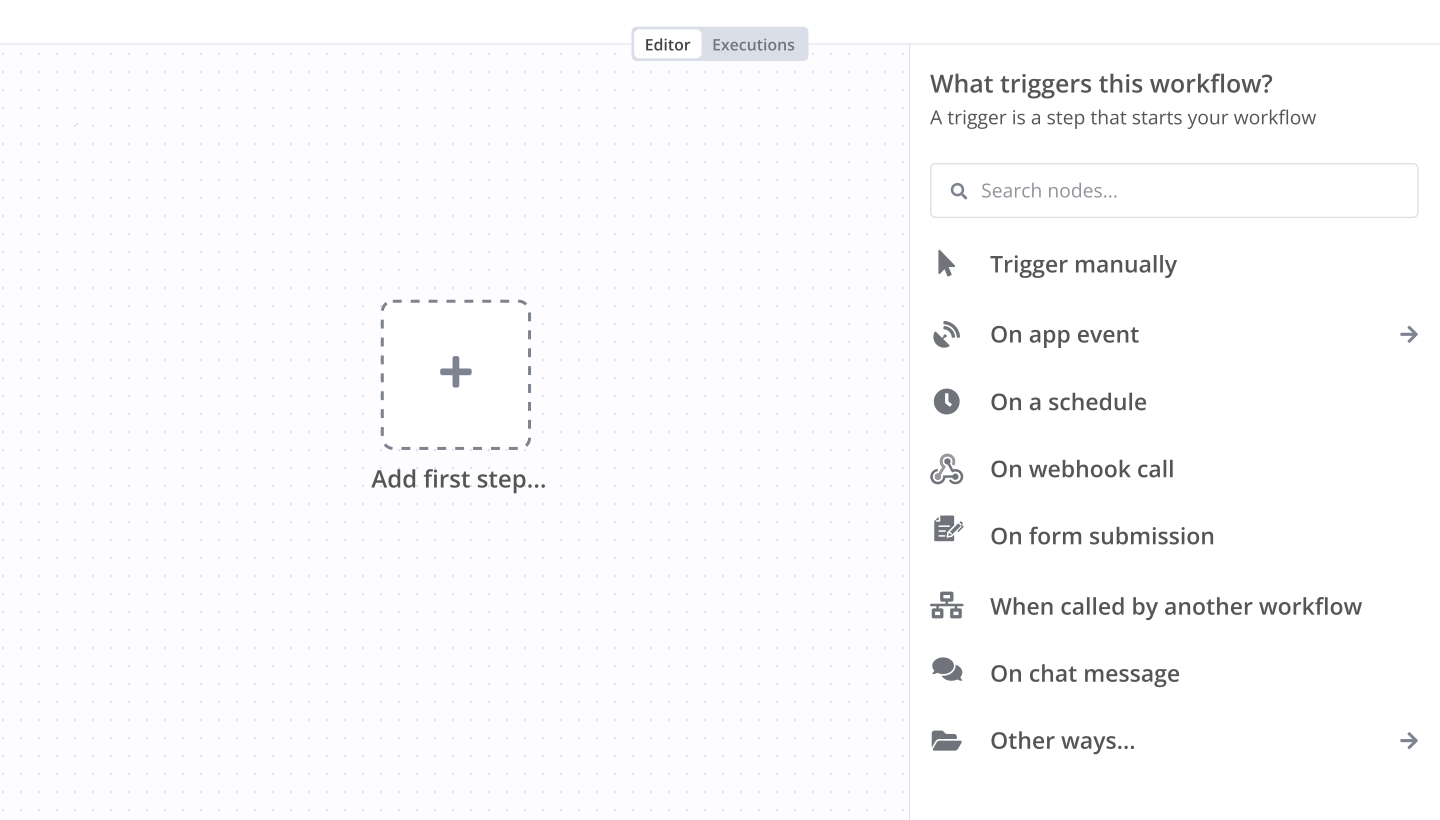
DeepL and Notion integration: Create a new workflow and add the first step

Step 2: Add and configure DeepL and Notion nodes

You can find DeepL and Notion in the nodes panel. Drag them onto your workflow canvas, selecting their actions. Click each node, choose a credential, and authenticate to grant n8n access. Configure DeepL and Notion nodes one by one: input data on the left, parameters in the middle, and output data on the right.

DeepL and Notion integration: Add and configure DeepL and Notion nodes

Step 3: Connect DeepL and Notion

A connection establishes a link between DeepL and Notion (or vice versa) to route data through the workflow. Data flows from the output of one node to the input of another. You can have single or multiple connections for each node.

DeepL and Notion integration: Connect DeepL and Notion

Step 4: Customize and extend your DeepL and Notion integration

Use n8n's core nodes such as If, Split Out, Merge, and others to transform and manipulate data. Write custom JavaScript or Python in the Code node and run it as a step in your workflow. Connect DeepL and Notion with any of n8n’s 1000+ integrations, and incorporate advanced AI logic into your workflows.

DeepL and Notion integration: Customize and extend your DeepL and Notion integration

Step 5: Test and activate your DeepL and Notion workflow

Save and run the workflow to see if everything works as expected. Based on your configuration, data should flow from DeepL to Notion or vice versa. Easily debug your workflow: you can check past executions to isolate and fix the mistake. Once you've tested everything, make sure to save your workflow and activate it.

DeepL and Notion integration: Test and activate your DeepL and Notion workflow

Translate documents to multiple languages with Google Drive and DeepL

Who's it for

This workflow is perfect for content creators, international teams, and businesses that need to translate documents into multiple languages automatically. Whether you're localizing documentation, translating marketing materials, or creating multilingual content, this workflow saves hours of manual work.

What it does

Automatically monitors a Google Drive folder for new documents (PDF, DOCX, TXT, or Markdown) and translates them into multiple languages using DeepL API. Each translated document is saved with a language-specific filename (e.g., document_en.pdf, document_zh.pdf) in a designated folder. You receive an email notification when all translations are complete.

How it works

Monitors a Google Drive folder for new files
Detects file format (PDF/DOCX/TXT/Markdown) and extracts text
Translates the content into your chosen languages (default: English, Chinese, Korean, Spanish, French, German)
Saves translated files with language codes in the filename
Sends an email notification with translation summary
Optional: Records translation history in Notion database

Set up instructions

Requirements
Google Drive account (for file storage)
DeepL API key (free tier: 500,000 characters/month)
Gmail account (for notifications)
Notion account (optional, for tracking translation history)

Setup steps

Create Google Drive folders:
Create a "Source" folder for original files
Create a "Translated" folder for output
Copy the folder IDs from the URLs

Get DeepL API key:
Sign up at DeepL API
Copy your API key

Configure the workflow:
Open the "Configuration (Edit Here)" node (yellow node)
Replace folder IDs with your own
Set your notification email
Choose target languages

Set up credentials:
Add Google Drive OAuth2 credentials
Add DeepL API credentials
Add Gmail OAuth2 credentials

Activate the workflow and upload a test file!

Customization options

Change target languages**: Edit the targetLanguages array in the Configuration node (supports 30+ languages)
Adjust polling frequency**: Change trigger from "every minute" to hourly or daily for batch processing
Enable Notion tracking**: Set enableNotion to true and provide your database ID
Add more file formats**: Extend the Switch node to handle additional file types
Filter by file size**: Add conditions to skip files larger than a certain size

Supported languages

EN (English), ZH (Chinese), KO (Korean), JA (Japanese), ES (Spanish), FR (French), DE (German), IT (Italian), PT (Portuguese), RU (Russian), and 20+ more.

Performance

Short files** (1 page): ~30 seconds for 6 languages
Medium files** (10 pages): ~2 minutes for 6 languages
Large files** (100 pages): ~15 minutes for 6 languages

Technical Details

Trigger**: Google Drive folder monitoring (1-minute polling)
Translation**: DeepL API with automatic source language detection
Loop implementation**: Split Out + Aggregate pattern for parallel translation
Error handling**: Catches API failures and sends email alerts
Storage**: Original file format preserved in translated outputs

Notes

DeepL free tier provides 500,000 characters/month (approximately 250 pages)
For high-volume translation, consider upgrading to DeepL Pro
The workflow creates new files instead of overwriting, preserving translation history
Google Docs are automatically converted to the appropriate format before translation

What You'll Learn

This workflow demonstrates several n8n patterns:
File format detection and routing (Switch node)
Loop implementation with Split Out + Aggregate
Binary data handling for file operations
Conditional logic with IF nodes (optional features)
Cross-node data references
Error handling and user notifications

Perfect for learning automation best practices while solving a real business problem!

Nodes used in this workflow

Popular DeepL and Notion workflows

Translate documents to multiple languages with Google Drive and DeepL

Who's it for This workflow is perfect for content creators, international teams, and businesses that need to translate documents into multiple languages automatically. Whether you're localizing documentation, translating marketing materials, or creating multilingual content, this workflow saves hours of manual work. What it does Automatically monitors a Google Drive folder for new documents (PDF, DOCX, TXT, or Markdown) and translates them into multiple languages using DeepL API. Each translated document is saved with a language-specific filename (e.g., document_en.pdf, document_zh.pdf) in a designated folder. You receive an email notification when all translations are complete. How it works Monitors a Google Drive folder for new files Detects file format (PDF/DOCX/TXT/Markdown) and extracts text Translates the content into your chosen languages (default: English, Chinese, Korean, Spanish, French, German) Saves translated files with language codes in the filename Sends an email notification with translation summary Optional: Records translation history in Notion database Set up instructions Requirements Google Drive account (for file storage) DeepL API key (free tier: 500,000 characters/month) Gmail account (for notifications) Notion account (optional, for tracking translation history) Setup steps Create Google Drive folders: Create a "Source" folder for original files Create a "Translated" folder for output Copy the folder IDs from the URLs Get DeepL API key: Sign up at DeepL API Copy your API key Configure the workflow: Open the "Configuration (Edit Here)" node (yellow node) Replace folder IDs with your own Set your notification email Choose target languages Set up credentials: Add Google Drive OAuth2 credentials Add DeepL API credentials Add Gmail OAuth2 credentials Activate the workflow and upload a test file! Customization options Change target languages**: Edit the targetLanguages array in the Configuration node (supports 30+ languages) Adjust polling frequency**: Change trigger from "every minute" to hourly or daily for batch processing Enable Notion tracking**: Set enableNotion to true and provide your database ID Add more file formats**: Extend the Switch node to handle additional file types Filter by file size**: Add conditions to skip files larger than a certain size Supported languages EN (English), ZH (Chinese), KO (Korean), JA (Japanese), ES (Spanish), FR (French), DE (German), IT (Italian), PT (Portuguese), RU (Russian), and 20+ more. Performance Short files** (1 page): ~30 seconds for 6 languages Medium files** (10 pages): ~2 minutes for 6 languages Large files** (100 pages): ~15 minutes for 6 languages Technical Details Trigger**: Google Drive folder monitoring (1-minute polling) Translation**: DeepL API with automatic source language detection Loop implementation**: Split Out + Aggregate pattern for parallel translation Error handling**: Catches API failures and sends email alerts Storage**: Original file format preserved in translated outputs Notes DeepL free tier provides 500,000 characters/month (approximately 250 pages) For high-volume translation, consider upgrading to DeepL Pro The workflow creates new files instead of overwriting, preserving translation history Google Docs are automatically converted to the appropriate format before translation What You'll Learn This workflow demonstrates several n8n patterns: File format detection and routing (Switch node) Loop implementation with Split Out + Aggregate Binary data handling for file operations Conditional logic with IF nodes (optional features) Cross-node data references Error handling and user notifications Perfect for learning automation best practices while solving a real business problem!

Build your own DeepL and Notion integration

Create custom DeepL and Notion workflows by choosing triggers and actions. Nodes come with global operations and settings, as well as app-specific parameters that can be configured. You can also use the HTTP Request node to query data from any app or service with a REST API.

DeepL supported actions

Translate
Translate data

Notion supported actions

Append After
Append a block
Get Child Blocks
Get many child blocks
Get
Get a database
Get Many
Get many databases
Search
Search databases using text search
Get
Get a database
Get Many
Get many databases
Create
Create a page in a database
Get
Get a page in a database
Get Many
Get many pages in a database
Update
Update pages in a database
Create
Create a pages in a database
Get Many
Get many pages in a database
Update
Update pages in a database
Create
Create a page
Get
Get a page
Search
Text search of pages
Archive
Archive a page
Create
Create a page
Search
Text search of pages
Get
Get a user
Get Many
Get many users

FAQs

  • Can DeepL connect with Notion?

  • Can I use DeepL’s API with n8n?

  • Can I use Notion’s API with n8n?

  • Is n8n secure for integrating DeepL and Notion?

  • How to get started with DeepL and Notion integration in n8n.io?

Need help setting up your DeepL and Notion integration?

Discover our latest community's recommendations and join the discussions about DeepL and Notion integration.
Justin Cheu
Cris A. Works
Martin
Liam Skaff
AyS 0908

Looking to integrate DeepL and Notion in your company?

Over 3000 companies switch to n8n every single week

Why use n8n to integrate DeepL with Notion

Build complex workflows, really fast

Build complex workflows, really fast

Handle branching, merging and iteration easily.
Pause your workflow to wait for external events.

Code when you need it, UI when you don't

Simple debugging

Your data is displayed alongside your settings, making edge cases easy to track down.

Use templates to get started fast

Use 1000+ workflow templates available from our core team and our community.

Reuse your work

Copy and paste, easily import and export workflows.

Implement complex processes faster with n8n

red iconyellow iconred iconyellow icon