
Back to Integrations
integrationMicrosoft To Do node
integrationMicrosoft Outlook node

Microsoft To Do and Microsoft Outlook integration

Save yourself the work of writing custom integrations for Microsoft To Do and Microsoft Outlook and use n8n instead. Build adaptable and scalable Productivity, Communication, and HITL workflows that work with your technology stack. All within a building experience you will love.

How to connect Microsoft To Do and Microsoft Outlook

  • Step 1: Create a new workflow
  • Step 2: Add and configure nodes
  • Step 3: Connect
  • Step 4: Customize and extend your integration
  • Step 5: Test and activate your workflow

Step 1: Create a new workflow and add the first step

In n8n, click the "Add workflow" button in the Workflows tab to create a new workflow. Add the starting point – a trigger on when your workflow should run: an app event, a schedule, a webhook call, another workflow, an AI chat, or a manual trigger. Sometimes, the HTTP Request node might already serve as your starting point.
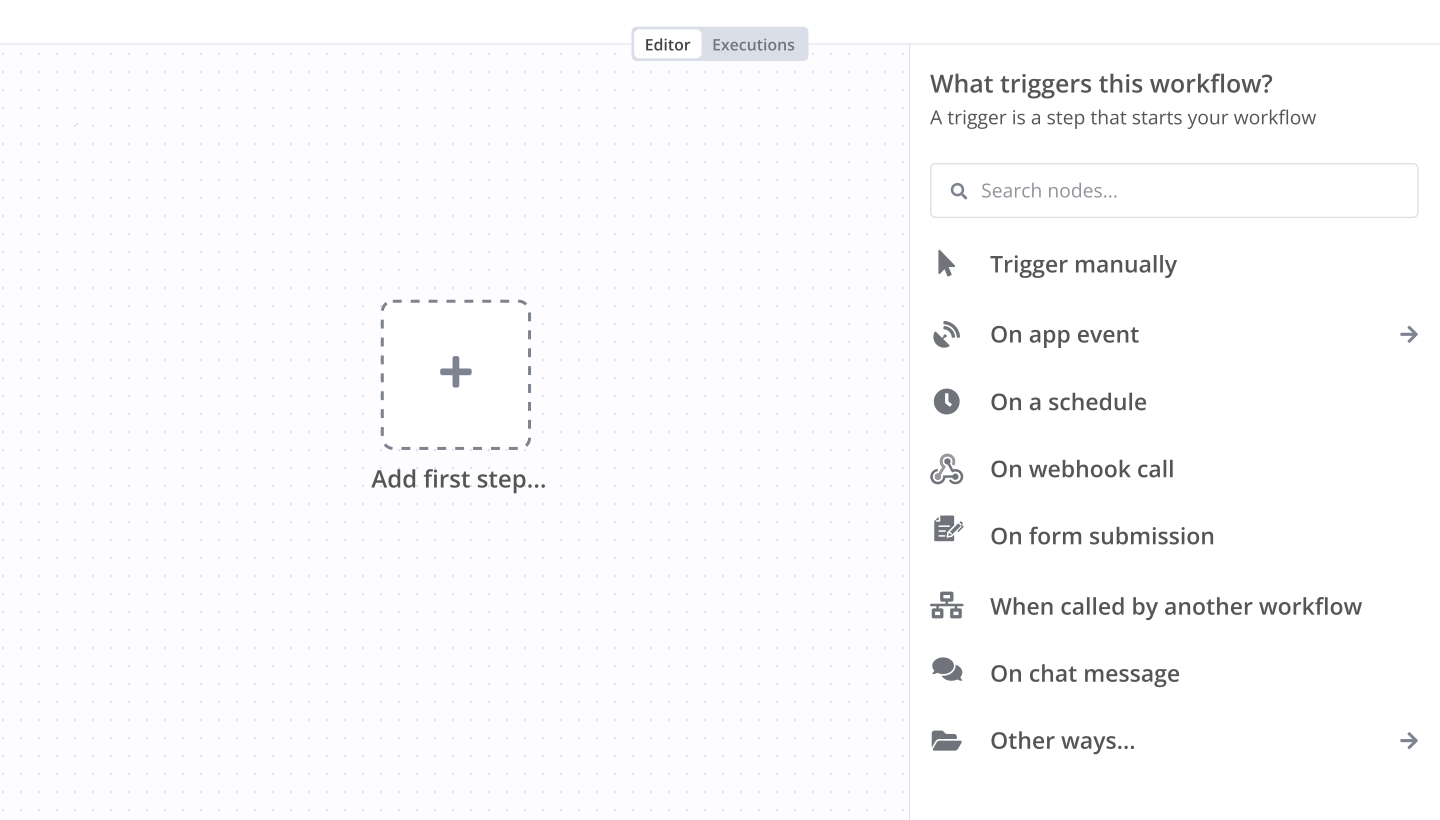
Microsoft To Do and Microsoft Outlook integration: Create a new workflow and add the first step

Step 2: Add and configure Microsoft To Do and Microsoft Outlook nodes

You can find Microsoft To Do and Microsoft Outlook in the nodes panel. Drag them onto your workflow canvas, selecting their actions. Click each node, choose a credential, and authenticate to grant n8n access. Configure Microsoft To Do and Microsoft Outlook nodes one by one: input data on the left, parameters in the middle, and output data on the right.

Microsoft To Do and Microsoft Outlook integration: Add and configure Microsoft To Do and Microsoft Outlook nodes

Step 3: Connect Microsoft To Do and Microsoft Outlook

A connection establishes a link between Microsoft To Do and Microsoft Outlook (or vice versa) to route data through the workflow. Data flows from the output of one node to the input of another. You can have single or multiple connections for each node.

Microsoft To Do and Microsoft Outlook integration: Connect Microsoft To Do and Microsoft Outlook

Step 4: Customize and extend your Microsoft To Do and Microsoft Outlook integration

Use n8n's core nodes such as If, Split Out, Merge, and others to transform and manipulate data. Write custom JavaScript or Python in the Code node and run it as a step in your workflow. Connect Microsoft To Do and Microsoft Outlook with any of n8n’s 1000+ integrations, and incorporate advanced AI logic into your workflows.

Microsoft To Do and Microsoft Outlook integration: Customize and extend your Microsoft To Do and Microsoft Outlook integration

Step 5: Test and activate your Microsoft To Do and Microsoft Outlook workflow

Save and run the workflow to see if everything works as expected. Based on your configuration, data should flow from Microsoft To Do to Microsoft Outlook or vice versa. Easily debug your workflow: you can check past executions to isolate and fix the mistake. Once you've tested everything, make sure to save your workflow and activate it.

Microsoft To Do and Microsoft Outlook integration: Test and activate your Microsoft To Do and Microsoft Outlook workflow

Extract meeting decisions and tasks with Outlook, GPT-4o, SharePoint, and To Do

Quick overview
This workflow polls Outlook for meeting summary emails, uses GPT-4o to extract strategic decisions and action items from the transcript, logs decisions to a SharePoint list, creates Microsoft To Do tasks with normalized due dates, and sends failure alerts via Outlook email if any node errors occur.

How it works
An Outlook trigger polls for new emails from a configured bot sender address every 15 minutes and passes matching messages downstream.
A deduplication node checks each email's conversation ID against a rolling in-memory list and drops any threads already processed in a previous run. The list is capped at 100 entries and rotates automatically.
The HTML body of each email is stripped of markup and converted to clean plain text before being passed to the AI node.
GPT-4o analyzes the plain text transcript and returns a structured JSON object containing two arrays: Strategic_Decisions and Action_Items.
A parse node strips any markdown fences from the AI output, splits the two arrays, and routes them to separate output branches — decisions to SharePoint, action items to the due date normalizer.
Each strategic decision is logged as a new item in the configured SharePoint list for permanent team-level record keeping.
Action item due dates are normalized from YYYY-MM-DD to the dateTimeTimeZone format Microsoft Graph requires, then each action item is created as a dated Microsoft To Do task with assignee and deadline included

Setup
Replace [email protected] in the Outlook Trigger sender filter with the actual address your meeting bot uses to send transcript emails.
Connect your Microsoft Outlook OAuth2 credential to both the Outlook Trigger node and the Send Error Email node. Replace [email protected] in the error node with your actual admin address.
Connect your OpenAI credential to the Extract Insights via AI node. The prompt expects the AI to return a JSON object with Strategic_Decisions and Action_Items arrays — adjust the prompt if your meeting bot structures summaries differently.
Connect your Microsoft SharePoint credential to the Log to SharePoint List node and configure the target site ID and list ID where decisions should be stored.
Connect your Microsoft To Do credential to the Create To Do Tasks node and replace YOUR_TODO_LIST_ID with your actual task list ID. In the Parse & Route Arrays node settings, set the number of outputs to 2 so the split routing works correctly.

Requirements
Microsoft Outlook OAuth2 account with inbox access and a configured meeting bot sender address
OpenAI API key with access to GPT-4o
Microsoft SharePoint site with a list configured to receive decision records
Microsoft To Do account with a task list ready to receive action items

Customization
Change the polling interval in the Outlook Trigger node from 15 minutes to any frequency that matches your meeting cadence.
Adjust the DEADLINE_HOUR_UTC constant in the Normalize Due Date node to set task deadlines in your team's local timezone. Default is 14:00 UTC (17:00 EEST).
Modify the GPT-4o prompt in the Extract Insights via AI node to match the structure of your meeting bot's email format or extract additional fields beyond decisions and action items.
Add a Slack or Teams notification node after the SharePoint and To Do branches to alert the team when new decisions or tasks have been created.

Additional info
The Parse & Route Arrays node must have its output count set to 2 manually in the node settings tab on the canvas. This is not configurable from the parameters panel and is easy to miss during setup.
If the AI output cannot be parsed, the node defaults to empty arrays for both Strategic_Decisions and Action_Items so the workflow never crashes on a malformed response.
Due dates must be in YYYY-MM-DD format in the AI output. The Normalize Due Date node silently skips any value that does not match this pattern, leaving the task without a deadline rather than failing.

Nodes used in this workflow

Popular Microsoft To Do and Microsoft Outlook workflows

Extract meeting decisions and tasks with Outlook, GPT-4o, SharePoint, and To Do

Quick overview This workflow polls Outlook for meeting summary emails, uses GPT-4o to extract strategic decisions and action items from the transcript, logs decisions to a SharePoint list, creates Microsoft To Do tasks with normalized due dates, and sends failure alerts via Outlook email if any node errors occur. How it works An Outlook trigger polls for new emails from a configured bot sender address every 15 minutes and passes matching messages downstream. A deduplication node checks each email's conversation ID against a rolling in-memory list and drops any threads already processed in a previous run. The list is capped at 100 entries and rotates automatically. The HTML body of each email is stripped of markup and converted to clean plain text before being passed to the AI node. GPT-4o analyzes the plain text transcript and returns a structured JSON object containing two arrays: Strategic_Decisions and Action_Items. A parse node strips any markdown fences from the AI output, splits the two arrays, and routes them to separate output branches — decisions to SharePoint, action items to the due date normalizer. Each strategic decision is logged as a new item in the configured SharePoint list for permanent team-level record keeping. Action item due dates are normalized from YYYY-MM-DD to the dateTimeTimeZone format Microsoft Graph requires, then each action item is created as a dated Microsoft To Do task with assignee and deadline included Setup Replace [email protected] in the Outlook Trigger sender filter with the actual address your meeting bot uses to send transcript emails. Connect your Microsoft Outlook OAuth2 credential to both the Outlook Trigger node and the Send Error Email node. Replace [email protected] in the error node with your actual admin address. Connect your OpenAI credential to the Extract Insights via AI node. The prompt expects the AI to return a JSON object with Strategic_Decisions and Action_Items arrays — adjust the prompt if your meeting bot structures summaries differently. Connect your Microsoft SharePoint credential to the Log to SharePoint List node and configure the target site ID and list ID where decisions should be stored. Connect your Microsoft To Do credential to the Create To Do Tasks node and replace YOUR_TODO_LIST_ID with your actual task list ID. In the Parse & Route Arrays node settings, set the number of outputs to 2 so the split routing works correctly. Requirements Microsoft Outlook OAuth2 account with inbox access and a configured meeting bot sender address OpenAI API key with access to GPT-4o Microsoft SharePoint site with a list configured to receive decision records Microsoft To Do account with a task list ready to receive action items Customization Change the polling interval in the Outlook Trigger node from 15 minutes to any frequency that matches your meeting cadence. Adjust the DEADLINE_HOUR_UTC constant in the Normalize Due Date node to set task deadlines in your team's local timezone. Default is 14:00 UTC (17:00 EEST). Modify the GPT-4o prompt in the Extract Insights via AI node to match the structure of your meeting bot's email format or extract additional fields beyond decisions and action items. Add a Slack or Teams notification node after the SharePoint and To Do branches to alert the team when new decisions or tasks have been created. Additional info The Parse & Route Arrays node must have its output count set to 2 manually in the node settings tab on the canvas. This is not configurable from the parameters panel and is easy to miss during setup. If the AI output cannot be parsed, the node defaults to empty arrays for both Strategic_Decisions and Action_Items so the workflow never crashes on a malformed response. Due dates must be in YYYY-MM-DD format in the AI output. The Normalize Due Date node silently skips any value that does not match this pattern, leaving the task without a deadline rather than failing.

Triage VIP Outlook emails using Excel, GPT-4o and Microsoft To Do

Quick overview This workflow polls Microsoft Outlook every 5 minutes, deduplicates email threads, checks senders against a VIP list in Microsoft Excel, uses OpenAI (GPT-4o) to detect urgency, and creates a Microsoft To Do task for urgent VIP emails while emailing an admin on workflow errors. How it works An Outlook trigger polls your inbox every 5 minutes and passes new emails downstream. A deduplication node checks each email's conversation ID against a rolling in-memory list, dropping any threads already processed in a previous run. The list is capped at 100 entries. The full priority sender list is read in a single batch from Microsoft Excel, building a fast lookup set of known email addresses — one API call, zero rate-limit risk. A code node cross-references each email against the sender set, tags matches as priority, and filters out all non-priority emails so only relevant messages continue. The HTML body of each priority email is stripped of markup and converted to clean plain text before being passed to the AI node. GPT-4o analyzes the plain text and returns a structured JSON response with an is_urgent boolean and a short summary. A parse node cleans the output and maps both fields onto the item. An IF node routes urgent emails to Microsoft To Do, creating a flagged task with the sender name and subject. Non-urgent emails exit silently with no action taken. Setup Connect your Microsoft Outlook OAuth2 credential to both the Outlook Trigger node and the Send Error Email node. Replace [email protected] in the error node with your actual admin address. Connect your Microsoft Excel credential to the Excel: Read VIP Sheet node and point it to your priority sender workbook and sheet. Open the Code: Tag & Filter VIPs node and change the VIP_COLUMN value from 'email' to match your actual column header. Connect your OpenAI credential to the AI: Analyze Urgency node, then connect your Microsoft To Do credential to the Create VIP To Do Task node and select the target task list. Requirements Microsoft Outlook OAuth2 account with inbox access Microsoft Excel file with a column of priority sender email addresses OpenAI API key with access to GPT-4o Microsoft To Do account with a configured task list Customization Change the polling interval in the Outlook Trigger node from 5 minutes to any frequency that suits your inbox volume. Rename the VIP_COLUMN variable in the Code: Tag & Filter VIPs node to match any column header in your Excel sheet. Modify the GPT-4o prompt in the AI: Analyze Urgency node to adjust what counts as urgent for your specific use case. Update the To Do task title template in the Create VIP To Do Task node to include additional fields such as the email summary or received date. Additional info The deduplication node uses n8n static workflow data to persist processed conversation IDs across runs. The list is capped at 100 entries and rotates automatically to prevent memory bloat. If the AI output cannot be parsed, the node defaults to is_urgent: false so the workflow never crashes on a malformed response. The Error Trigger node is a global catcher — it fires on any node failure in the workflow and sends a formatted alert email to the configured admin address.

Build your own Microsoft To Do and Microsoft Outlook integration

Create custom Microsoft To Do and Microsoft Outlook workflows by choosing triggers and actions. Nodes come with global operations and settings, as well as app-specific parameters that can be configured. You can also use the HTTP Request node to query data from any app or service with a REST API.

Microsoft To Do supported actions

Create
Delete
Get
Get Many
Update
Create
Delete
Get
Get Many
Update
Create
Delete
Get
Get Many
Update

Microsoft Outlook supported actions

Create
Create a new calendar
Delete
Delete a calendar
Get
Retrieve a calendar
Get Many
List and search calendars
Update
Update a calendar
Create
Create a new contact
Delete
Delete a contact
Get
Retrieve a contact
Get Many
List and search contacts
Update
Update a contact
Create
Create a new email draft
Delete
Delete an email draft
Get
Retrieve an email draft
Send
Send an existing email draft
Update
Update an email draft
Create
Create a new event
Delete
Delete an event
Get
Retrieve an event
Get Many
List and search events
Update
Update an event
Create
Create a mail folder in the root folder of the user's mailbox
Delete
Delete a folder
Get
Retrieve a folder
Get Many
Get many folders
Update
Update a folder
Get Many
Retrieves the messages in a folder
Delete
Delete a message
Get
Retrieve a single message
Get Many
List and search messages
Move
Move a message to a folder
Reply
Create a reply to a message
Send
Send a message
Send and Wait for Response
Send a message and wait for response
Update
Update a message
Add
Add an attachment to a message
Download
Download an attachment from a message
Get
Retrieve information about an attachment of a message
Get Many
Retrieve information about the attachments of a message

FAQs

  • Can Microsoft To Do connect with Microsoft Outlook?

  • Can I use Microsoft To Do’s API with n8n?

  • Can I use Microsoft Outlook’s API with n8n?

  • Is n8n secure for integrating Microsoft To Do and Microsoft Outlook?

  • How to get started with Microsoft To Do and Microsoft Outlook integration in n8n.io?

Looking to integrate Microsoft To Do and Microsoft Outlook in your company?

Over 3000 companies switch to n8n every single week

Why use n8n to integrate Microsoft To Do with Microsoft Outlook

Build complex workflows, really fast

Build complex workflows, really fast

Handle branching, merging and iteration easily.
Pause your workflow to wait for external events.

Code when you need it, UI when you don't

Simple debugging

Your data is displayed alongside your settings, making edge cases easy to track down.

Use templates to get started fast

Use 1000+ workflow templates available from our core team and our community.

Reuse your work

Copy and paste, easily import and export workflows.

Implement complex processes faster with n8n

red iconyellow iconred iconyellow icon